




INZO Review
INZO is an offshore broker focused on the Middle East markets, especially the Arab countries. There is nothing on INZO’s website to give us confidence that this is a trustworthy investment intermediary. Closer inspection shows that it is not even clear which legal entity you are dealing with. The only certainty is that this broker is not subject to any regulatory oversight and provides you with no guarantees of transparency and fair dealing.
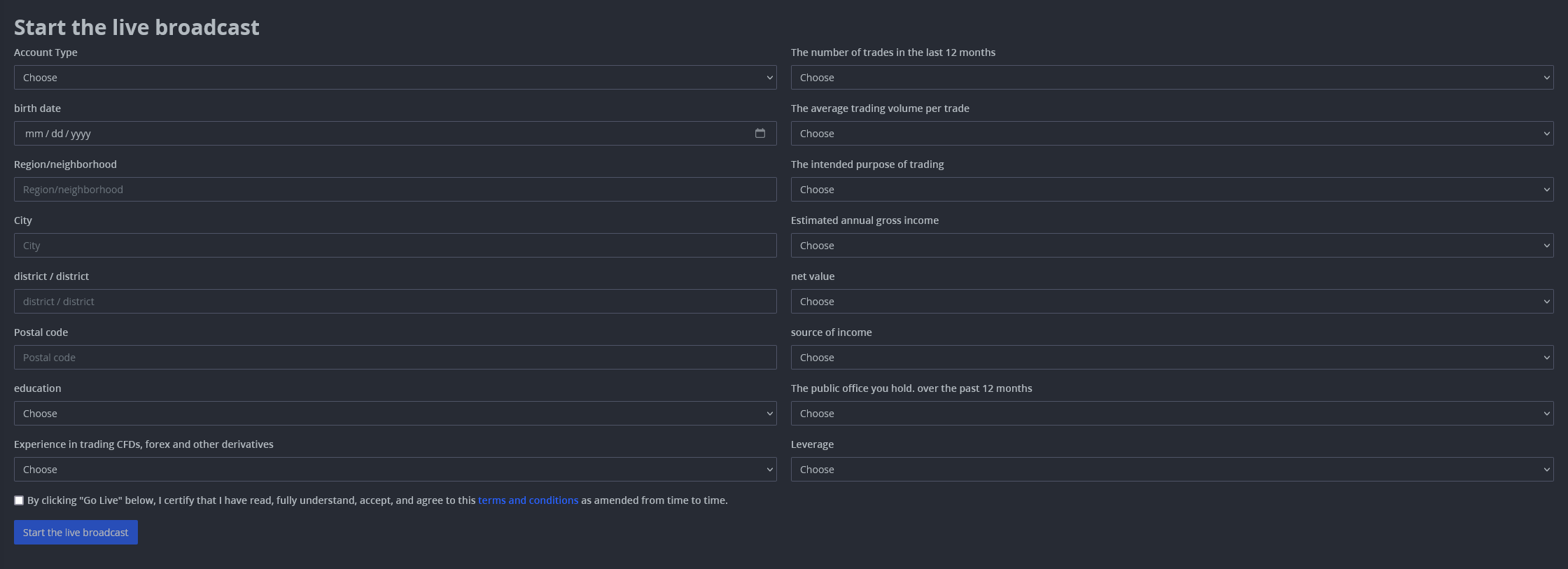
The website itself is cheap-looking, clunky and almost indistinguishable from the websites of the many fake brokers that lurk for potential victims on the internet. The website interface is primarily in Arabic, with other languages available being English, French, Polish and Kurdish (Sorani). When registering for an account you can also choose a language, with Turkish instead of Kurdish in the options available there. But after logging in it is found that the dashboard is only available in Arabic and English. Moreover, the English version is a rather poor translation. For example, the option to register a live account is titled “start the live broadcast”. The dashboard itself is visually and functionally more unconvincing than even the website.
The limited educational materials are available in Arabic only. INZO does not provide clear and detailed information about the financial services it offers. Surprisingly, this unconvincing broker offers the two most established and advanced trading platforms. But this is not enough to give us confidence that it is safe and reasonable to choose this broker for our investments in the financial markets.
INZO does not offer anything substantial in terms of additional tools, information and research resources. In fact, there is nothing that can be pointed out as an advantage of INZO over other brokers. The high leverage and deposit bonuses that INZO offers to its clients are no more attractive than the offers of offshore subsidiaries of established brands. In this review, we will take a detailed look at what this broker offers, but our recommendation is to choose a more reliable alternative.
INZO Licenses and Regulations
As mentioned, the only certainty about INZO is that it is not a regulated broker. This in itself is not something out of the ordinary for traders from certain jurisdictions or those looking to take advantage of high leverage. Almost all of the leading brands in the industry have subsidiaries in offshore jurisdictions. This allows them to use a single legal entity to serve clients in multiple jurisdictions, particularly emerging markets in Africa and Asia. It also allows them to offer more flexible and attractive terms to traders who feel constrained by the stricter requirements of regulators in regions such as the European Union. As they strive to maintain their reputation, these established brands offer the same quality of service in all the markets in which they operate and often even offer offshore clients guarantees and protections identical to those in regulated jurisdictions.
But all of this cannot be correlated to INZO, which is an entirely offshore broker with no representation in regulated jurisdictions. Nor can it be said to be an established brand that in itself provides guarantees to clients.
Normally you will find information about the legal and regulatory status of a broker in the footer of the website. In the case of INZO, this is also the case, but the available information is misleadingly presented.
The first statement we see is that INZO is authorised by the Mwali International Services Authority as an international brokerage.
The website does not name the company holding this licence. In the database of the said regulator we do find a licence with this number in the name of INZO Group Ltd. But offshore registration does not mean that INZO is authorized to operate as an “international brokerage”. Mwali is an autonomous island, part of the Comoros Union. The local financial regulator does not impose any significant regulations and supervision over forex brokers.
In addition, again in the footer of the website, another company, INZO LLC, is listed as being “authorized to provide financial services by Saint Vincent and the Grenadines”. According to the text of the Terms and Conditions, which are linked in the homepage of the website, this is the company you become a customer of, not the one based at Mwali.
Such a company can indeed be found among those registered in Saint Vincent and the Grenadines (SVG). But this does not provide any guarantees of customer protection. SVG is an offshore zone with no broker regulations in place. As soon as you open the website of the local Financial Services Authority you see a warning that the institution does not licence forex and other types of brokers and does not supervise the activities of International Business Companies engaged in such activities. Due to the large number of scammers taking advantage of this lack of regulatory oversight, starting in 2023, the financial authorities in the SVG began requiring international brokerage firms registered in the country to provide proof that they hold the necessary licences in the jurisdictions in which they provide financial services. So the license from Mwali is rather a cover for the completely unregulated activities of this broker in the SVG.
It is stated that INZO LLC does not offer its services to residents of certain jurisdictions such as Canada, USA, North Korea, Iran, Israel, China and Turkey. But the truth is that this company is not authorized to offer financial services in any regulated jurisdiction.
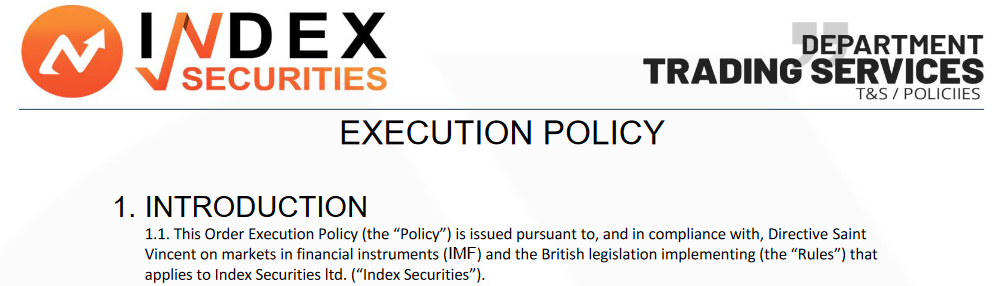
But the even bigger problem with INZO is that registering an account requires agreeing to a document other than the Terms and Conditions available on the website. The Execution Policy in question is on behalf of a completely different brand, Index Securities. The index-securities.com domain mentioned in the document is not operational at the time of writing this review. The document also lists a completely different company, Index Securities ltd. Again, the jurisdiction SVG is referenced, but there is no company by that name on the register of companies incorporated in this country.
There are some potential benefits of trading through an offshore broker. But again, these mostly apply to offshore divisions of established brands. In the case of INZO, you cannot even be sure which company you are a client of.
Offshore brokers often offer higher leverage compared to brokers regulated in jurisdictions with strict financial regulations. High leverage allows traders to control large positions with a relatively small amount of capital, potentially amplifying profits. However, it also increases risk significantly. In some cases, trading through offshore brokers can offer tax advantages, depending on the trader’s country of residence and the tax laws regarding foreign income and investments. Traders often choose offshore jurisdictions with lower tax rates or more favorable tax treatment for capital gains. Offshore brokers may have fewer trading restrictions, lower compliance costs, and more trading freedom for clients. This can include fewer restrictions on scalping, hedging, and the use of trading algorithms. Some offshore brokers provide access to a broader range of currency pairs, including exotic pairs that are not commonly offered by brokers in highly regulated jurisdictions. This can be advantageous for traders looking for opportunities in less commonly traded markets.Offshore brokers might offer lower fees and narrower spreads compared to their onshore counterparts. This is partly due to lower operational and regulatory costs in some offshore jurisdictions. Offshore brokers may provide greater privacy protections for their clients due to less stringent regulatory requirements regarding the disclosure of client information.
However, trading through offshore brokers also comes with significant risks, including less protection in case of broker insolvency or fraud, potential legal issues with tax authorities, and generally lower oversight and consumer protection. It’s essential for traders to conduct thorough due diligence on the broker’s reputation, regulatory status, and operational history before opening an account and to be fully aware of the legal implications in their home country.
Trading forex through a regulated broker licensed in stringent jurisdictions like the European Union, United Kingdom, or Australia offers several significant benefits, primarily revolving around security, transparency, and compliance. Brokers regulated in these jurisdictions are required to adhere to strict financial standards and operational guidelines, which are designed to protect traders. This includes maintaining adequate capital reserves, providing transparent pricing, and ensuring fair trading practices.
Regulated brokers must keep client funds in segregated bank accounts, separate from the broker’s own operational funds. This is critical in protecting clients’ money in case the broker faces financial difficulties. In many of these jurisdictions, there are investor compensation schemes that can reimburse clients if the broker becomes insolvent. For example, the UK’s Financial Services Compensation Scheme (FSCS) protects investments up to GBP 85 000.
Regulated brokers are subject to oversight by regulatory bodies, which also provide a pathway for dispute resolution. This gives traders a recourse in case of disputes or unfair practices, which is not often guaranteed when dealing with offshore brokers. Regulatory frameworks in these areas ensure that brokers provide transparent pricing without manipulation and execute orders at the best possible prices.
While offering lower leverage might seem like a disadvantage, it is actually beneficial from a risk management perspective. Regulators in these jurisdictions often impose leverage limits to protect traders from excessive risk, which can be crucial in markets as volatile as forex. Regulated brokers often provide extensive educational resources and trading tools to help traders make informed decisions. They are also required to provide detailed disclosures about the risks associated with trading forex. Overall, trading with a regulated broker in these jurisdictions can offer a safer and more reliable trading environment, which is crucial for both new and experienced traders. The regulatory frameworks are designed to ensure fair play, which can help traders focus more on their trading strategies rather than worrying about the integrity of their broker.
INZO does not offer any guarantees or protections for its customers’ funds. One set of Terms and Conditions claims that clients from certain jurisdictions have negative balance protection, but this claim is not specified or proven.
INZO Trading Software
It is quite surprising that a suspicious broker like INZO offers not one, but two advanced trading platforms – MetaTrader 5 (MT5) and cTrader. This is a variety that even some of the big brokerage companies cannot boast. In the recent past, there have been many shady brokers using the MetaTrader software, which has been the leading choice for most brokers and traders around the world for a second decade now. This issue led to the temporary removal of the MetaTrader mobile apps from the Apple Store. You are now much less likely to encounter outright scams using this or other advanced trading software. But again, we will point out that this alone is not enough to make INZO look like a more credible financial services provider.
Let’s take a look at what makes MetaTrader so widely used. MT5 is a highly popular trading platform for several reasons, expanding on the success of its predecessor, MetaTrader 4 (MT4). Its popularity stems from a combination of advanced features, broad accessibility, and strong support from brokers and developers.
MT5 allows users to trade a wide range of assets including forex, stocks, commodities, and futures. This versatility attracts a broader spectrum of traders compared to platforms that specialize in a single type of asset. The platform provides an extensive set of technical analysis tools, enabling traders to analyze price dynamics in detail. MT5 includes over 80 built-in technical indicators and analytical objects for detailed price analysis.
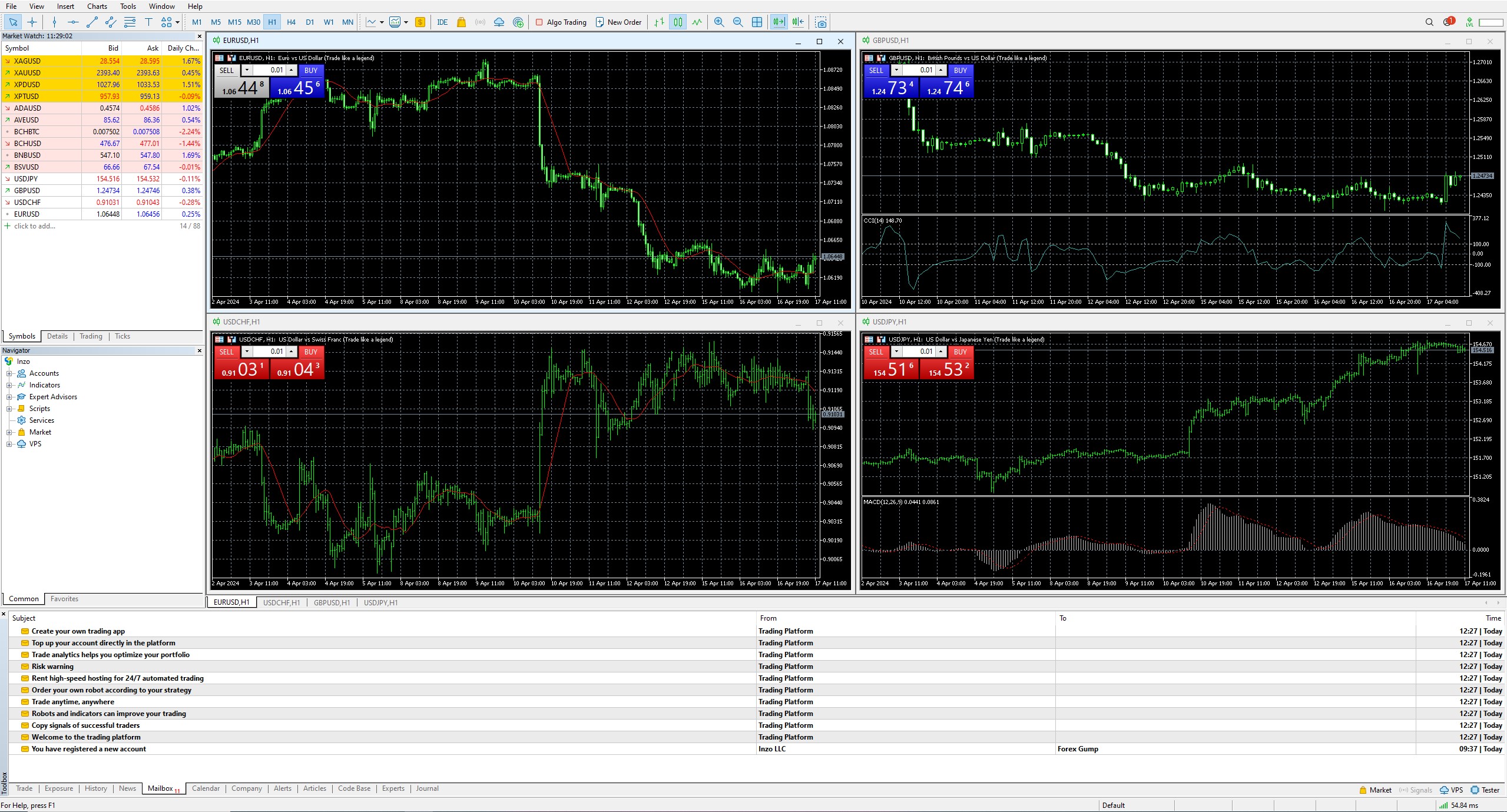
One of MT5’s standout features is its powerful algorithmic trading capabilities. It comes equipped with the MQL5 (MetaQuotes Language 5), which is more advanced than its predecessor, allowing for the development of more complex and faster trading robots and scripts. Traders can access 21 timeframes, significantly more than MT4’s nine. This variety allows for much more precise chart analysis. The ability to open up to 100 charts simultaneously provides traders with comprehensive market visibility. MT5 includes an integrated economic calendar that features news events, forecasts, and other important financial information directly on the platform, helping traders make more informed decisions based on economic indicators.
MT5 allows different types of trade orders, including both pending and market orders, which can be beneficial for implementing various trading strategies. This includes six types of pending orders and two stop orders, which enhances trade execution strategies. MT5 supports both hedging and netting systems. Depending on the market and trading style, traders can choose the system that best suits their trading strategies, allowing more flexibility in managing positions.
For traders who use algorithmic strategies, MT5 provides a powerful strategy tester that allows back-testing with multiple pairs and timeframes simultaneously. This can save a significant amount of time and enhance the optimization of strategies. MetaTrader 5 benefits from a large, active community of users and developers who share tools, indicators, and automated trading strategies. The platform is supported by most forex brokers worldwide, ensuring that users have robust support and resources.
MT5 is accessible on various platforms including desktop (Windows, macOS), web, and mobile (iOS and Android), ensuring traders can monitor and execute trades from anywhere. These features collectively make MT5 an attractive option for both novice and experienced traders, offering a rich set of tools and functionalities that enhance the trading experience.
cTrader is another popular trading platform that is often compared to MT5. It’s known for its intuitive interface, advanced trading capabilities, and strong emphasis on transparency and speed. cTrader is well-regarded for its clean, modern, and user-friendly interface. It is designed to be intuitive, making it accessible for beginners while still offering the depth required by more experienced traders.
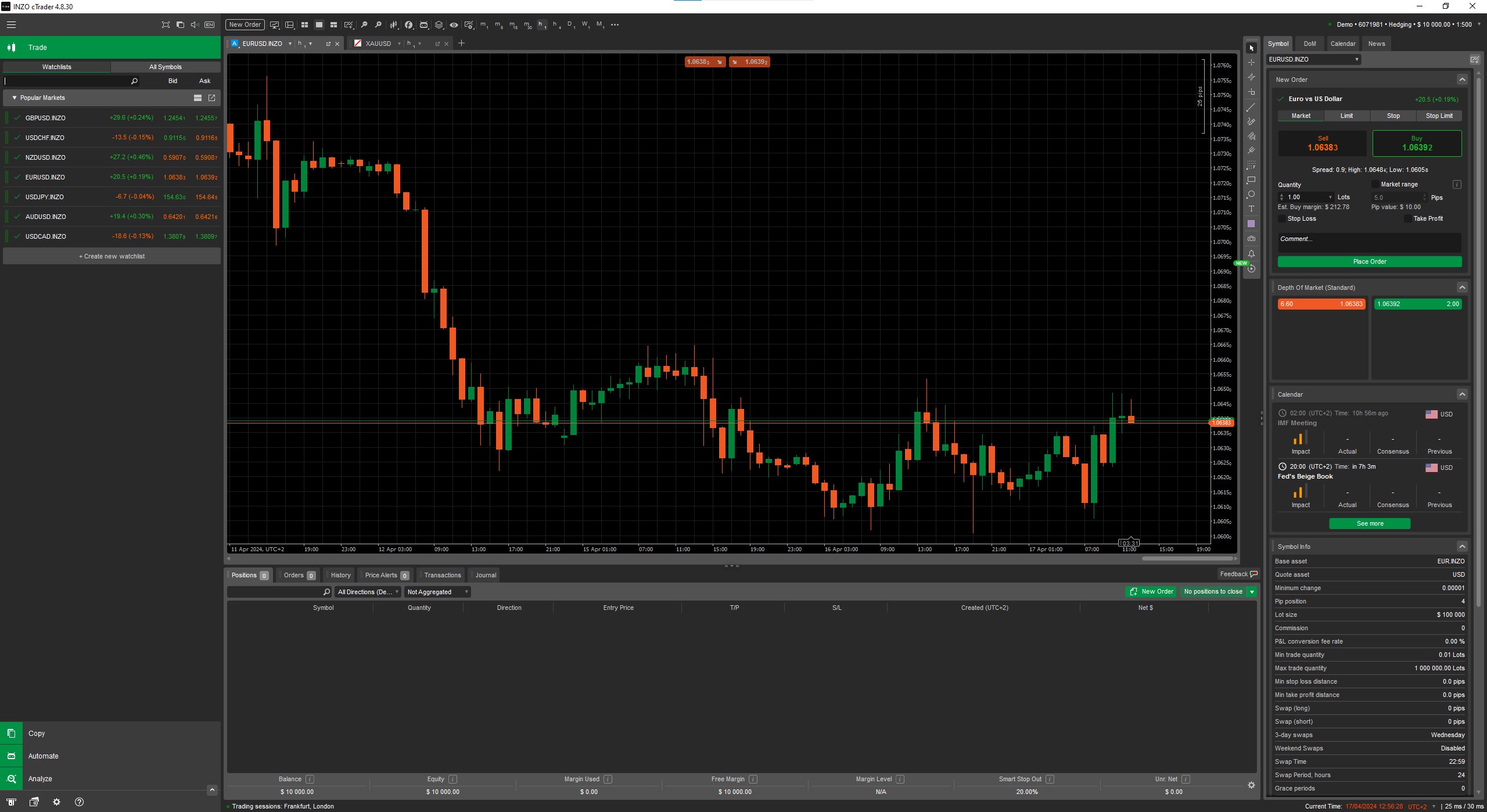
cTrader provides Level II pricing, which displays the full range of executable prices coming directly from liquidity providers. This feature is particularly valuable for more experienced traders who look for greater depth of market visibility and transparency in price action.
Similar to MT5, cTrader supports algorithmic trading but uses cAlgo for coding trading robots and custom technical indicators. cAlgo uses C# language, which is commonly used in professional software development environments, making it potentially more accessible to a broader programming community. MT5 uses MQL5 for developing trading robots and indicators, which is specifically designed for trading and financial market analysis.
cTrader offers comprehensive charting tools and over 70 pre-installed technical indicators, as well as the ability to create custom indicators. Its charting solution is highly customizable and includes detachable charts, which can be useful for multiple monitor setups.It supports multiple order types including Market, Limit, Stop, Stop-Limit, and a sophisticated range of order protection tools like stop-loss and take-profit orders. cTrader has an integrated copy trading service, allowing traders to copy the strategies of other successful traders directly through the platform.
When choosing which platform to choose, keep in mind that MT5 has a slight edge in terms of accessibility, available on more devices and operating systems. While both platforms are available on multiple devices, MT5’s support and customization for desktop applications are more mature. MetaTrader 5 benefits from a larger user base and a more extensive community, partly due to the longevity and continued success of its predecessor, MetaTrader 4. This results in more custom indicators and expert advisors available for MT5. MetaTrader is offered by a wider range of brokers worldwide compared to cTrader, which might be a consideration depending on the trader’s location and preferred brokers. On the other hand, cTrader is often considered to have a more modern and user-friendly interface, making it easier for new traders to learn and navigate.
Both platforms are available as desktop installations for Windows, but only MetaTrader is available for Mac. Both software have mobile apps available for Android and iOS devices.
In conclusion, both cTrader and MetaTrader 5 offer advanced functionalities suitable for both novice and experienced traders. The choice between them often comes down to personal preference regarding interface, specific features like programming language and broker availability, and the type of trading one intends to engage in.
INZO does not partner with third party extension and add-on providers for MetaTrader. Many leading brokers offer as part of their services integration with such additional resources, which allows customization and expansion of the trading platform functionality.
INZO Account types and Conditions
INZO allows you to register Demo Accounts to test both trading platforms in combination with different account types and leverage levels. Demo funds are up to 10000. The only base currency that can be used for both Demo and Live trading accounts is USD.
INZO does not allow you to create multiple accounts, including Demo, with one registration. So if you want to test or trade with different platforms and different account types, you need to make separate registrations with different email addresses. Because of this, INZO lags significantly behind industry standards, where you can typically register multiple Demo and Live accounts after initial registration.
Registering for a Live account requires completing a questionnaire regarding financial status, funds availability and experience in trading financial instruments. But this questionnaire is much more pro-forma than the ones filled in when registering an account with a regulated broker.
To deposit funds and trade with real money you are required to prove identity and residency by providing full name, address, date of birth, place of birth, contact number, and email address, clear colored copy of an identity document, bank statement, tenancy agreement, or a utility bill.
INZO offers five types of trading accounts. The descriptions of the conditions associated with these account types are not comprehensive and clearly described. INZO does not provide a list of all tradable instruments, information on average spreads and other important details that you would expect to find on a legitimate broker’s website.
The trading platforms include several dozen major currency pairs, a large number of cryptocurrencies and a limited number of other financial instruments – spot metals, oil and ten major indices.
All accounts have STP order execution but offer different pricing options. The standard account requires a minimum deposit of 100 USD. With this type of account, the trader only pays the spread. INZO advertises a spread starting at 0.8 pips. On trading platforms we do see spreads of 0.8-0.9 pips for benchmark currency pairs such as EUR/USD, but it should be noted that these are the levels in a Demo account.
The standard account allows leverage up to 1:500, but it is not specified whether this level applies to all asset classes. EU regulators limit leverage to 1:30 for trading in major currency pairs and even lower levels for more volatile assets. The same rules currently apply to Australia. In the US, the maximum limit is slightly higher at 1:50.
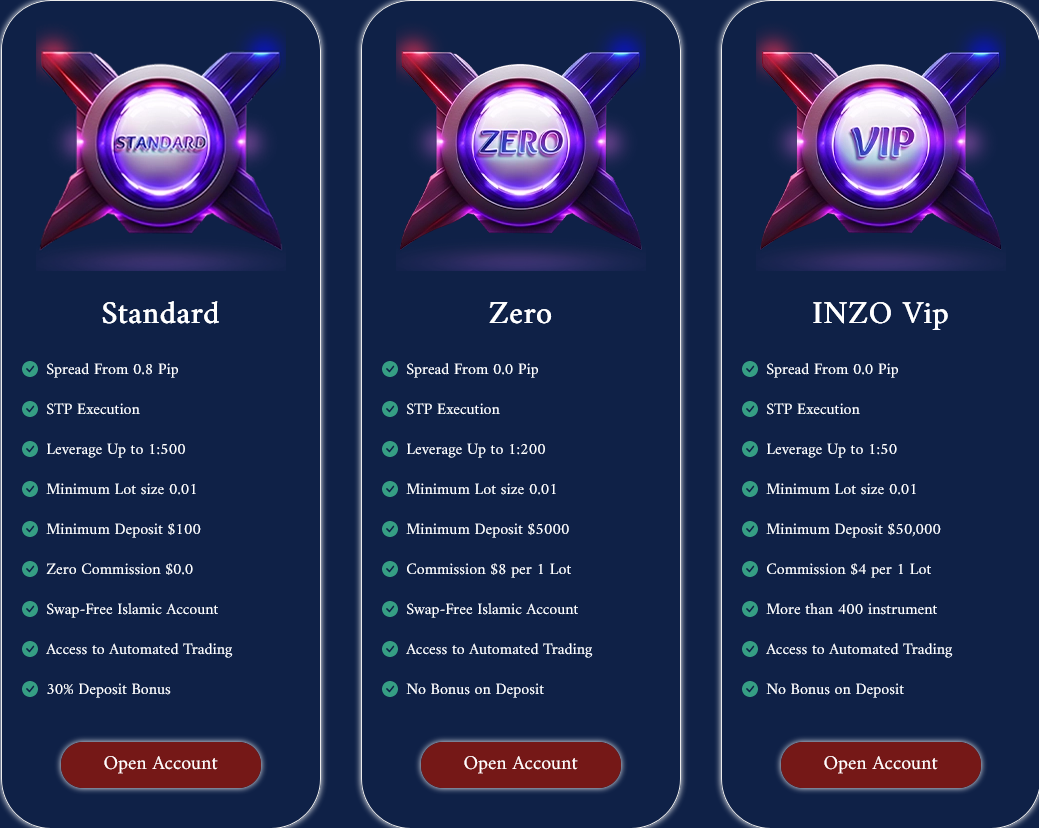
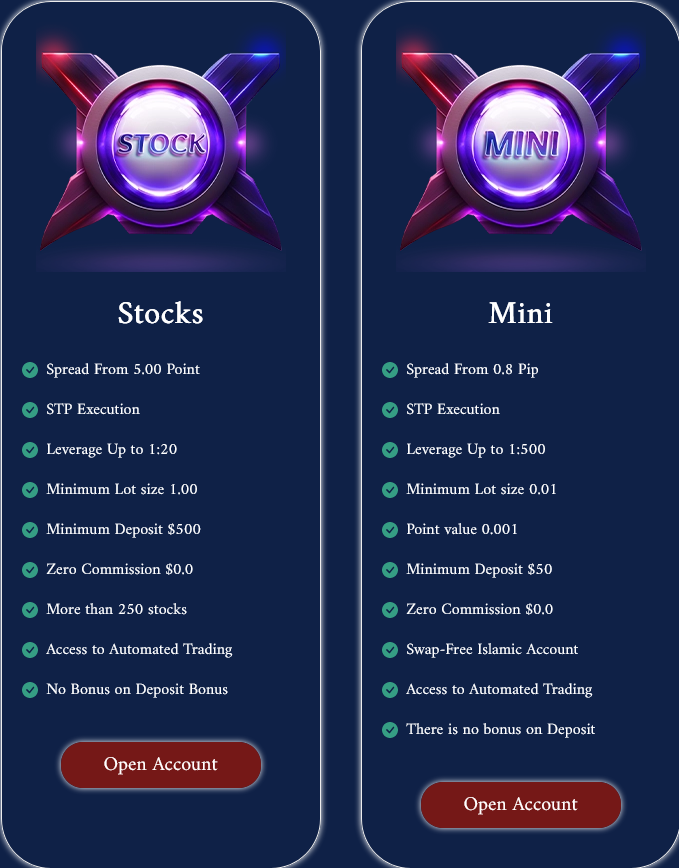
The broker offers a Mini Account, the terms of which are the same as those of a Standard Account, but the minimum deposit is 50 USD and presumably allows trading with smaller trade sizes than a standard lot.
Zero and INZO VIP accounts offer a different pricing model – a spread starting from zero and paying a fixed commission per traded lot. The Zero account has a commission of 8 USD per lot, while the Vip account offers a commission of only 4 USD per lot. But the Zero Account requires a minimum deposit of 5,000 USD and the VIP Account requires 50,000 USD. At most established brokers you will find trading accounts with similar terms and much lower minimum investment requirements.
Zero and INZO VIP accounts offer another pricing model – a spread starting from zero and paying a fixed commission per traded lot. The Zero account has a commission of 8 USD per lot, while the VIP account offers a commission of only 4 USD per lot. But the Zero Account requires a minimum deposit of 5,000 USD and the VIP Account requires 50,000 USD. At most established brokers you will find trading accounts with similar terms and much lower minimum investment requirements. In addition, INZO offers a lower maximum leverage with these accounts – up to 1:200 for Zero and only 1:50 for Vip.
Forex trading cost structures can significantly impact the overall profitability of trading strategies, especially for high-frequency traders. The two common pricing models – trading with only the spread versus trading with zero or raw spreads and a fixed commission – offer different advantages and might be preferred based on a trader’s style and goals.
Trading with оnly сpread model is straightforward and easy to understand, especially for beginners. Traders don’t need to calculate additional costs, as everything is included in the spread.: It’s generally more suitable for casual traders or those who trade less frequently. Since the cost is based solely on the spread, traders who aren’t opening and closing many positions in a short period may find this model more cost-effective. The total cost might not be as transparent, as the spread can vary widely depending on market conditions, and it may be difficult to ascertain how much of it is a markup by the broker.
Fixed commission accounts offer a very transparent fee structure and traders know exactly how much they will pay per trade regardless of the spread. This model is preferred by high-volume traders, such as scalpers and day traders, who benefit from lower spreads. The lower the spread, the quicker a trade can potentially become profitable, which is crucial in high-frequency trading.
The choice between these two models often depends on the trading strategy. A strategy that involves opening many trades in quick succession might benefit from the zero/raw spread model due to the lower cost per trade. Conversely, a strategy with fewer, longer-term trades might find the only-spread model more suitable and less costly overall. During volatile market conditions, spreads in the only-spread model can widen significantly, which can increase trading costs unexpectedly. In contrast, the raw spread plus commission model provides more predictability in terms of trading costs. It’s essential for traders to analyze not only the spread or commission costs but also other potential trading fees, such as swap/rollover charges, which can add up and affect profitability. Ultimately, the decision on which model to use should be based on a thorough analysis of one’s trading frequency, strategy, and cost implications. It might also be helpful to test both models under a demo account to see which one aligns best with personal trading habits and goals.
INZO offers a separate trading account for stock CFDs. This is unusual because most brokers integrate this type of trading with the other instrument types. This account requires a minimum deposit of 500 USD and awolles leverage up to 1:20.
All account types can use the functionality of the MetaTrader and cTrader platforms for automated trading. There is also an option to apply for a swap-free account, which is tailored to the requirements of the Muslim faith against interest.
INZO claims to offer a social trading service but provides absolutely no information on the terms and parameters. Copy trading, also known as social trading, is a form of trading that allows individuals to automatically copy positions opened and managed by another selected trader. This approach to trading enables less experienced traders to benefit from the insights and strategies of more seasoned traders by mirroring their trades in real-time.
INZO Deposit and Withdrawal Methods
As with everything else at INZO, the broker does not provide enough detailed information about depositing and withdrawing funds, and the little information available is contradictory. Available payment methods are cryptocurrencies, Visa and MasterCard credit/debit cards, Perfect Money, Payeer, Voucherry and bank transfer via Asia Bank. We also see a WesternUnion logo on the homepage of the website, but this option is not available in the deposit menu.
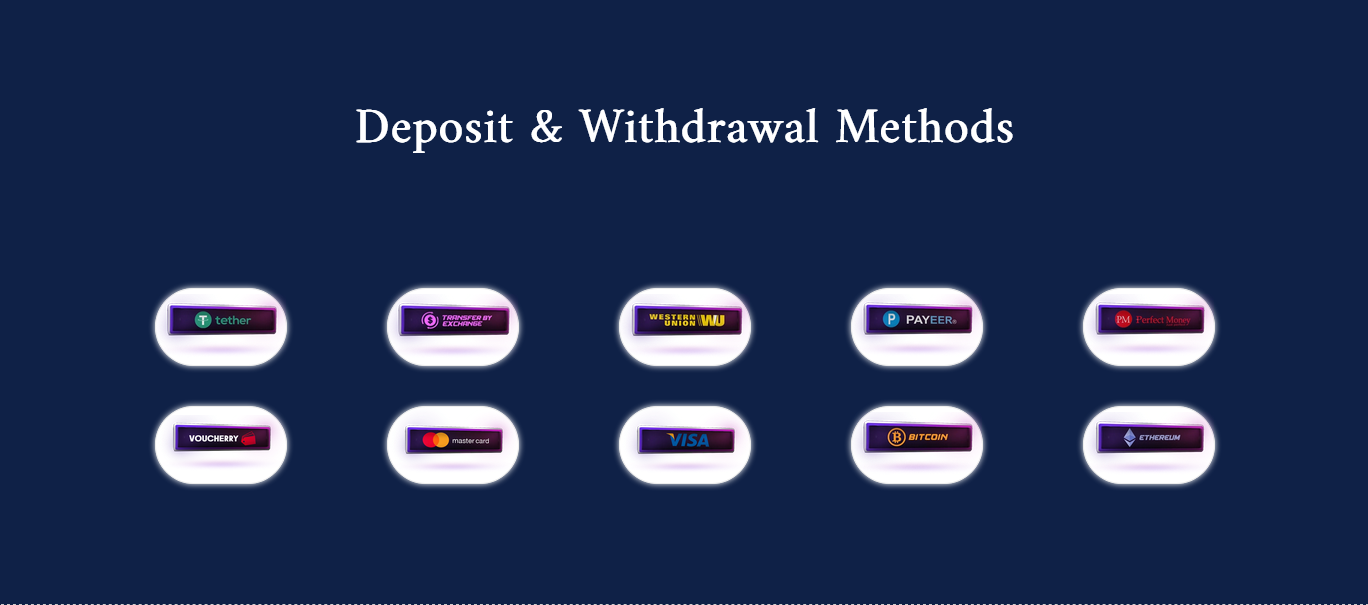
Nowhere do we find information about transaction fees, minimum and maximum deposit and withdrawal amounts, estimated transaction processing time.
It is also unclear whether all methods available for deposit can also be used for withdrawal. In the Terms and Conditions we find a standard disclaimer that when withdrawing via credit/debit card, the maximum withdrawal amount is equal to the deposit made via that card. Other funds, such as profits, must be withdrawn via other methods.
Established brokers offer a wider range of globally established and locally specific payment methods. More importantly, if you are a client of a legitimate and reputable company you can expect clear and detailed information regarding all terms and conditions associated with transactions to and from your trading account.
Given the legal ambiguity surrounding INZO, we’re not sure this broker won’t surprise you with hidden fees and administrative traps to prevent you from withdrawing your money.
| Deposit method | Minimum | Maximum | Processing time | Fee |
| Credit/Debit Card | Unspecified | Unspecified | Unspecified | Unspecified |
| Crypto | Unspecified | Unspecified | Unspecified | Unspecified |
| Perfect Money | Unspecified | Unspecified | Unspecified | Unspecified |
| Bank | Unspecified | Unspecified | Unspecified | Unspecified |
| Withdrawal method | Minimum | Maximum | Processing time | Fee |
| Credit/Debit Card | Unspecified | Unspecified | Unspecified | Unspecified |
| Crypto | Unspecified | Unspecified | Unspecified | Unspecified |
| Perfect Money | Unspecified | Unspecified | Unspecified | Unspecified |
| Bank | Unspecified | Unspecified | Unspecified | Unspecified |
INZO Bonuses and promotions
Most financial regulators prohibit licensed brokers from offering bonuses, promotions and prize games. There are various reasons for this, including because bonuses can encourage riskier market behaviour by traders and that the terms and conditions attached to promotions can be misleading and restrict a trader’s ability to manage their funds. However, many offshore brokers do offer bonuses, and this is also the case for INZO.
At the time of writing this review, the broker offers two types of bonuses – a Welcome Bonus of 30 USD and a Deposit Bonus of 30%. But these bonuses are only available for traders using a Standard account. The maximum deposit Bonus is up to USD 5000.
The welcome bonus allows you to start trading without having deposited your own funds, but your leverage is limited to 1:100. After depositing funds, the broker increases the maximum leverage for your account to 1:500.
The bonus funds themselves cannot be withdrawn. The minimum amount of the profit generated by using the Welcome bonus that the trader can withdraw is USD 70. Withdraw funds from account or internal transfer bring cancellation of the bonus. Bonus will be canceled in proportion to the size of the balance at time of withdrawal.
| Bonus | Min deposit | Max bonus | Required turnover | Cash out limit |
| Welcome Bonus | Unspecified | $30 | Unspecified | $70 |
| Deposit Bonus | Unspecified | 30% | Unspecified | Unspecified |
INZO Tools and Education
Leading forex and CFD brokers try to provide their clients with much more than basic trading functionality. The big brands provide a plethora of additional tools and information resources aimed at both novice investors and professional traders. These resources include educational materials such as articles, e-books, video training, webinars and seminars. Major brokers have their own teams of experts who produce technical and fundamental analysis, articles and market commentary. Additional tools typically include forex calculators that make it easy to calculate all the parameters related to the order the trader is considering, interactive economic calendars, trading signals and trading software extensions. INZO on the other hand does not even have its own mobile app.
The only educational materials on the INZO website are training videos on the basics of forex trading. These videos are only available in Arabic.INZO offers no additional tools beyond an extremely basic economic calendar.
Conclusion
The only thing that can be pointed out as a positive of this broker is the presence of two established trading platforms. But everything else that can be pointed out about INZO are shortcomings – the broker has no license, no quality website and mobile app, no basic services and features like multiple Demo accounts, and most importantly, no clarity on trading parameters and withdrawal terms. Spreads and commissions seem competitive, but firstly it is unclear how well the advertised levels and Demo accounts match the actual trading, and secondly there are many other reputable brokers that offer even more favorable terms.
Notes from the author:
I find it quite difficult to point out how INZO differs from the countless outright scams disguised as forex brokers. The availability of licenses to use both the industry's most popular trading platform MetaTrader 5 (MT5) and its most established competitor cTrader cannot make up for the lack of a forex broker license from a respected regulatory institution.
And as if it wasn't bad enough that INZO is officially run by a completely unregulated offshore company, when you register an account you are asked to agree to a document that is on behalf of a completely different company and a different brand. Seems unnecessary to explain why you shouldn't put your money on the line if you have no idea who exactly you're dealing with.
User reviews of this broker that you can find online are divided into two types - negative reviews from people complaining that INZO is preventing them from withdrawing their money, and super positive reviews that are so obviously fake and AI generated that it's kind of embarrassing.
The website is ridiculously inadequate to modern standards in terms of appearance and functionality. While there are provisions for multiple accounts in the Terms and Conditions, in practice each Demo or Live account requires a separate registration with a different email.
Although spreads and commissions seem low and competitive, I don't have any confidence that spreads in real trading match those seen in Demo accounts. INZO does not provide basic information such as average spreads and a complete list of tradable instruments, let alone a more detailed breakdown of trading parameters.
INZO is clearly designed for clients from countries like Iraq, but mostly seems to target people who don't have much experience and knowledge about financial trading. There's really no good reason to choose INZO when more credible and proven brands are available.


