





4T Review
Generally an offshore broker does not mean an untrustworthy broker. All major brands have offshore divisions and some fully offshore brokers also maintain a high level of service. However, the case of 4T is different. This broker gives us plenty of reasons to be suspicious, even though it has a license from a fairly respected offshore jurisdiction and is part of a holding company operating in Europe. In theory, 4T offers the MT4 and MT5 trading platforms as well as its own mobile app. But in practice, the broker has no branded and configured trading platforms, it is not possible to log into a МТ5 Demo account, and the mobile app has not been updated for two years. Again, in theory, the broker offers two types of trading accounts with a different pricing model, which is the industry standard. But in practice, the ECN account requirements are so high that no one could or would want to meet them. Leverage is lower than usual for an offshore broker, and the tradable instruments are few and do not cover all major asset classes. In a lot of ways, this doesn’t seem like a credible broker. But as long as 4T accepts clients, we’ll do a detailed review so you can make an informed decision about whether to be one.
4T Licenses and Regulation
The company that operates this broker is called 4T Limited and is authorised and regulated by the Seychelles Financial Services Authority (FSA) under license number SD058. According to information on the website, this company is part of a holding group that includes companies in Cyprus, Switzerland and Dubai. But the brokerage business is carried out by the offshore legal entity.
When deciding whether to trade through an offshore forex broker based in Seychelles and licensed by the Seychelles Financial Services Authority (FSA), a trader must carefully evaluate the regulatory environment, potential risks, and benefits. Seychelles has become a popular offshore jurisdiction for forex brokers due to relaxed financial regulations, ease of company registration, and lower capital requirements, making it attractive for brokers seeking a more flexible operating environment. However, the level of investor protection and oversight provided by the Seychelles FSA is considerably lower compared to tier-1 regulatory authorities such as the Australian Securities and Investments Commission (ASIC) or the Cyprus Securities and Exchange Commission (CySEC) under EU regulations.
One of the primary concerns with Seychelles-licensed brokers is the lack of stringent client fund protection measures. Unlike EU, UK, or Australian-regulated brokers, which must comply with strict capital requirements, risk management policies, and fund segregation rules, brokers in Seychelles operate under a looser regulatory framework. The Seychelles FSA does not impose mandatory participation in investor compensation schemes, meaning that in the event of broker insolvency, traders have no recourse to recover their funds. In contrast, brokers regulated by CySEC in the EU are required to participate in compensation schemes such as the Investor Compensation Fund (ICF), which covers losses up to €20,000 per trader, while ASIC-regulated brokers must adhere to strict financial reporting and client fund segregation rules.
Another key difference lies in trading conditions and transparency. Brokers in Seychelles are not required to follow best execution policies, meaning there is less oversight on order execution quality, pricing transparency, and potential conflicts of interest. In contrast, ASIC and EU-regulated brokers must ensure fair order execution, prevent price manipulation, and provide clear risk disclosures. The lack of regulatory enforcement in Seychelles increases the risk of slippage, widening spreads, or hidden fees, particularly with brokers operating on a dealing desk (market maker) model.
Despite these risks, Seychelles brokers offer certain advantages, particularly in terms of trading flexibility and leverage. While EU and ASIC-regulated brokers are restricted to a maximum leverage of 1:30 for retail traders, offshore brokers in Seychelles often provide leverage of 1:500 or higher, allowing traders to take larger positions with smaller margin requirements. This can be appealing for experienced traders, scalpers, and high-frequency traders looking to maximize capital efficiency, but it also amplifies trading risk, making it easier to incur significant losses.
Another benefit of Seychelles-based brokers is the lack of restrictions on trading strategies. Many highly regulated brokers impose limitations on scalping, hedging, and Expert Advisors (EAs) to comply with local regulations or their own risk management policies. Offshore brokers in Seychelles typically allow all trading styles, making them attractive to traders who require greater operational freedom. Additionally, some traders are drawn to Seychelles brokers due to simpler account registration processes, reduced KYC (Know Your Customer) requirements, and support for cryptocurrency deposits and withdrawals, which may not be as readily available with tier-1 regulated brokers.
However, trading with a Seychelles-licensed broker also comes with significant risks, particularly concerning fund security, withdrawal reliability, and legal recourse. If a dispute arises between a trader and the broker, the Seychelles FSA has limited enforcement powers, meaning traders may struggle to resolve issues such as withdrawal delays, account restrictions, or unfair trade executions. In contrast, traders dealing with ASIC or EU-regulated brokers have access to financial ombudsman services that can help mediate disputes and ensure brokers adhere to ethical business practices.
Ultimately, choosing a Seychelles-based broker comes down to a trader’s risk tolerance and trading priorities. Those who prioritize fund safety, regulatory oversight, and legal protections are better off choosing a tier-1 regulated broker in jurisdictions like Australia or the European Union. However, traders seeking higher leverage, fewer trading restrictions, and lower entry barriers may find Seychelles brokers a viable alternative, provided they conduct thorough due diligence. It is essential to verify the broker’s reputation, withdrawal policies, and transparency before committing funds. Regardless of regulatory status, traders should never deposit more money than they can afford to lose, especially when dealing with offshore brokers that offer limited investor protections.
4T Trading Software
4T claims to offer the MetaTrader 4 and MetaTrader 5 trading platforms. This is an industry standard combination that calls for the implementation of a variety of trading strategies. But brokers using these platforms offer branded versions of the software configured for the respective broker. There are no links on the 4T website to download an installation file for the desktop versions of both platforms. When registering for a Demo account, you will receive an email that contains a link for the generic version of the software, which can also be downloaded directly from the website of the developer Metaquotes.
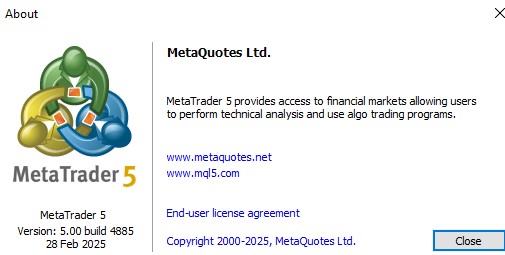
In addition to that, the link is for the MetaTrader 5 platform, even if you have registered a MetaTrader 4 account. 4T lists names of trading servers, but we were not able to log into them through the desktop version of the platforms.
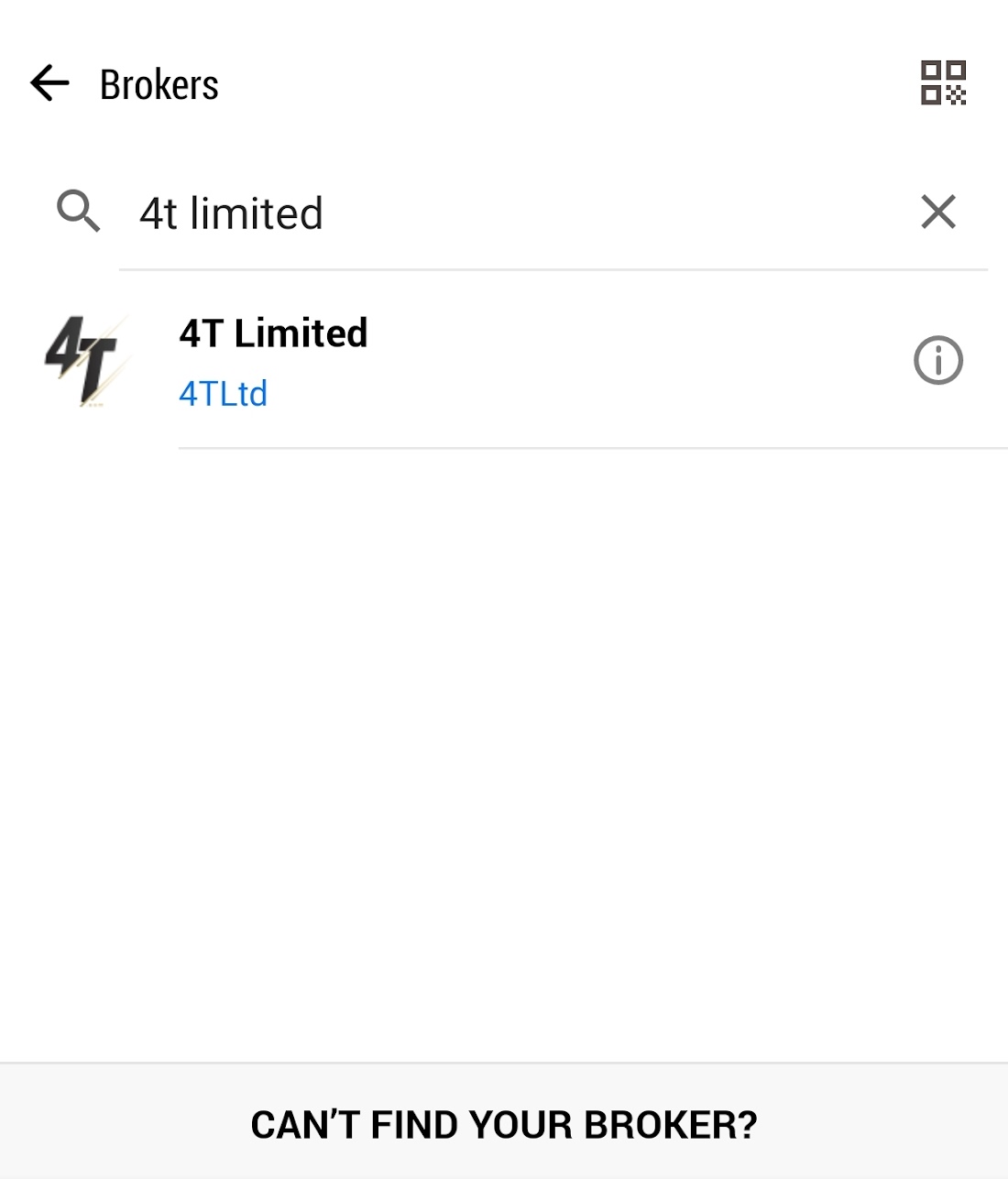
The MT4 mobile app allows logging into a live and demo account for that broker, but in the MT5 mobile app we find only one server associated with that broker – i.e. no Demo server for that platform.
MetaTrader 4 (MT4) and MetaTrader 5 (MT5) are two of the most widely used trading platforms in the forex and CFD industry, developed by MetaQuotes Software. These platforms have established themselves as the standard in forex trading due to their robust functionality, user-friendly interface, advanced charting tools, and support for automated trading strategies. MT4, released in 2005, quickly gained popularity among traders for its stability, efficiency, and powerful customization options. Despite the introduction of MT5 in 2010, many traders still prefer MT4 due to its simplicity, widespread broker support, and compatibility with a massive ecosystem of custom indicators and Expert Advisors (EAs).
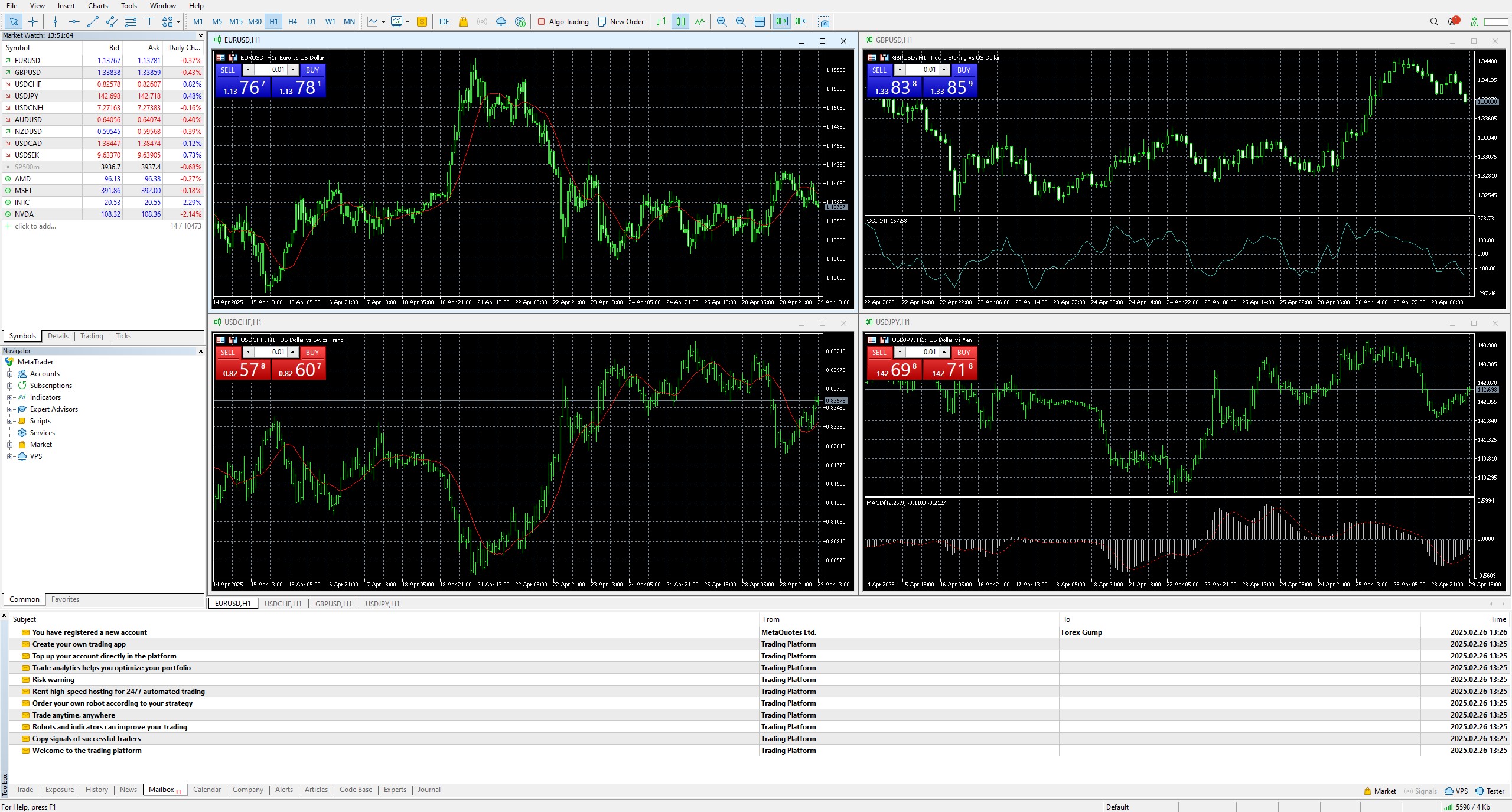
One of the main advantages of MT4 and MT5 is their flexibility and adaptability to different trading styles. Both platforms offer advanced technical analysis tools, multiple order types, and support for algorithmic trading, making them suitable for manual traders, scalpers, swing traders, and those using automated strategies. Additionally, their broad adoption by brokers ensures that traders have access to a wide range of liquidity providers, reducing issues like slippage and order execution delays.
While MT5 was designed as a more advanced multi-asset trading platform, supporting not only forex and CFDs but also stocks, commodities, and futures, it has faced slower adoption among forex traders. The key technical differences between the two platforms include MT5’s improved order execution speeds, additional order types, expanded timeframes, built-in economic calendar, and market depth (DOM) functionality. MT5 also supports hedging and netting, whereas MT4 was initially designed only for hedging. The MQL5 programming language used in MT5 allows for more complex and efficient coding, but it is not backward-compatible with MQL4, which is used in MT4. This has made it difficult for traders who rely on custom indicators and EAs built for MT4 to transition to MT5, as they would need to rewrite or repurchase their existing trading tools.
Both platforms are available in desktop, web, and mobile versions, each offering different levels of functionality. The desktop version provides the most comprehensive trading experience, allowing traders to use custom indicators, EAs, and advanced charting tools. The web version is a lightweight alternative that enables traders to execute trades and analyze markets without requiring software installation, but it lacks full support for automated trading and custom scripts. The mobile versions, available on iOS and Android, offer basic trading functionalities, such as market execution, pending orders, and limited charting tools. However, mobile users cannot run automated trading strategies (EAs), making these versions more suitable for monitoring trades rather than strategy development or in-depth analysis.
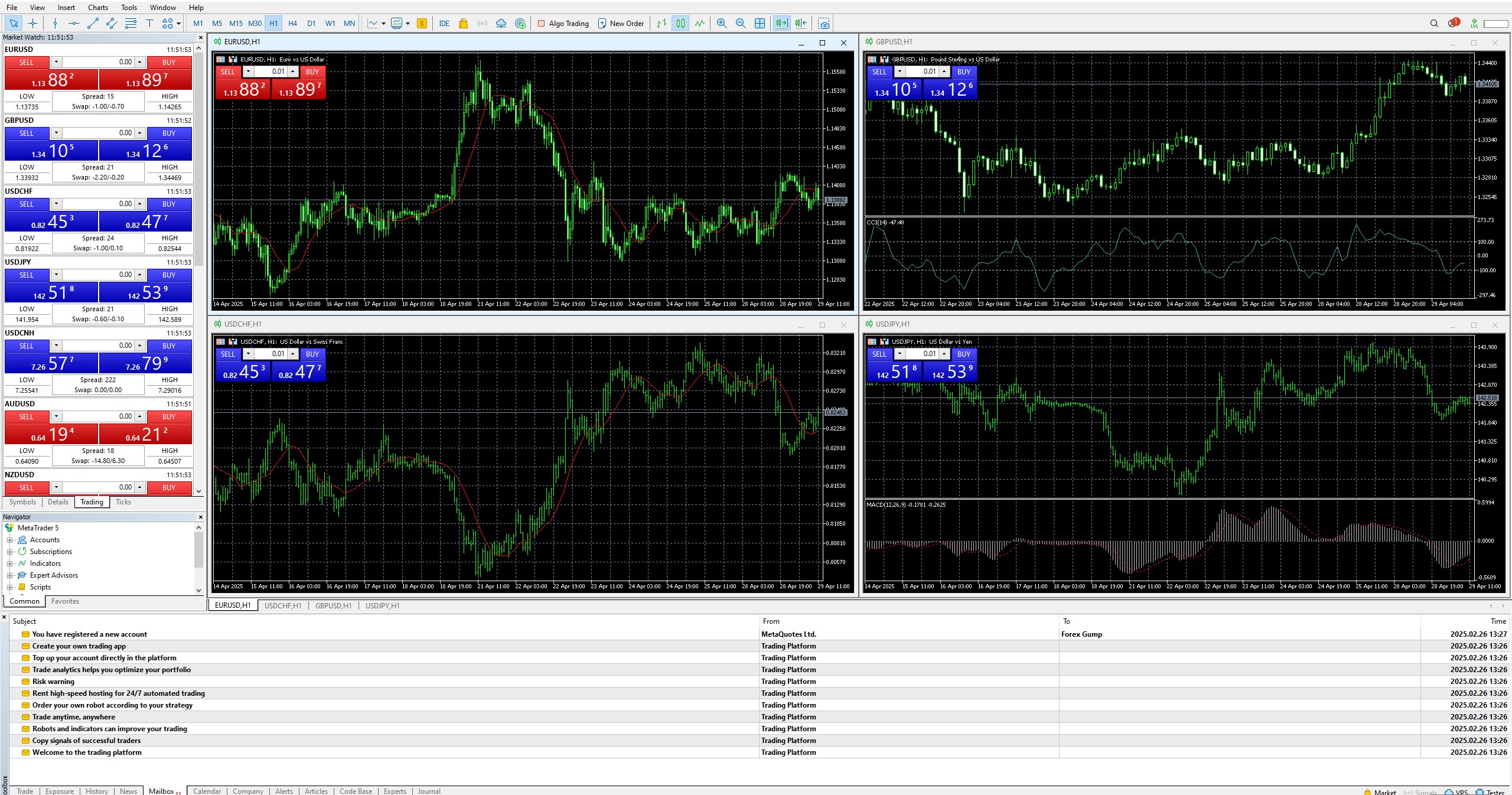
Despite MT5’s technical improvements, many traders continue to favor MT4 due to its familiarity, stability, and the vast ecosystem of third-party tools that have been developed over the years. Since many brokers still support MT4 and offer optimized trading conditions on the platform, traders see little incentive to migrate to MT5. Additionally, the lighter system requirements of MT4 make it preferable for traders operating on low-spec hardware or unreliable internet connections.
Ultimately, while MT5 is a more advanced platform with better execution speeds, expanded asset support, and improved scripting capabilities, MT4 remains the go-to choice for many retail forex traders. The decision between the two platforms depends on a trader’s specific needs, programming preferences, and the availability of custom trading tools.
Full use of the automated trading capabilities of the MetaTrader 4 and 5 platforms require the use of a Virtual Private Server (VPS). This allows EA scripts to function 24/7 without being dependent on the trader’s hardware and internet connection. Some brokers offer their own VPS services or assume the subscription fees of clients who meet certain deposit capital and/or trading volume requirements. But 4T is not one of them.
4T has its own mobile app available for Android and iOS devices. But at the time of writing this review, the last app update was as of May 2023. Such lack of support is very suspicious and brings security risks. In addition to this, the mobile app did not accept the login credentials for the account registered for the purpose of this review.
4T Account types and trading conditions
The 4T continues to disappoint and baffle on the terms of trade as well. As is the case with the trading software, at first glance things appear standard, but in practice we encounter significant problems.
After initial registration we were given access to the dashboard on the website, but there is no option to create Demo accounts. The Demo account requires a separate registration, which does require a different email address if you have already registered a friend live or demo account. When configuring an account you have a choice between the MT4 and MT45 platforms, but as stated in the trading software section, 4T does not actually have a Demo Server for the MT5 platform.
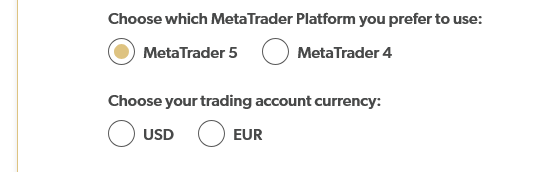
The tradable instruments are quite few in number and include a limited variety of assets – major currency pairs, gold, silver, energy, indices and EU and US equities. Base currency can be USD, EUR or GBP.
The main page of the website does not mention different account types. As mentioned, there is also no such choice when creating a live or demo account. But in one of the subsections of the website we find a description of two types of trading accounts. One is a Standard account, requiring a minimum deposit of 100 USD. When using this type of account the trader pays only a floating spread. 4T promises a spread of 1 pip for the benchmark currency pair EUR/USD. When using an MT4 demo account we did see a spread of 1 pip, which is a bargain but not a very competitive trading cost.
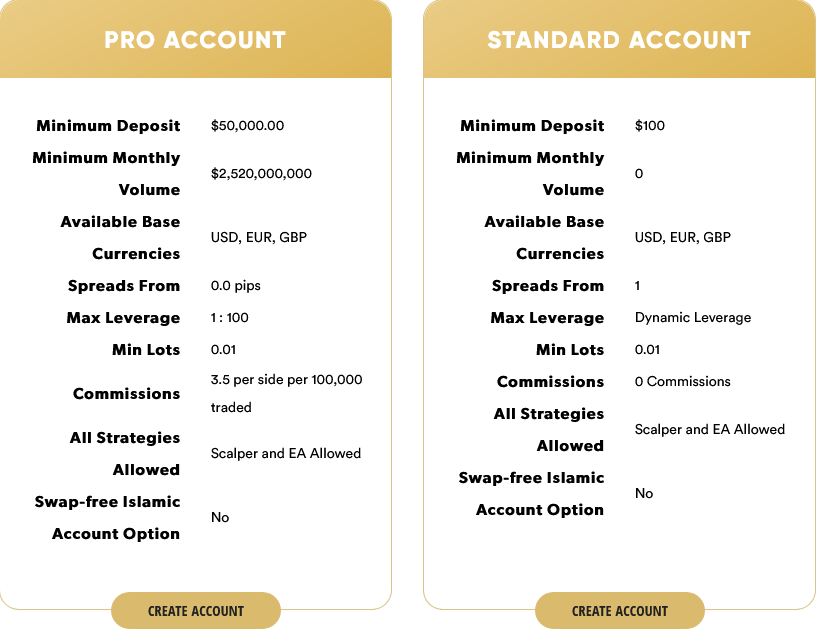
The other account type is the Pro account. This type of account offers a raw spread starting at 0 pips, but the trader pays a flat commission of 3.5 USD per side per lot, or 7 USD per lot traded. Again, this is a typical but not particularly low cost trade. The problem with this type of account is the ridiculously high minimum deposit specified by 4T – 50,000 USD. In addition to this, there is a minimum monthly trade volume requirement of over 2.5 million USD. These types of accounts are designed for a more professional type of client and sometimes brokers require a higher threshold to enter – but almost never is the required minimum deposit over 500 USD.
Generally when choosing between a floating spread account and an ECN account with a fixed commission, a forex trader must consider their trading strategy, cost structure, market conditions, and execution requirements. Floating spread accounts are well-suited for casual traders, beginners, and swing traders who hold positions for longer periods and are not as sensitive to minor variations in spreads. ECN accounts are particularly suitable for scalpers, day traders, and algorithmic traders who rely on high-speed execution and precise trade entries. Since these traders open and close multiple positions within a short period, having consistently tight spreads and fixed commission costs helps maintain more predictable expenses. Additionally, ECN trading often features better trade execution with lower slippage, making it ideal for strategies that require fast order processing and access to real market liquidity.
But in practice, 4T does not offer a choice between two types of poop. If at all a trader decides to be a client of this broker, there is no reason to invest tens of thousands of dollars for a Pro account. A forex broker that offers only one type of account with a floating spread presents a unique mix of potential advantages and disadvantages that traders should evaluate in the context of their own trading strategies, preferences, and experience level. One of the primary advantages of this model is its simplicity. Traders do not need to choose between multiple pricing structures or compare commission rates against raw spreads, which can be confusing for beginners. The cost structure is transparent in the sense that all trading fees are included within the spread, eliminating the need to calculate additional commissions per trade. If the broker in question consistently offers extremely low floating spreads—even approaching zero during liquid market conditions—this can be cost-effective for many traders, particularly swing traders or those who trade infrequently and prefer a straightforward fee model.
Another advantage lies in accessibility. Brokers with only one account type often have lower minimum deposit requirements, making them more appealing to new or casual traders who want to start small. The absence of ECN-style pricing also means that there are fewer technical complexities, such as variable commission fees, potential slippage from routing orders through external liquidity providers, or differences in execution speed and depth of market visibility. A single account type ensures a uniform trading experience for all clients, which can lead to a more cohesive support system and fewer discrepancies in client expectations.
However, this simplicity comes with limitations. The main disadvantage of a broker that does not offer ECN-style accounts with raw spreads and fixed commissions is the lack of flexibility for professional or high-frequency traders who require tighter control over costs and execution quality. While floating spreads can be very low under normal market conditions, they are also highly variable and tend to widen during periods of volatility, low liquidity, or major news events. For traders who operate with precision, such as scalpers or algorithmic traders, this unpredictability can increase transaction costs and reduce profitability. In contrast, ECN accounts provide raw spreads with a known commission, allowing for more accurate cost calculations regardless of market fluctuations.
Another potential drawback is that brokers who only offer floating spreads typically act as market makers, which may raise concerns among more experienced traders about conflicts of interest. Although many regulated brokers operate transparently and fairly even with a dealing desk model, some traders prefer ECN environments for the perceived neutrality of direct market access, where trades are matched with liquidity providers rather than being handled internally.
Ultimately, the value of a broker offering only one account type with a floating spread depends on the quality of their execution, the consistency of their spreads, and the specific needs of the trader. For those who value simplicity, low costs, and an easy-to-understand pricing model, this setup can be highly appealing. On the other hand, traders who need execution precision, stable cost structures, and professional-grade features may find the absence of ECN accounts limiting. The decision should be based on the trader’s style, capital size, frequency of trading, and sensitivity to variable costs under changing market conditions.
As an offshore broker 4T can offer higher leverage to its competitors based in highly regulated jurisdictions. According to the descriptions of the account types, the maximum leverage offered is indeed ten times higher than is called for in the EU or Australia – 1:300. Elsewhere on the website, however, we have seen a level of 1:400 indicated. But most offshore brokers offer even higher leverage of 1:500, 1:1000 or even more.
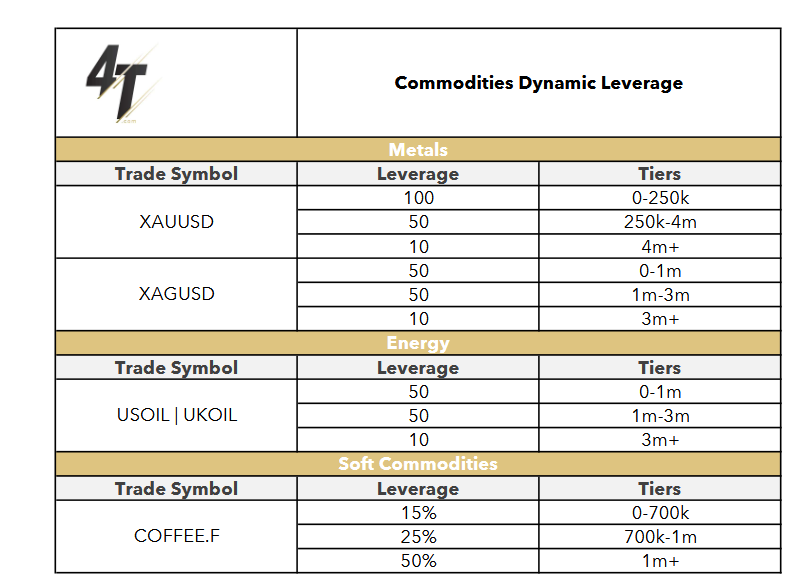
4T applies dynamic leverage formulas depending on the asset type and size of the account exposures. The maximum level of 1:400 applies to major currency pairs and accounts with leveraged positions of up to 200,000 currency units. For exposures of more than 8 million, the maximum leverage is lowered to 1:10. For index trading the maximum level is 1:300, for equity trading it is 1:10 and for commodity trading it is 1:100 or 1:50 depending on the asset traded.
4T charges a rather high monthly inactivity fee of 50 USD. The account starts to be considered inactive after 12 months of no transactions.
4T Deposit and Withdraw Methods
On the homepage of 4T we see a statement that the broker allows transactions with bank transfer, credit/debit cards and Skrill e-wallet. However, this option is missing in the deposit menu and in the detailed description of deposit and withdrawal methods. Most established brokers transact not only with established e-wallets, but also with regionally popular payment processors and unconventional methods such as cryptocurrencies.
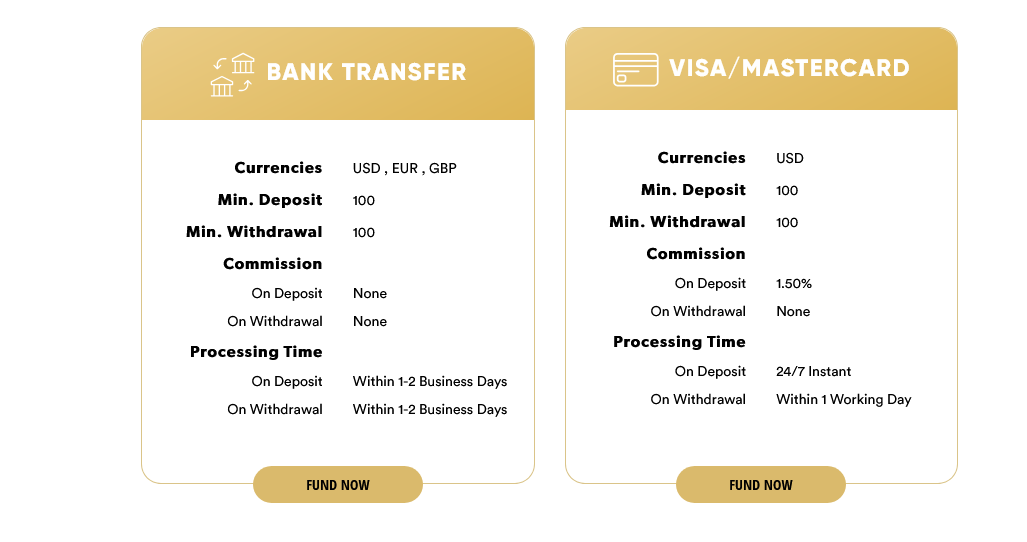
The minimum deposit and withdrawal amount with both available payment methods is 100 currency units. 4T states that it does not charge withdrawal fees, but there is a 1.5% fee when depositing with a credit/debit card
| Deposit method | Minimum | Maximum | Processing time | Fee |
| Bank | $100 | Unspecified | up to 24 hours | Free |
| Credit/Debit Card | $100 | Unspecified | Instant | 1.5% |
| Withdrawal method | Minimum | Maximum | Processing time | Fee |
| Bank | $100 | Unspecified | up to 48 hours | Free |
| Credit/Debit Card | $100 | Unspecified | up to 48 hours | Free |
4T Bonuses and Promotions
Offshore brokers often take advantage of the lack of regulatory restrictions to offer their clients various promotions such as welcome bonus, deposit bonuses, cashback, prize games, trade competitions or loyalty programs. At the time of writing this review, 4T only offers a deposit bonus with rather infuriating and in some ways vague terms.
According to the description on the website, 4T offers a first deposit bonus of 500 USD. However, the text of the Bonus Terms and Conditions specifies a minimum deposit of 100 USD, without requiring it to be a first deposit. The terms also include some very atypical restrictions. Not only is the promotion time-limited, but it is only valid for the first 100 customers who opt-in.
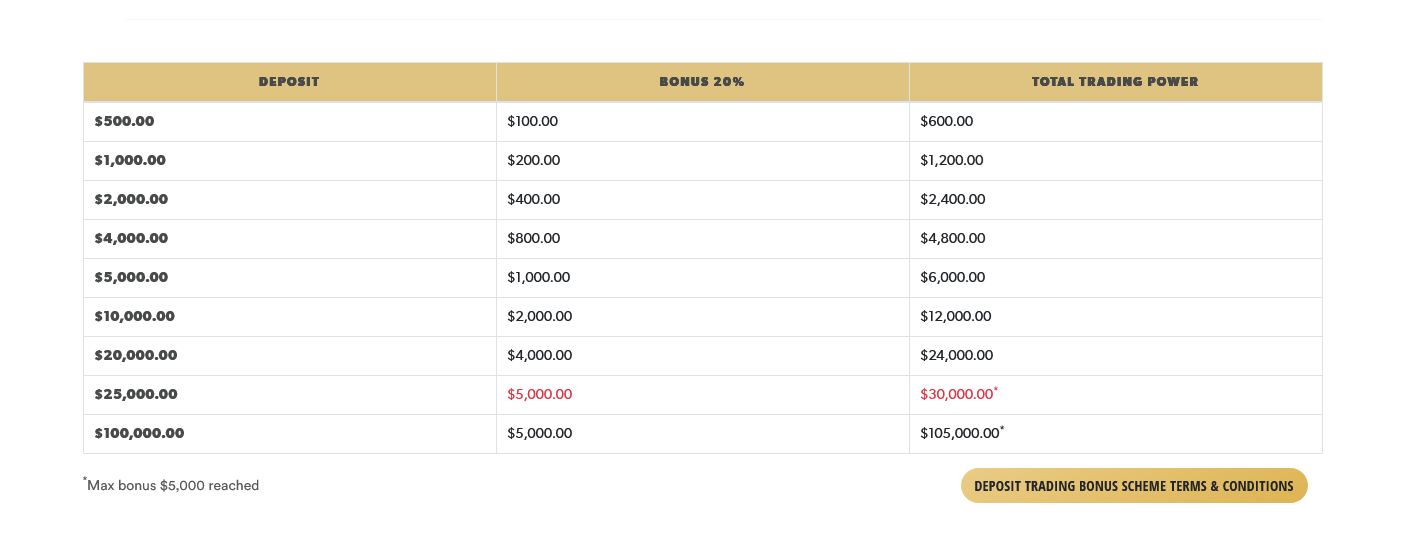
The bonus amount is 20% of the deposit, which is quite modest. Bonuses in the industry are often 100% or 200%. The maximum bonus amount is 5,000 USD.
The Bonus amount is credited in the Client’s trading account and cannot be withdrawn. Any withdrawal made from a Client’s trading account whereby a bonus was granted, will result in the full cancellation and removal of the Bonus. In case the account Balance equals zero or goes negative, the full credit will be withdrawn. In case a Client has previously opted in and has already received a bonus or promotion, then they will only be able to opt into this Bonus scheme if the Client opts out from the previous promotion or opens a new trading account and makes a new deposit of a minimum of USD 100 (or other equivalent currency).
| Bonus | Min deposit | Max bonus | Required turnover | Cash out limit |
| Deposit Bonus | $500 | $5000 | Unspecified | Unspecified |
4T Tools and Education
4T does not offer any research and analytical resources or additional tools. Educational materials are limited to basic definitions of forex trading. A forex broker that does not offer research resources places its traders at a disadvantage, particularly beginners and those looking to refine their trading strategies. Without access to structured learning materials such as trading guides, webinars, video tutorials, and market analysis, novice traders must seek information elsewhere, which can lead to misinformation or reliance on unreliable sources. Education is a critical component of success in forex trading, as understanding technical analysis, risk management, trading psychology, and fundamental market drivers helps traders make informed decisions rather than relying on guesswork.
Beyond education, the absence of research tools such as economic calendars, market news updates, trading signals, and sentiment analysis means traders may struggle to stay ahead of market movements. Many brokers provide these tools in partnership with leading research firms like Trading Central or AutoChartist, offering insights that help traders identify opportunities and manage risk more effectively. Without such tools, traders must rely on external sources, which may not be conveniently integrated into their trading platform, leading to delays in decision-making and potential missed opportunities.
For advanced traders, the lack of in-depth research reports, technical indicators, and real-time market commentary reduces their ability to conduct comprehensive market analysis. Many professional traders depend on institutional-grade research to validate their strategies, and without access to these resources, they may face increased uncertainty in their trades. Additionally, the absence of sentiment analysis or algorithmic insights can put traders at a disadvantage when trying to anticipate market reactions to key economic events.
Brokers that offer educational content and research tools not only help traders develop their skills but also foster a sense of trust and credibility. A broker that neglects these aspects may indicate a lack of commitment to client success and long-term trader retention, suggesting that their focus is solely on executing trades rather than supporting traders in making informed decisions. This can make such brokers less attractive, particularly when many competitors provide extensive educational resources, market analysis, and real-time data as part of their service offering.
Notes from the author:
The only reasons we decided to write a review for 4T are that this broker has a license, albeit from an offshore zone, is associated with financial companies in regulated jurisdictions, offers advanced trading platforms, and has its own mobile app. In most cases, these would be sufficient indicators that this broker is credible. But 4T is not actually credible. In fact, we have serious doubts about whether this is a real broker. Although it has trading servers that can be accessed via the MetaTrader mobile apps, the broker does not have branded and configured desktop versions of the trading software. The mobile app has not been updated for two years. One of the two account types offered has completely absurd minimum deposit and minimum trading volume requirements. The available trading instruments and payment methods are very limited. The trading cost is not impressive, the leverage is lower than that offered by other offshore brokers, and the bonuses are not worth mentioning. Perhaps in the past, 4T was a reliable broker with ambitions for growth. Now, however, it looks more like a scam than a reputable financial services provider.


