



XBTFX Minimum Deposit
XBTFX gives you a choice of which of the two companies to become a customer of when you sign up – one is based in Antigua and Barbuda and the other in the Seychelles. The types of accounts you can trade with differ depending on which brokerage you are a client of. XBTFX Antigua and Barbuda offers a classic choice between a Standard account, where the trader pays a floating spread, and an ECN account, where the spread is raw and can be as low as zero, but a fixed commission is paid. Both accounts require a minimum deposit of only 10 USD, which is quite low, especially for ECN type accounts.
XBTFX Seychelles clients do not have access to a Standard account. They can only start trading with an ECN account using the cTrader platform. However, clients of the Seychelles company can upgrade to an ECN Gold account if they deposit over 25,000 USD. It’s hard to say that this is worth it, as far as the only difference is the lowering of the commission to 2.5 USD per side per lot.
Whether you’re just beginning your trading journey or you’re an experienced investor exploring a new broker, it’s wise to start with a moderate investment. Trading with a smaller amount helps limit potential losses, especially in the highly volatile forex market where prices can shift rapidly. This cautious approach reduces the risk of significant financial setbacks while giving you valuable real-world experience.
By starting small, you gain insight into trading strategies, market behavior, and your own emotional responses to both gains and setbacks. It’s an opportunity to learn without putting a large portion of your capital at risk. This practical exposure also helps refine your trading methods, allowing you to observe how different strategies perform under actual market conditions without the pressure of substantial losses.
Moreover, since forex trading often involves leverage—which can magnify both profits and losses—a smaller initial investment gives you the chance to understand and manage leverage effectively. It serves as a safeguard against scenarios where losses could surpass your original deposit.
If you’re already managing a diverse investment portfolio, a small forex position can be a low-risk way to test how this type of trading fits into your broader financial strategy. As your understanding deepens and your confidence grows, you can scale your investments accordingly, making informed adjustments that align with your evolving goals. Starting small isn’t just about safety—it’s a smart, strategic step toward becoming a more skilled and adaptable trader.
XBTFX is a broker focused on cryptocurrencies, and this is evident in the payment methods through which you can deposit and withdraw funds. XBTFX allows transactions with all cryptocurrencies that can be used as base currency for trading accounts.
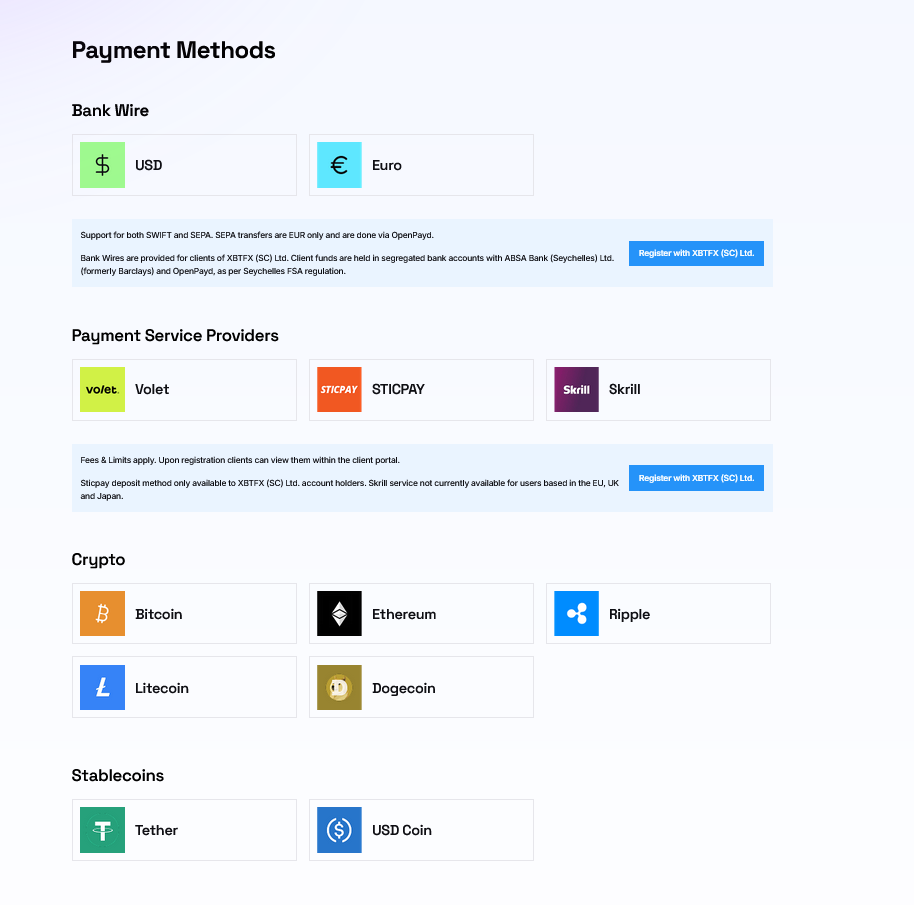
If you want to make a transaction to or from a USD or EUR account, the choice is between credit/debit cards, bank transfer or Skrill and Volet e-wallets.
The website claims that bank transfer is only available to customers of the Seychelles company. But in fact it is the other way around – these customers do not have such an option in the deposit menu. If you are a customer of the Seychelles company and you want to make a deposit or withdrawal in USD rather than in cryptocurrency, the choice of payment method comes down to Skrill and Stickpay.
When deciding how to deposit funds into a forex trading account, it’s important to weigh several essential factors to ensure the chosen payment method aligns with your needs for convenience, cost, security, and transaction speed.
Security should be a top priority—your selected method must offer robust protection for both your funds and personal information. Speed is also critical, especially in a fast-moving market like forex, where the ability to make instant deposits can mean seizing a timely trading opportunity.
Cost is another key consideration. It’s not just about the fees charged by the payment provider; brokers may also impose additional charges depending on the method used. Be mindful of any hidden costs, including currency conversion fees if your method doesn’t support your trading currency directly.
Additionally, while some payment options are quick and easy for deposits, they may be slower or more complex when it comes to withdrawals. Opting for a method that offers a smooth process for both types of transactions can save time and reduce frustration. Accessibility is also important—your payment method should be convenient and straightforward, without involving unnecessary steps or complications.
Finally, make sure the method complies with both local and international financial regulations. Choosing a reliable and legally compliant payment option not only enhances your overall trading experience but also helps avoid potential legal or operational issues in the future.
Using cryptocurrencies to deposit funds into a forex trading account is an increasingly popular option that brings a unique mix of advantages and challenges. As this method continues to gain traction, it’s essential for traders to understand both its potential and its risks before choosing it as a funding solution.
One of the standout benefits of cryptocurrency transactions is their speed. Transfers are often completed much faster than traditional bank wires, allowing traders to fund their accounts quickly and respond to market opportunities without delay. Transaction fees are generally lower, particularly for international transfers, making crypto a cost-effective choice compared to conventional banking methods. Since cryptocurrencies operate on decentralized networks, transactions can often be completed without involving banks or intermediaries, which may reduce paperwork and streamline the process. This global nature also eliminates the need for currency conversion, making cross-border payments simpler and more efficient.
Another advantage is the finality of crypto transactions. Once confirmed, they cannot be reversed, protecting recipients from chargebacks or payment disputes that sometimes arise with credit card deposits. However, this irreversible nature also adds a layer of risk if errors occur during the transfer.
That said, cryptocurrencies come with notable downsides. Their value can be highly volatile, meaning the amount deposited might fluctuate significantly in fiat terms before it’s credited to the trading account. Regulatory uncertainty is another concern. The legal status of cryptocurrencies varies widely across countries, and evolving regulations may impact their acceptability or introduce new compliance burdens.
Additionally, using crypto requires a certain level of technical knowledge. Traders must manage wallets, protect private keys, and understand the basics of blockchain transactions. Losing access to a crypto wallet can result in permanent loss of funds, and while the blockchain itself is secure, exchanges and wallets are still vulnerable to hacks or breaches. Crypto transactions may also trigger tax obligations, depending on local laws, so traders need to stay informed about the tax implications in their jurisdiction.
For those considering cryptocurrencies as a funding method, it’s important to carefully weigh the benefits of speed, cost-efficiency, and global accessibility against the risks of volatility, regulation, and technical complexity. Understanding your personal needs and the legal landscape in your region will help determine if this approach is the right fit for your trading strategy.
Using a credit or debit card to deposit funds into a forex trading account is a widely favored choice, primarily because of its speed and convenience. Transactions are often processed instantly, allowing traders to act quickly and capitalize on market opportunities without delay. Since most people already have access to a credit or debit card, this method is both accessible and user-friendly, eliminating the need for additional accounts or tools. It’s also widely supported by forex brokers across various regions, making it a reliable option even in areas with limited local banking services. Typically, the deposit process is straightforward—just enter your card details and the desired amount, and the funds are transferred almost immediately.
However, there are some potential drawbacks to keep in mind. Some brokers impose high fees on card deposits, and in certain cases, the card issuer may classify the transaction as a cash advance, leading to extra charges and higher interest rates. Using a credit card also carries the risk of accumulating debt, particularly if trades don’t go as planned and interest begins to build on the borrowed amount.
Withdrawals can present additional challenges. While depositing is generally simple, some brokers either don’t support withdrawals back to credit or debit cards or impose delays and complications, often requiring an alternative method for receiving funds. There’s also a security concern—sharing card information with brokers carries the risk of fraud or data breaches, especially if the broker’s platform lacks proper encryption or other protective measures.
While credit and debit cards offer a fast and accessible way to fund your trading account, it’s important to weigh the potential costs and risks before deciding if this method suits your trading approach and financial situation.
Depositing funds into a forex trading account via bank transfer remains a trusted and widely used method, especially among traders handling larger sums. This traditional approach comes with a mix of advantages and drawbacks that are worth considering, particularly when compared to faster or more modern alternatives like credit cards or cryptocurrencies.
One of the main strengths of bank transfers is their high level of security. These transactions are supported by established financial institutions that implement strict fraud prevention measures. Unlike credit card deposits, bank transfers typically allow for much higher transfer limits, making them ideal for traders who need to move substantial amounts of capital. Because the funds come directly from a bank account, this method also encourages more disciplined money management by avoiding the risks associated with borrowing or credit-based funding. For institutional investors or serious traders committing significant resources, the combination of higher limits and strong security makes bank transfers a preferred option.
However, the method is not without its downsides. Bank transfers can be slow, often taking several business days to complete, which can be a disadvantage in a fast-paced trading environment where timing is critical. Fees are another factor—both the sending and receiving banks may charge for wire transfers, and international transactions often come with additional costs that can add up quickly.
The process itself can be more involved than other deposit options. It may require detailed account information, and in the case of cross-border transfers, additional paperwork or regulatory approvals. In some countries, there are legal restrictions on sending money abroad, such as limits on transfer amounts or requirements for extra authorization. For small-scale traders, these fees and procedural steps may outweigh the benefits, making faster and more cost-effective methods like e-wallets or card payments more attractive.
There’s also the risk of errors—mistyping account numbers or bank codes can lead to funds being sent to the wrong recipient, and resolving such mistakes can be both time-consuming and stressful. While bank transfers offer reliability and strong safeguards, they may not always be the most efficient or economical choice, especially for traders seeking speed, simplicity, or lower transaction costs.
Employing e-wallets including Skrill to finance forex trading accounts offers significant advantages, making these options popular among traders. One of the most notable benefits is their quick processing times, with services like Skrill and Neteller often completing deposits almost instantly or within a few hours, preventing traders from missing crucial market opportunities.
Accessibility is greatly enhanced through both web and mobile platforms, with Skrill and Neteller featuring user-friendly interfaces that make transferring funds straightforward. The global acceptance of these e-wallets by forex brokers ensures that traders worldwide have a dependable method to fund their accounts, free from geographical restrictions.
E-wallet transactions generally come with lower fees than those associated with bank wire transfers or credit card deposits, providing a more cost-effective solution for traders looking to frequently manage their account funds. Advanced security features, such as encryption and two-factor authentication, offer robust protection for users’ finances and personal information, minimizing the risk of unauthorized access.
Moreover, e-wallets present an additional layer of financial privacy, as they eliminate the need for direct use of personal bank accounts or credit card information in transactions, preserving traders’ financial confidentiality.
The flexibility offered by Skrill and Sticpay supporting a range of funding sources from bank transfers to credit/debit cards and local payment methods, enables traders to choose the most convenient and cost-saving funding route. They also support multiple currencies, facilitating the storage and transfer of funds in various currencies without the need for conversion, avoiding conversion fees and simplifying transactions involving multiple currencies.
In addition to funding, e-wallets streamline the withdrawal process, ensuring fast processing of transactions and swift access to funds. They also contribute to better management of trading budgets, as traders can earmark specific sums for trading, enhancing financial discipline.
While the benefits are substantial, traders should remain mindful of possible downsides, such as restrictions on withdrawal amounts and potential fees for currency conversion or transfers to banks. Despite these considerations, the comprehensive advantages offered by e-wallets often outweigh the limitations, affirming their position as preferred funding methods for forex trading accounts.
XBTFX states that it does not charge its own fees for depositing and withdrawing funds, but you should keep in mind the fees of the payment processor or bank used, as well as gas fees for crypto transactions.
The offered leverage of 1:500 means that you only need about 2 USD in your balance to place the usual minimum order of 1000 currency units, or 0.01 standard lots. Trading in smaller lot sizes significantly reduces the financial risk per trade. Losses on any single trade are more manageable and have a smaller impact on the overall account balance. This is especially beneficial for beginners who are still learning about market fluctuations and risk management. With the ability to make smaller trades, traders can fine-tune their risk management strategies. This includes adjusting the trade size according to the volatility of the currency pair or economic events, thus allowing for more precise control over the exposure of each trade.
Since XBTFX does not have its own mobile app, depositing and withdrawing funds can be done only through the dashboard on the website. Unlike regulated and even most offshore brokers, XBTFX allows you to deposit funds before you have verified your account.
After logging in, you would be able to access the deposit and withdrawal menus in several ways. One is through the respective buttons located on the home screen. The other is to open the Funds tab in the main menu, then select Deposit or Withdraw from the submenu that opens.
In the Deposit menu, you must first select which currency wallet you will deposit in – the broker automatically creates wallets for your account in all available major currencies. Then you need to select the cryptocurrency or currency in which the transfer will be made. After this selection, an additional drop-down menu appears from which to select a payment method.
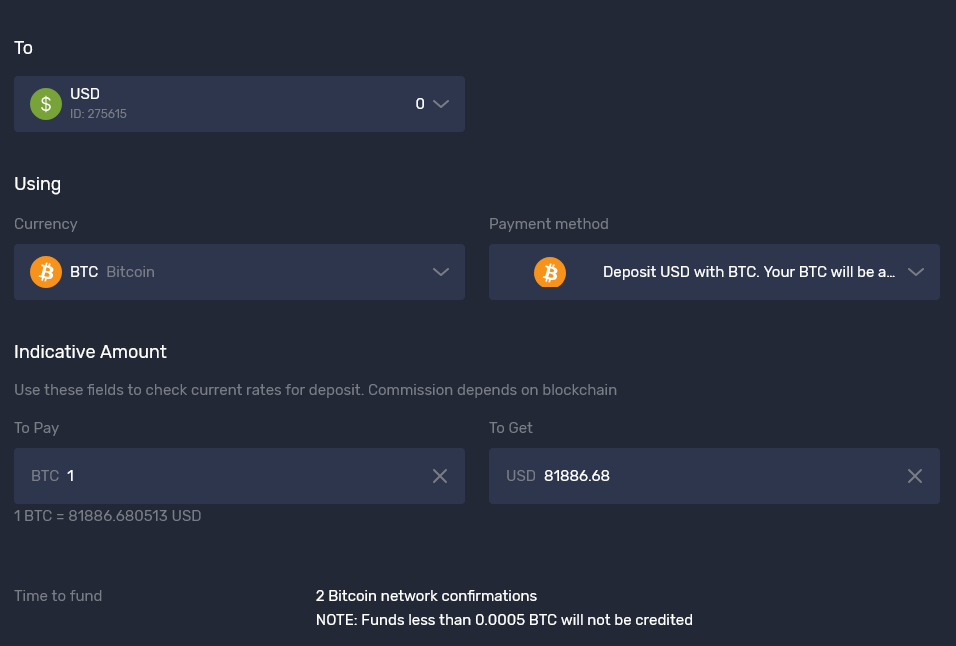
The next step is to enter an indicative deposit amount. For example, if you use a cryptocurrency to deposit into a USD wallet, the menu automatically calculates the amount you will receive according to the current exchange rate. This screen displays information about limits and fees associated with the selected payment method.
The next step is to click the Send Request button. This will transfer you to a separate menu where you need to enter the certificates required by the respective payment method and confirm the payment. When using cryptocurrencies to fund a crypto wallet, you need to copy the address of the crypto wallet, make the corresponding payment and send the confirmation to the broker.


