




XBTFX Review
XBTFX is an offshore broker offering a generally standard set of services. The special feature of XBTFX is that it operates through two separate offshore entities, giving you the choice of which one to become a client of. The differences are not trivial, because in one case you get a choice between more trading platforms, more account types, more payment methods, and options for passive income. If you are a trader who is willing to take the risks associated with investing through an offshore broker, this review will tell you in detail about the advantages and disadvantages offered by XBTFX specifically.
XBTFX Licenses and Regulation
An offshore broker does not automatically mean a shady broker or potential fraud. Virtually all of the industry’s leading brands have offshore divisions through which they serve clients in a global mashup and offer more flexible terms not possible in jurisdictions with strict financial regulations – most notably higher leverage as well as bonuses. However, when you are dealing with an entirely offshore broker that is not affiliated with a parent company with a premium license, you need to be more careful.
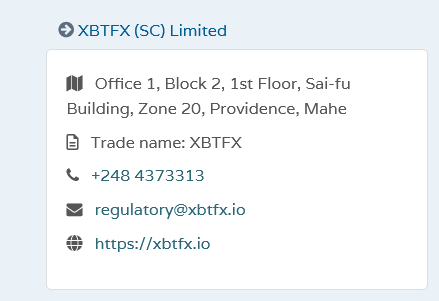
XBTFX operates through two companies – one based in Antigua and Barbuda, XBTFX LLC, and one incorporated in Seychelles and licensed by the local Financial Services Authority – XBTFX (SC) Ltd.
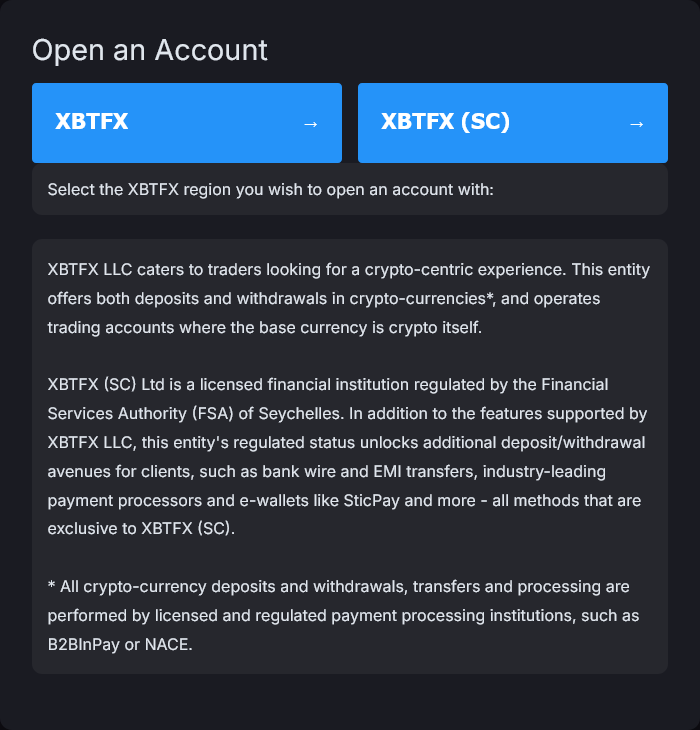
The broker gives you a choice of which company to become a client with when you sign up. According to the presentation on the website, XBTFX LLC offers a more crypto-centric experience, including the ability to redeem cryptocurrencies as account base and deposit and withdraw via digital currencies. But this actually applies to the XBTFX (SC) Ltd as well. The main differences are different. XBTFX LLC clients have a choice between two trading platforms, MT5 and cTrader, two account types – ECN and Standard, have a choice between more payment methods, and access to Copy Trading and PAMM/MAM accounts. The company’s clients in Seychelles only have access to ECN accounts and the cTrader platform, and have no passive income options. Since the company in Antigua and Barbuda is obviously the main one for the brand, from now on in the review we will mainly refer to it, so when we talk about XBTFX (SC) Ltd we will refer to it as XBTFX SC.
Seychelles is widely recognized as one of the most established offshore hubs for forex brokers. Oversight of the sector falls under the jurisdiction of the Seychelles Financial Services Authority (FSA), which is responsible for licensing, regulating, and supervising non-bank financial services, including forex trading. Within its regulatory framework, the FSA sets capital adequacy requirements designed to ensure that brokers maintain financial stability and can endure periods of market volatility.
For a standard forex broker license issued by the FSA, the minimum capital requirement typically starts at around $50,000 USD. However, this figure can vary based on the specific license category and may increase depending on the broker’s trading volume, risk profile, and other regulatory considerations. In addition to the initial capital, brokers are often expected to maintain sufficient operational capital to meet their ongoing liabilities. This measure is intended to guarantee that they have enough resources to cover client trades and potential losses.
To further ensure financial integrity and client protection, brokers operating in Seychelles must implement effective risk management systems capable of identifying, monitoring, and controlling business-related risks. They are also required to hold client funds in segregated accounts, keeping them separate from company operating funds to safeguard client assets.
Although Seychelles continues to develop its financial services industry and strives to align with international standards, its regulatory environment may differ significantly from that of more established jurisdictions such as the United States, the United Kingdom, or the European Union. While the relatively low capital requirements can make Seychelles an appealing option for forex brokers, traders should remain cautious, conduct thorough due diligence, and carefully evaluate how the regulatory framework might impact the safety and transparency of their investments.
Antigua and Barbuda, on the other hand, is an offshore zone, geared more towards gambling and other activities. The forex license in this jurisdiction does not even require the company to be incorporated there. All that is required is that the company rent an office in the country and have at least one director and one shareholder. Both individuals and legal entities can obtain the previously given status within the framework of the company. There are no residency requirements. There are no requirements for authorized capital. International companies in this offshore zone have virtually no tax obligations beyond the administrative fees paid in the registration process.
When deciding whether to become a client of an offshore forex broker operating through a lightly regulated company in the Seychelles or a virtually unregulated company in Antigua and Barbuda, a trader must carefully weigh the trade-offs between flexibility and risk. Both jurisdictions are popular among brokers seeking to avoid the more stringent oversight found in places like the European Union, Australia, or the United Kingdom. However, they differ significantly in terms of regulatory structure, client protection, and legal recourse.
The Seychelles, regulated by the Financial Services Authority (FSA), offers a basic regulatory framework that imposes some requirements on brokers, such as company registration, local presence, and capital adequacy. While these regulations are relatively minimal compared to those enforced in major financial centers, the FSA still provides some oversight, including the need for financial reporting and fit-and-proper assessments of company directors. Clients of Seychelles-regulated brokers may also benefit from standard practices like segregation of client funds and negative balance protection, although these are often implemented voluntarily by the broker, rather than strictly mandated by the regulator. Traders should note, however, that the FSA does not operate an investor compensation fund and offers limited dispute resolution mechanisms, which means that in the event of broker insolvency or misconduct, recovering funds could be difficult.
In contrast, a broker operating through a company in Antigua and Barbuda may fall under virtually no meaningful regulatory oversight. There is no specialized financial regulator for forex and CFD brokers, and registration requirements are minimal. Such brokers are often classified as international business companies (IBCs) that simply need to register a corporate presence. This lack of oversight means that there are no mandatory safeguards such as fund segregation, minimum capital requirements, regular audits, or protections against conflicts of interest. Traders using such brokers face a much higher level of counterparty risk, as there is little to prevent a broker from misusing client funds, manipulating prices, or refusing withdrawals. Legal recourse in such jurisdictions is often impractical or prohibitively expensive, especially for international clients.
Despite these risks, offshore brokers in both the Seychelles and Antigua and Barbuda often offer attractive trading conditions, such as higher leverage, lower capital requirements, and fewer restrictions on trading strategies like scalping and hedging. These conditions may appeal to traders looking for more flexibility than what is permitted under stricter regulatory regimes. However, this flexibility comes at the cost of reduced client protection, and traders must be prepared to accept a greater level of personal responsibility and risk.
Ultimately, the decision should depend on a trader’s risk tolerance, experience level, and trading objectives. Traders who value regulatory protection, transparency, and access to formal dispute resolution are better served by brokers licensed in well-regulated jurisdictions. Those who prioritize leverage and minimal interference and are comfortable with the associated risks may find an offshore broker acceptable, but due diligence is crucial. It is important to thoroughly research the broker’s history, reputation, client reviews, and operational transparency before opening an account. In all cases, traders should avoid depositing more than they can afford to lose, especially when dealing with brokers from jurisdictions that offer little to no regulatory oversight.
XBTFX provides no negative balance protection, and only the Seychelles company is required to provide segregated bank accounts for customer funds. Some offshore brokers participate in voluntary investor compensation funds or take out insurance on client funds, but XBTFX is not one of them
XBTFX Trading Software
XBTFX offers the two most advanced trading platforms in the industry – MetaTrader 5 (MT5) and cTrader. But only the company’s clients in Antigua and Barbuda have access to both options. The broker’s Seychelles-based company offers only cTrader. The lack of the older but still widely used MetaTrader 4 (MT4) can also be a negative for some traders.
XBTFX also does not have its own mobile app. So while you can manage your trading activities through the MT5 and cTrader mobile apps, managing your finances and trading account settings is only possible through the Client Area of the website.
MetaTrader 5 (MT5) is a powerful multi-asset trading platform developed by MetaQuotes Software, designed to provide traders with access to a broad range of financial instruments, including forex, stocks, commodities, indices, and futures. Building upon the foundation of its predecessor, MetaTrader 4 (MT4), MT5 offers more advanced features, enhanced performance, and broader market support, positioning itself as a versatile tool for both retail and institutional traders. The MetaTrader platforms have become the industry standard in forex trading largely because of their reliability, wide broker adoption, and extensive support for technical analysis and automated trading.
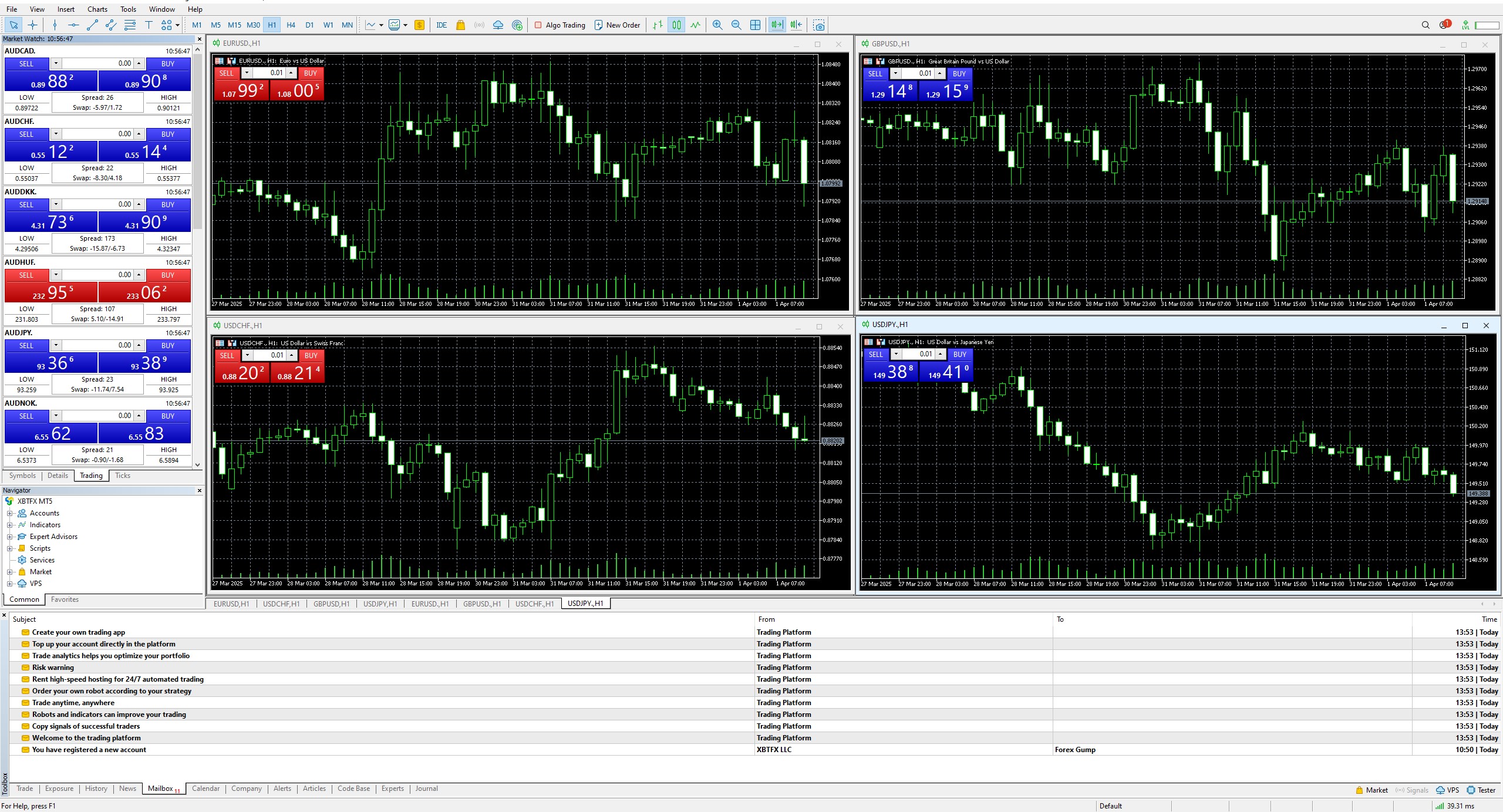
One of the main reasons MT5 and its predecessor have gained such prominence is their balance of user-friendly design with professional-grade functionality. The platforms allow traders to access real-time market data, execute trades with precision, and develop custom indicators and strategies through their integrated programming languages—MQL4 for MT4 and MQL5 for MT5. This support for customization has led to the development of a massive ecosystem of third-party tools, expert advisors (EAs), scripts, and indicators, creating a thriving community and extensive resources for traders of all levels.
MT5 offers several key advantages over MT4, including faster processing speeds, support for a wider array of asset classes, and the inclusion of additional order types. It features 21 timeframes compared to MT4’s nine, and it provides up to 100 charts that can be open simultaneously. MT5 also includes an integrated economic calendar, built-in depth of market (DOM) functionality, and support for netting and hedging systems, making it suitable for more complex portfolio strategies. The MQL5 programming language is more powerful than MQL4, allowing for faster and more efficient backtesting, multi-threaded strategy execution, and more robust custom applications.
Technically, MT5 supports six types of pending orders, advanced charting with over 80 built-in technical indicators and graphical objects, and an internal email system for broker communications. The platform also includes built-in reporting tools, a strategy tester for EA optimization, and VPS integration for continuous trading. Its architecture is designed for high performance, offering improved order execution speeds and lower latency compared to MT4.
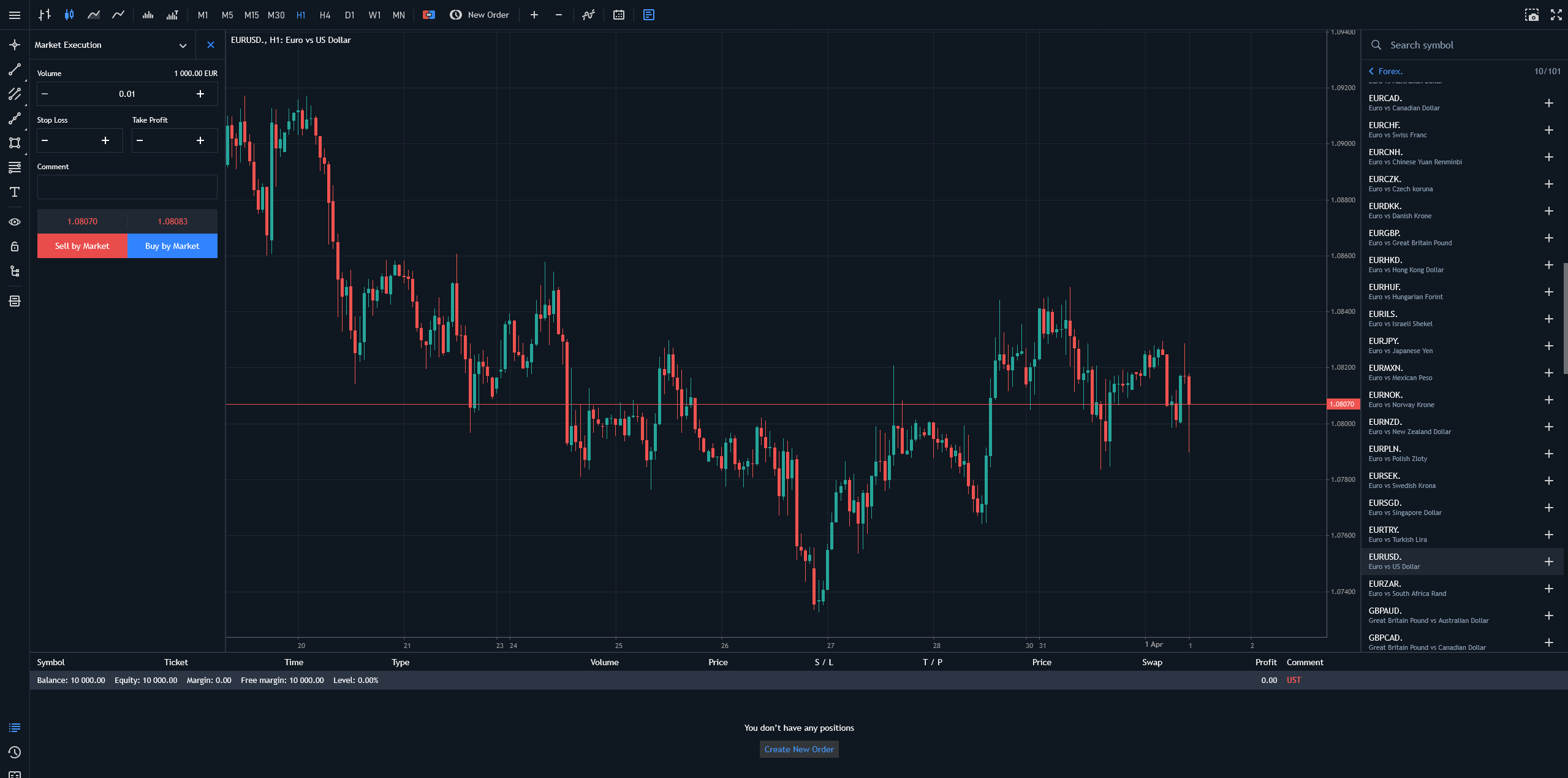
MetaTrader 5 is available in three versions: desktop, web, and mobile. The desktop version is the most comprehensive, supporting the full range of features including algorithmic trading, custom indicators, backtesting, and deep market analysis. It is the preferred choice for serious traders who need advanced tools and full control over their trading environment. The web version is a browser-based alternative that offers basic trading and charting capabilities without requiring installation. It is convenient for quick access but lacks support for EAs, advanced scripts, and certain customizations. The mobile version, available for Android and iOS, is designed for traders who need to monitor markets and manage trades on the go. It includes real-time quotes, charting with basic technical indicators, order execution, and account management features, but it does not support automated trading or the more complex functionalities found in the desktop version.
Despite MT5’s advancements, many traders still prefer MT4 due to its simplicity, lighter system requirements, and the vast existing library of indicators and EAs developed specifically for that platform. The lack of backward compatibility between MT4 and MT5 means that tools and strategies created for MT4 must be rewritten for MT5, which has discouraged some traders from transitioning. Additionally, MT4 remains more widely supported by brokers, especially those focused solely on forex, while MT5’s broader asset support appeals more to traders looking to diversify beyond currency markets.
In summary, MetaTrader 5 is a feature-rich, flexible, and high-performance trading platform that addresses the needs of modern traders across multiple asset classes. Its technical advancements make it ideal for professional and multi-asset traders, while its user-friendly interface ensures accessibility for newcomers. Still, MT4’s enduring popularity reflects the strength of its community, simplicity, and legacy support, making the choice between the two platforms ultimately dependent on the trader’s strategy, asset focus, and preferred level of technical complexity.
The cTrader platform is a professional-grade trading platform developed by Spotware Systems, designed to cater to both retail and institutional forex and CFD traders. Known for its modern interface, intuitive layout, and advanced functionality, cTrader has earned a strong reputation as a robust alternative to the MetaTrader suite, particularly for those seeking a more transparent and execution-focused trading environment. It offers a full range of tools for manual, algorithmic, and copy trading, making it appealing to a wide spectrum of traders from beginners to professionals.
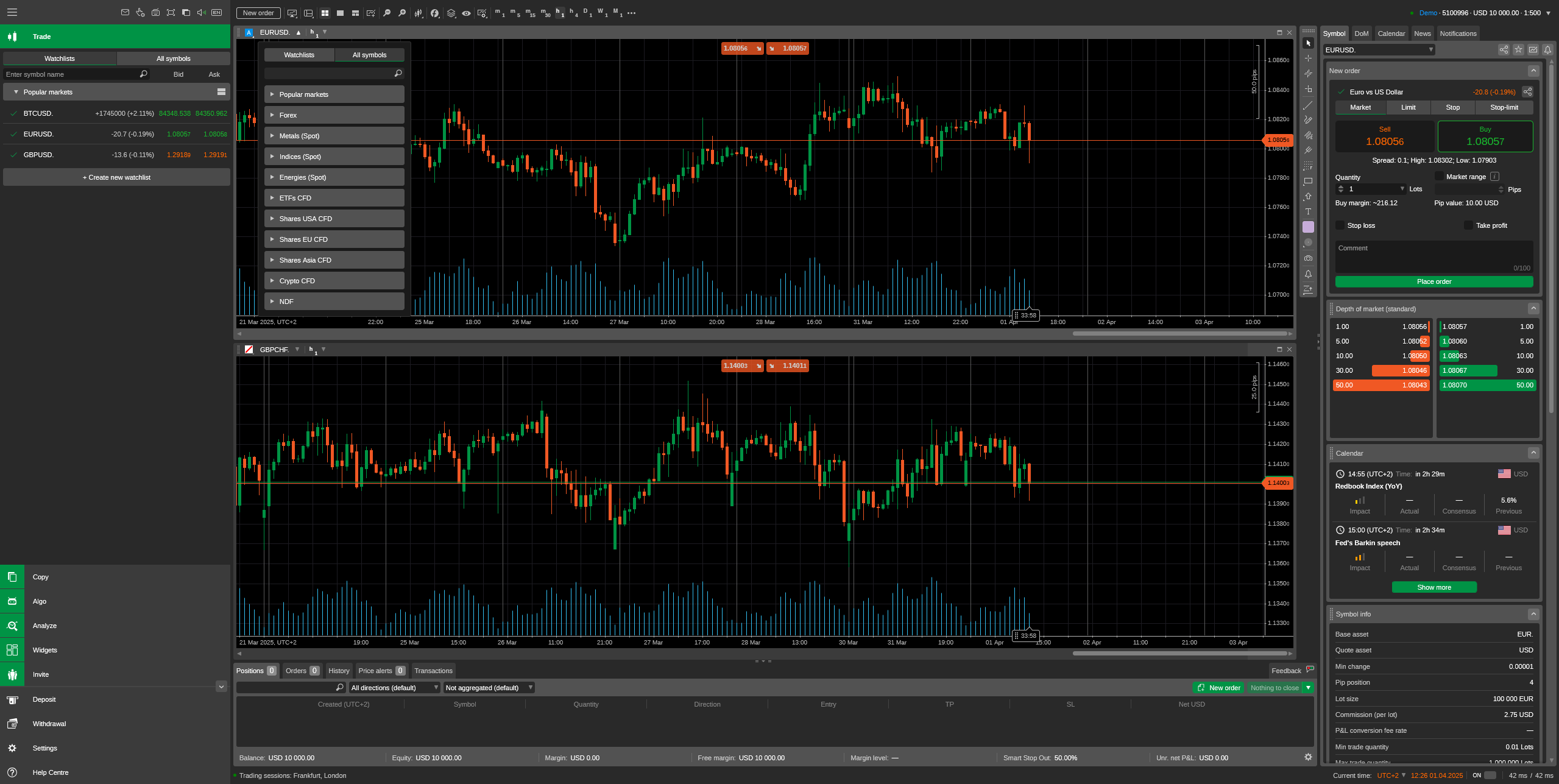
One of cTrader’s core strengths lies in its clean and customizable user interface, which is designed to be highly intuitive without sacrificing depth. It provides Level II pricing (market depth), showing the full range of executable prices from liquidity providers, which allows traders to see not just the best bid and ask but also the available volume at various price levels. This feature, more common in institutional platforms, helps users better understand market structure and liquidity. In terms of charting and technical analysis, cTrader offers more than 70 built-in indicators, a wide selection of timeframes ranging from one minute to one month, and advanced chart types including tick charts, range bars, Renko, and Heikin Ashi. It also supports multiple chart layouts and detachable charts, allowing traders to work across multiple monitors or windows.
For order execution, cTrader excels with its no dealing desk (NDD) model, ensuring that trades are routed directly to liquidity providers with no interference or requotes. It supports a comprehensive range of order types, including market orders, limit and stop orders, and advanced protection tools like stop loss, take profit, trailing stop, and server-side SL/TP. The platform also provides smart order routing and exceptionally fast execution speeds, making it a preferred choice for scalpers and high-frequency traders.
One of cTrader’s standout features is cAlgo, the platform’s native environment for algorithmic trading, which operates using the C# programming language. This is a notable difference from MetaTrader, which uses MQL4 and MQL5. C# is a widely adopted, modern programming language that offers more flexibility and integration potential with other software tools and services. Through cAlgo, traders can develop, backtest, and deploy custom trading robots (called cBots) and technical indicators. The platform also includes a powerful backtesting engine and supports tick-level backtesting for more accurate strategy evaluation.
In addition to manual and algorithmic trading, cTrader features a built-in copy trading service called cTrader Copy, which enables users to follow and mirror the trades of professional strategy providers. This functionality is integrated directly into the platform and is easy to access and manage without needing external plugins or services.
When comparing cTrader to MetaTrader 5 (MT5), both platforms are sophisticated and capable, but they cater to slightly different trader preferences. MT5 is more of a multi-asset platform designed to support trading not only in forex and CFDs but also in stocks and futures, making it attractive for brokers with diverse asset offerings. MT5 supports both hedging and netting systems, features an integrated economic calendar, and includes a massive ecosystem of Expert Advisors, custom indicators, and third-party plugins due to its long-standing popularity. It uses the MQL5 programming language, which is powerful but more niche and less widely known than C#.
In contrast, cTrader is seen as more transparent and user-focused, particularly in terms of pricing and execution. It offers more modern UI/UX design, deeper access to market depth, and more visually intuitive order management tools. For traders who prioritize execution transparency, low-latency performance, and institutional-grade features, cTrader may offer a more appealing experience. However, MT5 maintains its strength through its massive user base, broker adoption, and compatibility with a wide array of tools and strategies developed by the trading community over many years.
Ultimately, the choice between cTrader and MetaTrader 5 often comes down to individual preference and trading style. cTrader is highly attractive to traders who value modern design, transparent execution, and C# programming for custom strategy development. MT5, on the other hand, is better suited to traders who want access to a broader trading community, extensive third-party resources, and multi-asset support within a familiar and widely supported platform. Both platforms are powerful, and selecting the right one depends on what features are most critical to the trader’s goals.
XBTFX states that it encourages the use of EAs and scripts for automated trading, but does not offer a Virtual Private Server (VPS) service, which is essential for the smooth 24/7 operation of scripts. Many brokers offer a free VPS or cover subscription fees to third-party providers for clients who meet certain criteria for invested capital and/or traded volume.
XBTFX Account types and trading conditions
As stated, XBTFX gives you a choice of which of the two companies to become a customer of when you sign up – one is based in Antigua and Barbuda and the other in the Seychelles. Registration with the second company requires email verification and completion of a short questionnaire on personal details, financial situation and financial trading experience. You can then deposit and trade, but withdrawal requires identity verification.
The initial registration of an account with the company in Antigua and Barbuda requires nothing but providing the most basic details. In addition to depositing, it is also possible to withdraw funds before you have verified your identity.
The broker’s clients have the opportunity to trade over 300 forex and CFD instruments, including currency pairs, stocks, cryptocurrencies, metals, indices, commodities and even non-deliverable forward contracts (NDFs).
However, the types of accounts you can trade with differ depending on which brokerage you are a client of. XBTFX Antigua and Barbuda offers a classic choice between a Standard account, where the trader pays a floating spread, and an ECN account, where the spread is raw and can be as low as zero, but a fixed commission is paid. Both accounts require a minimum deposit of only 10 USD, which is quite low, especially for ECN type accounts.
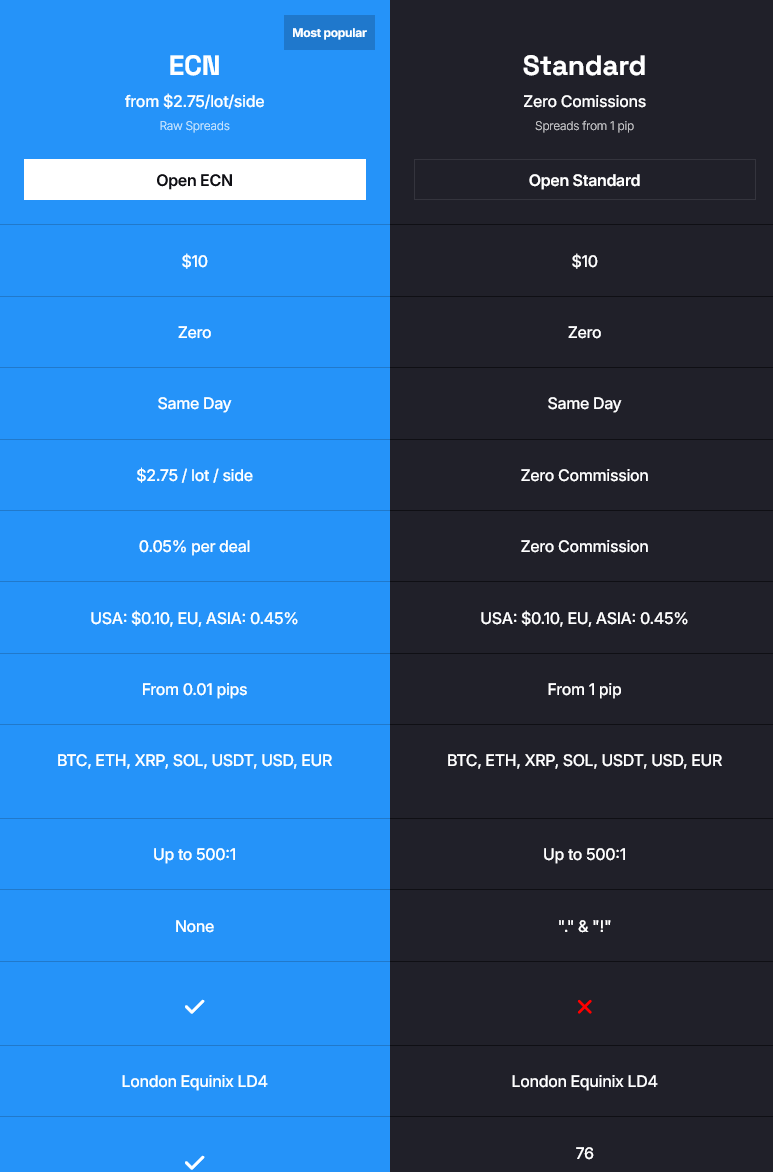
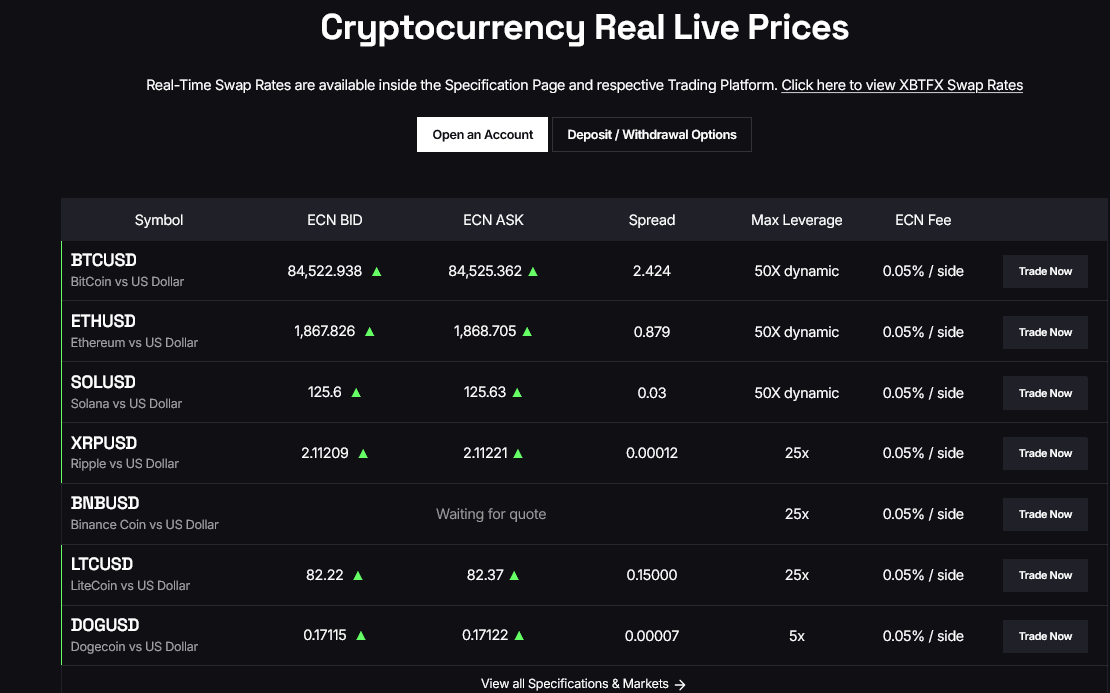
Standard Account spreads start at 1 pip. When we opened a Demo account we saw a spread of 1.3 pips for the benchmark currency pair EUR/USD. The ECN account charges a commission of 2.75 USD per side per lot, or 5.50 USD per round turn lot. The cryptocurrency trading fee with this account is 0.05% per deal. Trading commissions for US stocks is 0.10 USD, and for European and Asian stocks is 0.45%.
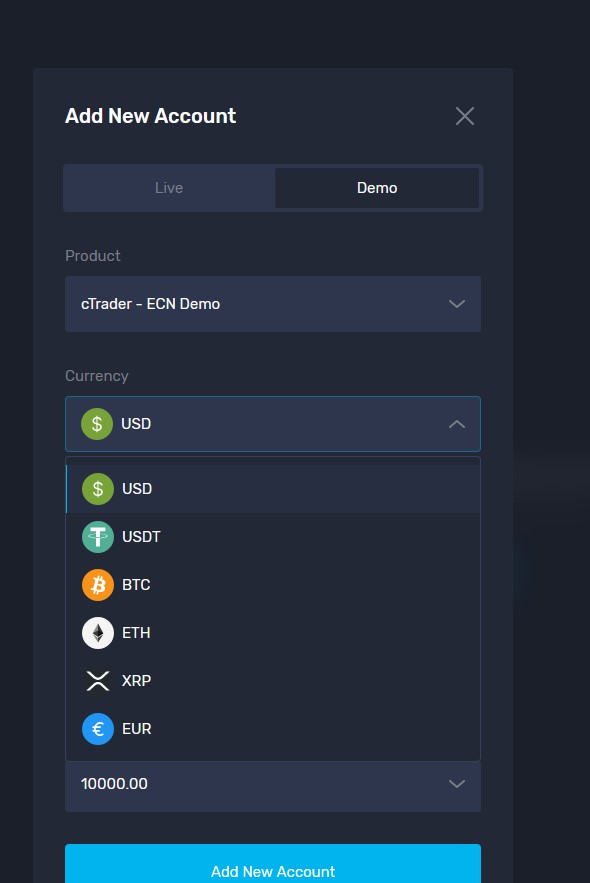
But it should be noted that both accounts are only available when using the MT4 platform. cTrader can only be used with an ECN account. In addition, registration of a live cTrader account requires identity verification which is not required for MT4 accounts. There are also differences in the underlying currencies. With an ECN account you have a choice between BTC, ETH, XRP, SOL, USDT, USD and EUR. The website lists the same base currencies for a Standard account, but after registration we found that the base currencies of this type of account can only be crypto – BTC, USDT and ETH.
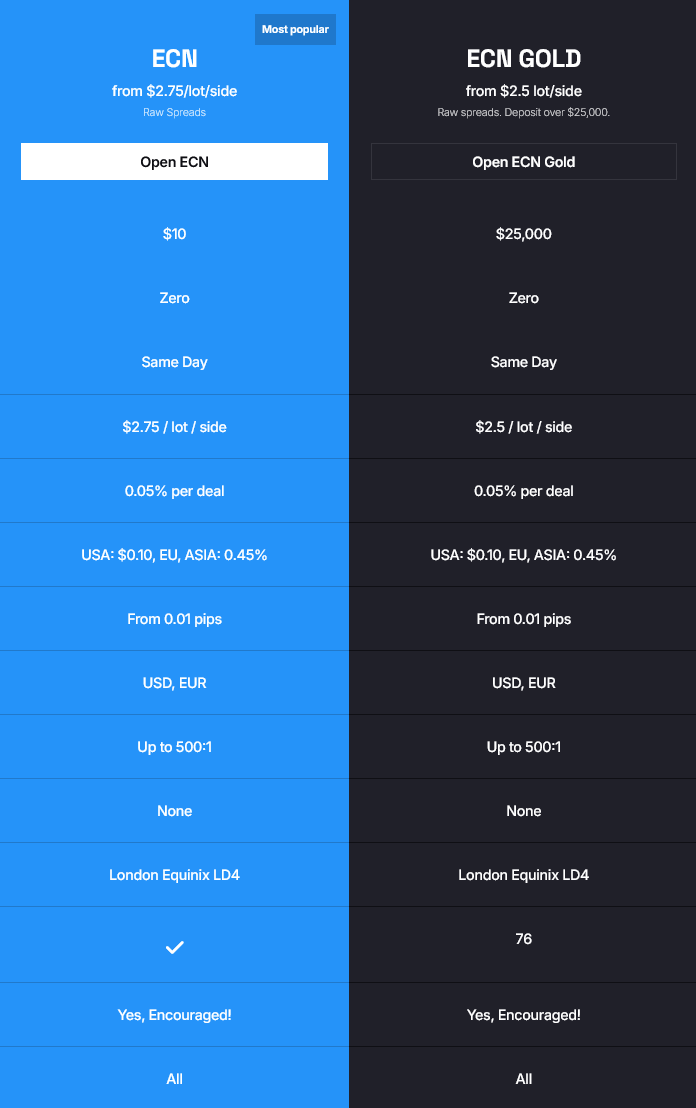
XBTFX SC clients do not have access to a Standard account. They can only start trading with an ECN account using the cTrader platform. The conditions are the same as described above, with the only difference being that there is no option for EUR as the base currency. However, clients of the Seychelles company can upgrade to an ECN Gold account if they deposit over 25,000 USD. It’s hard to say that this is worth it, as far as the only difference is the lowering of the commission to 2.5 USD per side per lot.
When choosing between a floating spread account and an ECN account with a fixed commission, a forex trader must consider their trading strategy, cost structure, market conditions, and execution requirements. Both pricing models have advantages and drawbacks, making them suitable for different types of traders.
A floating spread account operates with spreads that fluctuate based on market conditions. During periods of high liquidity, such as during major trading sessions, spreads tend to be lower and more competitive, while during volatile periods or major news events, spreads can widen significantly. This type of pricing model is often used by market maker or STP (Straight Through Processing) brokers, where the broker may act as a counterparty or route orders through liquidity providers. Floating spread accounts are generally commission-free, as all trading costs are built into the spread, making them simpler and more predictable for traders who do not want to calculate additional commission costs.
Floating spread accounts are well-suited for casual traders, beginners, and swing traders who hold positions for longer periods and are not as sensitive to minor variations in spreads. They are also ideal for traders who do not execute a high volume of trades daily and those who prefer a straightforward fee structure. However, one of the risks of floating spreads is that during times of market volatility, spreads can widen sharply, which can increase the effective trading cost. For short-term traders, such as scalpers or high-frequency traders, sudden spread widening can significantly impact profitability.
An ECN (Electronic Communication Network) account operates on a raw spread + commission model, where traders pay a fixed commission per lot traded in exchange for tighter spreads, often as low as 0.0 pips on major currency pairs. ECN brokers connect traders directly to the interbank liquidity pool, ensuring better market transparency, deeper liquidity, and faster execution. Since spreads are raw, they do not fluctuate as much due to broker markup, making trading costs more predictable, especially for high-frequency traders.
ECN accounts are particularly suitable for scalpers, day traders, and algorithmic traders who rely on high-speed execution and precise trade entries. Since these traders open and close multiple positions within a short period, having consistently tight spreads and fixed commission costs helps maintain more predictable expenses. Additionally, ECN trading often features better trade execution with lower slippage, making it ideal for strategies that require fast order processing and access to real market liquidity.
However, ECN accounts may not be ideal for traders who trade infrequently or hold long-term positions, as the commission fees can add up over time. Additionally, some ECN brokers have higher minimum deposit requirements, making them less accessible to beginners or small-cap traders.
Ultimately, the decision between a floating spread account and an ECN account depends on trading style and strategy. Traders who prioritize simplicity and low trading frequency may find a floating spread account more convenient, while those who require tight spreads, direct market access, and consistent execution will benefit from an ECN account despite the added commission costs. Evaluating trading costs under different market conditions and analyzing trade frequency will help determine the most cost-effective and suitable pricing model for an individual trader’s needs.
All XBTFX account types offer a maximum leverage of up to 1:500 for forex trading. This is much higher than the 1:30 offered by brokers in highly regulated jurisdictions such as the EU or Australia. But most offshore brokers offer higher levels, often 1:1000 or even more. The maximum leverage when trading cryptocurrencies varies between 1:5 and 1:50 depending on the instrument. For metals trading, the broker offered a leverage of 1:200 for gold, 1:100 for silver and 1:20 for other instruments of this class. Indices can be leveraged up to 1:50, stocks up to 1:50, and energy up to 1:20 or 1:25 depending on the specific instrument.
XBTFX SC clients have no passive income options, while the broker’s other clients have several such options, including Copy Trading and PAMM/MAM accounts.
Copy Trading and PAMM (Percentage Allocation Management Module) accounts are two investment solutions offered by forex brokers that allow traders to benefit from professional or experienced traders’ strategies without actively managing trades themselves. While both models enable passive trading, they operate differently in terms of execution, risk management, and investor control.
Copy Trading is an automated trading method where individual traders, known as followers or investors, link their trading accounts to a signal provider or professional trader, whose trades are then automatically replicated in the follower’s account. This system allows less-experienced traders to mirror the strategies of successful traders without needing to analyze markets or execute trades manually. Copy trading platforms typically provide detailed performance metrics, including a trader’s profit history, risk level, drawdown percentage, and trading style, allowing followers to select a trader whose strategy aligns with their risk appetite. Copy trading can be adjusted in terms of investment size, risk settings, and trade volume, giving followers some degree of customization. However, the follower has no control over individual trade decisions, and their success is entirely dependent on the performance of the trader they are copying. The major risk of copy trading is that if the chosen trader incurs losses, the follower’s account suffers the same fate, making it crucial to select traders wisely and diversify exposure.
PAMM accounts, on the other hand, operate as an investment pool where multiple investors allocate funds to a money manager or professional trader, who then trades on their behalf. The money manager’s capital is included in the pool, ensuring they have a vested interest in the account’s performance. The profits or losses from the trading activity are distributed proportionally among all investors based on their percentage share of the total capital. Unlike copy trading, PAMM investors do not receive individual trade copies but rather a share of the overall performance. This makes PAMM accounts ideal for those who prefer a fully managed forex investment solution without needing to monitor or adjust trading activity. The manager typically earns a performance-based commission, meaning they are incentivized to generate profits. However, investors in a PAMM account have less flexibility compared to copy trading, as they cannot intervene in trade execution or adjust risk settings independently.
While both copy trading and PAMM accounts offer passive trading opportunities, they cater to different types of investors. Copy trading is better suited for those who want to retain control over their funds while benefiting from expert trading strategies, whereas PAMM accounts are preferable for investors who want a fully hands-off approach, trusting a professional trader to manage their capital. Both methods carry risks, particularly if the chosen trader or money manager underperforms, and investors should conduct thorough due diligence before committing funds to either system.
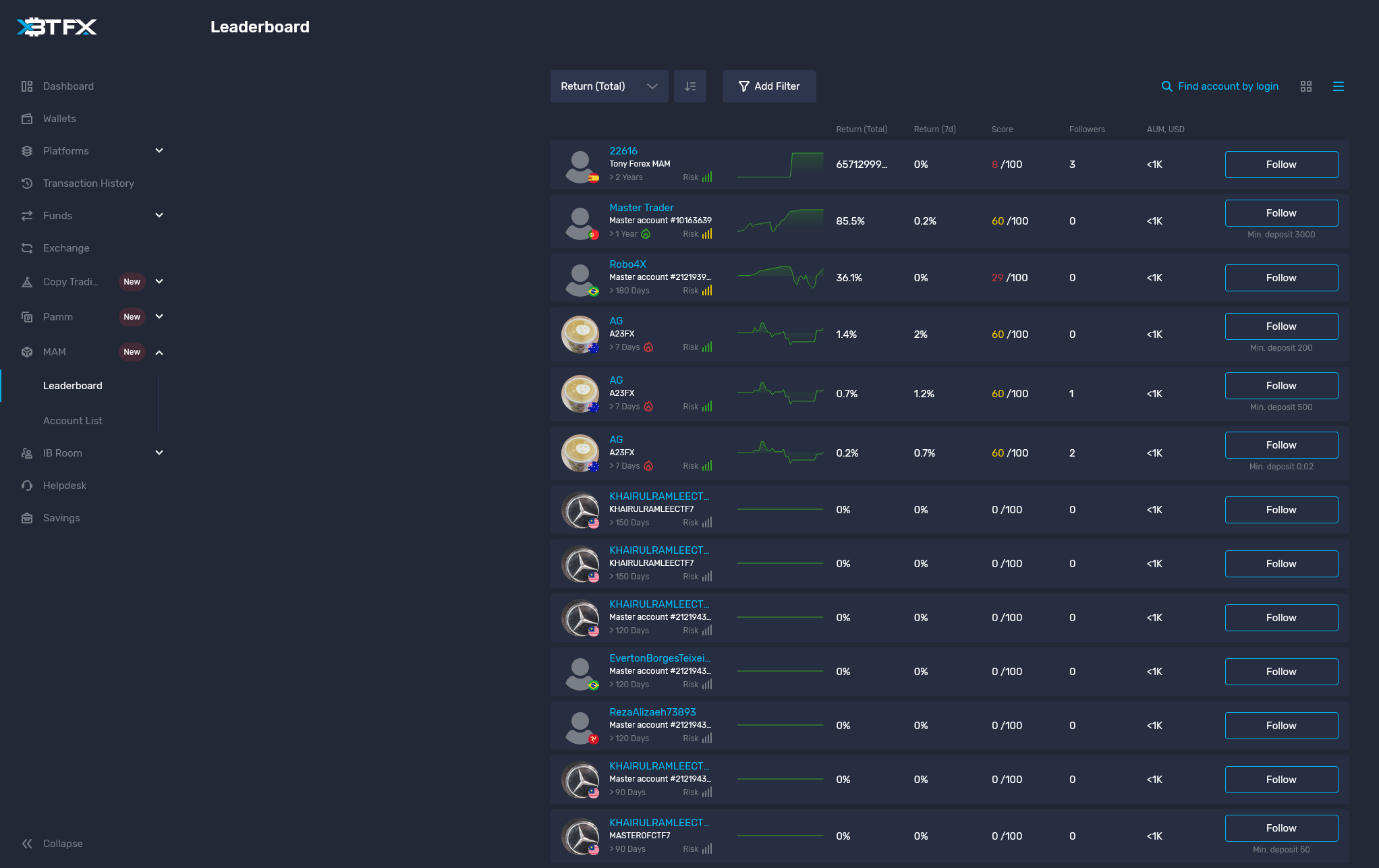
A MAM account functions similarly to a PAMM account but provides more customization and flexibility for investors. Instead of pooling funds into a single master account, MAM accounts allow each investor to maintain an individual trading account, while the money manager executes trades across multiple accounts simultaneously. This system gives investors the ability to adjust risk parameters, trade sizes, and leverage settings according to their personal risk tolerance. MAM accounts are commonly used by professional money managers handling multiple clients, as they allow for personalized risk management while maintaining centralized trade execution. Unlike PAMM accounts, where all investors must follow the same risk exposure, MAM accounts provide greater control over capital allocation and allow managers to tailor strategies to different investor preferences.
The primary difference between PAMM and MAM accounts lies in fund management and risk control. PAMM accounts operate as a pooled investment fund, offering simplicity and passive management, while MAM accounts allow for more individualized risk settings and flexibility, making them suitable for investors who prefer some level of customization. Both systems enable investors to benefit from the expertise of skilled traders, but choosing between them depends on whether an investor prioritizes full automation (PAMM) or personalized risk settings (MAM).
One of the few aspects where XBTFX SC’s terms are better is the inactivity fee. It amounts to only 10 USD per year and starts being charged after 12 months of inactivity. But the main company’s XBTFX clients start paying an inactivity fee after 3 months, and it’s quite high – 50 USD or equivalent per month. In addition to this, the broker may also charge inactive accounts an annual administrative fee of 100 USD.
XBTFX Deposit and Withdraw Methods
XBTFX is a broker focused on cryptocurrencies, and this is evident in the payment methods through which you can deposit and withdraw funds. XBTFX allows transactions with all cryptocurrencies that can be used as base currency for trading accounts.
If you want to make a transaction to or from a USD or EUR account, the choice is between credit/debit cards, bank transfer or Skrill and Volet e-wallets.
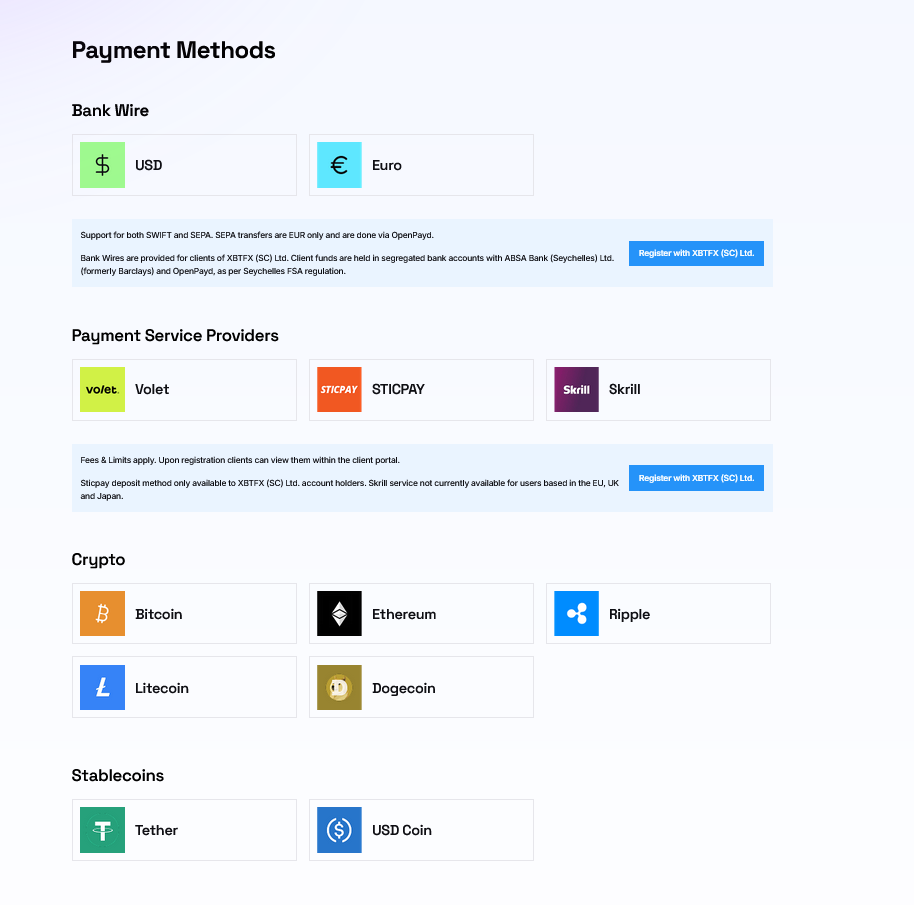
The website claims that bank transfer is only available to customers of the Seychelles company. But in fact it is the other way around – these customers do not have such an option in the deposit menu. If you are a customer of the Seychelles company and you want to make a deposit or withdrawal in USD rather than in cryptocurrency, the choice of payment method comes down to Skrill and Stickpay.
XBTFX states that it does not charge its own fees for depositing and withdrawing funds, but you should keep in mind the fees of the payment processor or bank used, as well as gas fees for crypto transactions.
There are no clearly stated deposit and withdrawal limits for customers of the Seychelles company. For clients of the broker’s main company, there is a daily crypto withdrawal limit of the equivalent of 1,000 USD and a monthly limit of the equivalent of 10,000 USD. These limits apply to non-certified accounts. If you have verified your identity by providing an ID and a selfie, the daily and monthly crypto transaction limits increase to 10,000 and 35,000 USD respectively. If you have met the second level of verification, proof of address, the daily limit for crypto withdrawals becomes the equivalent of 1,000,0000 USD. It is not clear what the restrictions are on withdrawals via fiat currencies.
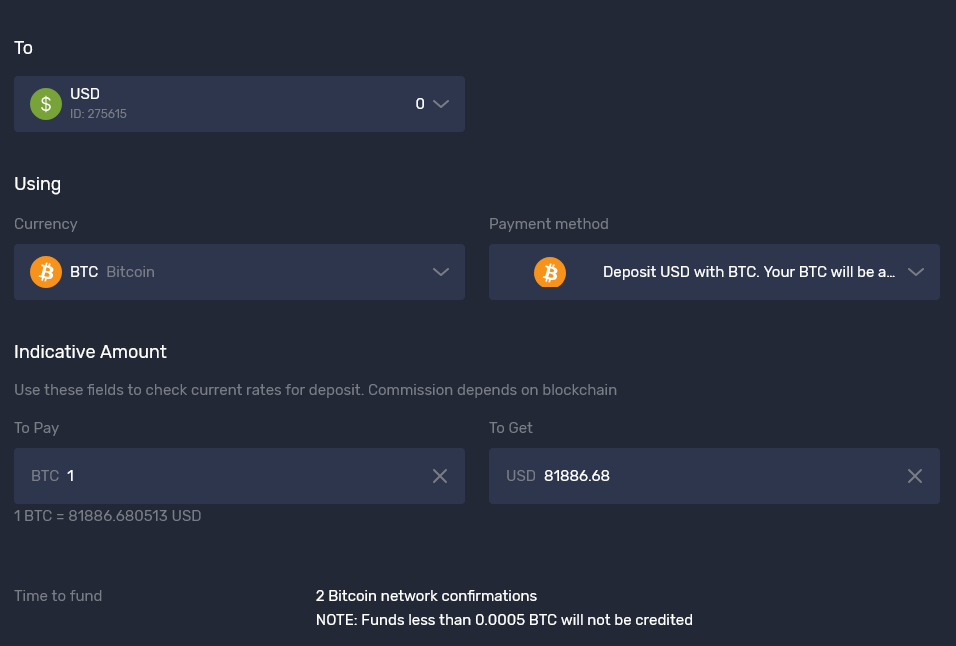
Withdrawals are processed within the same day requested. Approval time can range from minutes, up to 24 hours depending on review and wallet replenishing required.
| Deposit method | Minimum | Maximum | Processing time | Fee |
| Crypto | $10 | $1000 | Instant | Free |
| Bank | $10 | - | Unspecified | Free |
| Credit/Debit Card | $10 | - | Instant | Free |
| Skrill | $10 | - | Instant | Free |
| SticPay | $10 | - | Instant | Free |
| Withdrawal method | Minimum | Maximum | Processing time | Fee |
| Crypto | Unspecified | Unspecified | up to 48 hours | Unspecified |
| Bank | Unspecified | Unspecified | up to 48 hours | Unspecified |
| Credit/Debit Card | Unspecified | Unspecified | up to 48 hours | Unspecified |
| Skrill | Unspecified | Unspecified | up to 48 hours | Unspecified |
| SticPay | Unspecified | Unspecified | up to 48 hours | Unspecified |
XBTFX Bonuses and Promotions
One of the selling points of offshore brokers, alongside high leverage, is the ability to offer deposit bonuses, welcome bonuses, promotions, loyalty programs and other such practices prohibited to most regulated companies in this sector.
XBTFX, however, does not take advantage of this freedom and does not offer bonuses. At the time of writing this review, there is only one exception – a temporary promotion where the broker refunds the cost of a card transaction as a bonus.
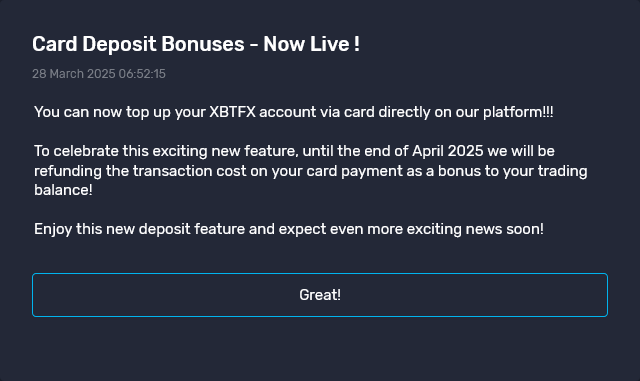
This is somewhat inconsistent with the claim that the broker does not charge transaction fees. In any case, this bonus cannot be compared to the deposit bonuses offered by many other offshore bonuses. According to the general formulations in XBTFX’s documentation, the bonuses offered cannot be withdrawn.
XBTFX Tools and Education
XBTFX has a fairly limited set of educational resources, which is limited to articles on the basics of forex trading and a small number of topical market commentaries. The only analytical and research resources this broker offers are those built into the trading platforms. So this is one important area where XBTFX lags significantly behind many of its competitors.
Notes from the author:
When you are dealing with a completely offshore broker, there are many factors to keep in mind. When that broker is heavily focused on cryptocurrencies, the potential risks are even greater. In addition to these considerations, XBTFX gives you more reasons to think seriously about whether it is worth investing through this broker. XBTFX is licensed by a relatively reputable offshore jurisdiction, Seychelles, and gives you the opportunity to become a client of this company. But at the same time it gives you every incentive to choose the virtually unregulated company in Antigua and Barbuda. Most of the benefits of this broker are only available to clients of the latter company - a choice between several advanced trading platforms, a choice between account types with different pricing models, Copy Trading and PAMM/MAM accounts, and more payment methods. Another feature is that this broker allows you not only to deposit and trade, but also to withdraw funds without verifying your identity - which again applies only to the company's customers in Antigua and Barbuda who use crypto transactions. There are probably people with legitimate reasons to trade anonymously, but keep in mind that this lack of transparency goes both ways.
The cost per trade is pretty decent, especially for ECN accounts. But you can find just as advantageous terms with more established and trustworthy brokers.


