





Alpari Review
Alpari is a loosely regulated offshore broker, but at the same time has a long history of market presence and offers a relatively robust suite of services. This broker has been operating since 1998 and boasts that it has attracted over 1 million clients in this quarter century. The broker offers the two most widely used trading platforms in the industry, MetaTrader 4 and MetaTrader 5, as well as a significant number of tradable instruments. Clients have the option of several trading account types with different pricing models, as well as the ability to trade with very high levels of leverage. Alpari’s spreads and commissions are relatively competitive, but this does not apply to all types of trading accounts.
Alpari also offers PAMM accounts but does not support a copy trading platform. Unlike other offshore brokers, Alpari does not offer Deposit or Welcome Bonuses.The broker promises segregated bank accounts for its clients, but doesn’t seem to guarantee negative balance protection. Information on some trading parameters is unclear and contradictory. In preparing this review, we found different versions of the minimum deposit amount and available payment methods for depositing and withdrawing funds. Alpari charges fees for transactions with certain payment methods. The broker offers fairly limited educational and informational materials and does not offer any research resources.
In this review, we will take a detailed look at the advantages and disadvantages of Alpari so that you can decide whether it is worth becoming a client of such an offshore broker.
Alpari Licenses and Regulation
Alpari originally began operations in the Russian Federation but subsequently moved its headquarters offshore. Over the years, the broker has been based in St. Vincent and the Grenadines and Mauritius, but at the time of writing this review it operates from another offshore jurisdiction – Island of Mohéli in the Comoros Union.
The Alpari brand is part of the Exinity Group. A broker’s affiliation with a larger financial services group may argue for greater confidence in financial stability and compliance with best practices. But you should bear in mind that Alpari remains an offshore broker, which means much weaker regulatory oversight and fewer guarantees about the safety of client funds. When you create an account with Apari, you become a client of Alpari (Comoros) Ltd. This company is licensed by the Mwali International Services Authority as an International Brokerage and Clearing House under License number T2023236.

The Mwali International Services Authority (MISA), also known as the Moheli International Services Authority, is the regulatory body responsible for overseeing financial services, including forex and CFD brokerages, on the island of Moheli in the Union of the Comoros. Moheli is one of the three islands that make up the Comoros, and it has become a notable offshore jurisdiction for various financial services providers due to its relatively flexible regulatory environment. But it would be a stretch to state that brokers based in this island state are regulated.
Traders should be aware that while MISA offers a more lenient regulatory environment, this comes with potential risks, such as lower levels of investor protection compared to brokers regulated by authorities in more established financial centers. It is essential for traders to conduct thorough due diligence when selecting a broker regulated by MISA. This includes checking the broker’s financial stability, the safety of funds, and the level of client protection offered. Brokers regulated by MISA may be more suitable for experienced traders who understand the risks associated with trading through offshore entities and who may prioritize flexibility and lower regulatory burdens over stringent investor protections.
Alpari primarily targets customers in Russia, Belarus, Central Asia and the Middle East. The website indicates a relatively short list of jurisdictions from which it does not accept clients – USA, Japan, Canada, Myanmar, the Democratic Republic of Korea, European Union, United Kingdom, Iran, Syria, Sudan and Cuba. But it is advisable to check for yourself whether the legislation in your country allows you to become a client of an offshore broker.
Alpari states that it guarantees segregation of customer funds. This means that traders’ money is held in separate bank accounts from the company’s operating funds and the broker has limited access to it. The broker also promises a high level of encryption via SSL (Secure Sockets Layer) network security protocol to guarantee a secure connection and protection of personal data and financial transactions. These are also standard protections offered by regulated brokers in the sector. But Alpari does not appear to guarantee negative balance protection. Most leading financial regulators require brokers to guarantee retail customers such protection, without which the trader could lose more money than is available in his account balance.
Regulated brokers are required to maintain adequate capital reserves, use segregated accounts to keep client funds separate from the firm’s operating funds, and follow other financial management practices that enhance the security of client assets. Forex trading involves significant risk, particularly due to the leverage offered by brokers. Regulations often limit the amount of leverage that traders can use, require brokers to offer negative balance protection, and mandate that brokers provide clear risk warnings.
Financial regulators in the European Union and the United Kingdom also require brokers to participate in an Investor Provident Fund. In the event of a broker’s bankruptcy, this fund recovers a portion of retail customers’ money. In the EU, this guarantee reaches 20,000 EUR and in the UK 85,000 GBP. Some brokers participate in voluntary investor compensation funds, such as the Hong Kong-based Financial Commission, or take out additional insurance on client funds. But Alpari is not one of them and does not provide such guarantees to clients.
Before becoming a client of a broker like Alpari, you should carefully weigh the pros and cons and inform yourself about the alternatives you have. If you have the option of becoming a client of a more tightly regulated broker, this may be a better choice, especially if you are a small-time trader. The ability to trade with higher leverage is only beneficial to more experienced traders who can take on more significant financial risks. If your residency requires you to choose only between offshore brokers, check to see if you can become a client of an offshore subsidiary of some of the more established brands that offer more substantial guarantees to their clients.
Alpari Trading Software
Applari offers an industry standard suite of trading software – the MetaTrader 4 (MT4), MetaTrader 5 (MT5) platforms, as well as proprietary mobile applications. Larger brokers often also offer alternatives to MetaTrader software, such as cTrader or TradingView, as well as simpler web platforms suitable for beginners and casual traders. But in general, the MT4 and MT5 platforms offer all the functionality a trader could need, regardless of experience and investment intentions. However, Applari does offer some additional services and extensions to the software that allow for further customization and expansion of functionality. Traders could use third-party providers for this purpose, but some brokers offer this as part of their service.
MetaTrader 4 (MT4) is a widely acclaimed trading platform, primarily utilized for Forex trading, along with CFDs (contracts for differences) and futures markets. Developed by MetaQuotes Software and launched in 2005, MT4 is celebrated for its advanced trading features, robust security, and accessibility, making it suitable for traders of all experience levels. The platform offers an intuitive interface, allowing traders to efficiently manage their trades and perform market analysis. It supports multiple chart setups and various time frames, enabling traders to make more informed decisions. MT4 is equipped with an extensive suite of technical analysis tools, including over 30 built-in indicators, more than 2,000 free custom indicators, and an additional 700 indicators available for purchase, all designed to help traders analyze the price dynamics of financial instruments.
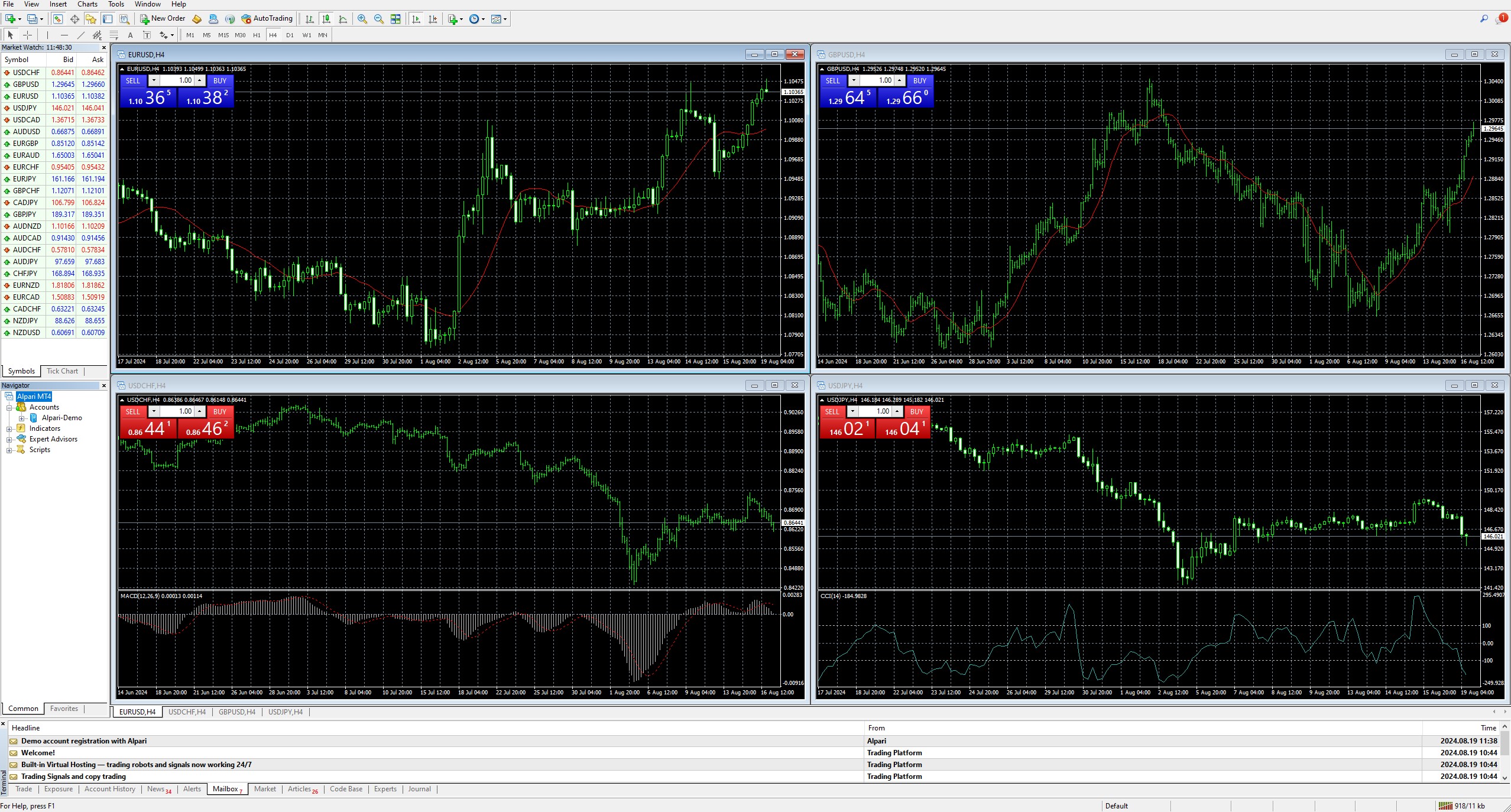
One of MT4’s standout features is its support for automated trading through Expert Advisors (EAs), which allow trading strategies to be executed automatically based on predefined conditions. Users can also create custom indicators and scripts using the MQL4 (MetaQuotes Language 4) programming language, specifically designed for developing trading robots and technical indicators. The platform ensures strong security by encrypting data between the trader and the server with a 128-bit key, and supporting RSA digital signatures, safeguarding both trading and personal data. MT4 also includes advanced communication tools that enable brokers to post messages and interact directly with traders, which is particularly useful for real-time updates and support.
MetaTrader 4 is accessible as a web-based platform via an internet browser, as well as through fully-fledged desktop applications for Windows, Mac, and Linux. Additionally, MT4 offers mobile versions for iOS and Android, allowing traders to manage their accounts from smartphones and tablets, thus providing the flexibility to trade on the go. The platform also grants access to market news and features an internal mailing system to keep traders informed of the latest economic events.
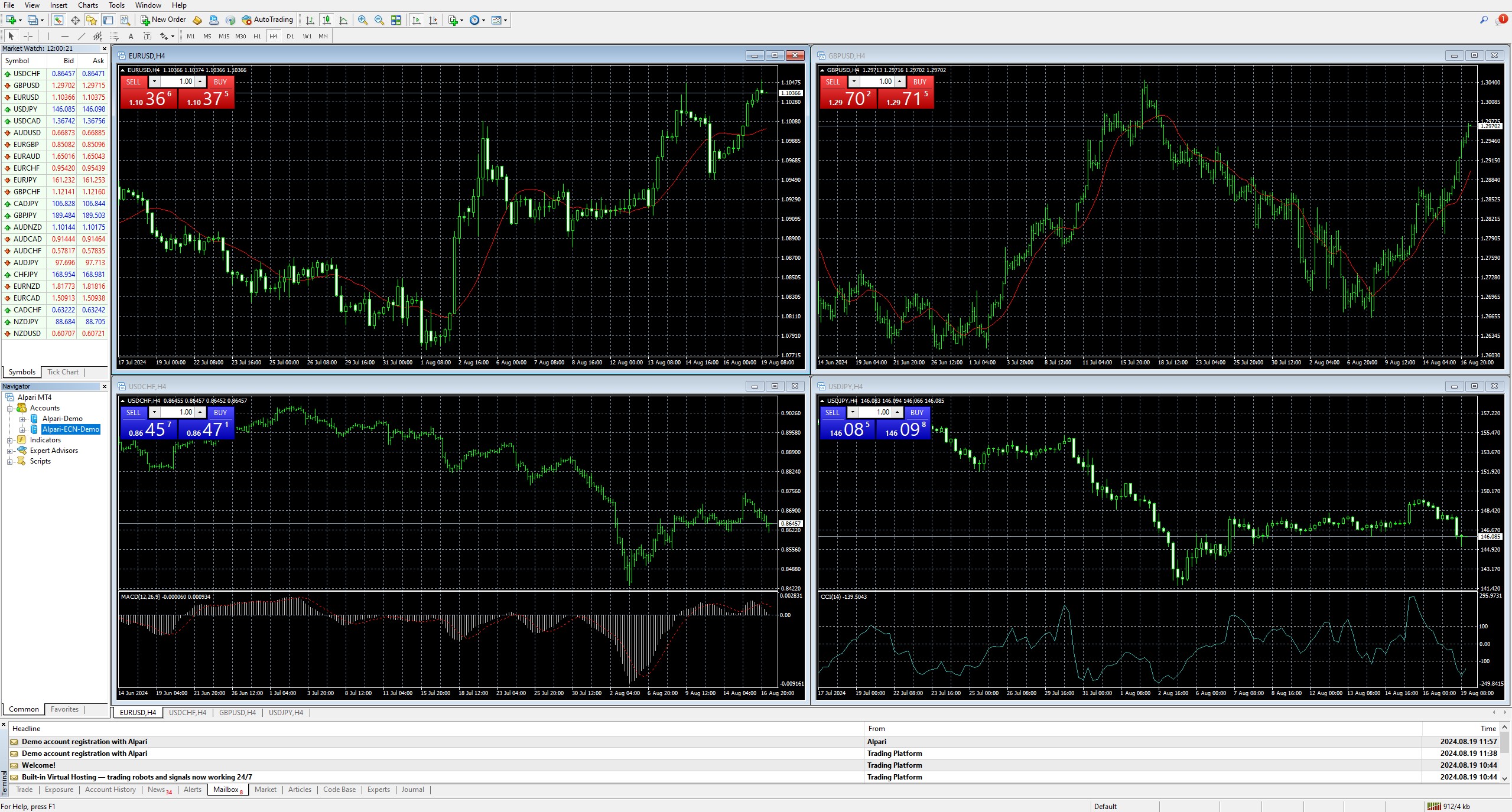
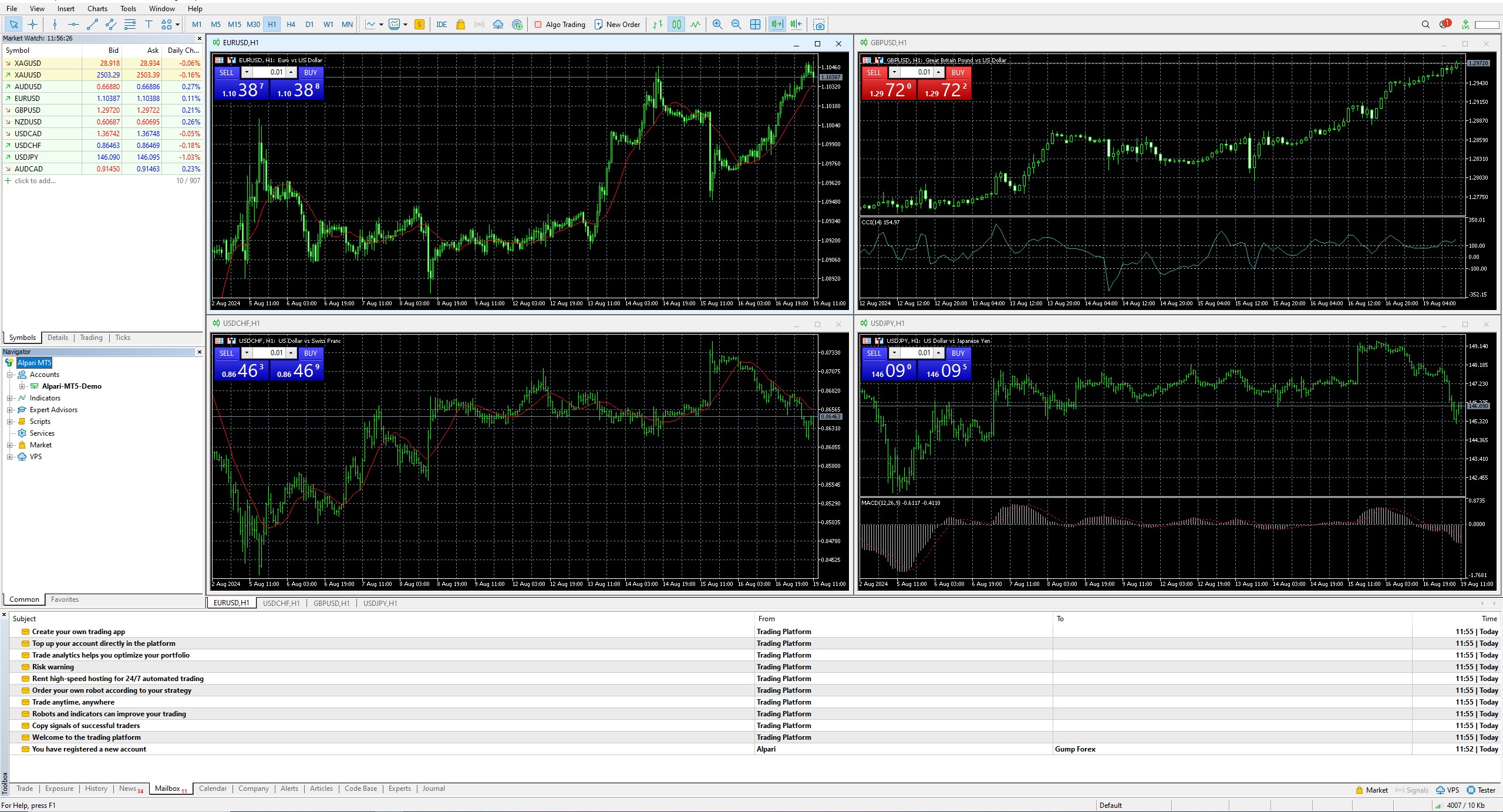
MetaTrader 5 (MT5), the successor to MT4, was developed and released by MetaQuotes Software in 2010. It is designed to cater to a broader market, including not just Forex but also stocks, commodities, and futures. MT5 comes equipped with more advanced technological features compared to MT4, offering additional functionalities aimed at professional traders. Unlike MT4, which is primarily focused on Forex trading, MT5 supports trading across multiple financial markets from a single account, including stocks, futures, and CFDs, providing traders with extensive opportunities to diversify their portfolios.
MT5 includes a greater number of technical indicators, graphical objects, and timeframe options than MT4. It features 21 timeframes, over 80 technical indicators and analytical tools, and an integrated economic calendar directly on the platform. A significant feature of MT5 is the Market Depth functionality, which displays price quotes from different market participants in real-time, a tool particularly valuable for day traders and those using scalping techniques. The platform supports the MQL5 (MetaQuotes Language 5) programming language, which is more powerful and efficient than MQL4. MQL5 facilitates faster execution, more advanced EA (Expert Advisor) capabilities, and easier programming of complex trading strategies. However, scripts developed for MT4 are not directly compatible with MT5 due to differences in the programming languages and platform architecture.
For traders involved in algorithmic trading, MT5 offers a powerful strategy tester that supports multi-threaded, multi-currency, and real tick data testing. This tester also allows the visualization of testing results, providing deeper insights into the effectiveness of trading strategies. MT5 provides enhanced charting capabilities, enabling more thorough analysis, with the ability to open up to 100 charts simultaneously, each featuring 21 timeframes and over 80 built-in technical indicators and analytical tools. The platform’s integrated economic calendar keeps traders informed of major economic events that could impact the market, all within the platform itself.
MT5 offers four types of order execution: Market, Instant, Request, and Exchange, providing greater flexibility and precision in executing different trading strategies. Unlike MT4, which only offers hedging, MT5 supports both netting and hedging systems, allowing traders to choose the system that best suits their trading style and regulatory requirements.
Despite the advancements in MT5, many traders still prefer MT4 for its simplicity and familiarity. MT4 has been in the market longer, leading to wider adoption among brokers and a larger user base. The MQL4 programming language used in MT4 is often considered easier to learn and use compared to MQL5, making it a preferred choice for those who rely heavily on automated trading. Additionally, MT4’s extensive library of EAs, custom indicators, and scripts is a significant advantage for traders who have already invested time and resources in developing or acquiring MT4 strategies, as these tools are not directly compatible with MT5.
For traders looking to fully utilize the automated trading capabilities of the MetaTrader platforms, using a Virtual Private Server (VPS) is recommended. This ensures that scripts and automated strategies can run reliably 24/7 without depending on the trader’s personal hardware or internet connection. Some brokers offer a free VPN to more active clients who meet certain deposit and volume requirements. But once again, Alpari is not one of these brokers and the VPN service must be entirely at the client’s expense.
Alpari offers the desktop versions of MT4 and MT5 for Windows, as well as the mobile platform applications for Android and iOS devices. But the web versions of the platforms are not available. Alpari advertises several proprietary mobile apps, but at the time of writing this review the main Alpari Mobile app was missing from the Google Play Store. Instead, the Alpari Invest app, designed for PAMM accounts, was available.
Alpari Account types and trading conditions
Alpari offers several types of trading accounts that allow a choice of different pricing models and trading platforms. The broker allows free registration of Demo accounts, which gives you the opportunity to try out all possible routines without depositing real money. Registering a Live Account requires filling in personal details and identity verification. There are only two options for the account base currency – USD and EUR.
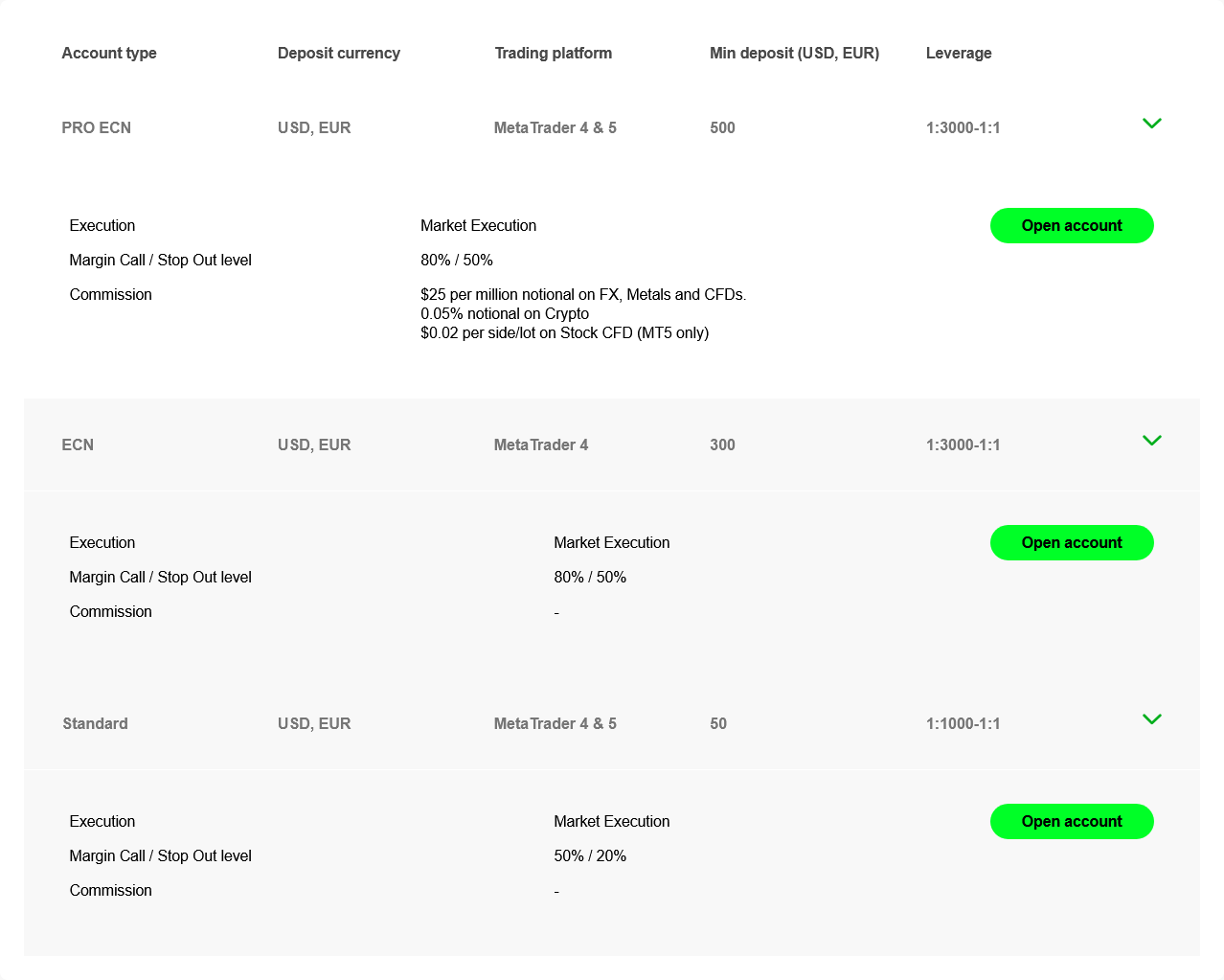
The standard account can be used with MetaTrader 4 (MT4) and MetaTrader 5 (MT4) platforms. This is an account where the trader pays only a floating spread. The ECN account, which pays a spread and a fixed commission, can only be used with the MT4 platform. The ECN Pro account offers lower spreads than the ECN account and, like the Standard account, can be used with both available trading platforms.
The tradable instruments offered by Alpari include 7 major currency pairs, 25 minor currency pairs, 12 exotic currency pairs, 2 precious metals, CFDs on 19 indices, 13 commodities, 17 cryptocurrencies and over 600 US stocks. Cryptocurrencies and stocks are only available when using the MT5 platform.
The broker’s website includes relatively detailed information on contract specifications, but the descriptions of account types are incomplete and contradictory. The home page of the website states that the Standard Account requires a minimum deposit of 50 USD/EUR. But after registration of the account we get access to a different description, according to which the minimum deposit for the Standard Account is 20 USD when using the MT4 platform and 100 USD when using MT45 The minimum deposit information for ECN and ECN Pro matches in both places – 300 USD and 500 USD respectively.
Using the Standard Demo account we saw a spread of 1.7 pips for the benchmark currency pair EUR/USD, 1.5 pips for GBP/USD and 2 pips for USD/JPY. These levels are within the industry average, but are far from the lowest you can find at another brokerage.
The descriptions of the account types indicate the amount of commissions for the ECN Pro account only. Therefore, we assume that the commissions for the ECN account are the same, with the difference between the two account types being the spread. The other option is for the ECN account not to charge a commission, which explains the higher spreads, but this is unusual. When using an ECN Demo account we saw a spread of 0.9 pips for EUR/USD and 1.3 pips for other major currency pairs. These levels are extremely high for this type of account which should offer a raw spread. In fact, these are spreads that many other brokers offer for a Standard account type without additional commissions. When using an ECN Pro account we saw more expected and competitive spreads of 0.1-0.2 pips.
The listed commissions for an ECN Pro account are of 25 USD per million notional value on forex, metals and CFDs, and 0.05% of the notional trade value for cryptocurrencies. On their own, these commissions are competitive, but only in combination with the ECN Pro account spreads.
Understanding the difference between accounts where clients only pay a spread and those that feature raw spread plus a fixed commission – ECN accounts – is crucial for choosing the right account type for your trading style and goals. With the accounts where traders pay only the spread, those spreads are usually higher than those in raw spread accounts, because this is the primary way the broker earns revenue on these accounts. Traders don’t have to calculate additional commission costs, because the cost of the trade is clear from the spread alone. These accounts are generally more suitable for beginner traders, less frequent traders, or those who prefer simplicity in cost calculations. ECN accounts with fixed commission offer spreads that are very close to the interbank spread (which can be zero or near zero) and charge a fixed commission on each trade. A fixed commission is charged per lot traded, which is separate from the spread. This fee is explicitly stated and is generally based on the transaction size. These accounts provide more transparency in pricing and can be more cost-effective for frequent traders or those trading large volumes.
For high-volume traders, raw or zero spread accounts can be more cost-effective despite the commission. The narrower spread means that the cost to enter and exit trades is lower, which can significantly impact profitability in strategies that involve frequent trading (like scalping). Raw or zero spread accounts offer more transparency. Traders can see the actual market spread and are only charged a clearly defined commission, making it easier to analyze and forecast trading costs. The choice might depend on your trading strategy. If your strategy involves opening many trades quickly (scalping or high-frequency trading), a raw spread plus commission account might be more suitable because the transaction costs could be lower per trade. For less frequent trades or longer-term positions, the simplicity of a spread-only account might be preferable if the slightly higher spread isn’t a significant factor in the strategy’s performance.
One of the main advantages of offshore brokers is that they do not have to comply with strict regulatory requirements to maximize the leverage they offer to retail traders. But before you take advantage of these opportunities, don’t forget that leverage is a double-edged sword and can increase both your profits and losses. This risk is especially pronounced with brokers that don’t provide negative balance protection, which appears to be the case with Alpari.
The maximum leverage you can trade with as an Alpari retail client depends on your account type, the instrument you trade and the size of your positions. When using a Standard account, the maximum leverage is 1:1000 for trading major and minor currency pairs, 1:200 for exotic currency pairs, 1:1000 for spot metals, 1:300-1:500 for indices, 1:500 for oil and 1:25 for other commodities. The maximum leverage for trading Bitcoins and Ethereum is 1:1000, for other cryptocurrencies the maximum leverage is 1:5.
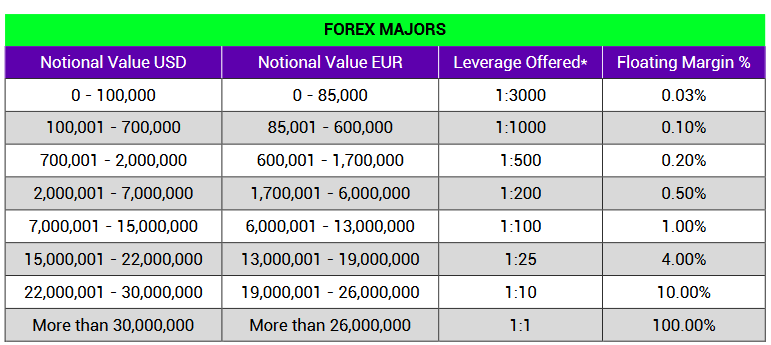
When using ECN accounts the maximum leverage is 1:3000 for major currency pairs and spot metals, 1:1000 for minor currency pairs, 1:200 for exotic currency pairs. The maximum leverage for other asset classes is the same for all account types.
The broker reduces the maximum available leverage if the notional value of the positions exceeds certain thresholds. For example, for ECN accounts the maximum leverage for major currency pairs is reduced from 1:300 to 1:1000 if the notional value exceeds 100,000 USD or 85,000 EUR.
Alplari also offers the option of passive income as a PAMM account manager or investor. PAMM (Percentage Allocation Management Module) account is a type of managed trading account that allows investors to allocate their funds to be managed by experienced traders or money managers. The PAMM system automates the distribution of trading results among all participating investors based on their share of the total invested capital. Investors can choose from a list of professional traders to manage their funds. Managers trade using their own funds and the pooled funds from investors, aligning their interests with those of the investors. The PAMM system automatically distributes profits and losses proportionally among investors based on their contribution to the total fund. Each investor’s share of the account is calculated as a percentage of the total fund, ensuring fair distribution of trading results.
A minimum investment of 50 USD/EUR is required to be an investor in any of the PAMM accounts offered by the broker. If you want to be a PAMM account manager and earn fees from successful trades with the money of investors who have trusted you, you must have deposited a minimum of 100 USD/EUR for a private account and 300 USD/EUR for a public account if you use a Standard account, and 500 USD/EUR in both cases if your account is an ECN. Tradable instruments are limited to 33 currency pairs, 2 metals and 25 CFDs when using a Standard account and 46 currency pairs, 2 metals and 692 CFDs when using an MT4 ECN Pro account.
Alpari maintains a dedicated mobile application for PAMM accounts called Alpari Invest. The app, available for Android and iOS devices, allows one-click deposits and instant withdrawals, enables you to keep track of your investments and get important notifications on your returns, and also gives suggestions for PAMM accounts that fit all your requirements.
Alpari charges inactivity fees, but they are relatively low – 5 USD/EUR per month. An account will be considered dormant after no trading activity for six months.
Alpari Deposit and Withdraw Methods
Alpari allows you to deposit and withdraw funds with a fairly wide range of payment methods, including many options in local currencies. But similar to the information about the required minimum deposit, we find different information about the payment methods on the homepage of the website and after logging in. In this section, we will describe all of the payment methods announced by Alpari, but you should keep in mind that the actual options available are likely to vary greatly depending on your location.
Alpari claims to allow deposits through bank transfer and credit/debit cards in EUR/USD, UnionPay in CNY, Fasapay in USD and IDR, AdvCash in USD and EUR, GC Pay in USD and EUR, LatAm online banking in COP and MXM, Perfect Money in EUR and USD, Vload eVouchers in EUR and USD, online banking in THB, VND, MYR, IDR, WebMoney in EUR and USD, TC Wallet in EUR and USD.
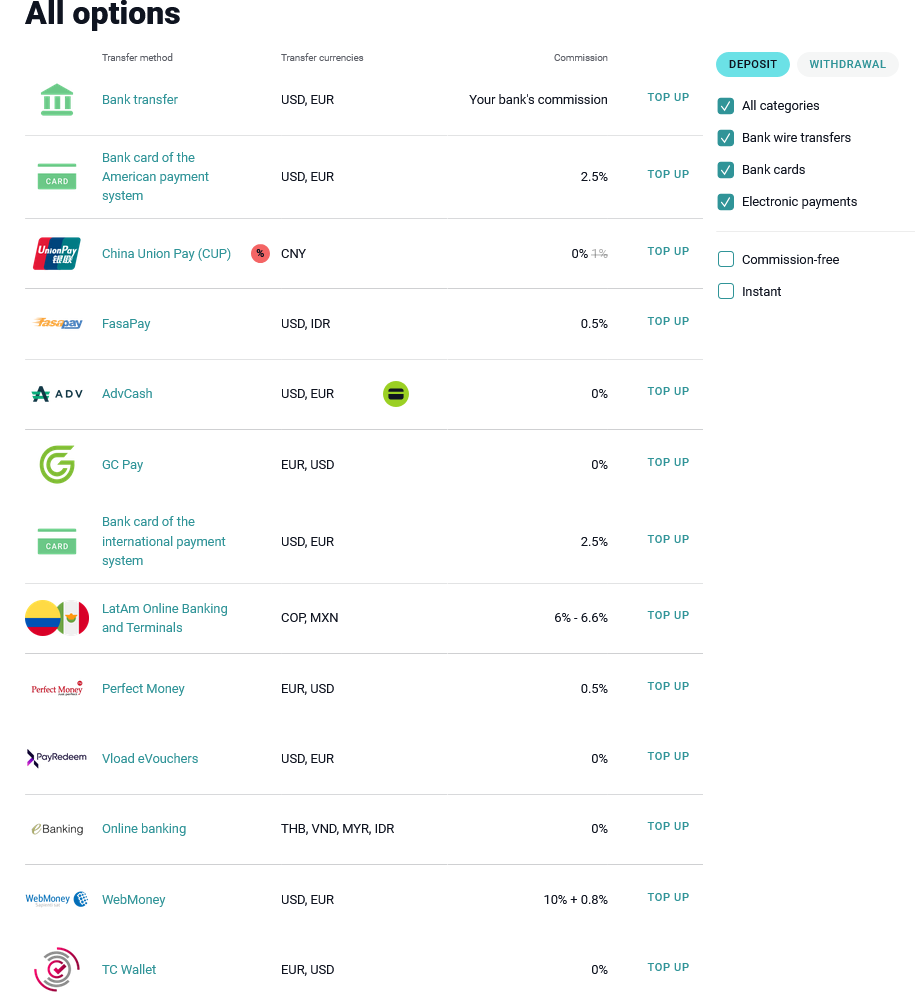
On the home page of the website, additional options are announced that are not available in the description of payment methods that we see after registration. These include multiple local payment processors – Mir for deposits in RUB, KZT, UAH, AZN and KGS, Appex for deposits in NGN, Humo and Uzcard in UZS, Online Banking Egypt, Pigsmile for transactions in BRL, RunPay and TC Pay for deposits in USD. In the same location, an option for depositing and withdrawing with cryptocurrencies via b2binPay is also listed.
Most payment methods are also available for withdrawal with the exception of credit/debit cards. The website specifies minimum transaction amounts only on payment methods in local currencies – 1500 RUB; 10 000 KZT, 500 UAH, 36 AZN, 500 KGS, 500 UAH, 50 000 UZS, 1000 CNY, 350 EGP, 10 BRL, 10 000 IDR.
Alpari differs negatively from many of its competitors in that it charges fees for deposits and withdrawals for most payment methods. The fee for deposit by bank transfer depends on your bank’s commissions. For deposit by credit/debit card Applari charges 2.5%. Deposit with Fasapay and Perfect Money requires 0.5% fee, with LatAm bank transfer – 6-6.6%. Other payment methods, including cryptocurrencies, have no deposit fee.
For withdrawals via LatAm online banking, the broker charges 1%+2 USD, and for online banking in THB, VND, MYR, IDR the fee is 2%. When withdrawing with Fasapay and Perfect Money the fee is 0.5%, when using AdvCash it is 2%, WebMoney charges 0.8% but not more than 50 USD/EUR. Withdrawal via Vload eVouchers is charged 6%, via Appex – 2.5%, and via cryptocurrencies – 0.1%, but not less than 3 USD and not more than 10 USD.
In case of no trading activity, or if any form of abuse is found relating to the reimbursement policy, Alpari reserves the right to reclaim any reimbursement fees. If you ask to withdraw your funds after no trading activity, Alpari will charge you the equivalent amount of any banking fees incurred, or 3% of the total withdrawal amount. In the event that your trading account and withdrawal are denominated in different currencies, the transaction will be subject to conversion and charges may apply.
Payments to third parties are not accepted. The name of the Receiver must match the name registered with Alpari. If you wish to withdraw your initial deposit, you have to use the same source of funds from which you originally deposited. Any generated profits following your initial deposit can be withdrawn by any other Payment method available to you.
| Deposit method | Minimum | Maximum | Processing time | Fee |
| Credit/Debit Card | $20 | Unspecified | Unspecified | 2.5% |
| Bank | $20 | Unspecified | Unspecified | Unspecified |
| FasaPay | $20 | Unspecified | Unspecified | 0.5% |
| UnionPay | $20 | Unspecified | Unspecified | Free |
| Advanced Cash | $20 | Unspecified | Unspecified | Unspecified |
| Perfect Money | $20 | Unspecified | Unspecified | 0.5% |
| Crypto | $20 | Unspecified | Unspecified | Unspecified |
| Withdrawal method | Minimum | Maximum | Processing time | Fee |
| Bank | Unspecified | Unspecified | Unspecified | 2% |
| FasaPay | Unspecified | Unspecified | Instant | 0.5% |
| UnionPay | Unspecified | Unspecified | Instant | Free |
| Perfect Money | Unspecified | Unspecified | Instant | 0.5% |
| Advanced Cash | Unspecified | Unspecified | Instant | 2% |
| Crypto | Unspecified | Unspecified | Instant | 0.1% |
Alpari Bonuses and Promotions
Along with the higher leverage they can offer, offshore brokers often attract clients through bonuses, promotions and prize games – practices banned by most leading financial regulators. Alpari is somewhat disappointing in this regard because it does not offer Welcome Bonuses, Deposit Bonuses or No Deposit Bonuses. This broker only offers a loyalty program that requires a more substantial deposit.
Alpari’s loyalty program has four tiers – Gold, Platinum, Diamond and VIP. All customers with a live account can participate in the program if their account balances meet the requirements – 1,000 USD, 5,000 USD, 10,000 USD and 40,000 USD for the four tiers respectively.
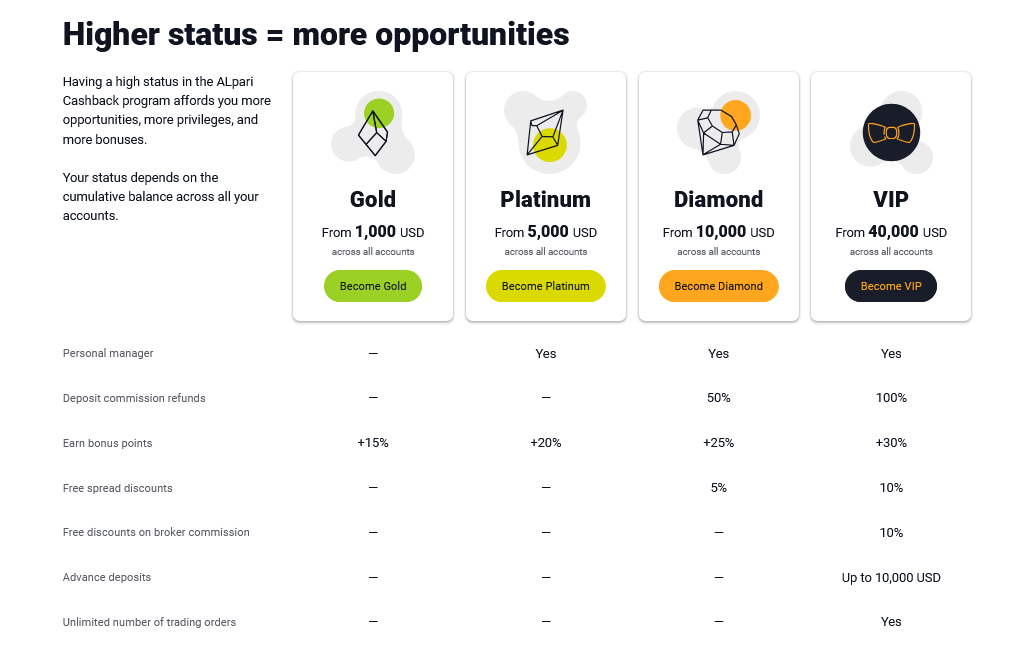
Depending on trade volume, loyalty program participants receive points that can be redeemed for negative swap refund, up to 20% spread refund, PRO ECN commission refund, Improved conversion rate for account deposits and PAMM account and portfolio investments, deposit commission refund. The latter is not very attractive considering that most brokers do not charge commissions for depositing at all. Loyalty Points can also be exchanged for real cash, which is withdrawable, or funds for fix-contracts trading.
Higher levels in the loyalty program provide faster points earning, greater discounts on spreads and commissions, and a personal manager.
| Bonus | Min deposit | Max bonus | Required turnover | Cash out limit |
| Loyalty program | $1000 | Unspecified | Unspecified | Unspecified |
Alpari Tools and Education
Alpari does not offer much in the way of educational materials. The website has a modest educational section including a glossary and articles on the basics of forex and CFD trading. Alpari does not offer video training, webinars, e-books, fundamental and technical analysis or commentary from experts as you will find with some larger brands. Alpari’s website includes an informative market news section that is updated regularly.
In terms of additional instruments, Alpari offers a more robust package. In addition to basic tools such as an economic calendar and currency converter, the broker offers subscriptions to two of the most popular third-party extension packages for MetaTrader 4 and MetaTrader 5 platforms – Trading Central and FX Blue.
Trading Central is a renowned provider of financial market research and analytics. With more than 25 years’ experience, Trading Central is dedicated to helping traders and investors find and validate new opportunities, learn about financial markets, and manage their risk. It does this through an award-winning mix of automated AI analytics and registered investment adviser expertise. Trading Central offers a range of fundamental analysis tools for traders who want to find opportunities easily or inform their decisions. FX Blue is an award-winning fintech provider, which delivers institutional-quality software and services to brokers in more than 20 countries. Founded in 2010, it helps traders make informed, technology-assisted decisions through high-quality analytics, insights and tools. From technical indicators for advanced charting to innovative risk-management tools, FX Blue helps seasoned traders conduct detailed price analysis and create a customized MetaTrader experience.
Notes from the author:
Brokers like Alpari pose the question of where the balance lies between the benefits and risks of trading through offshore financial services providers. On the one hand, Alpari is not an offshore subsidiary of a regulated broker, but a purely offshore broker, which makes it less trustworthy. But on the other hand, this brand has been operating for a quarter of a century, so it's clearly doing something right. It would be easier to recommend it if it participated in a voluntary Investor Compensation Fund such as the Financial Commission, and if it stated that it provided negative balance protection. Beyond that, Alpari has a reasonably good looking and functioning website, with the Client Area making a particularly good impression. The broker provides not only the MT4 and MT5 platforms, but also popular third-party extensions such as Trading Central, which greatly enhance the experienced trader's toolkit.
The spreads for the Standard Account are reasonable but not spectacular, while the ECN Pro account looks quite competitive. But the lack of clear information on some trading parameters leaves a bad impression. This impression is reinforced by the conflicting information about available payment methods and the presence of deposit and withdrawal fees. The opportunity to trade with high dynamic leverage and the bonuses included in the loyalty program will nevertheless be attractive for more active and experienced traders. The offered PAMM accounts and the dedicated mobile app are in turn worth considering by less experienced investors looking for passive income.


