





Doo Prime Review
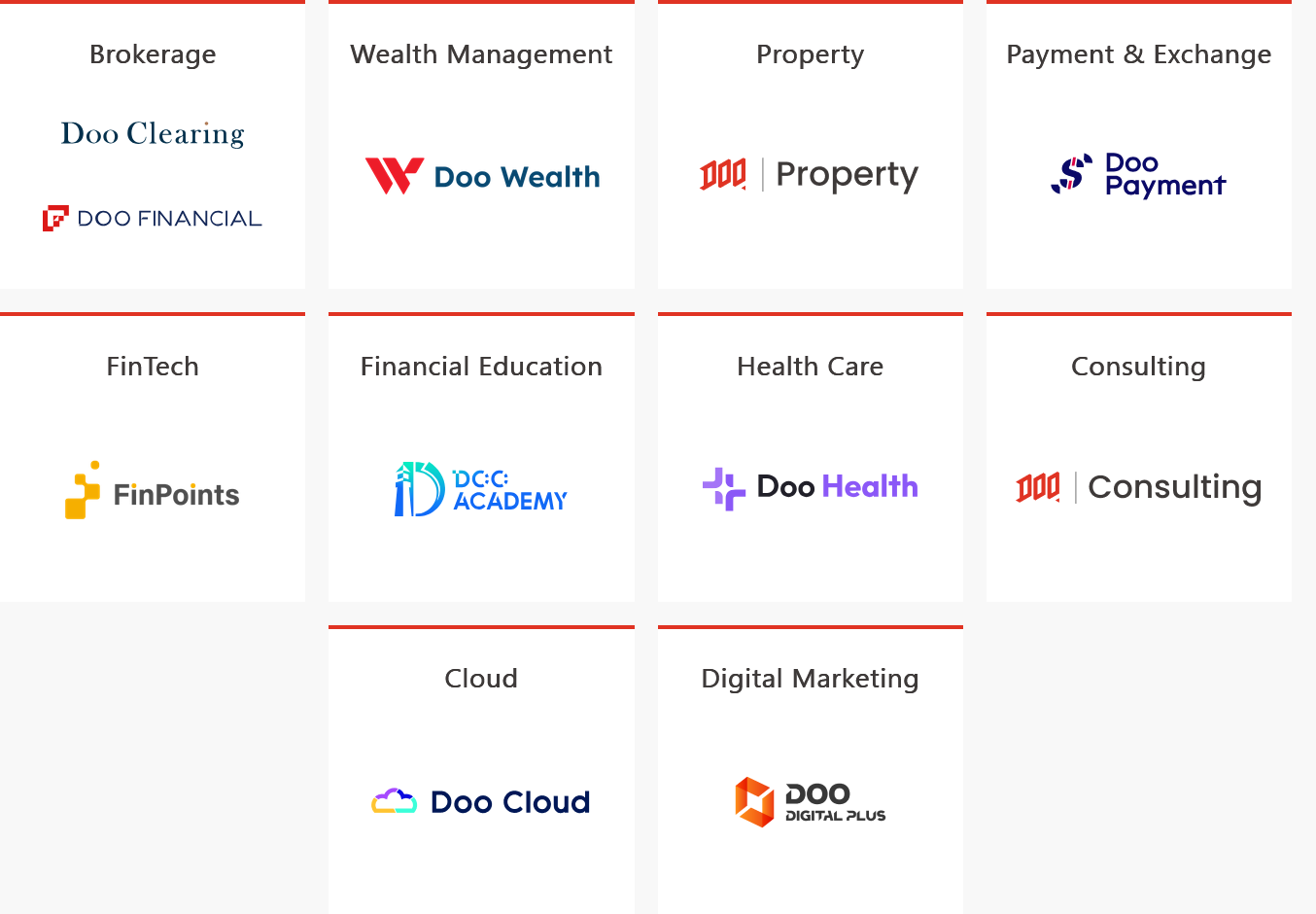
Doo Prime is the brand owned by the international financial and technology group Doo Group. This group includes many companies engaged in activities including wealth management, property, payment & exchange, fintech, financial education, healthcare, consulting, cloud services, digital marketing. Doo Group also has two other brokerage brands – Doo Clearing and Doo Financial. Companies in this group hold licenses from some of the most respected and stringent financial regulators in the world, including those in the US, UK, Australia, Singapore, Hong Kong. This means that the group as a whole must meet very high requirements for financial soundness, transparency, accountability and compliance with good business practices. One would expect that a forex and CFDs broker that is part of such a financial group would also be very impressive and confidence inspiring.
Doo Prime indeed looks like such a broker at first glance – it offers multiple trading platforms, including its own mobile app, an impressive variety of tradable instruments, different account types tailored to the needs of traders with different experience, capital and investment intentions, passive income options, significant informational and research resources and multilingual customer support. But a closer look reveals quite a few irregularities that are hard to explain given the Doo Group’s profile.
Although the group companies hold multiple licenses from leading financial regulators, Doo Prime is operated solely by offshore companies subject to much looser regulatory controls and weaker client safeguards. The information on the Doo Prime website is sometimes contradictory and incomplete, and this ambiguity affects even some fundamental trading parameters such as the cost of trading certain types of accounts. We also found a drastic discrepancy between advertised and actually available payment methods.
Taken on its own, Doo Prime proves to be quite inconclusive in some of the most important respects when choosing a broker through which to invest in the financial markets. In this review, we’ll take a detailed look at Doo Prime’s offerings so you can make an informed decision about whether this broker is worth giving a chance. The review will be dedicated exclusively to how Doo Prime offers to retail customers. The Doo Group business as a whole, including the other brokerage brands, will not be the subject of a detailed examination in this review.
Doo Prime Licenses and Regulation
On the Doo Prime website we can see the claim that it is a “multi-regulated” forex broker. This may be true in a general technical sense, but the reality does not match the implication that this claim is trying to make.
According to the Doo Prime Customer Agreement, three offshore companies are behind this brand:
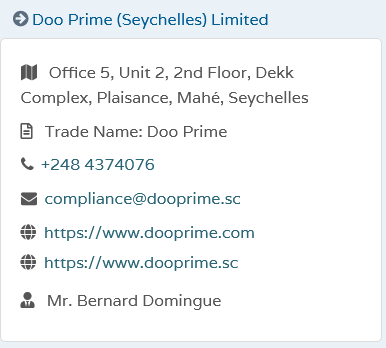
- Doo Prime Seychelles Limited, licensed securities dealer, authorized and regulated by the Seychelles Financial Services Authority;
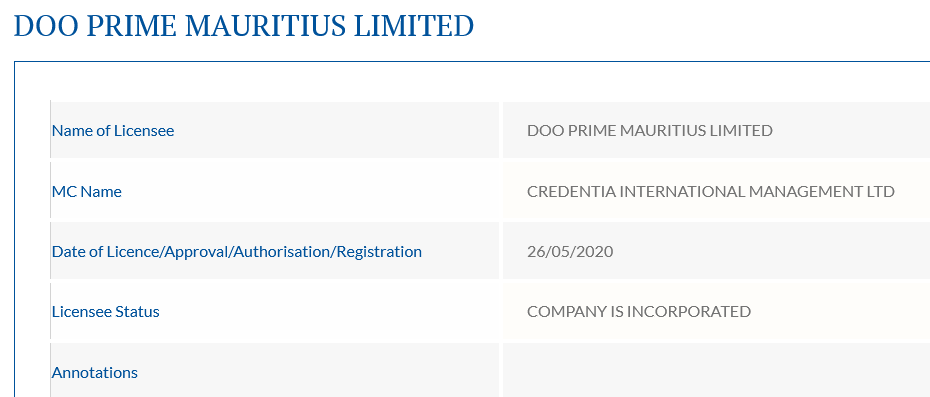
- Doo Prime Mauritius Limited, licensed investment dealer, authorized and regulated by the Mauritius Financial Services Commission;
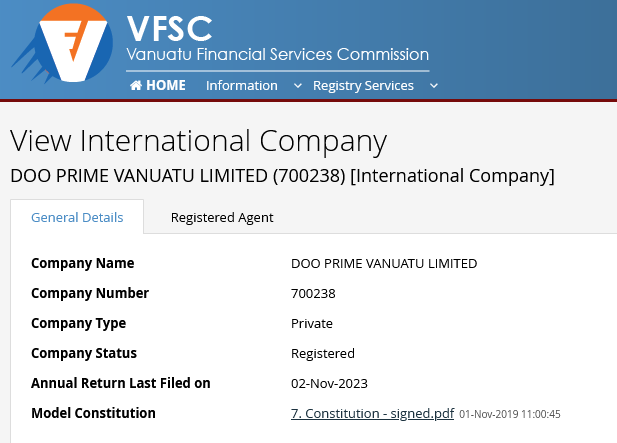
- Doo Prime Vanuatu Limited licensed financial dealer, authorized and regulated by the Vanuatu Financial Services Commission.
On the homepage of the website is another offshore company whose relationship to registered customers is not made clear – Doo Prime Limited, registered in Cayman Islands.
In the website and documentation we did not find an explanation of which company you become a customer depending on the jurisdiction. The broker only provides the general wording that it does not offer services to individuals or companies of certain jurisdictions, including but not limited to Afghanistan, Canada, Congo (Kinshasa), Cuba, Cyprus, Hong Kong, Indonesia, Iran, Malaysia, North Korea, Singapore, Sudan, Syria, United Arab Emirates, United States and Yemen.
Doo Prime offers its services through the domain dooprime.com. In the company’s registration details in Seychelles we see that the broker has another official registered domain – dooprime.sc. At the time of writing this review, registering a new account and logging into an existing one was not possible through dooprime.sc domain. The information on both websites is identical with some minor exceptions that will be mentioned later in this review.
You should keep in mind that these are the companies you will be dealing with if you become a Doo Prime customer. The licenses of other Doo Group companies are not directly relevant, but we will still list the main ones so that we can put into context some characteristics of Doo Prime that we find puzzling. We should note that Doo Prime is not even listed among the brands and businesses on the Doo Group’s main website. Doo Prime’s trading software is registered in the names of group companies based in Singapore and Hong Kong. But that doesn’t mean that forex broker regulations in those jurisdictions apply to clients of this broker, which is effectively offshore.
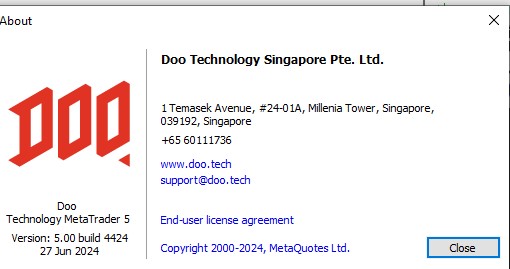
Among the companies in the group are Doo Capital Market Sg Pte. Ltd, regulated by the Monetary Authority of Singapore; Doo Financial HK Limited. Licensed by the Hong Kong Securities and Futures Commission; Doo Financial Labuan Limited. Registered with the Malaysia Labuan Financial Services Authority, Elish & Elish, Inc., US based company Licensed by the Securities and Exchange Commission and the Financial Industry Regulatory Authority; Doo Clearing Limited, licensed by the UK’s Financial Conduct Authority, Doo Financial Australia Limited, authorized by the Australian Securities and Investments Commission.
In the United Kingdom, the Doo Group operates under the brand name Doo Clearing and serves only professional clients, not retail traders. Under the UK regulatory framework, a professional client must meet two of these three conditions: To have carried out transactions, in significant size, on the relevant market at an average frequency of 10 per quarter over the previous 4 quarters; To have a financial instruments portfolio, defined as including cash deposits and financial instruments, that exceeds EUR 500,000; To work or have worked in the financial sector for at least one year in a professional position, which requires knowledge of the transaction or services envisaged. Professional clients are stripped of the guarantees and protections afforded to retail clients, but are also exempt from many of the restrictions, most notably the 1:30 maximum leverage trading limit.

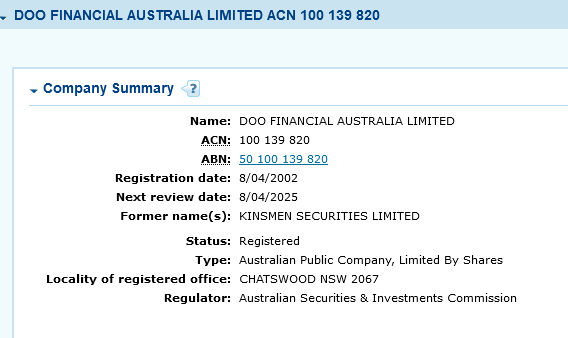
In Australia, the group operates through the Doo Financial brand and does not offer forex trading. In this market, as in the United States, the Doo Group offers trading in financial instruments such as equities, public funds, bonds, futures and capital notes.
Understanding the regulatory environment is essential for anyone engaged in forex trading, as it significantly impacts the safety of investments and the overall trading experience. Forex markets are particularly susceptible to fraudulent activities due to their vast size and global nature. Robust regulatory frameworks protect traders by ensuring that brokers adhere to strict operational standards and ethical practices. Awareness of these regulations helps traders select compliant brokers, reducing the risk of falling victim to scams.
Regulators enforce rules that mandate fair treatment of clients by forex brokers. This includes ensuring transparent pricing, executing orders at the best possible prices, and preventing conflicts of interest. Regulated brokers are required to maintain adequate capital reserves, use segregated accounts to keep client funds separate from the firm’s operating funds, and implement other financial management practices that enhance the security of client assets. Forex trading involves significant risk, particularly due to the leverage offered by brokers. Regulations often limit the amount of leverage that traders can use, mandate negative balance protection, and require brokers to provide clear risk warnings.
In case of disputes or issues with broker practices, traders need to know their protection under regulatory guidelines and what recourse is available. Regulatory bodies often provide mechanisms for filing complaints and seeking resolution. Regulations ensure that the forex market operates transparently and orderly, promoting integrity and maintaining investor confidence in the financial system.
For larger-scale traders or those trading as part of a business, understanding regulations is crucial to ensure compliance with legal standards, including anti-money laundering (AML) and know your customer (KYC) requirements. In essence, knowledge of forex trading regulations not only safeguards traders’ financial interests but also enhances their trading capabilities by providing a safer, more stable, and transparent market environment.
For residents of countries outside strictly regulated jurisdictions, the most viable option for entering the forex trading market is often through an offshore subsidiary of a well-established and reputable brand. Many leading brokers operate such offshore divisions, enabling them to serve clients from multiple countries under a single legal entity.
Several offshore jurisdictions have emerged as popular choices for brokers due to various regulatory, tax, and operational advantages. These jurisdictions often have more lenient regulatory requirements compared to stricter environments like the United States, European Union, or Japan. This flexibility allows brokers to offer products and services that might be restricted in their home countries, such as higher leverage on trades, which can be particularly attractive to traders.
The cost of doing business is often significantly lower in offshore jurisdictions, including lower initial licensing fees, reduced capital requirements, and less burdensome compliance costs. This cost efficiency is crucial for newer or smaller brokers trying to establish themselves in the competitive forex market. Offshore financial centers also typically provide favorable tax regimes, including lower corporate tax rates, no capital gains tax, and other financial incentives. By establishing a subsidiary in these jurisdictions, forex brokers can significantly reduce their tax liabilities, enhancing their overall profitability.
Brokers operating in offshore jurisdictions often benefit from more flexible corporate governance and operational requirements. This can include simplified reporting standards and fewer restrictions on international capital flows, making it easier for brokers to manage global operations.
While there are legitimate business reasons for brokers to operate offshore, traders should be cautious. Offshore jurisdictions may offer less oversight, which can sometimes result in weaker protection against malpractice. Traders should thoroughly research a broker’s regulatory environment, the protections offered, and the reputation of both the broker and the jurisdiction before trading.
One of the most established offshore hubs for forex brokers is Seychelles. The Seychelles Financial Services Authority (FSA) is responsible for licensing, regulating, and supervising non-bank financial services in Seychelles, including forex trading. As part of its regulatory framework, the FSA imposes specific capital adequacy requirements to ensure brokers maintain financial stability and can withstand market volatility. The minimum capital requirement for forex brokers in Seychelles varies depending on the specific license category but typically starts around $50,000 USD. This amount can increase based on the broker’s trading volume, risk exposure, and other regulatory assessments. Beyond the initial capital, brokers must also maintain operational capital that aligns with their liabilities to ensure they can cover client trades and potential losses.
Brokers must have adequate risk management systems in place to monitor and control risks associated with their business activities. Seychelles-based brokers are required to keep client funds in segregated accounts separate from their corporate funds to protect clients’ investments.
While Seychelles has been developing its financial services sector and aims to adhere to international standards, traders should be aware that regulatory standards in offshore jurisdictions like Seychelles can differ significantly from those in more established financial centers such as the United States, United Kingdom, or the European Union. Therefore, while the lower capital requirements might make Seychelles an attractive location for forex brokers, traders should exercise due diligence and consider the regulatory environment and its implications on their investments.
Another commonly used offshore jurisdiction by brokers is Mauritius, regulated by the local Financial Services Commission (FSC). Forex brokers in Mauritius, generally categorized as Investment Dealers, must adhere to minimum capital requirements set by the FSC. The specific amount can vary depending on the broker’s activities. For Investment Dealers that hold or control clients’ assets (Full-Service Dealer including underwriting or Broker), the required minimum stated capital is MUR 10 million (approximately USD 250,000). For those that do not hold or control clients’ assets but execute orders on behalf of clients, the requirement is MUR 1 million (approximately USD 25,000). Apart from the minimum stated capital, brokers must ensure they have sufficient operational capital relative to their risk exposure, adequate to cover all risks associated with their brokerage operations. The FSC mandates that all financial service providers, including forex brokers, engage in fair trading practices, including transparent pricing, avoiding conflicts of interest, and ensuring that advertisements and promotions are not misleading.
Vanuatu has become a popular destination for forex brokers seeking a more flexible regulatory environment. Forex trading regulation in the offshore zone of Vanuatu is overseen by the Vanuatu Financial Services Commission (VFSC). Brokers must maintain a minimum paid-up capital, which was increased in recent years to improve the credibility and financial stability of licensed entities. As of the latest updates, the minimum capital requirement is approximately USD 50,000. Vanuatu’s regulatory standards are generally considered less stringent than those of more established financial centers. This includes more lenient requirements for operational procedures, client fund segregation, and ongoing compliance. Vanuatu regulations do require brokers to keep client funds separate from their operational funds to some extent, to protect clients’ money in the event of the broker’s insolvency. Vanuatu offers a flexible and cost-effective regulatory environment for forex brokers, making it an attractive destination for those seeking fewer regulatory constraints. However, this flexibility comes with increased responsibilities for traders to conduct thorough due diligence and understand the risks involved. The VFSC’s oversight provides a level of regulation, but it may not match the stringent standards of more established financial hubs.
According to Doo Prime’s legal documentation, the broker guarantees segregated bank accounts for its en retail clients. This means that client money is kept separate from the company’s operating funds and the broker has limited access to it. But nowhere did we find information on whether Doo Prime provides negative balance protection. This protection is standard for larger financial regulators and is intended to prevent a customer from losing more than the amount available in his or her trading account balance. Retail clients of brokers licensed in more heavily regulated jurisdictions such as the EU and the UK enjoy further additional protections, such as an Investor Compensation Fund that covers client losses up to a certain amount in the event of the broker’s bankruptcy. Some brokers take out voluntary insurance or participate in private Investor Compensation Funds, such as the Hong Kong-based Financial Commission. But Doo Prime does not appear to be among them.
Doo Prime Trading Software
Doo Prime offers a standard but very advanced and flexible set of trading software. The main platforms that can be used by the broker’s retail clients are the industry standard MetaTrader 4 (MT4) and MetaTrader 5 (MT4). The broker’s clients also have the option to integrate their MetaTrader trading accounts with the popular platform with social networking elements TradingView. Doo Prime also maintains its own mobile application called Doo Prime InTrade. Let’s take a detailed look at what each of the available options consists of.
MetaTrader 4 (MT4) is a highly popular trading platform primarily used for Forex trading, as well as for CFDs (contracts for differences) and futures markets. Developed by MetaQuotes Software and released in 2005, MT4 is renowned for its advanced trading capabilities, robust security, and accessibility for traders of all skill levels. MT4 features an intuitive interface that allows traders to efficiently manage their trades and analyze markets. It offers multiple chart setups and supports various time frames, enabling traders to make more informed decisions. The platform is equipped with a comprehensive set of technical analysis tools, including over 30 built-in indicators, more than 2,000 free custom indicators, and 700 additional indicators available for purchase. These tools assist traders in analyzing price dynamics of financial instruments.
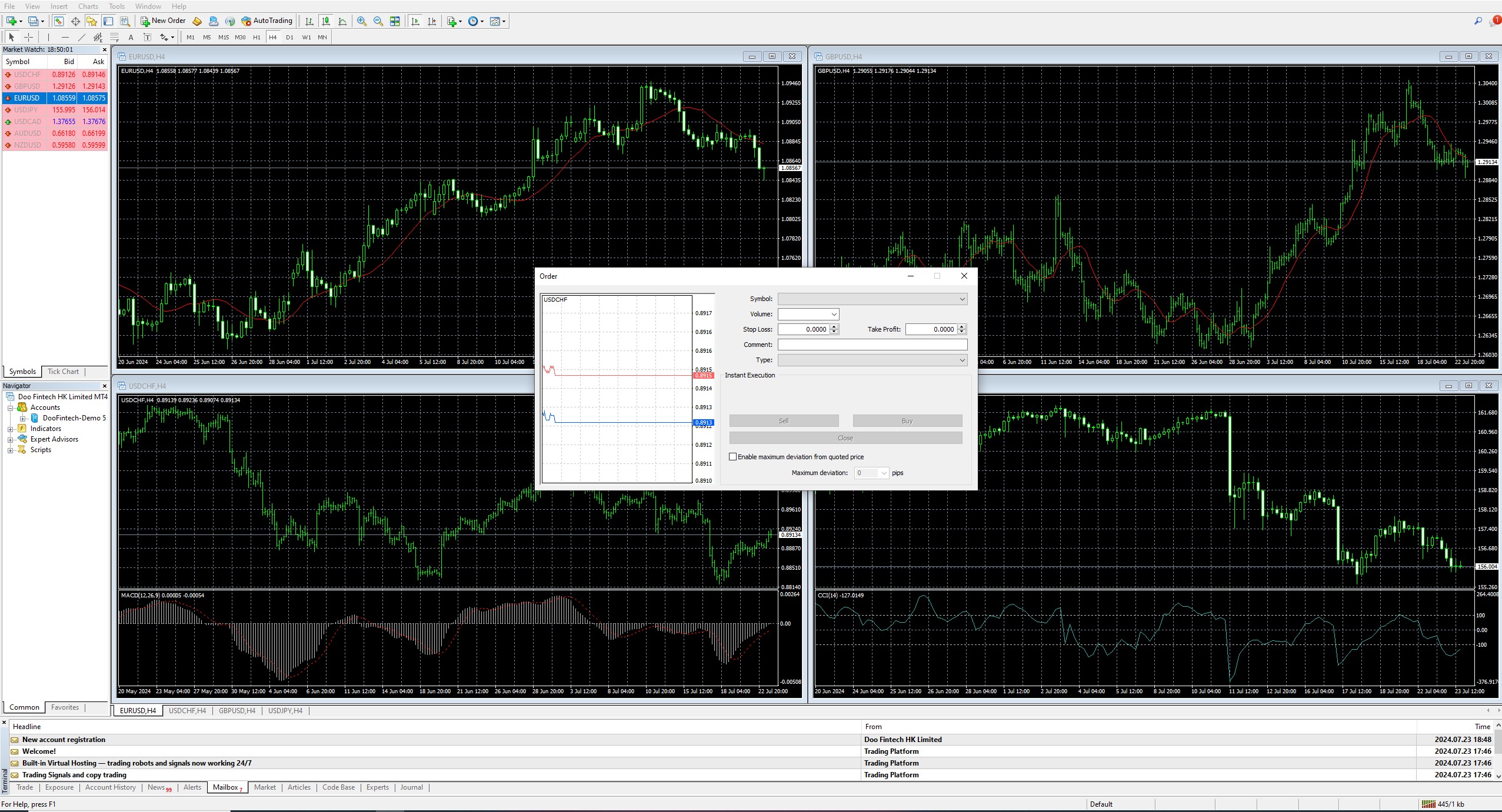
One of the standout features of MT4 is its support for automated trading through Expert Advisors (EAs). EAs automate trading strategies, allowing trades to be managed automatically based on predefined conditions. Users can create custom indicators and scripts using the MQL4 (MetaQuotes Language 4) programming language, specifically designed for developing trading robots and technical indicators.
MT4 provides robust security by encrypting data between the trader and the server with a 128-bit key and supporting RSA digital signatures, ensuring that trading and personal data are well-protected. The platform includes advanced communication tools for brokers to post messages and communicate directly with traders, which can be very useful for real-time updates and support. MetaTrader 4 is available as a web version accessible via an internet browser, and as fully-fledged desktop applications for Windows, Mac, and Linux. It also offers mobile versions for iOS and Android, allowing traders to manage their accounts from smartphones and tablets, providing the flexibility to trade on the go. The platform grants access to market news and includes an internal mailing system to keep traders updated with the latest economic events.
Overall, MetaTrader 4 remains a preferred choice for many traders due to its comprehensive features, customizability, and strong community support. Whether you are a beginner or an experienced trader, MT4 offers tools that cater to both automated and manual trading strategies.
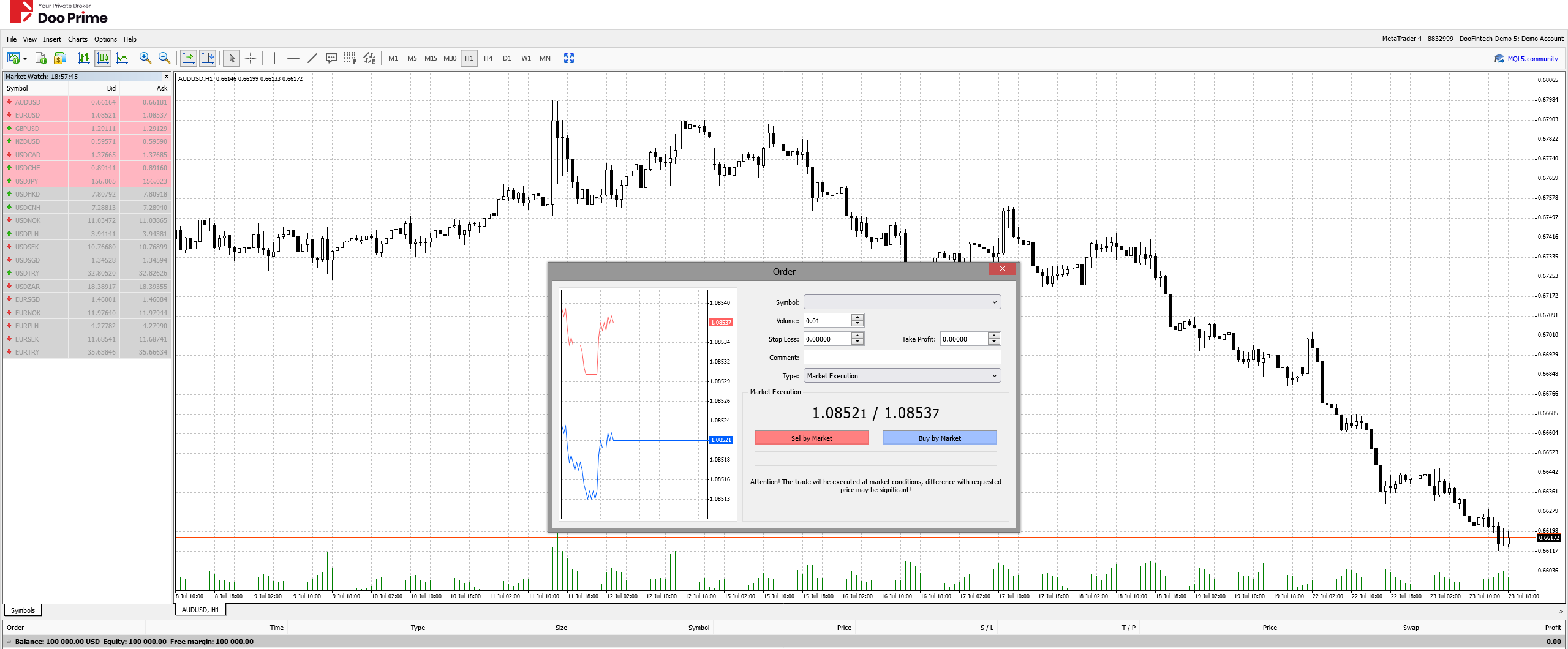
MetaTrader 5 (MT5) is the successor to MetaTrader 4, developed and released by MetaQuotes Software in 2010. It’s designed to cater to a broader market, including not just Forex but also stocks, commodities, and futures. MT5 is equipped with more advanced technological features compared to MT4 and offers additional functionalities aimed at professional traders. Unlike MT4, which is primarily focused on Forex trading, MT5 allows trading in several financial markets from a single account. This includes stocks, futures, and CFDs, providing traders with extensive opportunities to trade different instruments. MT5 includes more technical indicators, graphical objects, and timeframe options than MT4. It features 21 timeframes, over 80 technical indicators and analytical tools, and has an integrated economic calendar directly on the platform. A significant feature of MT5 is the Market Depth functionality, which shows the price quotes from different market participants in real-time. This is particularly useful for day traders and those using scalping techniques.
The platform supports MQL5 (MetaQuotes Language 5), which is more powerful and efficient than MQL4. MQL5 allows for faster execution, more advanced EA (Expert Advisor) capabilities, and easier programming of complex trading strategies. However, this means that scripts developed for MT4 cannot be directly implemented in MT5. For those who develop and test algorithmic trading strategies, MT5 offers a powerful strategy tester that supports multi-threaded, multi-currency, and real tick data testing. It also allows the visualization of testing results, providing more insights into the effectiveness of a strategy.
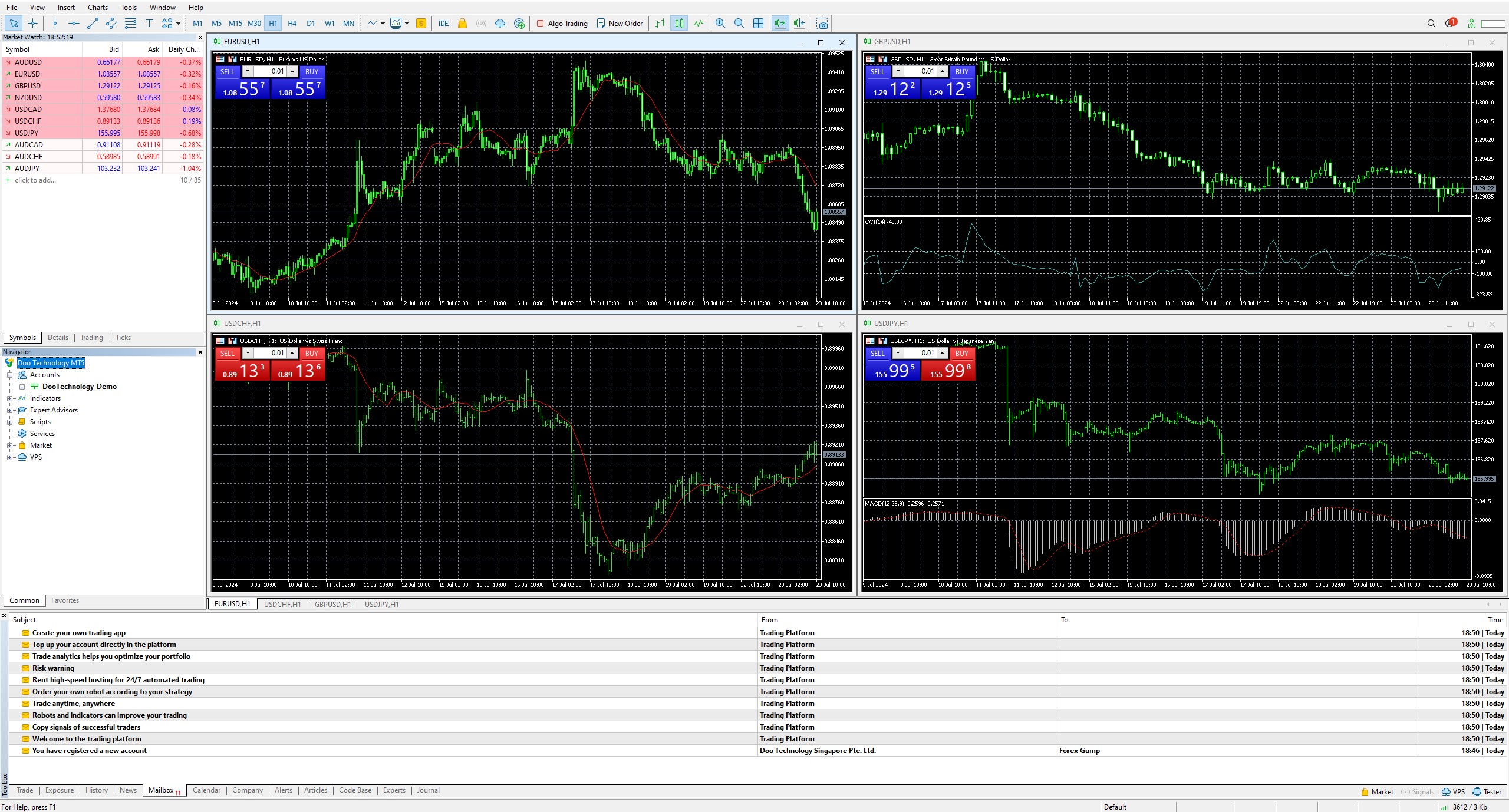
MT5 provides more advanced charting capabilities, allowing for more thorough analysis. Traders can open up to 100 charts simultaneously, and the charts come with 21 timeframes and over 80 built-in technical indicators and analytical tools. : Integrated directly into the platform, the economic calendar keeps traders apprised of major economic events that can impact the market, without needing to use an external website. MT5 offers four types of order execution: Market, Instant, Request, and Exchange. This variety allows for greater flexibility and precision in executing different trading strategies. MT5 supports both netting and hedging systems. While MT4 only offers hedging, MT5 allows traders to choose the system that best suits their trading style and regulatory requirements.
Like MT4, MT5 has a strong community and plenty of resources such as free indicators, expert advisors, scripts, and community forums where traders can share strategies and tools. MetaTrader 5 addresses many of the limitations of MetaTrader 4, offering more powerful features and wider capabilities across different markets. Its tools and resources make it suitable for both beginner traders and more experienced professionals who require robust, multifunctional software.
While MT5 is undeniably more advanced software, many traders still prefer MT4, which is why brokers like Doo Prime continue to offer both platforms. There is more than one reason for this. Many traders find MT4 simpler and more straightforward compared to MT5, which offers a broader range of features that can sometimes feel overwhelming. Traders who have been using MT4 for years may prefer to stick with what they know and are comfortable with. MT4 has been around longer than MT5, leading to wider adoption among brokers and a larger user base. The extensive library of EAs, custom indicators, and scripts available for MT4 is a significant advantage for those who rely heavily on automated trading. Some trading strategies developed for MT4 are not directly compatible with MT5 due to differences in the programming languages and platform architecture. Traders who have invested time and resources in developing or acquiring MT4 strategies may prefer to continue using MT4 to avoid the hassle of converting their tools to MT5.
Doo Prime offers desktop versions for Windows on both platforms, as well as the MT4 and MT5 mobile apps for Android and iOS. But the web version is only available for the MT4 platform, and not for MT5.
Many brokers are offering clients the option to integrate their trading account with TradingView, a platform that combines the function of a trading software with that of a provider of technical information and analysis for financial markets and a social network. Unlike MetaTrader platforms which primarily focus on executing trades, TradingView is best known for its powerful charting tools and collaborative features that allow users to share and view trading ideas.
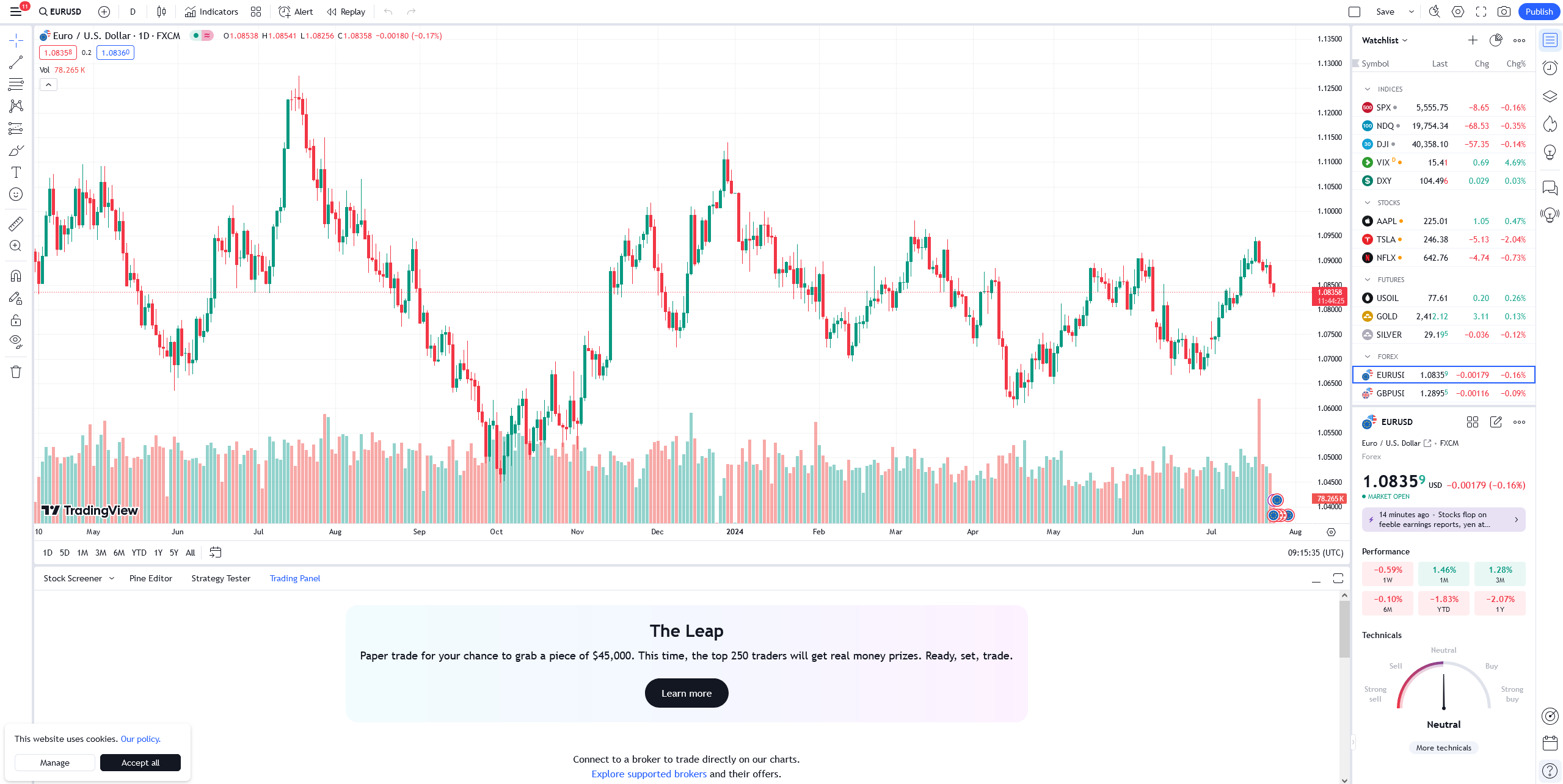
TradingView offers extensive charting capabilities with numerous chart types, time frames, and over 100 pre-built indicators for comprehensive market analysis. Users can access custom tools created by other traders as well. One of TradingView’s significant advantages is its web-based interface, allowing users to access their charts and analysis from any internet-connected device without the need to download or install any software.
TradingView incorporates social networking features, allowing traders to share their trading ideas, strategies, and analyses with a global community. This interaction can provide diverse insights and learning opportunities for users at all levels. Unlike MetaTrader which focuses on Forex along with other markets via derivatives, TradingView provides direct charts and data for a variety of markets including stocks, Forex, futures, cryptocurrencies, and bonds.Users can set customizable alerts on specific price levels, indicators, or even drawing tools. These alerts can be sent via email, SMS, or pop-up notifications within the platform. While TradingView is not primarily a trading platform, it has integrated trading features through partnerships with various brokerage platforms. Users can trade directly from TradingView’s interface depending on the broker and the market.
Taking full advantage of the automated trading capabilities of the MetaTrader platforms requires Expert Advisors to function seamlessly 24/7. This is difficult to achieve for retail traders who must rely on their own hardware and internet connection. Because of this, most such traders use a Virtual Private Server (VPS). Doo Prime provides a free VPS server to customers who have deposited at least 5,000 USD.
The Doo Prime InTrade app integrates MetaTrader trading accounts with hunktions for controlling your Doo Prime account, including accessing stats and depositing funds. No new live or demo accounts can be registered through the app.
Doo Prime Account types and trading conditions
The Doo Prime trading account registration process is much more lax than that for brokerages subject to stricter regulations. After the initial registration, you can register an unlimited number of Live and Demo accounts. This allows you to try out different combinations of pricing models, trading platforms and maximum leverage. Even before you have verified your Live Account, you can deposit funds into your Wallet. Verification only requires providing a copy of your ID. Proof of address is optional.
The base currency of the accounts can be only one – USD. This is unusual because most brokers provide multiple base currency options. On the other hand, Doo Prime offers trading with an impressive number of symbols – over 10,000. These include major and minor currency pairs, CFDs on precious metals, commodities, indices, global futures, cryptocurrencies and stocks from exchanges in the US, Hong Kong and Australia. But it should be noted that cryptocurrencies are available on trading platforms, but are not mentioned on the Doo Prime website.
Doo Prime offers three types of accounts that also follow the industry standard model – an STP (Straight Through Processing) account where the broker only pays a floating spread, an ECN (Electronic Communication Network) account where the spread is raw and close to zero but is coupled with an additional commission, and a Cent account that allows for real turnover with the terms of an STP account but with much lower capital. Doo Prime does not allow the creation of Demo Cent accounts. All three types of accounts can be used with MT4, MT5 and TradingView platforms.
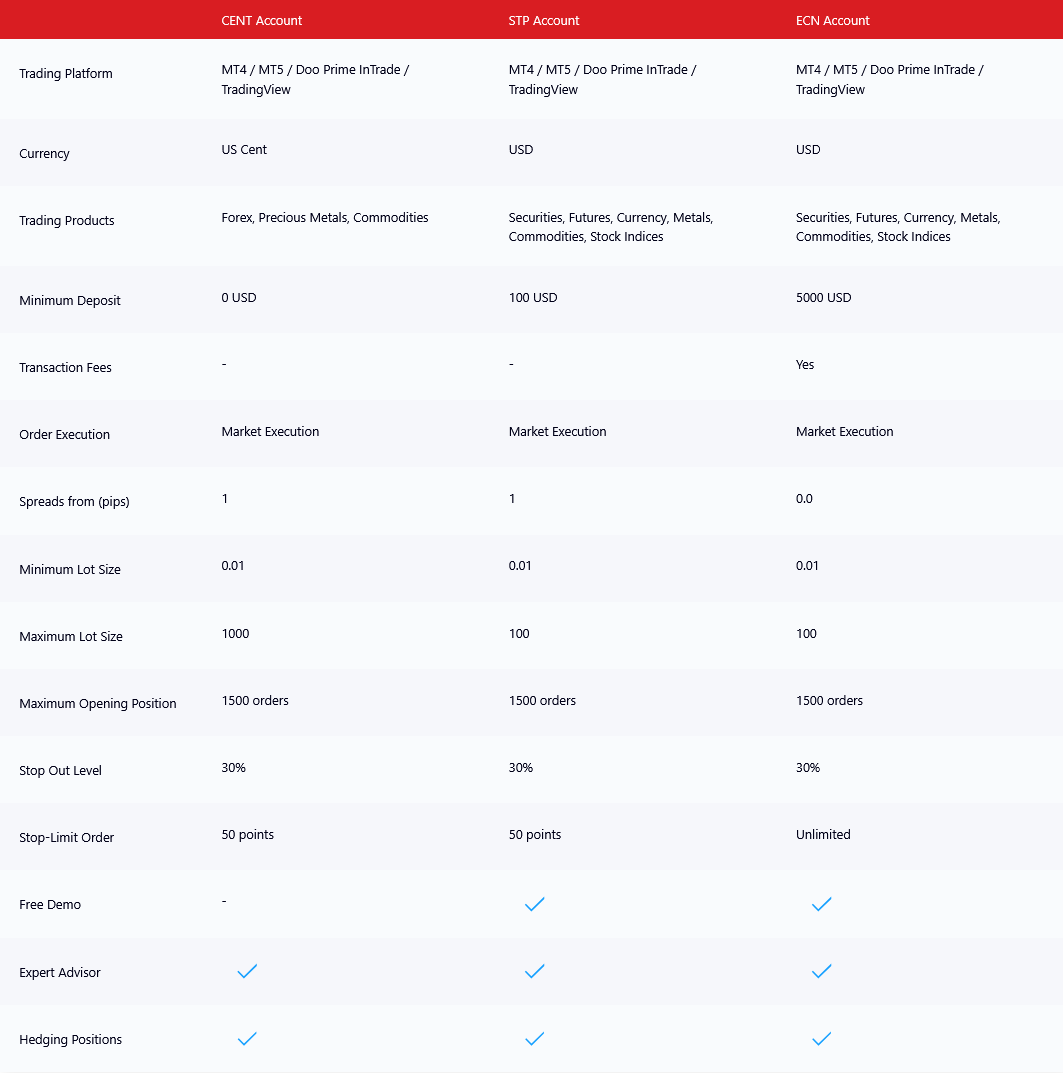
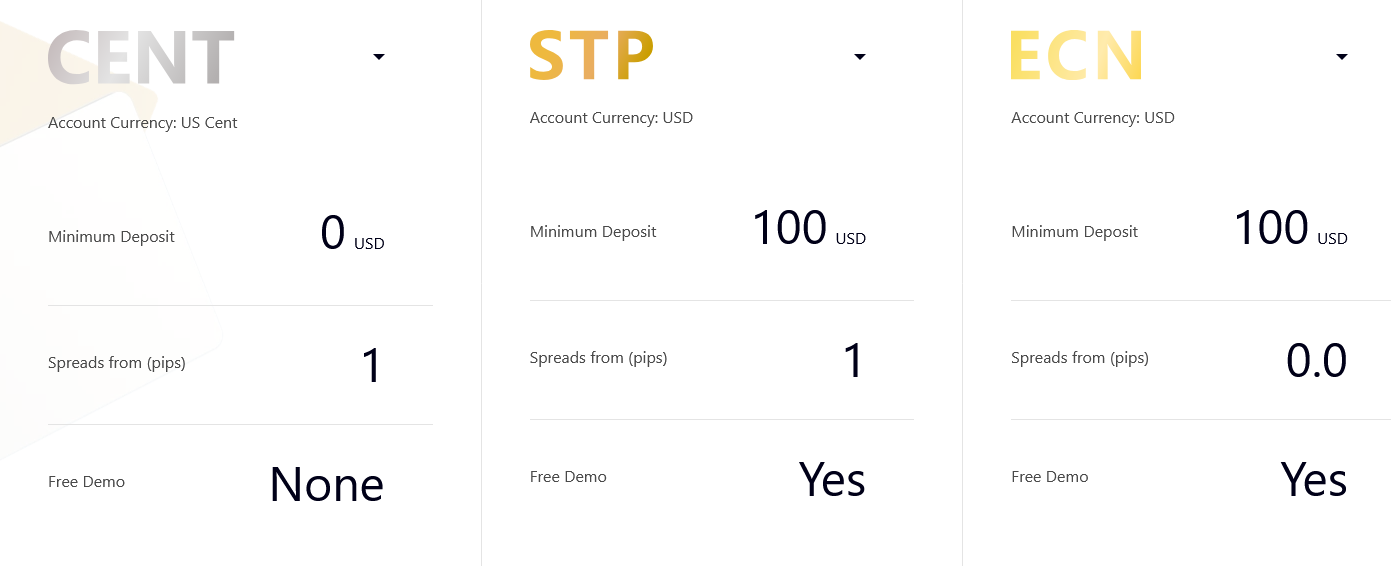
Doo Prime advertises a spread starting at 1 pip for STP and Cent accounts. When using STP Demo accounts, we saw a spread of 1.6 pips for the benchmark currency pair EUR/USD. This is within the industry average, but not the most competitive level you can find.
When using an ECN Demo account, the spread is 0.0-0.1 pips for EUR/USD. But here we come to one of the big issues with this broker. Doo Prime does not provide public information on what the commission per traded lot is when using an ECN account. This means that we do not know what the cost of trading is when using this type of account. Such lack of clear information on a key parameter of the trade is completely unacceptable.
Understanding the difference between accounts where clients only pay a spread and those that feature raw or zero spread plus a fixed commission is crucial for choosing the right account type for your trading style and goals.
With the accounts where traders pay only the spread, those spreads are usually higher than those in raw spread accounts, because this is the primary way the broker earns revenue on these accounts. Traders don’t have to calculate additional commission costs, because the cost of the trade is clear from the spread alone. These accounts are generally more suitable for beginner traders, less frequent traders, or those who prefer simplicity in cost calculations.
ECN accounts with fixed commission offer spreads that are very close to the interbank spread (which can be zero or near zero) and charge a fixed commission on each trade. A fixed commission is charged per lot traded, which is separate from the spread. This fee is explicitly stated and is generally based on the transaction size. These accounts provide more transparency in pricing and can be more cost-effective for frequent traders or those trading large volumes.
For high-volume traders, raw or zero spread accounts can be more cost-effective despite the commission. The narrower spread means that the cost to enter and exit trades is lower, which can significantly impact profitability in strategies that involve frequent trading (like scalping). Raw or zero spread accounts offer more transparency. Traders can see the actual market spread and are only charged a clearly defined commission, making it easier to analyze and forecast trading costs.
Cent accounts are specifically designed for traders with lower capital. They are denominated in cents instead of full dollars. For example, when a trader deposits 10 USD , it appears as 1,000 cents in their account. This method allows traders to trade smaller amounts per pip than even micro lots, further reducing the risk per trade. Cent accounts are particularly beneficial for new traders who wish to trade smaller amounts while learning the intricacies of forex trading or testing new strategies. These account types help in mastering trading skills without the pressure of large investments and are a good step towards trading larger amounts as confidence and experience grow.
The choice might depend on your trading strategy. If your strategy involves opening many trades quickly (scalping or high-frequency trading), a raw spread plus commission account might be more suitable because the transaction costs could be lower per trade. For less frequent trades or longer-term positions, the simplicity of a spread-only account might be preferable if the slightly higher spread isn’t a significant factor in the strategy’s performance.
Doo Prime does not set a minimum deposit per Cent account. The minimum deposit for a STP and ECN accounts is 100 USD, which is a common industry level.
Because Doo Prime operates through offshore companies, it is not limited in the leverage it can offer its retail clients. Regardless of account type, major currency pairs and precious metals CFDs can be traded at a fairly high leverage of 1:1000. Surprisingly, minor pairs have the same leverage limit as most regulated brokers – 1:20. Stock CFDs can trade with leverage between 1:5 and 1:20, indices with leverage up to 1:100, and for other commodities the maximum leverage is 1:50 or 1:100 depending on the symbol.
Doo Prime provides several options for passive income, including PAMM accounts, a proprietary copy trading platform and the ability to integrate your trading account with third-party social trading platforms.
PAMM (Percentage Allocation Management Module) account is a type of managed trading account that allows investors to allocate their funds to be managed by experienced traders or money managers. The PAMM system automates the distribution of trading results among all participating investors based on their share of the total invested capital. Investors can choose from a list of professional traders to manage their funds. Managers trade using their own funds and the pooled funds from investors, aligning their interests with those of the investors. The PAMM system automatically distributes profits and losses proportionally among investors based on their contribution to the total fund. Each investor’s share of the account is calculated as a percentage of the total fund, ensuring fair distribution of trading results. Doo Prime requires a minimum deposit of 200 USD for a master (manager) STP PAMM account and 1000 USD for an ECN PAMM account. These accounts are only available through the MT4 platform.
Copy trading, also known as social trading, is a method that allows traders to replicate the trades of experienced and successful traders. This approach leverages the knowledge and expertise of professional traders, enabling less experienced or time-constrained individuals to participate in the forex market with reduced effort. Investors can choose to copy the trades of one or more experienced traders. The trades are replicated in real-time in the investor’s account, maintaining the same entry and exit points as the chosen trader. Providers can set a commission on the profit made to be paid by those following them.
MT4 accounts on Doo Prime can also be integrated with the FOLLOWME global community for sharing trade signals and copy trading.
Doo Prime Deposit and Withdraw Methods
In preparing this review, we found a complete discrepancy between the payment methods advertised on the website and those actually available on the deposit menu. While it is to be expected that there would be a difference in available payment methods depending on the jurisdiction in which the customer is located, this cannot account for the total discrepancy we found in the case of Doo Prime.
According to the information available on the website, Doo Prem offers a rather impressive range of payment methods – several different local bank transfer options in CNY, KRW, PHP, THB, MXN and ZAR; International bank transfer in USD, EUR, GBP; Credit/debit cards in AED, AUD, BND, CAD, CHF, CNY, DKK, EUR, GBP, HKD, INR, KHR, KRW, LAK, MMK, NGN, NOK, NZD, PLN, SEK, THB, TWD, USD, VND, ZAR; Pay4Broker, OTCCPP, EPay, FasaPay and HWGC e-wallets. Deposits in other currencies are converted at the current USD exchange rate.
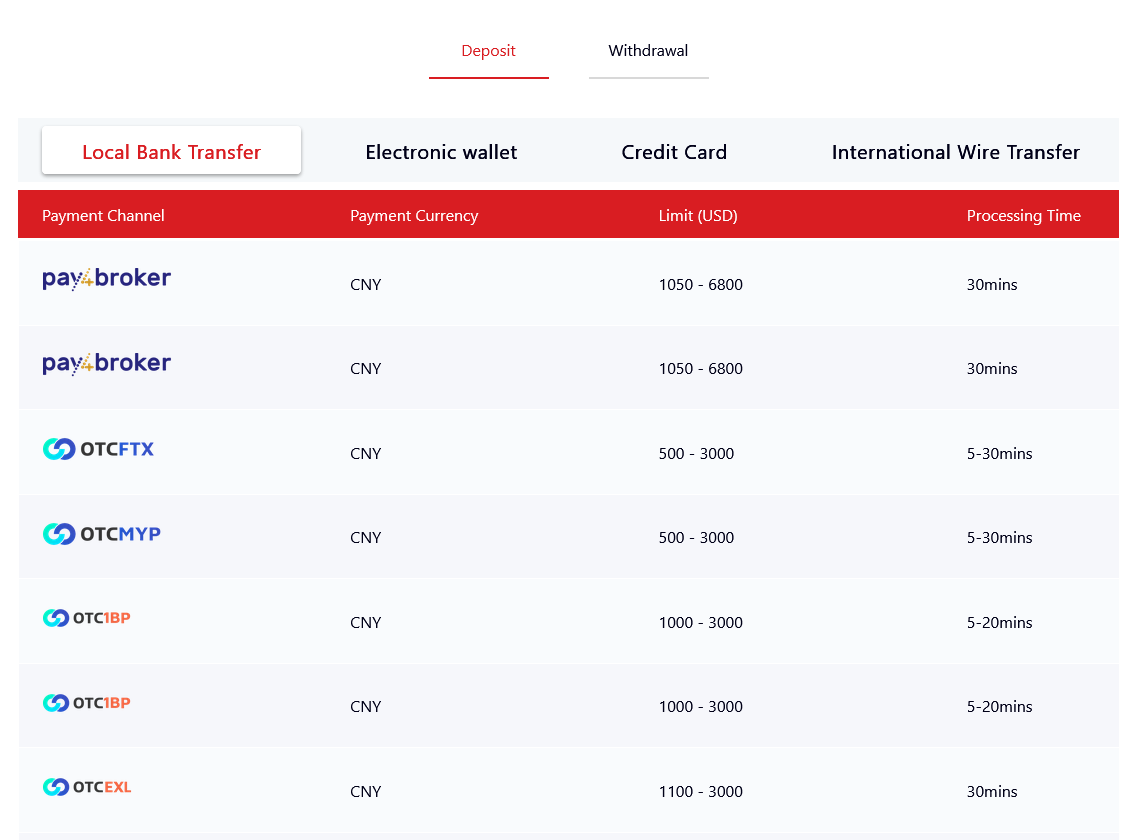
The withdrawal options described on the website are much fewer, which in itself is suspicious – international bank transfer in USD, EUR, GBP; local bank transfer in CNY, THB, VND, IDR, JPY and an unspecified e-wallet in USD.
But after registering an account, we found that the only deposit option available wasn’t even one of the ones advertised on the website – cryptocurrencies. This is a payment method that is associated with many uncertainties and potential problems, in addition to requiring higher technological knowledge. Cryptocurrencies also do not allow refunds to be requested.
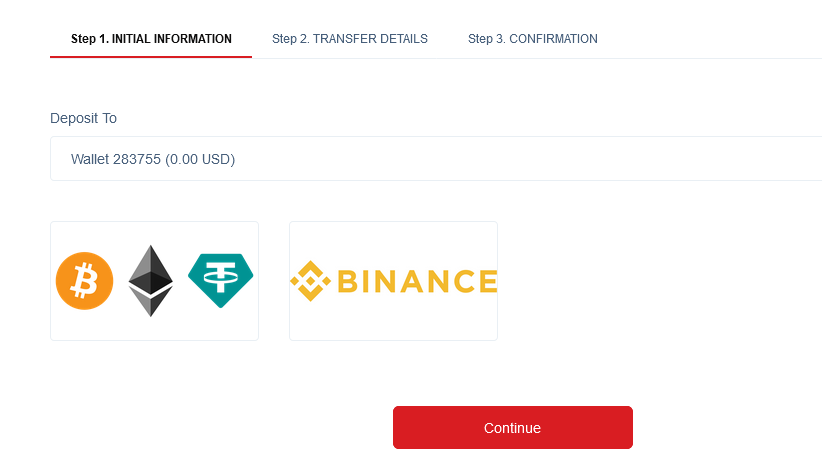
The website specifies a minimum deposit amount of 100 USD for the payment methods described there. In the deposit menu there are minimums according to the cryptocurrency – 0.00030028 BTC, 25.00 USDT TRC, 20.00 BINANCEPAY. There is also an option for the Ethereum cryptocurrency, but no minimum is specified for it. According to the website, the recommended minimum withdrawal amount is 50 USD. Nowhere is there any mention of deposit and withdrawal fees. But we can’t be sure that means there are no such fees.
| Deposit method | Minimum | Maximum | Processing time | Fee |
| Crypto | $20 | Unspecified | Unspecified | Unspecified |
| Bank | $100 | - | up to 3 days | Unspecified |
| Credit/Debit Card | $100 | $10000 | Unspecified | Unspecified |
| Google Pay | $100 | $10000 | Unspecified | Unspecified |
| Apple Pay | $100 | $10000 | Unspecified | Unspecified |
| FasaPay | $10 | $25000 | Unspecified | Unspecified |
| Withdrawal method | Minimum | Maximum | Processing time | Fee |
| Bank | $50 | Unspecified | up to 5 days | Unspecified |
| Apple Pay | $50 | Unspecified | up to 48 hours | Unspecified |
| Google Pay | $50 | Unspecified | up to 48 hours | Unspecified |
| FasaPay | $50 | Unspecified | up to 48 hours | Unspecified |
Doo Prime Bonuses and Promotions
Doo Prime offers a 25% Welcome Bonus. It is common for offshore brokers to offer such bonuses, but the specifics around this bonus are not so common.
Although advertised as a welcome bonus, this promotion is also available to existing customers but requires new account registration. The bonus can only be used with a g STP live account and not with an ECN account. Participation in the promotion requires the deposit of 10 USD in the newly registered STP account. The Bonus will expire within 90 days of the STP account being opened. The credit percentage for the promotion is set at 25% and the maximum credit amount per client across all their potential STP accounts is a cumulative amount of $2,000. The promotion is valid only for residents of certain jurisdictions: Algeria, Angola, Benin, Botswana, Burkina Faso, Burundi, Cape Verde, Comoros, Congo- Brazzaville, Cote De Ivoire, Djibouti, Eswatini, Gabon, Gambia, Ghana, Kenya, Lesotho, Madagascar, Malawi, Maldives, Mauritania, Mauritius, Mayotte, Mozambique, Namibia, Niger, Nigeria, Reunion, Rwanda, Sao Tome & Principe, Senegal, Seychelles, South Africa, St. Helena, Tanzania, Togo, Uganda, Western Sahara, Zambia, Zimbabwe, Cameroon, Antartica, French Southern Territories, South Georgia & South Sandwich Islands, Aland Islands, Albania, Andorra, Austria, Belarus, Belgium, Bulgaria, Czech Republic, Faroe Islands, Finland, France, Georgia, Germany, Gibraltar, Guernsey (Channel Islands), Latvia, Liechtenstein, Lithuania, Luxembourg, Malta, Moldova, Monaco, Montenegro, North Macedonia, Norway, Portugal, Romania, San Marino, Serbia, Slovakia, Slovenia, Spain, Svalbard & Jan Maven, Sweden, Switzerland, Ukraine, United Kingdom, Vatican City.
The bonus can be lost when trading but cannot be withdrawn. If funds are withdrawn from an account using a bonus, the bonus funds are partially forfeited depending on whether the amount withdrawn is less or more than the amount deposited. In the first case the bonus credit is reduced by 25% of the amount withdrawn and in the second case by 25% of the amount deposited.
Doo Prime also presents as a promotion the possibility to apply for a swap-free account. Many brokers offer such an option to clients of the Muslim faith who want to comply with religious requirements versus interest. All Doo Prime clients with verified STP or ECN accounts can request a swap-free account. If approved, they are allowed to hold open positions for up to three days without swap payments. But Wednesdays and Fridays are strictly excluded from the swap-free grace period. For instance, if a client opens a position on Monday with a three (3) day grace period, Wednesday will be counted as a non-swap-free day. Consequently, the client will receive swap-free status for Monday and Tuesday, but swaps will be applied on Wednesday. The position will then return to swap-free status on Thursday to complete the total of three swap-free days
| Bonus | Min deposit | Max bonus | Required turnover | Cash out limit |
| 25% Welcome bonus | $10 | $2000 | Unspecified | Unspecified |
Doo Prime Tools and Education
Doo Prime does not offer any educational materials. There is not even a forex glossary. On the websites of some of the more established brokers, you can find detailed and high-quality educational materials, including articles, e-books, video tutorials, webinars and more.
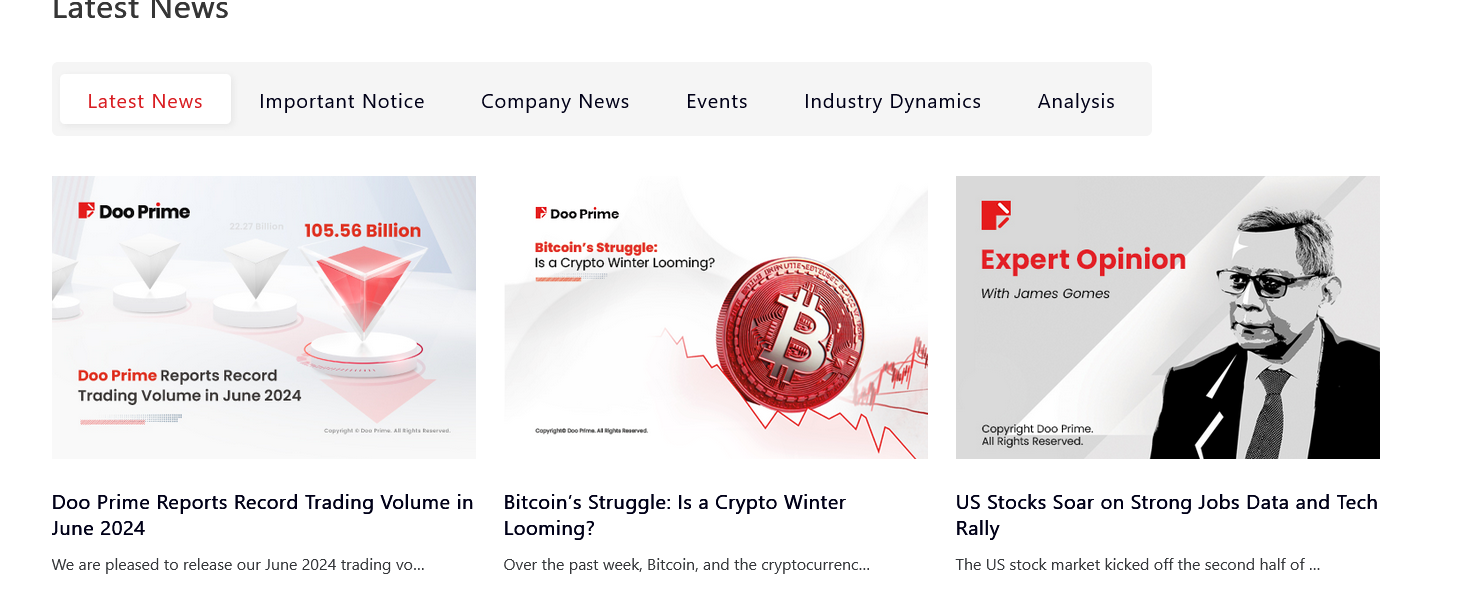
Doo Prime offers a “Media Center”, which contains a variety of informational materials, including market and economic news, analysis, expert opinion, market insights. There is an “Education” tab in this Media Center, but the content of this section is analytical articles, not educational material.
The available ancillary tools are also quite limited. For example, there is no forex calculator. The economic calendar is basic, in fact it is the same calendar that is integrated in the MT5 platform. Doo Prime works with the leading analytics provider Trading Central, which allows you to use Trading Central’s plugin for technical indicators in the MetaTrader platforms.
Notes from the author:
Doo Prime is a broker that has all the necessary prerequisites to not be suspicious and untrustworthy. Yet Doo Prime is precisely suspicious and does not inspire confidence. Behind this brand is supposedly an established fintech group with a global reach. This means that Doo Prime has the financial, regulatory and technological backbone to provide comprehensive and high-quality services. But the broker is actually run by offshore companies that are not subject to significant regulatory scrutiny. This in itself is not necessarily negative, it is not even unusual. But Doo Prime has not taken any additional steps to instill confidence in its potential clients, such as voluntarily participating in the Finance Commission. This brand is not even mentioned on the Doo Group's website, where there are links to the group's other brokerage businesses.
Doo Prime offers a seemingly good selection of trading account types, but does not specify what the cost of trading is when using an ECN account. The broker provides a pretty solid selection of trading platforms and a huge selection of tradable instruments. But while the platforms allow cryptocurrency trading, this is not stated on the website and it is not clear what the terms and conditions associated with these instruments are. The website details a number of conventional payment methods, but in the deposit menu itself we only see cryptocurrencies. This is something I have only seen with outright scams. There's no way to say that Doo Prime is a scam, but given such inconsistencies and contradictions, it's also hard to say that it's a credible broker worthy of trust. High leverage and Welcome Bonuses are not a good enough argument to choose Doo Prime over more established brokers.


