





DTT VAN LTD Review
DTT VAN LTD is a forex and CFD broker providing access to currencies, metals, energies, indices, and stocks through the MetaTrader 4 and MetaTrader 5 platforms. While the platforms are industry-standard and reliable, the regulatory picture requires immediate attention.
The broker operates under Vanuatu Financial Services Commission licensing, an offshore regulator offering significantly weaker oversight than tier-one authorities like the FCA, ASIC, or CySEC. This means no compensation schemes if the broker fails, limited fund protection requirements, and reduced recourse options when disputes arise.
This review examines DTT VAN LTD’s regulatory reality, platform performance, account costs, available instruments, fee transparency, and whether the broker’s conditions justify its offshore regulatory framework. We’re breaking down everything you need to know before deciding if this broker deserves your trading capital.
DTT VAN LTD Regulation
DTT VAN LTD operates under Vanuatu Financial Services Commission license number 40169. While this provides legal authorization, VFSC is an offshore regulator offering significantly weaker protection than tier-one authorities like the FCA, ASIC, or CySEC.

What’s Missing
- No Negative Balance Protection: Your account can go negative during extreme volatility, meaning you could owe the broker money beyond your initial deposit.
- No Fund Segregation Confirmed: DTT VAN LTD doesn’t document that client funds are kept separate from operational capital, unlike tier-one regulated brokers where this is mandatory and audited.
- No Compensation Schemes: If the broker fails, you have zero guaranteed protection. FCA offers £85,000 coverage, CySEC provides €20,000, while the VFSC requires none of these.
VFSC licensing makes DTT VAN LTD legal to operate but doesn’t provide the robust safeguards that proper regulation enforces. You’re trading without the safety nets, such as compensation funds, verified segregation, negative balance protection, that tier-one regulators mandate. If problems arise, your recourse options are extremely limited compared to properly regulated alternatives.
DTT VAN LTD Trading Platform
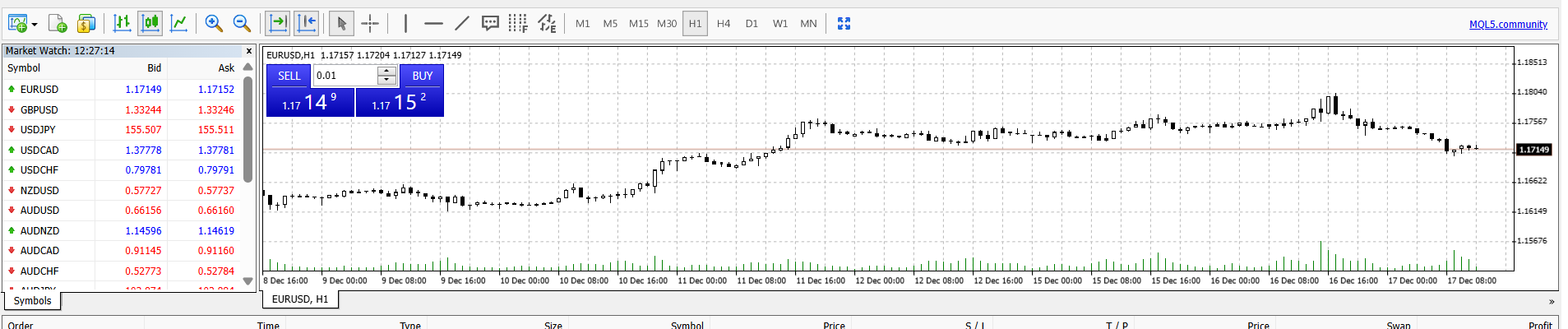
DTT VAN LTD offers trading through MetaTrader 4 and MetaTrader 5, the two most widely used platforms in retail forex. Both are available as desktop applications, web-based terminals, and mobile apps for iOS and Android. If you’re already familiar with MetaTrader, you’ll find everything exactly where you expect it.
MetaTrader 4: Simple and Reliable
MT4 remains popular for good reason—it’s straightforward, stable, and gets the job done. You get solid charting tools, dozens of technical indicators, quick order execution, and full Expert Advisor support for automated trading. The platform’s been around long enough that there’s a massive library of EAs available and plenty of community support when you need help.
MetaTrader 5: More Advanced Features
MT5 builds on MT4 with extra order types, more timeframes for detailed analysis, a built-in economic calendar, and better backtesting tools. You can code custom indicators and automated strategies using either MQL4 (for MT4) or MQL5 (for MT5), no need for external software.
Works Across All Your Devices
Both platforms let you customize charts however you want, use multiple screens, and access real-time market data. The mobile versions handle the essentials well for checking and managing trades on the go, while web access means you can trade from any browser without downloading anything.
The Platform Reality
MT4 and MT5 are excellent platforms, reliable, proven, and trusted by millions of traders worldwide. But here’s the critical point: good software doesn’t guarantee a good broker. These platforms are just tools executing through DTT VAN LTD’s systems, and those systems operate under minimal VFSC oversight with no negative balance protection and unverified fund segregation.
Think of it this way: a Ferrari is still a Ferrari whether it’s driven by a professional racer or someone who just got their license yesterday. The platforms are solid, but they can’t protect you from the risks that come with the broker operating them under offshore regulation with limited accountability.
DTT VAN LTD Trading Accounts
The broker offers four account levels, each requiring progressively larger deposits: Mini ($50), Standard ($1,000), VIP ($10,000), and ECN ($15,000). While this tiered structure appears standard, the actual capital requirements tell a different story.
Start with the Mini account and DTT VAN LTD looks accessible, $50 gets you in the door. Move beyond entry-level, however, and you’re facing deposits that substantially exceed industry norms. The Standard account demands $1,000 when most regulated competitors accept $200-$500. VIP and ECN tiers climb to $10,000 and $15,000 respectively, roughly double what established brokers require for comparable premium accounts.
Beyond listing minimum thresholds, DTT VAN LTD provides virtually no information about what distinguishes these tiers. Whether spreads tighten, commissions decrease, execution improves, or service quality changes as you deposit more remains entirely unclear. You’re asked to commit significantly more capital without understanding what tangible benefits justify the expense.
The $50 Mini account might work for brief broker evaluation, but any sustained trading realistically requires Standard tier or above. That means committing four or five figures to an offshore operation lacking the protections that should accompany such capital exposure. For the same deposit amounts, numerous properly regulated alternatives provide tier-one oversight, guaranteed compensation, and verified segregation, making DTT VAN LTD’s premium pricing for offshore protection particularly hard to justify.
DTT VAN LTD Trading Instruments
DTT VAN LTD advertises trading capabilities across five asset categories: foreign exchange, precious metals, energy products, equity indices, and individual stocks. While multi-asset access theoretically supports diversified trading strategies, the broker provides insufficient detail regarding specific instrument availability within each category.
The absence of detailed instrument specifications aligns with DTT VAN LTD’s operational approach evident across multiple areas: limited account differentiation documentation, undisclosed fee structures, minimal withdrawal information, and now insufficient market access detail. Under VFSC regulation that doesn’t mandate transparency standards, these information gaps create decision-making challenges for traders attempting objective broker evaluation.
DTT VAN LTD Trading Conditions
DTT VAN LTD advertises tight spreads on major pairs: 0.4 pips on EUR/USD, 0.6 pips on GBP/USD and USD/JPY. These numbers match what properly regulated brokers charge, if they’re accurate in live trading. Without VFSC enforcing execution standards, you can’t verify these advertised spreads until you’re actually trading with deposited funds.
Leverage: 1:200 Maximum
Maximum leverage sits at 1:200, meaning $1,000 controls $200,000 in positions. That’s substantial position sizing capability, but it also means a 0.5% price move against you triggers margin calls, the kind of movement that happens multiple times daily.
For context: European regulators cap retail leverage at 1:30 because higher ratios systematically destroy accounts. DTT VAN LTD’s 1:200 exceeds this protective limit by over six times.
No Negative Balance Protection
This is the critical issue. During extreme volatility, flash crashes, weekend gaps, major news, prices can jump past your stop losses instantly. Without negative balance protection, your account can go negative, meaning you owe the broker money beyond your deposit. With protection, your account just zeros out.
Competitive spreads don’t matter if one volatility spike creates debt exceeding all your accumulated savings. The combination of high leverage and no protection under minimal VFSC oversight creates serious liability exposure that proper regulation prevents.
DTT VAN LTD Payment Methods
DTT VAN LTD accepts four payment types: Visa and Mastercard (credit or debit), Binance Pay, and USDT cryptocurrency. It covers the basics, traditional cards and crypto options, but you won’t find popular e-wallets like Skrill, Neteller, or PayPal that many traders prefer.
The good news – deposits process instantly. Your trading account gets funded immediately, so you’re not stuck waiting when you spot a trade opportunity. For traders who need quick market access, that instant processing matters.
However, DTT VAN LTD tells you which payment methods work but won’t tell you what they cost. No fee schedules published anywhere. You can’t find out deposit charges, withdrawal costs, or transaction limits until after you’ve opened an account.
Payment transparency isn’t some nice-to-have feature, it’s basic operational honesty. Legitimate brokers publish their fees clearly because they’re not trying to hide anything. When brokers keep payment costs secret, it’s usually because those costs are high enough that showing them upfront would scare people away.
DTT VAN LTD Education and Trading tools
DTT VAN LTD offers zero educational resources and no trading tools beyond what comes standard with MetaTrader platforms. No courses, no webinars, no market analysis, no guides, nothing to help you develop trading skills or improve decision-making.
DTT VAN LTD provides MetaTrader platforms without any educational support, analytical tools, or trader development resources. Combined with VFSC’s minimal oversight, high deposit requirements ($1,000-$15,000 for meaningful tiers), and missing protections, the absence of education reinforces that this broker prioritizes initial capital acquisition over comprehensive trader support or long-term client success.
DTT VAN LTD Bonus
DTT VAN LTD does not advertise any deposit bonuses, trading credits, or promotional incentives. This means no initial account padding, but also no restrictive withdrawal conditions or mandatory volume requirements that bonus promotions typically impose.
No advertised bonuses mean avoiding the complications these promotions create, though with DTT VAN LTD’s overall transparency challenges, whether this represents deliberate policy or incomplete disclosure remains unclear. Either way, traders avoid bonus-related withdrawal restrictions—one of few straightforward aspects in an otherwise opacity-heavy operational approach.
Final Thoughts
DTT VAN LTD offers MetaTrader platforms that work well and advertises competitive spreads. Deposits process instantly, and the $50 Mini account provides accessible entry. That’s where the positives end.
However, the VFSC offshore regulation with no compensation fund, no confirmed fund segregation, and no negative balance protection despite 1:200 leverage. This means you could owe money beyond your deposit if markets gap violently. The $1,000-$15,000 minimums for Standard-ECN accounts demand premium deposits for minimal protection,backwards from how it should work.
Transparency failures are systematic: no instrument details, no fee disclosure, no withdrawal information, no account tier differences explained, and zero educational resources. Every missing piece compounds the risk of trading blind under minimal regulatory oversight.
Overall, DTT VAN LTD combines offshore regulation, hidden costs, high capital requirements, and comprehensive opacity. Good platforms can’t fix absent protections and deliberate information gaps. With properly regulated alternatives offering similar conditions with actual safeguards, there’s no justifiable reason to accept DTT VAN LTD’s risk profile.
Notes from the author:
DTT VAN LTD presents a straightforward risk-reward proposition that tilts unfavorably for traders prioritizing capital security and operational transparency.
The operational foundation appears functional. MetaTrader 4 and MetaTrader 5 platforms provide reliable execution infrastructure tested across millions of trading accounts globally. Advertised spreads of 0.4-0.6 pips on major pairs align with competitive industry standards. Instant deposit processing eliminates funding delays. The $50 Mini account threshold removes entry barriers for capital-constrained traders.
These positives cannot offset structural deficiencies. VFSC regulation provides legal authorization without substantive protection mechanisms—no compensation schemes, unverified fund segregation, and absent negative balance protection. This final deficiency becomes critical given 1:200 leverage availability. Market gaps during flash crashes, weekend events, or major economic releases can generate losses exceeding account equity, creating liability without protection preventing negative balances.
The transparency deficit extends beyond regulatory limitations. DTT VAN LTD withholds essential operational information across multiple dimensions: no published instrument specifications despite five advertised asset classes, zero fee disclosure for payment processing, no withdrawal documentation, and unexplained account tier differentiation beyond deposit thresholds. Systematic information withholding indicates either inadequate offerings that disclosure would expose, or deliberate opacity favoring broker interests over trader evaluation needs.
Capital requirements compound these concerns. Minimum deposits of $1,000-$15,000 for Standard through ECN tiers exceed regulated competitor norms while providing inferior protection—premium pricing for offshore-level safeguards represents inverted value proposition logic.


