




Eurotrader Withdrawal – Any Problems?
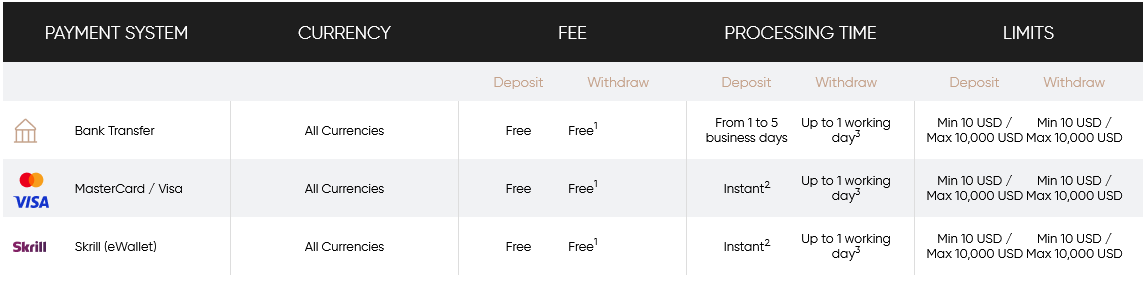
The payment methods through which you can deposit and withdraw funds from your Eurotrader accounts are relatively limited, but cover the most popular options. Customers of the Cypriot company can deposit and withdraw via bank transfer, credit/debit cards and the Skrill wallet. Customers of offshore companies have one more option in addition to the above – cryptocurrencies. In South Africa there is no option to withdraw cryptocurrency, but the local payment processor Ozow is available for ZAR transactions.
There are various considerations to keep in mind when deciding which method to use to withdraw funds from your trading account. Using the most basic method, credit/debit card, comes with its own set of advantages and disadvantages. Credit and debit card withdrawals are straightforward and convenient, allowing for easy transactions without the need for additional accounts or services. Credit and debit cards are backed by robust security measures, including fraud protection. This reassurance can make them a safe option for transferring funds. Most traders already have a credit or debit card, eliminating the need for opening accounts with third-party payment processors. But while generally fast, processing times can vary based on the broker’s policies and the card issuer’s procedures, potentially leading to delays. Some banks or card issuers might have restrictions on receiving funds from forex trading accounts, leading to declined transactions. If your trading account and card are in different currencies, you might incur currency conversion fees, which can add to the cost of withdrawal. Withdrawal to a credit/debit card is dependent on the card being valid and not expired. If your card expires or is canceled, you’ll need to arrange an alternative withdrawal method.
Withdrawing funds from your forex trading account via bank transfer is another popular option that traders use for its reliability and security. However, like any method, it comes with its own set of advantages and disadvantages.Bank transfers typically allow for higher withdrawal limits compared to other methods like credit/debit cards, making them ideal for withdrawing larger amounts of money.: Bank transfers are accepted worldwide and can be used by traders in almost every country, making it a universal method for fund withdrawal.: Funds are transferred directly into your bank account, which can be more convenient for managing large sums of money and facilitates easier access to funds once they arrive. Unlike e-wallets or other payment systems, you don’t need to have an account with a third-party provider. The money goes straight into your existing bank account.
But on the other hand bank transfers can be slower than other withdrawal methods. It can take anywhere from a few business days to over a week for the funds to appear in your account, depending on the banks and countries involved. Both the brokerage and the bank might charge higher fees for bank transfers compared to other methods. These fees can vary greatly between banks and might be higher for international transfers.: The process for setting up a bank transfer can be more complex and time-consuming, requiring more detailed information than other methods. The necessity for accurate bank details is critical. Mistakes in providing account numbers, SWIFT codes, or other identifying information can lead to delays or the funds being sent to the wrong account.
Utilizing e-wallets such as Netellers or Skrill for withdrawals from your forex trading account provides a contemporary and adaptable option compared to the conventional methods like bank transfers and credit/debit card transactions. These e-wallets each bring their distinctive features to the table, yet they share several benefits and drawbacks for forex trading withdrawals. E-wallet transactions are known for their speed, often outpacing the processing times of bank transfers and credit/debit card withdrawals. It’s common for funds to be accessible in your e-wallet within a day. The design of e-wallets caters to seamless online transactions, making withdrawals straightforward. Once funds are in your e-wallet, they’re readily available for further online use or for transfer to a bank account. E-wallets stand out for their global accessibility and multi-currency support, offering a flexible solution for traders around the world. Moreover, opting for an e-wallet adds a privacy layer since it eliminates the need to disclose bank or card details to the forex broker. However, it’s important to note some limitations. Certain e-wallets may restrict how much you can withdraw either in a single transaction or over a set period, which could pose an issue for traders wishing to access larger sums. The requirement for account verification with e-wallets entails a potentially lengthy process of providing personal information and documentation for identity confirmation. Dependence on internet connectivity and, in some cases, a smartphone, for accessing your funds may not suit everyone’s situation. Despite their robust security measures, e-wallets are not impervious to online threats such as hacking or phishing. Users must exercise caution and safeguard their account information to prevent unauthorized breaches.
Cryptocurrencies are a payment method whose asociated risks you should be particularly careful about. Cryptocurrency transactions are typically processed very quickly, often within minutes to a few hours, making it one of the swiftest methods for fund withdrawal. The transaction fees associated with cryptocurrencies are generally lower than those for traditional bank transfers or e-wallets, particularly for international transactions. Cryptocurrencies provide global access, allowing traders from any location to withdraw funds without the need for local banking services or concerns about currency conversion fees. Transactions via cryptocurrencies also offer enhanced privacy since they require less personal information than traditional bank transfers. Additionally, the blockchain technology underlying these transactions ensures a secure and immutable record, offering a reliable method of transfer. For traders in areas with underdeveloped financial systems or stringent capital controls, cryptocurrencies serve as a vital alternative for accessing funds.
However, several challenges accompany the use of cryptocurrencies. Their value can be extremely volatile, with the amount withdrawn potentially fluctuating significantly in a short period, which could lead to financial losses. The regulatory framework for cryptocurrencies is still under development and varies widely by country, affecting the feasibility of using cryptocurrencies for withdrawals and their conversion into local fiat currencies. The process of setting up a cryptocurrency wallet, managing private keys, and understanding blockchain can be complex and intimidating for those new to this technology. A critical risk includes the potential for irreversible loss of funds if private keys are misplaced or if funds are sent to an incorrect address, with no possibility of transaction reversal through customer service. While the initial withdrawal of funds as cryptocurrency might be fast and inexpensive, converting these funds back into fiat currency can involve complex steps and additional fees, depending on the exchange or service used. Despite blockchain’s inherent security features, cryptocurrency exchanges and wallets remain susceptible to hacking and theft, necessitating robust security measures to safeguard your assets. Additionally, not all forex brokers offer the option to withdraw funds in cryptocurrencies, which can limit this method’s availability to traders.
Eurotrader generally charges its own transaction fees, but you will be charged 2% if you make a withdrawal from an account that has no trading activity.
The minimum deposit and withdrawal amounts are 10 USD for most payment methods and the maximum is 10,000 USD. Customers in South Africa have a minimum of 50 USD when depositing with cards and no minimums when using other payment methods.
Withdrawals are typically processed within 1 business day, unless additional documentation or information is needed. Transfers to cards and bank accounts may take 1 to 7 business days from processing, while Skrill and Ozow withdrawals are credited on the same day.
All regulated forex brokers adhere to Know Your Client policies as well as regulatory norms against money laundering and sponsoring terrorism. Therefore, before you are allowed to make real money transactions and start trading, you must verify your identity and provide proof of address. Customers from more highly regulated jurisdictions such as the European Union and the United Kingdom must also complete a questionnaire regarding personal financial situation, origin of funds, financial trading experience and compliance with restrictions for customers from certain jurisdictions such as the United States.
Another important requirement is that you must generally use the same withdrawal method that was used to deposit. When using a credit/debit card, the withdrawal is made in the form of a refund, therefore the amount withdrawn may not exceed the amount of deposits made with that particular card. Amounts in excess of the deposit, e.g. trading profits, must be withdrawn via other payment methods, preferably a bank account in your name.
If your account and withdrawal request meets these conditions, the withdrawal should be a straightforward and simple process. But before you proceed with this operation, there are a few more important things to keep in mind.
Firstly, for traders engaged in margin trading, it’s vital to assess the impact of a withdrawal on your open positions. Withdrawing a significant amount from your account could lower your margin level below the broker’s required threshold, potentially triggering a margin call or even leading to the forced liquidation of your positions. To avoid such scenarios, always calculate the effect of your withdrawal on your margin cushion and ensure you maintain the necessary equity in your account to support your open trades.
Another consideration is currency conversion. Withdrawals made in a currency different from your account’s base currency entail conversion, which comes with associated rates and fees. The exchange rate provided by your broker or financial institution might not align with the current market rate, potentially affecting the amount you receive. It’s advisable to familiarize yourself with your broker’s currency conversion policies and seek the most favorable rates to minimize losses due to conversion discrepancies.
Tax implications form another crucial aspect of withdrawals from forex trading accounts. Depending on your jurisdiction, profits earned from forex trading may be subject to taxes, and you bear the responsibility for declaring these earnings to your local tax authorities. Accurate and detailed record-keeping of all your trading transactions becomes indispensable in this context, enabling you to comply with tax regulations and facilitate any necessary reporting or audits.
Post-withdrawal, it is a good practice to regularly scrutinize your withdrawal history and check your bank statements. This vigilance helps in the early detection and rectification of any discrepancies that might arise, ensuring the integrity of your financial transactions.
For traders who have received bonuses from their brokers, it’s imperative to understand the terms attached to these bonuses before attempting to withdraw them or the profits accrued from using them. Many brokers enforce specific conditions, such as achieving a minimum trading volume, before these funds can be withdrawn. Understanding these conditions in advance can prevent any surprises and ensure you meet all necessary criteria for accessing your funds. Regulatory norms in the EU prevent Eurotrader from offering bonuses to its clients there. The broker also does not offer bonuses and promotions through its South African division. But clients of the offshore company can benefit from a three-tier Deposit Bonus Scheme. For an initial deposit between 50 and 1,000 USD, the client can claim a bonus of 100%. The deposit bonus is available on the account for 90 days after it is granted. Once this period passes the bonus will be removed from the account. For any subsequent deposits after the first deposit the client will receive a deposit bonus of 30% for the first USD 10,000 and 20% for the next USD 40,000 with a cap of USD 10,000 on the total credit that the client will receive, including the initial deposit bonus. When a client withdraws money from his account automatically a % of the deposit bonus will be removed.
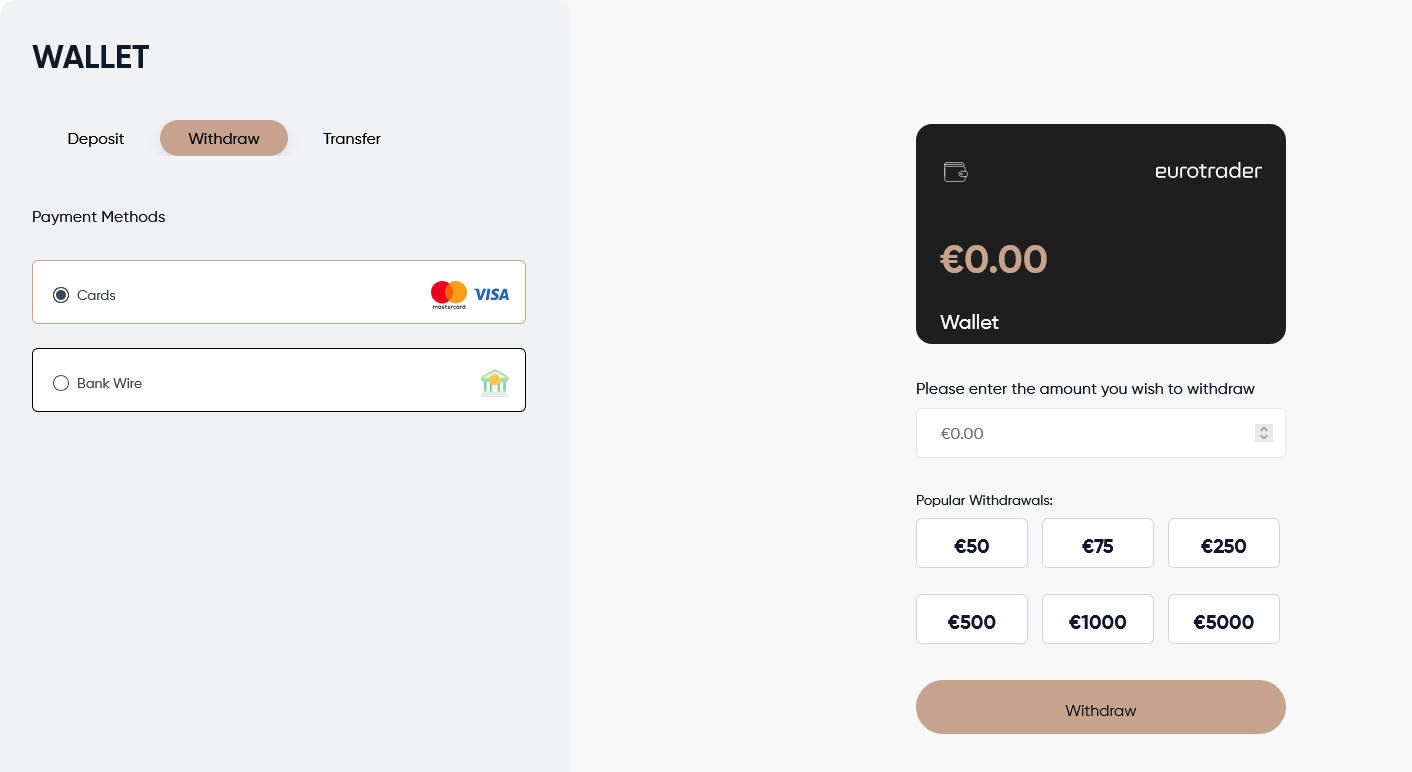
In order to withdraw funds from your Eurotrader Wallet, log into your account and click the Wallet tab in the main menu. This will open a screen with a choice between Deposit, Withdraw and Transfer between your main wallet and your trading account. In the Withdraw menu, select one of the available payment methods, then enter the amount you wish to withdraw and click the Withdraw button.


