





Fortrade Review
Headquartered in the United Kingdom, Fortrade has become a reputable name in the Forex trading industry since its establishment in 2013. With multiple licenses from top-tier global regulators, Fortrade ensures that it meets high standards of safety, compliance, and transparency for its clients. The broker is regulated by notable authorities such as the Financial Conduct Authority (FCA) in the UK, the Canadian Investment Regulatory Organization (CIRO) in Canada, the Cyprus Securities and Exchange Commission (CySEC) in Cyprus, and the Australian Securities and Investments Commission (ASIC) in Australia. Additionally, Fortrade holds an offshore license in Mauritius, allowing it to serve a global clientele.
Fortrade offers competitive trading conditions and a wide selection of trading instruments, making it an attractive option for a broad range of traders.
In terms of trading platforms, Fortrade supports both its proprietary web-based and mobile app platforms, which are designed for ease of use and accessibility. Additionally, it offers the widely popular MetaTrader 4 (MT4) platform, known for its comprehensive charting tools, automated trading capabilities, and robust technical analysis features.
To gain a deeper understanding of Fortrade’s offerings, including its trading platforms, range of instruments, regulatory compliance, customer support, and educational resources, it’s highly recommended to explore a detailed and comprehensive review of the broker.
Fortrade Regulation
Fortrade stands out in the crowded forex trading arena, not just for its global reach but also for its unwavering commitment to regulatory compliance and client protection. With its headquarters in the financial epicenter of the United Kingdom, Fortrade has positioned itself as a reliable and trustworthy broker, a status bolstered by its adherence to regulations from five top-tier financial authorities around the world. This robust regulatory framework isn’t just window dressing; it’s the bedrock of Fortrade’s operations, ensuring high standards of corporate governance, financial transparency, and, most importantly, client security.
FCA Regulation
As a UK-based broker, Fortrade is regulated by the Financial Conduct Authority (FCA), one of the most respected financial regulators globally. Operating under firm reference number 609970, Fortrade is bound by the FCA’s stringent requirements, which act as a fortress for traders’ investments.
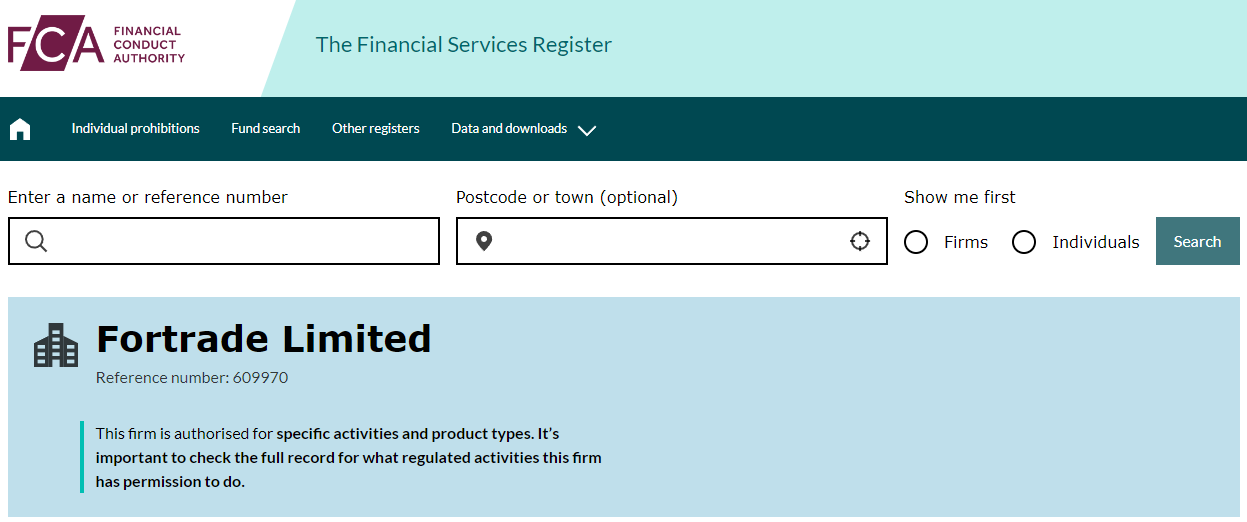
The FCA, established under the Financial Services and Markets Act 2000 (FSMA), works closely with the UK Treasury to uphold the integrity of the financial system in the UK, making it one of the most robust regulatory bodies out there.
- Minimum Operational Capital Requirement: Fortrade is required to keep at least €730,000 in operational capital. This isn’t just a number; it’s a safety net that ensures the broker’s financial stability and its ability to meet client obligations without breaking a sweat.
- Segregation of Client Funds: In line with FCA regulations, Fortrade segregates client funds from its own, ensuring that your money is ring-fenced and can’t be used to settle the broker’s debts. This practice acts as a shield, protecting your investments from potential mishandling.
- Financial Services Compensation Scheme (FSCS) Membership: Fortrade’s membership in the FSCS is like an insurance policy for your funds. If Fortrade were to go belly up, the FSCS would compensate eligible retail clients up to £85,000 per trading account. That’s peace of mind money can’t buy.
- Negative Balance Protection: European regulations require brokers to offer negative balance protection, and Fortrade delivers. This means you’ll never owe more than your initial deposit, even if the market takes a nosedive.
- Leverage Limits: To keep traders from getting in over their heads, Fortrade caps leverage at 1:30 for retail clients. This cap is designed to minimize the risks associated with high leverage, making sure you can trade with confidence.
- Responsible Trading Practices: Fortrade takes responsible trading seriously, which is why it doesn’t offer trading bonuses. This decision aligns with regulatory standards and encourages traders to focus on sustainable trading strategies rather than chasing short-term gains.
- Data Protection Compliance: With the General Data Protection Regulation (GDPR) in full force, Fortrade ensures your personal information is locked up tighter than Fort Knox. This commitment to data protection underscores the broker’s dedication to ethical business practices.
CySEC Regulation
Fortrade Cyprus Ltd operates under the watchful eye of the Cyprus Securities and Exchange Commission (CySEC) with License Number 385/20.
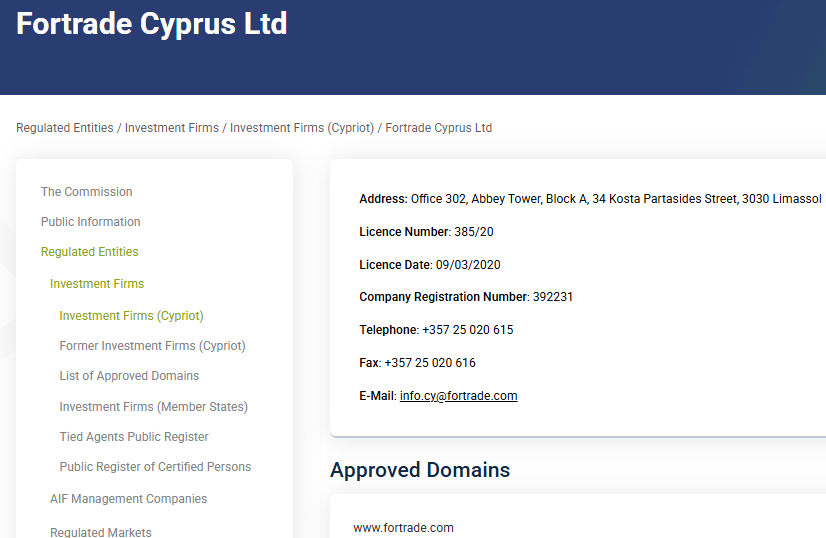
This isn’t just a rubber stamp—CySEC is a key player in European financial regulation, and Fortrade’s compliance with its standards means the broker is authorized to offer investment services across Europe.
- Minimum Operational Capital Requirement: Fortrade is required to maintain at least €730,000 in operational capital. This isn’t just a figure on paper; it’s a vital safety net that underscores the broker’s financial resilience and ensures its ability to meet client obligations without breaking a sweat. This substantial capital reserve is a key factor in maintaining the broker’s stability, providing an extra layer of security for clients by ensuring that Fortrade has the necessary financial buffer to handle operational needs and unexpected market conditions.
- Cross-Border License: Fortrade’s CySEC license isn’t limited to Cyprus; it allows the broker to operate across borders, providing services that meet both local and international financial standards. This cross-border capability means that wherever you are in Europe, you can trade with confidence knowing Fortrade is fully compliant with the highest regulatory standards.
- Alignment with ESMA Standards: CySEC’s affiliation with the European Securities and Markets Authority (ESMA) means that Fortrade isn’t just meeting local regulations—it’s adhering to stringent European-wide standards. This alignment ensures that Fortrade clients enjoy a secure and transparent trading environment, no matter where they’re trading from.
- Investor Compensation Scheme: While CySEC’s Investor Compensation Fund provides a safety net of up to €20,000 per trading account, it’s crucial to understand that this level of compensation is less comprehensive than what is offered by the UK’s Financial Services Compensation Scheme (FSCS), which covers up to £85,000 per account. This difference in coverage highlights the varying levels of client protection depending on the regulatory jurisdiction.
However, Fortrade’s adherence to CySEC’s stringent standards ensures that clients trading under this regulatory framework still benefit from a secure trading environment. The CySEC regulation aligns with the European Securities and Markets Authority (ESMA) standards, which means that Fortrade operates within the highest European regulatory guidelines, ensuring transparency, fairness, and security in all its dealings. This dual-regulatory oversight—both under FCA and CySEC—solidifies Fortrade’s reputation as a broker that prioritizes client protection and regulatory compliance.
ASIC Regulation
Fortrade, operating under Fort Securities Australia Pty Ltd., is also regulated by the Australian Securities and Investments Commission (ASIC) with ABN: 33 614 683 831 and AFSL: 493520. ASIC is widely regarded as a top-tier financial regulator, known for its stringent standards designed to protect traders within its jurisdiction.
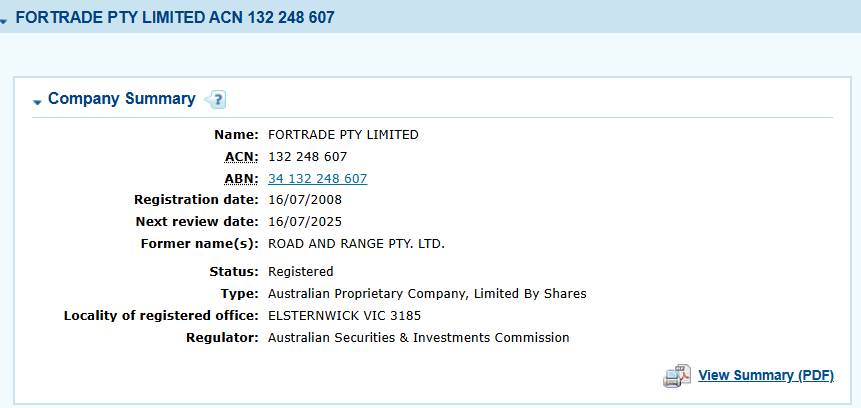
This regulation ensures that Fortrade adheres to the high levels of financial transparency and corporate governance required by ASIC.
The regulatory requirements under ASIC are quite similar to those in the UK and the EU, which means that Fortrade maintains a consistent standard of compliance across different regions. One key difference, however, is the minimum operational capital requirement in Australia, which is set at 1 million AUD. This higher capital requirement further strengthens the financial stability of brokers operating under ASIC regulation, ensuring they have a substantial buffer to meet their financial obligations.
However, it’s important to note a limitation within the current regulatory framework: ASIC does not mandate a compensation scheme like those found in the UK and the EU. In the UK, the Financial Services Compensation Scheme (FSCS) provides compensation up to £85,000 per account, and in the EU, the Investor Compensation Fund offers coverage up to €20,000 per account. The absence of such a scheme under ASIC means that, in the event of broker insolvency, clients in Australia may not have the same level of financial protection as their counterparts in Europe.
FSC Regulation
In its strategic efforts to expand its global footprint, Fortrade, like many other reputable brokers, has established operations in an offshore jurisdiction—Mauritius. This move is designed to broaden Fortrade’s international service capabilities and cater to a more diverse clientele. Fortrade Mauritius Ltd is incorporated under the laws of Mauritius and holds the registration number 8419176-1. It is regulated by the Financial Services Commission (FSC) of Mauritius, with the SEC-2.1B investment dealer license number GB21026472.
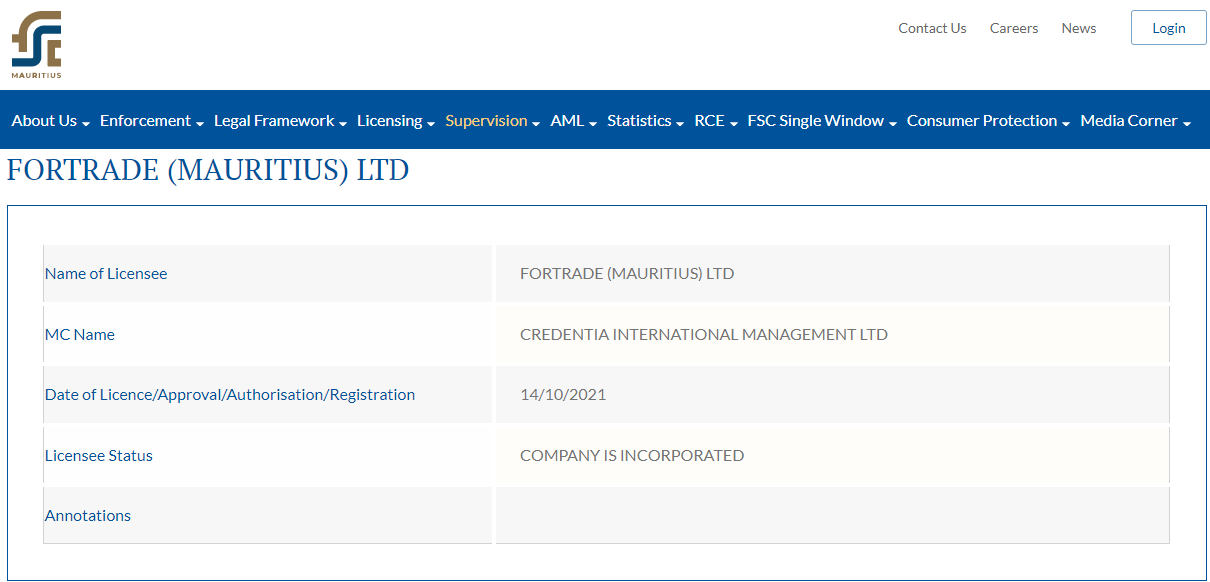
Operating in offshore jurisdictions like Mauritius allows Fortrade to function under regulatory frameworks that differ from those in the European Union and the United Kingdom. This regulatory diversification enables Fortrade to tailor its services more effectively to meet the specific needs and preferences of traders in various regions. For example, while Fortrade adheres to stringent regulatory standards, jurisdictions such as Mauritius do not impose the same leverage limitations that are mandatory in the EU, Australia, and the UK. This regulatory flexibility permits Fortrade to offer higher leverage options, which can be particularly appealing to traders looking to maximize their trading positions.
However, it’s important to note that while offshore regulations like those in Mauritius provide more flexibility, they might not offer the same level of client protection as those enforced by top-tier regulators such as the FCA, ASIC, or CySEC. Traders should carefully consider this when choosing a broker, especially in terms of the potential risks and benefits associated with trading under different regulatory regimes.
CIPF Membership
Fortrade, through Fortrade Canada Limited, is also a member of the Canadian Investor Protection Fund (CIPF) and is regulated by the Canadian Investment Regulatory Organization (CIRO). CIRO was established through the merger of the Investment Industry Regulatory Organization of Canada (IIROC) and the Mutual Fund Dealers Association of Canada (MFDA) in January 2023, creating a unified regulatory body aimed at enhancing the oversight of investment firms across Canada.
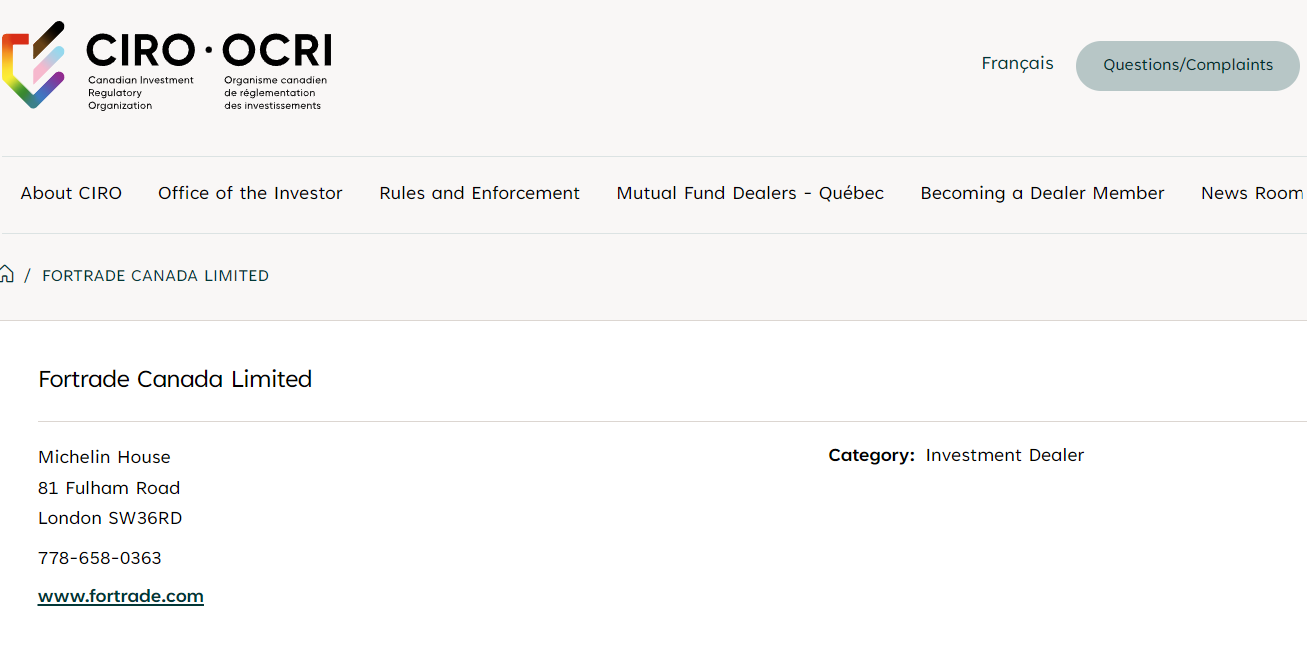
One of the key advantages of trading with a Canadian forex broker is the protection offered by the CIPF. This fund insures each trader’s account for up to $1 million in the event of broker insolvency, providing an additional layer of financial security. This high level of protection is particularly reassuring for traders who prioritize the safety of their funds in a robust regulatory environment.
In summary, Fortrade stands out as a broker that thoroughly addresses the key aspects of fund safety and regulatory oversight. With robust regulation across multiple jurisdictions, including the FCA in the UK, CySEC in Cyprus, ASIC in Australia, CIRO in Canada, and FSC in Mauritius, Fortrade ensures a comprehensive and secure trading environment for its clients. Its compliance with stringent financial standards, such as the segregation of client funds, negative balance protection, and adherence to minimum capital requirements, reinforces its commitment to maintaining a high level of client protection. Overall, Fortrade checks all the boxes when it comes to providing a safe and regulated trading experience.
Fortrade Trading Platform
Fortrade offers a robust suite of trading platforms, ensuring that both beginners and experienced traders have access to the tools they need to succeed. The broker’s technology lineup includes its proprietary Web Fortrader platform and the widely acclaimed MetaTrader 4 (MT4). Both platforms are designed to cater to different trading preferences, offering flexibility, speed, and reliability.
Web Fortrader
Web Fortrader is an online trading platform that is accessible from any PC, Mac, or mobile device with a web browser and internet connection. This platform supports various browsers, including Chrome, Internet Explorer, Firefox, Opera, and Safari. For mobile users, it’s essential to ensure that your device is running the latest version of your preferred mobile web browser for the best experience.
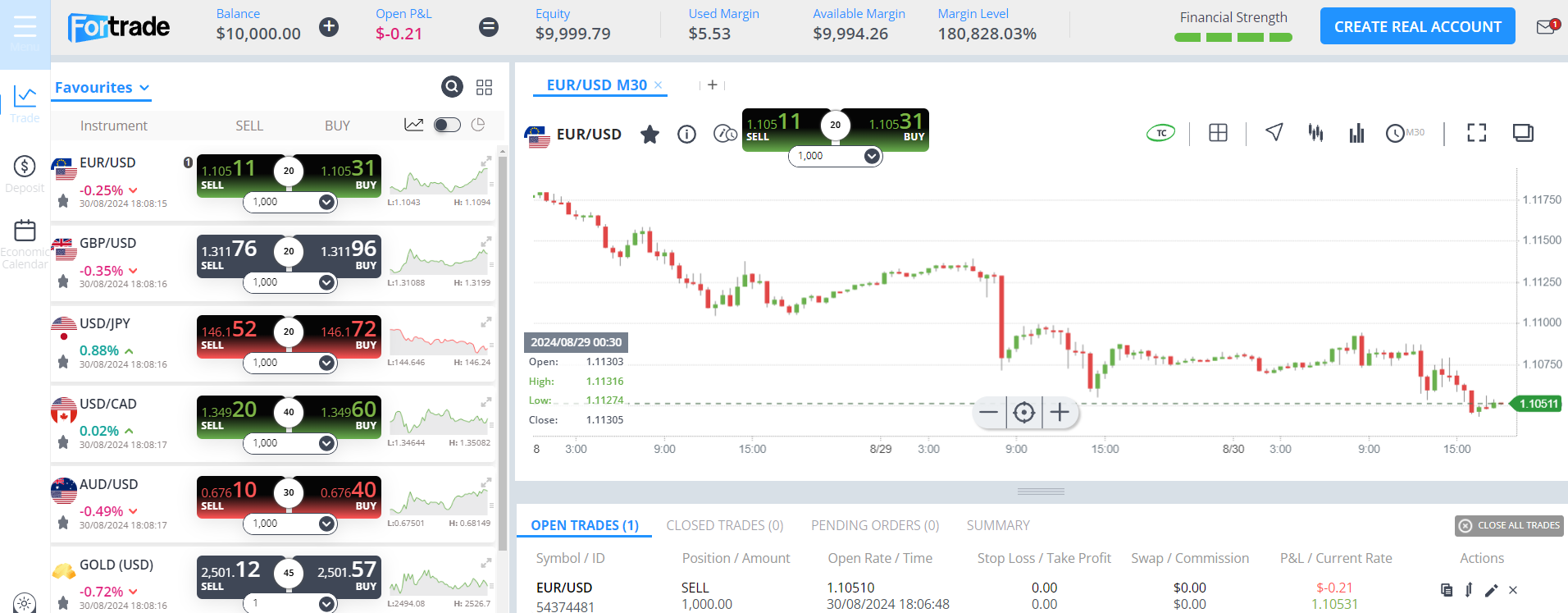
Key features of Web Fortrader include:
- Demo Account: Traders can fine-tune their skills with a €10,000 virtual balance, allowing them to test strategies and become familiar with the platform before committing real funds.
- Advanced Trading Features: The platform supports essential trading tools such as “Take Profit,” “Stop Loss,” and various pending orders, helping traders manage their risk and optimize their trading strategies.
- Security: Web Fortrader uses advanced encryption technologies to ensure the confidentiality, anonymity, and safety of your funds. This commitment to security makes it a reliable choice for traders concerned about data protection.
- User-Friendly Interface: The platform’s interface is designed to be intuitive and easy to navigate, making it accessible to traders of all experience levels.
MetaTrader4
Launched in 2005 by MetaQuotes Software, MetaTrader 4 (MT4) quickly became one of the most popular trading platforms for retail forex traders. Its widespread appeal stems from a user-friendly interface, extensive charting tools, and robust support for automated trading through Expert Advisors (EAs).
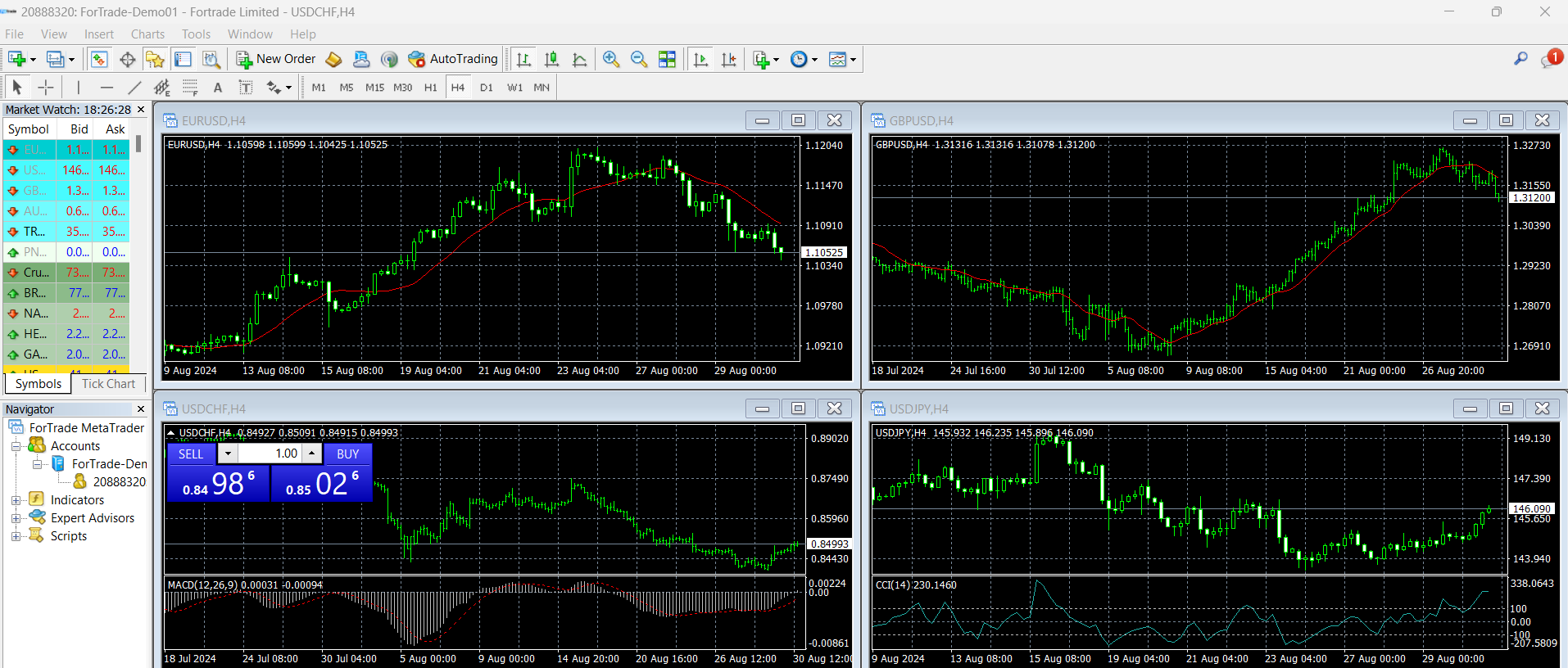
Key features of MT4 include:
- Over 50 Indicators and Tools: MT4 offers a rich selection of over 50 technical indicators and analytical tools, enabling traders to conduct in-depth technical analysis and make informed trading decisions.
- 9 Different Timeframes: Traders can choose from 9 different timeframes when analyzing price charts, allowing for a comprehensive view of market data across various time horizons.
- One-Click Trading: The platform simplifies the trading process with a one-click trading feature, enabling quick and efficient order execution with just a single click.
- User-Friendly Interface: MT4 is celebrated for its intuitive and user-friendly interface, making it accessible to traders of all levels. The platform’s straightforward navigation enhances the overall user experience.
- Pre-Programmed Analytical Tools: MT4 comes equipped with pre-programmed analytical tools, including chart pattern recognition and Fibonacci retracement. These tools assist traders in identifying potential trade setups.
- Multiple Pending Order Types: The platform supports various pending order types, such as limit orders and stop orders, allowing traders to implement a wide range of trading strategies, including precise entry and exit strategies.
Fortrade’s trading platforms are generally well-suited for both beginners and advanced traders. The platforms offer a user-friendly interface that makes it easy for newcomers to navigate, while also providing advanced tools and features that experienced traders will appreciate. Whether you’re just starting out or have been trading for years, Fortrade’s platforms cater to a wide range of trading needs, ensuring a smooth and effective trading experience for all users.
However, if you are a professional trader seeking the successor of MT4—MetaTrader 5 (MT5)—Fortrade might not be the ideal broker for you. While Fortrade offers robust platforms that cater to a broad range of trading needs, it does not provide MT5, which includes enhanced features such as additional timeframes, an expanded order management system, and more sophisticated trading tools. If MT5 is a crucial part of your trading strategy, you may need to consider other brokers that offer this platform.
Fortrade Minimum Deposit: Accessible and Flexible for Traders
Fortrade offers an affordable minimum deposit requirement of $100, which is in line with industry standards and provides an accessible entry point for traders, especially those just starting out. This low initial deposit allows beginners to familiarize themselves with the platform, practice trading strategies, and gain valuable experience without committing significant capital upfront.
However, Fortrade recommends an initial deposit of $500 to provide traders with a more substantial buffer, enabling them to manage trades more effectively and take full advantage of the broker’s comprehensive range of services. With a higher deposit, traders can better withstand market fluctuations and access additional features that may enhance their trading experience.
In addition to the low deposit requirement, Fortrade offers the flexibility to open accounts in multiple currencies, including USD, EUR, and GBP. This option reduces the need for currency conversion fees, offering convenience for traders who prefer to use their local currency or a specific trading currency.
Fortrade Trading Conditions
When it comes to trading conditions, Fortrade offers a mix of strengths and weaknesses. The broker provides generous leverage options but doesn’t necessarily boast the most competitive spreads in the market.
Leverage
Fortrade offers leverage up to 1:30 for retail clients, adhering to regulatory standards in regions such as the UK, Australia, and Europe. However, through its registration in jurisdictions with more flexible regulations, such as Mauritius, Fortrade provides significantly higher leverage options, which can be particularly appealing to traders aiming to amplify their market exposure with smaller capital investments. Specifically, Fortrade offers leverage of up to 1:200 on currencies, 1:100 on indices, 1:10 on stocks, 1:200 on commodities, and 1:2 on cryptocurrencies.
This elevated leverage allows traders to potentially maximize their trading positions, enabling them to control larger positions with less capital. However, it’s essential to understand that while high leverage can increase potential profits, it also amplifies potential losses. This makes effective risk management crucial, especially for traders using higher leverage, to avoid substantial losses that could exceed their initial investment.
Traders should carefully consider their risk tolerance and use tools such as stop-loss orders and take-profit levels to manage their exposure effectively when using high leverage options.
Spreads
Spreads are an essential aspect of trading conditions as they represent the cost of trading. In forex trading, the spread is the difference between the bid (buy) and ask (sell) price of a currency pair. Fortrade’s spreads are variable and can fluctuate depending on market conditions. While the broker provides competitive spreads on some instruments, it may not offer the tightest spreads compared to other brokers in the industry. This could be a consideration for traders who prioritize low-cost trading.
For instance, Fortrade typically offers spreads starting from 2 pips on major currency pairs such as EURUSD, GBPUSD, and USDJPY, which is relatively standard but not necessarily the most competitive. Traders focused on minimizing trading costs might find tighter spreads elsewhere, although Fortrade’s spreads are balanced by its other offerings, such as platform flexibility and comprehensive regulation.
In conclusion, while Fortrade offers high leverage and a solid range of trading instruments, traders should weigh these benefits against the potentially less competitive spreads. It’s crucial to consider your trading style and priorities when assessing whether Fortrade’s trading conditions align with your needs.
Fortrade Payment Methods
Fortrade supports a variety of standard payment methods, ensuring that traders have flexible options for funding their accounts and withdrawing profits. The broker accepts all major credit and debit cards, bank transfers, and popular e-wallet services like Neteller. This range of payment methods caters to a wide audience, allowing traders to choose the option that best suits their needs.
One of the key advantages of using Fortrade is that the broker does not charge commissions on trades. Additionally, Fortrade does not impose any extra fees on withdrawals beyond the standard bank transaction fees or processing fees that may be charged by payment processors. Similarly, Fortrade does not levy any deposit or processing fees, making it a cost-effective option for traders looking to maximize their investments without worrying about hidden charges.
This transparent approach to fees and charges aligns with Fortrade’s broader commitment to providing a straightforward and user-friendly trading experience. Traders can focus on their strategies without the added concern of unexpected costs eating into their profits.
Fortrade Bonuses and Promotions: Region-Specific Offers
Fortrade’s approach to bonuses and promotions is influenced by the regulatory frameworks in place across different regions. As with many brokers, regulatory restrictions prevent the offering of certain types of bonuses in specific jurisdictions.
In these regions, trading bonuses and promotional offers are generally not available due to strict regulations enforced by financial authorities such as the FCA (UK), ASIC (Australia), and CySEC (EU). These regulations are designed to promote responsible trading practices and protect traders from the potential risks associated with bonus-based incentives.
Fortrade Customer support
Fortrade offers robust customer support options to ensure that traders can get assistance whenever needed. The broker provides support through multiple channels, including phone, chat, and email, making it easy for clients to reach out with any queries or issues.
- Phone Support: Traders can contact Fortrade’s customer service team directly via phone for immediate assistance. This option is particularly useful for urgent matters or complex issues that require direct communication.
- Live Chat: For more instant, text-based support, Fortrade offers a live chat option on its website. This service is ideal for quick questions and troubleshooting, allowing clients to interact with support representatives in real-time.
- Email Support: For non-urgent inquiries or when more detailed explanations are needed, traders can reach out to Fortrade via email. This option allows clients to document their queries and receive responses in writing, which can be helpful for record-keeping.
These multiple support channels reflect Fortrade’s commitment to providing accessible and responsive customer service, helping traders resolve issues and continue trading with confidence.
Final Thoughts
Fortrade distinguishes itself in the forex trading industry through its comprehensive regulatory framework, which spans multiple jurisdictions, including the UK, Cyprus, Australia, Canada, and Mauritius. This extensive regulation is not just for show; it underscores Fortrade’s commitment to maintaining high standards of client protection, financial transparency, and corporate governance. Whether through the stringent oversight of the FCA in the UK, the robust regulatory environment provided by CySEC in Cyprus, the stringent standards of ASIC in Australia, or the flexibility offered by FSC in Mauritius, Fortrade ensures that its clients operate within a secure and reliable trading environment.
In addition to its regulatory strength, Fortrade provides a versatile range of trading platforms, including its proprietary Web Fortrader and the ever-popular MetaTrader 4 (MT4). These platforms cater to both novice and experienced traders, offering advanced tools and user-friendly interfaces that enhance the overall trading experience. However, it’s worth noting that Fortrade does not offer MetaTrader 5 (MT5), which could be a consideration for traders who prefer the enhanced features of the newer platform.
Fortrade also offers a broad spectrum of trading instruments, from forex pairs to commodities, indices, and stocks, ensuring that traders have ample opportunities to diversify their portfolios. The broker’s flexible leverage options—ranging from standard regulatory caps in regions like the UK and Australia to higher leverage in Mauritius—cater to different trading strategies and risk appetites.
While Fortrade’s spreads are competitive, they might not be the tightest in the industry, which is something traders focused on minimizing costs should consider. However, the broker balances this with a transparent fee structure, free deposits, and withdrawals, which can be attractive for those seeking a cost-effective trading environment.
Educational resources and trading tools further enhance Fortrade’s offerings, providing traders with the knowledge and support needed to navigate the financial markets successfully. The broker’s customer support, available through multiple channels, ensures that clients can get assistance whenever necessary, reflecting Fortrade’s dedication to client service.
In summary, Fortrade checks all the boxes when it comes to providing a safe, regulated, and comprehensive trading experience. Whether you are a beginner just starting out or an experienced trader looking for a reliable broker, Fortrade offers a solid platform to help you achieve your trading goals.
Notes from the author:
Fortrade, based in the UK, offers a solid mix of security and flexibility that’s likely to appeal to a wide range of traders. One thing that really stands out about Fortrade is its strong regulatory backing. With oversight from top-tier regulators like the FCA in the UK, CySEC in Cyprus, and ASIC in Australia, you can feel confident that your funds are protected. These layers of regulation mean Fortrade takes client security seriously, with segregated accounts and strict adherence to transparency and fair trading practices.
What I also like about Fortrade is the variety it brings to the table. With over 300 trading instruments, including forex pairs, commodities, indices, and stocks, you have plenty of options to diversify your portfolio. Plus, the choice between their own Web Fortrader platform and the widely used MetaTrader 4 (MT4) means there’s something for everyone, whether you’re a newbie or a seasoned pro. That said, if you’re someone who’s into using MetaTrader 5 (MT5) with its more advanced features, you might find its absence here a bit of a letdown.
On the flip side, while Fortrade’s spreads are decent, they aren’t the tightest out there. If keeping trading costs to an absolute minimum is your priority, this is something to keep in mind. However, the fact that they don’t charge for deposits or withdrawals helps balance things out, making Fortrade a pretty cost-effective choice overall.
In the end, Fortrade seems to offer a well-rounded experience that blends strong regulation with a broad range of trading options. Whether you’re just starting out and want a secure entry into forex trading, or you’re an experienced trader looking for flexibility, Fortrade gives you a reliable platform to work with.


