





QuoMarkets Review
QuoMarkets is an offshore broker that attempts to compensate for the lack of meaningful regulatory safeguards with attractive auction terms. The group of companies behind this broker also operate another offshore brand, TradeQuo, which is the subject of a separate review. QuoMarkets offers a fairly wide selection of high leverage trading account types, relatively low spreads and commissions, and a low minimum deposit. The ability to apply a variety of trading strategies through this broker is enhanced by the availability of the MetaTrader 4 and MetaTrader 5 platforms. But it should be noted as puzzling that the website only has information about the MetaTrader 5 platform, and the availability of the other option is only understood after account registration. The broker also has its own mobile application through which you can manage your trading accounts, but not perform trading operations. The app is available for iOS and Android devices, but the latter version is not available for installation via Google Play and must be downloaded as an APK file. QuoMarkets has a proprietary social trading platform that enables the generation of passive income. The broker also offers deposit bonuses. But on the other hand, you won’t find comprehensive packages of educational or research resources on the website.
QuoMarkets Licenses and Regulation
When you create an account with QuoMarkets you become a customer of the company Tradequomarkets Ltd, based in the offshore zone of the Commonwealth of Dominica.
The website provides content from groups of companies, some of which are subject to more significant regulatory scrutiny. These companies include TQBG Ltd, registered in Cyprus, Trade Quo Global Ltd, a securities dealer firm that is authorized and regulated by the Seychelles Financial Services Authority (FSA), and Quo Markets LLC, registered in St. Vincent and the Grenadines (SVG).
While these additional registrations and licenses lend some credibility to the pearl behind the QuoMarkets brand, they do not provide any guarantees or protections for client funds. The broker’s legal documentation makes no mention of segregated bank accounts and further states that the customer is responsible for any negative balance in their trading accounts.
QuoMarkets states that it do not target EU/EEA/UK clients анд does not accept clients from USA, Israel, Iran, Iraq, Canada, Russia, Afghanistan, Cuba, Cyprus, Eritrea, Liberia, Libya, Somalia and Syria or any jurisdiction where such distribution, publication, availability or use would be contrary to applicable law or regulation.
When deciding whether to trade through an offshore forex broker based in Dominica, a trader must carefully consider the regulatory environment, level of investor protection, trading conditions, and potential risks. Dominica, like many other offshore jurisdictions, does not have a well-established financial regulatory framework for forex and CFD brokers. Unlike heavily regulated markets such as Australia (ASIC) or the European Union (ESMA, CySEC, FCA), where brokers must adhere to strict financial oversight, capital requirements, and investor protection measures, Dominica does not impose strong regulatory standards on forex brokers, making it a significantly more flexible but riskier option for retail traders.
One of the key advantages of offshore brokers in Dominica is that they can offer higher leverage, flexible trading conditions, and fewer restrictions on trading strategies. Unlike EU and Australian regulators, which impose leverage limits of 1:30 for retail traders, offshore brokers can offer leverage of 1:500 or higher, making them attractive to traders who want to maximize their trading capital. Additionally, Dominica-based brokers often have lower deposit requirements, minimal trading restrictions, and allow scalping, hedging, and algorithmic trading, giving traders more flexibility in how they approach the market.
However, there are significant downsides to choosing an offshore broker in Dominica, primarily due to the lack of regulatory oversight and client protection mechanisms. Unlike ASIC, CySEC, or FCA-regulated brokers, which must maintain segregated client funds, submit financial audits, and participate in investor compensation schemes, Dominica-based brokers are not required to meet strict financial obligations or provide safeguards against broker insolvency or fraud. This means that if the broker goes out of business or engages in unethical practices, clients have little to no legal recourse to recover their funds. Offshore brokers also do not participate in compensation schemes, such as the Investor Compensation Fund (ICF) in the EU, which guarantees up to €20,000 per trader in case of broker failure.
Another key concern with offshore brokers is the potential for weaker fund security and order execution practices. Since brokers in Dominica are not subject to strict compliance checks, there is a greater risk of price manipulation, slippage, and conflicts of interest, especially if the broker operates a market-making model without external regulatory oversight. Traders should be cautious when dealing with unregulated or lightly regulated offshore brokers, as there may be hidden fees, withdrawal restrictions, or unfavorable trading conditions that are not clearly disclosed.
While some Dominica-based brokers operate legitimately and provide fair trading conditions, traders should conduct thorough due diligence before opening an account. This includes researching the broker’s reputation, verifying whether they offer segregated accounts, checking for negative balance protection, and reading reviews from other traders. Some brokers voluntarily adopt best practices such as segregating client funds, offering transparency in pricing, and maintaining a clean operational record, but without strong regulatory enforcement, these practices are not guaranteed.
Ultimately, trading with an offshore broker in Dominica is a high-risk, high-reward decision. The main advantages include higher leverage, fewer trading restrictions, and lower deposit requirements, but the disadvantages include weaker regulatory protection, higher counterparty risk, and limited legal recourse in case of disputes or insolvency. Compared to regulated brokers in Australia, the EU, or the UK, offshore brokers lack the same level of oversight, financial safeguards, and investor compensation programs, making them a riskier choice for retail traders. Traders who prioritize fund security, regulatory protection, and dispute resolution mechanisms are generally better off choosing a broker licensed in a well-regulated jurisdiction rather than opting for an offshore entity with fewer guarantees.
QuoMarkets Trading Software
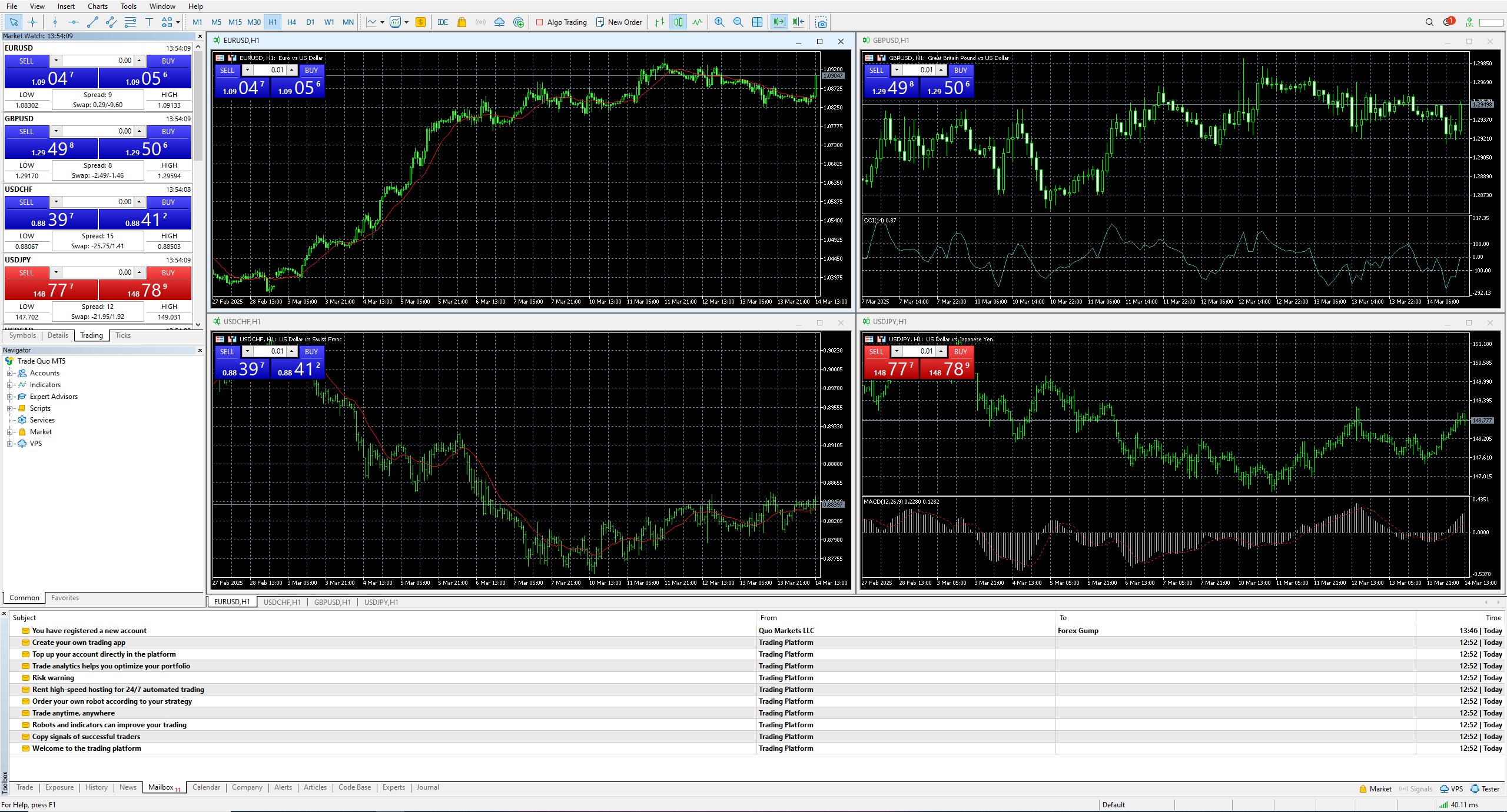
QuoMarkets offers a combination of MetaTrader 4 (MT4) and MetaTrader 5 (MT5) platforms. On the broker’s website there is only information about the MT5 platform, but after registering an account you get an option to create accounts with MT4 as well. The broker rolls out desktop and mobile versions of both platforms, but the bazaar-based version is only available for the MT5 platform.
MetaTrader 4 (MT4) and MetaTrader 5 (MT5) are two of the most widely used trading platforms in the forex and CFD industry, developed by MetaQuotes Software. These platforms have become the industry standard due to their robust technical capabilities, user-friendly interface, advanced charting tools, and extensive support for automated trading strategies. MT4, launched in 2005, quickly became the preferred choice for forex traders due to its stability, efficiency, and vast customization options. Although MT5 was introduced in 2010 with additional features and expanded asset support, many traders continue to favor MT4 due to its simplicity, extensive broker adoption, and compatibility with a well-established ecosystem of third-party tools, including custom indicators and Expert Advisors (EAs).
Technical Features of MT4 and MT5
One of the key strengths of MT4 and MT5 is their adaptability to different trading styles. Both platforms provide advanced charting tools, multiple order types, and algorithmic trading capabilities, making them suitable for manual traders, scalpers, swing traders, and those using automated strategies. Their widespread adoption by brokers ensures that traders have access to a broad range of liquidity providers, reducing the risk of slippage and execution delays.
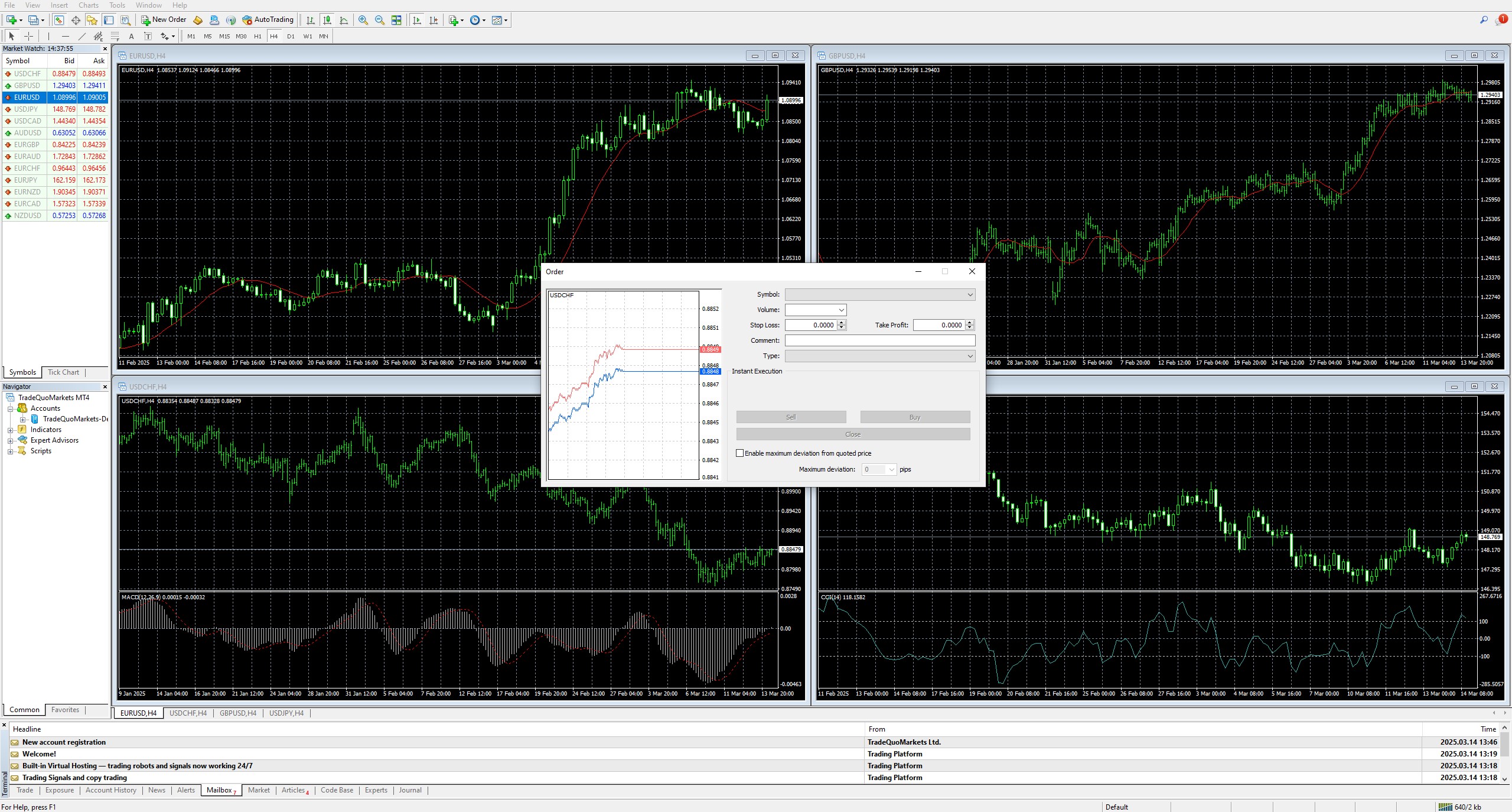
While MT5 was designed as an advanced multi-asset platform, supporting forex, CFDs, stocks, commodities, and futures, its adoption among forex traders has been relatively slow. The key technical differences between the two platforms include faster order execution speeds, additional order types, expanded timeframes, an integrated economic calendar, and market depth (DOM) functionality in MT5. Unlike MT4, which was originally built only for hedging, MT5 supports both hedging and netting, making it more compliant with certain regulatory requirements, particularly in stock and futures trading.
Programming and Automation
A critical distinction between the two platforms is the programming language used for developing custom indicators and automated trading strategies. MT4 operates on MQL4, a simpler, procedural programming language, while MT5 runs on MQL5, which is object-oriented and allows for more complex and faster executions of scripts and Expert Advisors. Despite MQL5’s technical superiority, many traders still prefer MT4 because MQL4 and MQL5 are not backward compatible, meaning that EAs and custom indicators built for MT4 cannot be used on MT5 without significant modifications. This has made many traders reluctant to switch platforms, as they would have to rebuild or repurchase their trading tools.
Order Execution and Market Depth
MT5 provides more advanced order execution capabilities compared to MT4. It supports six types of pending orders instead of four, allowing traders to execute Buy Stop Limit and Sell Stop Limit orders in addition to the traditional Buy/Sell Limit and Buy/Sell Stop orders available in MT4. The Market Depth (DOM) feature in MT5 also gives traders access to real-time bid/ask price levels, making it a more suitable choice for institutional and high-volume traders.
Charting and Timeframes
MT5 offers more extensive charting options compared to MT4. While MT4 supports nine timeframes, MT5 expands this to 21 different timeframes, providing traders with more granular control over market analysis. Additionally, MT5 features more built-in indicators and graphical objects, making it a superior platform for traders who rely heavily on technical analysis.
Desktop, Web, and Mobile Versions
Both MT4 and MT5 are available on desktop, web, and mobile, but the features vary across versions. The desktop version of each platform provides the full trading experience, including custom indicators, automated trading (EAs), and advanced charting tools. The web-based versions allow traders to execute trades and analyze basic market movements without requiring software installation, but they lack full support for EAs and custom scripts. The mobile versions of MT4 and MT5, available for iOS and Android, offer basic trading functionalities such as market execution, pending orders, and limited charting tools. However, mobile trading does not support automated trading (EAs), making it more useful for trade monitoring rather than developing or testing strategies.
Why Many Traders Still Prefer MT4
Despite the technical advancements of MT5, many forex traders continue to favor MT4 due to its familiarity, stability, and massive ecosystem of third-party tools. Since many brokers still support MT4 and offer optimized trading conditions, traders often see little incentive to switch. Additionally, MT4’s lower system requirements make it an attractive choice for traders with older hardware or unstable internet connections, as it consumes fewer system resources compared to MT5.
Ultimately, MT5 is a more advanced platform, offering better execution speeds, enhanced order types, and expanded asset support, making it ideal for multi-asset traders and those who require deep market analysis tools. However, MT4 remains the preferred choice for many retail forex traders due to its simplicity, stability, and established ecosystem of trading tools and strategies. The decision between the two platforms depends on a trader’s specific needs, programming preferences, and the availability of compatible trading tools.
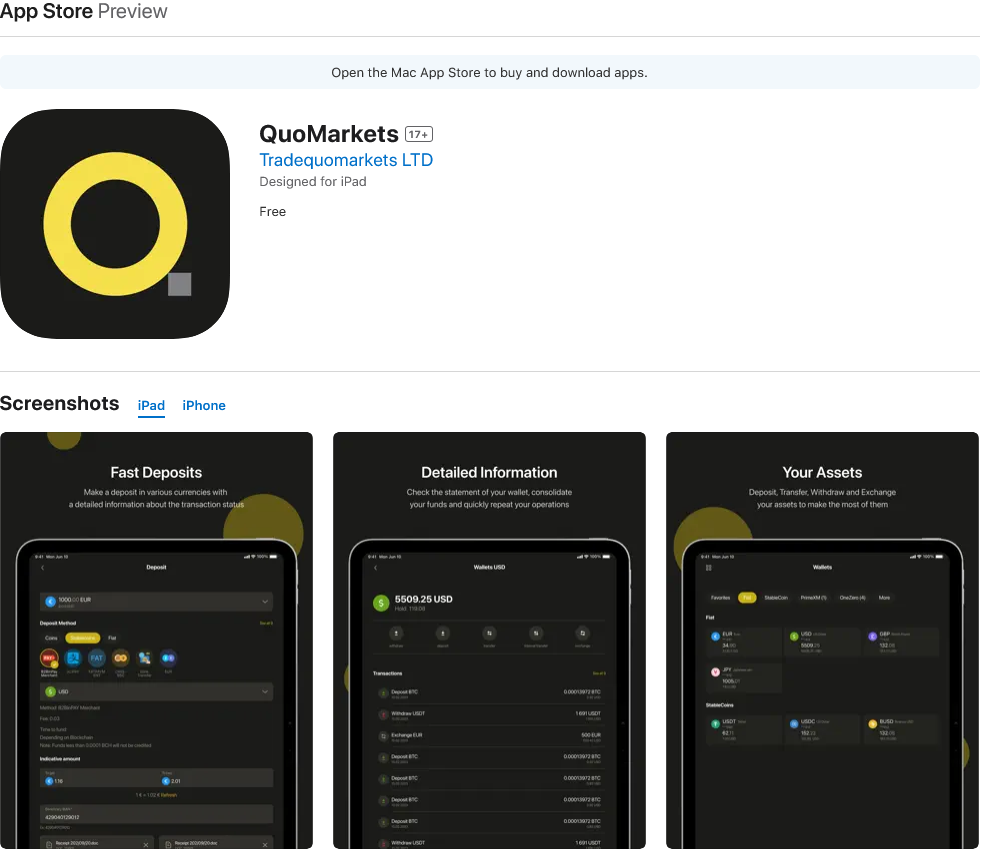
QuoMarkets has its own mobile application that provides the same functionality as the website’s dashboard – account registration and verification, deposit and withdrawal of funds, contact with customer support, etc. However, for trading activities you need to use the mobile applications of the MT4 and MT5 platforms.
QuoMarkets Account types and trading conditions
QuoMarkets provides four distinct types of trading accounts, primarily differentiated by their pricing models. The platform offers access to approximately 350 trading instruments, including around 150 share CFDs, 100 cryptocurrencies, nearly 80 currency pairs, and a selection of major metals, energies, and indices. According to the website, trading accounts can be denominated in either USD or EUR as the base currency. However, during the account creation process, GBP is also available as an additional option.
QuoMarkets promotes a low minimum deposit requirement across all account types, starting from as little as 1 USD, depending on the payment method. That said, the broker enforces a minimum deposit of 10 USD for all payment methods, which remains a highly competitive threshold. It’s worth noting, however, that many top global brokers also offer Micro and Cent accounts with similarly low entry requirements.
Upon completing the initial account registration, users have the flexibility to create multiple Demo accounts. This feature allows traders to explore various combinations of account types, leverage levels, and base currencies before committing to real trading. To deposit funds and begin live trading, users must first verify their identity and address as part of the broker’s compliance process.
QuoMarkets offers a choice between a Raw Account, a Standard Account, a Zero Spread Account and an account advertised with limitless leverage. The first two types are the usual choices provided by most brokers.
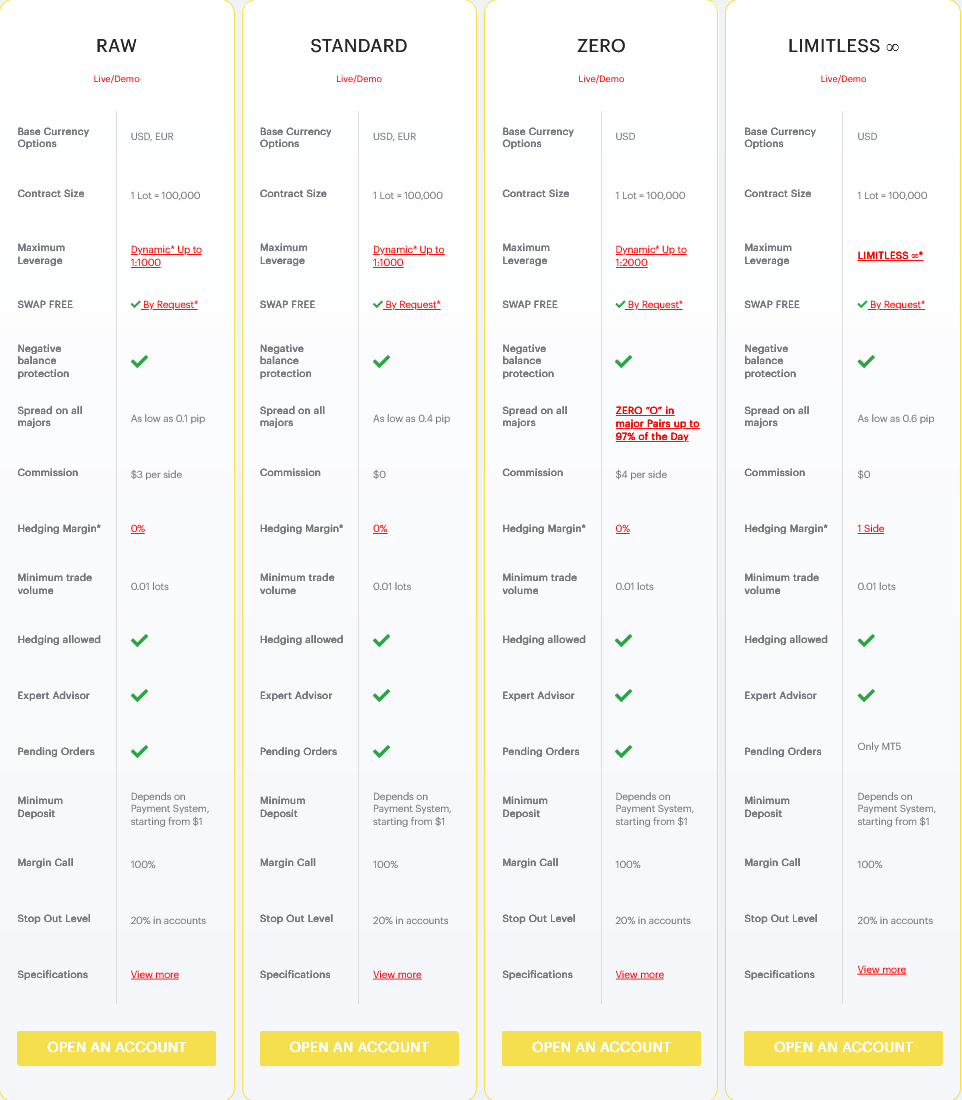
When using a Standard account type, the trader pays only a floating spread. This spread is quite low. When using a Demo account, we saw a spread of 0.6 pips for EUR/USD, 1 pip for GBP/USD and 1.2 pips for GBP/JPY. According to the information available on the website, the average spreads are 0.2 pips higher than these levels.
With a Raw account, the trader can expect a raw spread that can be as low as 0.1 pip. But in addition to this, the trader pays a fixed commission of 3 USD per side per lot. With a spread of 0.1 pip and such a commission, the client will pay 7 USD per lot traded, the same as with a spread of 0.7 pip without commission.
QuoMarkets offers another option – Zero Spread Account. With this type of account, the trader is guaranteed a zero spread, but pays a higher commission – 4 USD per side per lot. But the specific terms of this account type make it suitable only for traders with very specific needs. The zero spread actually applies to a limited number of instruments and is not guaranteed all the time. QuoMarkets promises zero spread during “approximately 90% to 97% of trading days” and this only applies to the following instruments – AUDUSD, EURUSD, GBPUSD, NZDUSD, XAGUSD, XAUUSD, USOUSD, BRNUSD, UKOUSD, DJIUSD, SPXUSD, NDXUSD, DAXEUR. This account type may be more advantageous than Raw and Standard accounts for certain instruments depending on trading volume and market volatility.
An additional potential advantage is that the Zero account offers higher leverage than the previous two account types.
The Raw and Standard accounts offer maximum leverage up to 1:1000 and the Zero Spread account up to 1:2000.
The maximum level applies to forex and gold and decreases depending on trading volume. Between o and 5 lots the trader can use a leverage of 1:1000, between 5 and 10 lots the maximum leverage is 1:500, between 10 and 20 lots it is 1:300, and for volume above 20 lots the leverage is limited to 1:200. For the Zero spread account the levels are 1:2000, 1:000, 1:500 and 1:300 respectively.
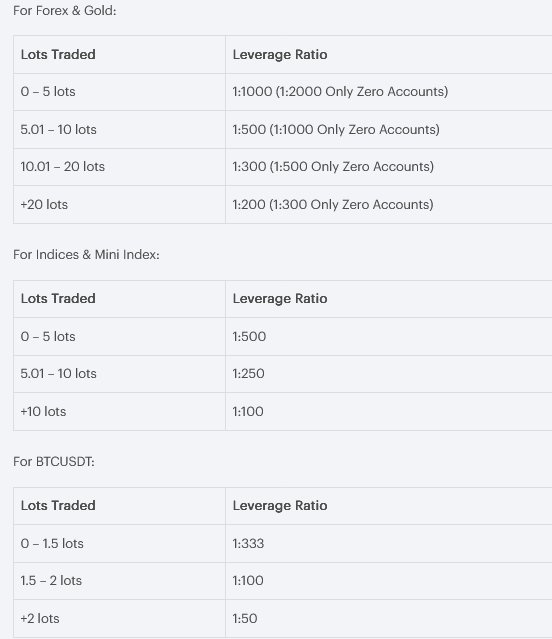
For other asset classes, there are fixed maximum leverage levels – 1:5 for shares, 1:50 for cryptocurrencies, 1:200 for energy, 1:200 for metals and 1:100 for indices.
By comparison, current regulations in the EU, the UK and Australia limit the maximum leverage for retail clients to 1:30 for major currency pairs, 1:20 for non-major pairs, gold and major indices, 1:10 for other commodities and non-major indices, 1:2 for cryptocurrencies and the same 1:5 for shares.
QuoMarkets offers another type of account promising unlimited leverage under certain conditions. This Limitless Leverage account has no trading commissions, with the trader only paying a floating spread. But this spread is 0.2 pips higher than the Standard account. In addition, this type of account does not allow pending orders, unlike all other accounts.
This form of leverage applies to Forex, Gold, Silver, and selected indices and commodities, including USOUSD, BRNUSD, UKOUSD, DJIUSD (DJI30), SPXUSD (SP500), NDXUSD (NASUSD) and DAXEUR (D40EUR).
Like other accounts, the maximum leverage is dynamic and changes depending on the volume traded. The lack of a leverage limit only applies to accounts with exposures below 0.5 standard lots, or 50,000 currency units. For volume between 0.51 and 1 lot the leverage is limited to 1:200, between 1 and 2 lots the limit is 1:1000, between 2 and 40 lots the maximum leverage for this type of account is 1:500 and above 40 lots there is a limit of 1:400.
Before markets close for the weekend and during news events, new positions within the Limitless Leverage and Zero Spread account are subject to a temporary leverage change. During these times, the leverage for new positions will be set at 1:250. After these events or upon market reopening, both account times are fully restored to their regular conditions. If equity is lower than 10 USD or 350 THB the leverage for new positions will be set at 1:250.
All of the broker’s accounts feature a very low stop-out rate – 20% for USD and EUR accounts and 0% for THB accounts. While this gives the trader more time to react to unfavorable market movements, it increases the risk of trading with high leverage, especially given the lack of negative balance protection.
Broker clients from Muslim countries can request a swap-free version for all account types. In this type of account, swap payments for positions left open overnight are replaced with another type of fee. Thus the trade meets the requirements of the Islamic faith against interest. Broker clients in other countries can also request a swap-free account, but then swap-free trading only applies to a very limited number of currency pairs, cryptocurrencies, metals and indices.
When deciding between a Standard account with a floating spread and a Raw spread account with a fixed commission, forex traders must consider several key factors, including trading costs, execution quality, market conditions, and overall strategy compatibility. Each account type comes with distinct advantages and drawbacks, making them better suited for different trading styles and experience levels.
A Standard account functions with a floating spread, meaning that the cost of trading is built into the spread itself, and traders are not charged a separate commission per trade. This model is straightforward and convenient, as traders only need to consider the spread when calculating their costs. The simplicity of a Standard account makes it particularly appealing to beginners and long-term traders who are not significantly impacted by small fluctuations in spreads. One of its biggest advantages is cost predictability, as there are no additional commission fees to factor into trading expenses. However, the primary drawback is that spreads are variable, meaning they can widen significantly during volatile market conditions, major news releases, or periods of low liquidity. This unpredictability can lead to higher trading costs, particularly for scalpers, day traders, and high-frequency traders, who require precise execution and stable cost structures. As a result, Standard accounts are typically better suited for swing traders, position traders, and those who trade less frequently.
A Raw spread account, often referred to as an ECN (Electronic Communication Network) or Zero Spread account, provides traders with direct market access, offering interbank spreads that can go as low as 0.0 pips. Instead of widening the spread, brokers charge a fixed commission per lot traded. This pricing structure is highly beneficial for traders who require the lowest possible spreads, especially during high-liquidity market conditions. Scalpers, day traders, and algorithmic traders benefit the most from tight spreads and faster execution, as they rely on cost efficiency and minimal slippage to maximize profits. Additionally, Raw spread accounts often provide superior order execution, as trades are typically routed directly through liquidity providers rather than being processed via a broker’s dealing desk, reducing the risk of requotes and price manipulation. However, one of the downsides of this account type is that traders must account for commission fees, which can make small trade sizes less cost-effective. Additionally, many brokers require a higher minimum deposit for Raw spread accounts, making them less accessible to beginners or traders with limited capital.
The decision between a Standard account and a Raw spread account ultimately depends on a trader’s experience level, trading strategy, and cost sensitivity. Casual traders, swing traders, and beginners may find a Standard account more suitable due to its ease of use and straightforward cost structure. In contrast, scalpers, day traders, and high-volume traders benefit more from a Raw spread account, where lower spreads, faster execution, and direct market access significantly reduce trading costs over time. Traders should carefully assess their expected trading frequency, market conditions, and overall cost efficiency to determine which account type best aligns with their trading objectives.
QuoMarkets maintains a proprietary Social Trading platform that provides passive income opportunities to active and successful investors. Social trading is a feature offered by some forex brokers that allows traders to interact, share insights, and copy the trades of more experienced investors within a community-driven trading environment. This approach leverages the power of social networks and collaborative trading, enabling traders to learn from others, access trading signals, and mirror successful strategies without needing extensive market knowledge or trading experience.
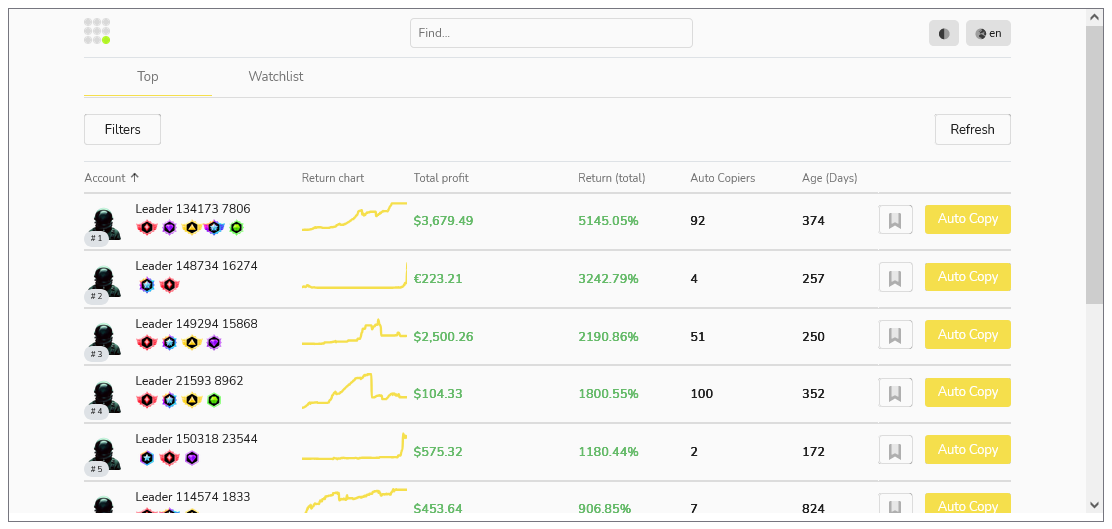
At its core, social trading integrates real-time market insights, trading activity feeds, and community discussions directly into a broker’s trading platform. Traders can follow top-performing investors, analyze their trading history, risk levels, and profitability, and decide whether to copy their trades automatically or use their strategies as inspiration for manual trading. Some platforms allow users to engage in forum discussions, share market predictions, and receive alerts about trading opportunities, creating an interactive learning environment.
One of the key features of social trading is copy trading, where traders can automatically replicate the trades of selected strategy providers in real-time. Once a trader chooses to follow an expert, all executed trades—including entry, exit, and stop-loss settings—are mirrored proportionally in their own account. This feature is especially useful for beginners or passive investors who want to participate in forex trading but lack the time or expertise to develop their own strategies.
Social trading offers several advantages. It helps reduce the learning curve for new traders, providing them with direct exposure to successful trading techniques and market strategies. Additionally, it allows traders to diversify their investments by following multiple traders with different styles and risk tolerances. Some platforms also include ranking systems, performance metrics, and risk analysis tools, ensuring transparency when selecting a trader to follow.
However, social trading also comes with risks. Copying trades does not guarantee success, as market conditions can change and even the most experienced traders can incur losses. Additionally, some brokers impose performance fees or commissions on copied trades, which can impact profitability over time. To mitigate risks, traders should carefully research and evaluate the performance of the strategy providers they follow, ensuring that their risk tolerance aligns with the trading approach of the experts they choose.
Overall, social trading provides a unique and accessible way to engage in forex trading, combining community-driven insights, automation, and transparency. It is an attractive option for beginners looking to learn from experienced traders and for investors who prefer a more passive approach to trading while still benefiting from the expertise of seasoned professionals.
Accounts that have remained dormant within one hundred or more consecutive calendar days and having remains of funds under 10 USD or an equivalent in account currency can be removed by the broker.
QuoMarkets Deposit and Withdraw Methods
According to the details provided on its website, QuoMarkets offers a relatively diverse range of payment methods for deposits, with a particular emphasis on cryptocurrencies. However, due to the broker’s unclear legal status, it is important to note that we have not independently verified the availability of all the payment methods advertised. The broker claims that it does not impose any fees for depositing or withdrawing funds.
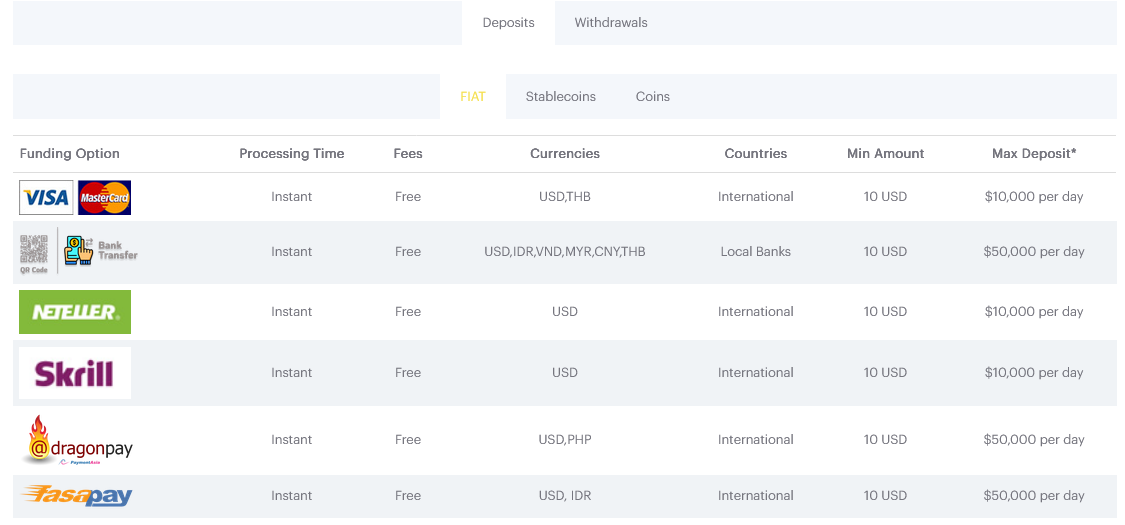
Fiat currency deposit options include credit/debit cards, local bank transfers, popular e-wallets like Neteller and Skrill, as well as regional payment solutions such as Dragonpay and FasaPay. Additionally, deposits can be made using a wide variety of stablecoins and cryptocurrencies.
QuoMarkets asserts that it does not charge any internal transaction fees. The minimum deposit and withdrawal amount is set at 10 USD or its equivalent. The broker also enforces daily transaction limits, with a maximum deposit cap of 10,000 USD and a withdrawal limit of 100,000 USD per day.
| Deposit method | Minimum | Maximum | Processing time | Fee |
| Bank | $10 | $10000 | up to 24 hours | Unspecified |
| Credit/Debit Card | $10 | $10000 | Instant | Free |
| Skrill | $10 | $10000 | Instant | Free |
| Neteller | $10 | $10000 | Instant | Free |
| FasaPay | $10 | $10000 | Instant | Free |
| DragonPay | $10 | $10000 | Instant | Free |
| Crypto | $10 | $10000 | Instant | Unspecified |
| Withdrawal method | Minimum | Maximum | Processing time | Fee |
| Bank | $10 | $100000 | up to 5 days | Unspecified |
| Credit/Debit Card | $10 | $100000 | up to 24 hours | Free |
| Skrill | $10 | $100000 | up to 24 hours | Free |
| Neteller | $10 | $100000 | up to 24 hours | Free |
| FasaPay | $10 | $100000 | up to 24 hours | Free |
| Crypto | $10 | $100000 | up to 24 hours | Unspecified |
QuoMarkets Bonuses and Promotions
If a new QuoMarkets customer deposits 50 USD or 100 USD, they may receive a bonus in the amount of the deposit. Bonus funds can be used for trading but not withdrawn. There are no restrictions on the maximum profit when using the bonus. The bonus can be claimed 30 days after account registration.
Another option for new clients is to request a bonus of 10%, 20% or 30% of their deposit. The requirement is to have made a deposit of at least 100 USD. The maximum deposit amount is 2000 USD per account and 5000 USD per customer. A client can request such a bonus for a maximum of 3 trading accounts. The bonus scheme is active for 90 days, after which the bonus is removed from the account. Withdrawal of funds from the account also results in the bonus being removed.
Approved customers with a verified phone number can also claim a 50 USD No Deposit Bonus. The bonus can be used for trading but not withdrawals. The maximum profit that can be withdrawn when using such a bonus is 100 USD. To withdraw your profit you must have traded at least two standard lots.
The offshore companies of some major forex brands offer more attractive promotions, including cash back bonuses, competitions for active traders, and loyalty programs providing rewards and improved conditions for the most valuable clients.
| Bonus | Min deposit | Max bonus | Required turnover | Cash out limit |
| Wellcome Bonus | $10 | $100 | Unspecified | Unspecified |
| Deposit bonus 30% | Unspecified | $30 | - | Unspecified |
QuoMarkets Tools and Education
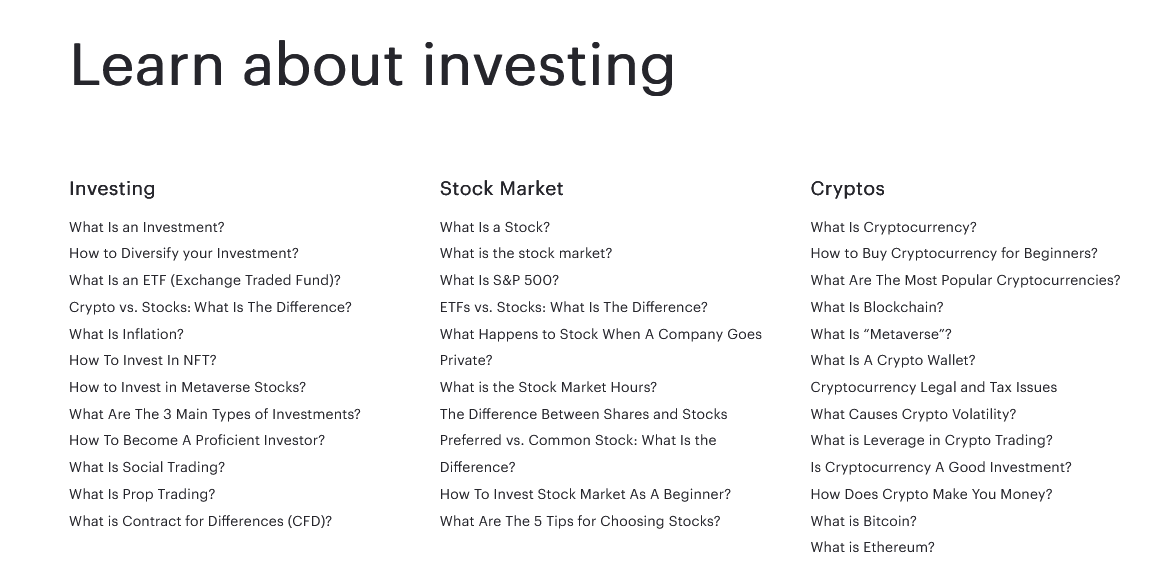
Educational resources on the QuoMarkets website are limited to articles on the basics of financial trading, collected in the Investing 101 section. The broker also maintains a blog where analytical posts are published.
The website integrates an economic calendar and news snap from the TradingView provider, but overall QuoMarkets does not offer analytical and research resources and tools.
A forex broker that does not provide clients with research resources and tools puts traders at a significant disadvantage, particularly those who rely on market analysis, trading signals, and economic data to make informed decisions. Without access to these essential resources, traders must seek information from third-party sources, which can lead to delays, fragmented analysis, or reliance on unreliable data. This lack of integrated market insights can make trading more challenging, especially for those who depend on technical indicators, fundamental analysis, and expert market commentary to develop their strategies.
For beginner traders, the absence of research tools creates an even steeper learning curve, forcing them to educate themselves through external sources rather than benefiting from structured broker-provided educational materials, news feeds, and expert analysis. Many brokers offer research tools in partnership with professional market intelligence providers like Trading Central or Autochartist, which help traders identify key price levels, trend reversals, and high-probability setups. Without these tools, traders may struggle to find consistent and actionable trade opportunities, increasing their risk of making uninformed or impulsive trading decisions.
Advanced traders also suffer from the absence of in-depth research reports, real-time news updates, and sentiment analysis tools, which are crucial for maintaining an edge in fast-moving markets. Institutional-grade research helps traders anticipate major market shifts and economic events, enabling them to adapt their strategies accordingly. A broker that does not provide these insights leaves traders to navigate volatile markets blindly, increasing their exposure to unexpected price swings and unfavorable market conditions.
Beyond market analysis, many research tools also assist in risk management and strategy refinement. Tools like volatility indicators, correlation matrices, and economic calendars help traders adjust their risk exposure and align their trades with macroeconomic trends. Without these resources, traders may misjudge market conditions, fail to manage risk effectively, or overlook critical events that could impact their positions.
Notes from the author:
When dealing with offshore brokers, it is often the case that the exterior looks good, but careful inspection of the details leaves us disappointed or suspicious. In the case of QuoMarkets, it is somewhat the opposite. This broker's website looks cheap and unconvincing - large stock images and a lack of detailed information. But putting aside the lack of regulatory oversight, QuoMarkets actually offers a pretty decent set of services. In some respects it even offers more than it advertises - it was only after registering an account that we discovered it also offers the MT4 platform, not just MT5 as advertised on the website. It is difficult to judge whether it is a good thing that more is available than advertised on the website. The broker offers four types of trading accounts that provide relatively favorable terms and different pricing methods. High leverage, deposit bonuses and social trading are also among the pros of this offshore broker. But QuoMarkets does nothing to compensate for its lack of strict regulatory oversight - it provides no negative balance protection, does not participate in a voluntary investor compensation fund, and does not even service its clients through a company in a more respected offshore jurisdiction than Dominica, even though it holds the necessary licenses.


