





Soho Markets Review
At first glance, the Soho Markets is a broker that offers a fairly standard package of services and a typical operating model. The broker holds one premium regulatory license from the Cyprus Securities and Exchange Commission (CySEC), and outside of highly regulated jurisdictions offers its services through offshore companies. Soho Markets offers two types of accounts with different pricing models – Standard and ECN, suitable for traders with different strategies and capital.. The tradable instruments are not very numerous, but include most major asset classes. There is a preferential package for professional clients in the EU.
The trading software available is the industry standard MetaTrader. Payment methods include expected options such as wire transfers, credit/debit cards and e-wallets, as well as some more non-traditional payment processors for the broker’s non-European clients.
So far so good. But on closer inspection we found quite a few irregularities. The website designed for the EU client does not function technically as it should – the chat and registration functions of the Demo Account do not work. Our attempts to register a Demo Account through the offshore company’s website were also unsuccessful. Speaking of the broker’s offshore business, we were unable to confirm some of the important legal details.
The base currency of trading accounts can only be one – USD. The minimum deposit for an ECN account is much higher than the industry norm. Live trading prices are much higher than advertised. The available payment methods are also not quite as advertised.
The broker offers services such as copy trading for which there is no information on the website and legal documentation. The website also does not specify exactly what trading software is offered. Non-EU clients of Soho Markets do not receive standard safeguards such as negative balance protection.
In this review, we’ll detail everything we’ve found about Soho Markets so you can make an informed decision about whether this broker is worth testing.
Soho Markets Licenses and Regulation
The most important information when checking a forex broker is what licenses it has. This determines whether you can become a client of the broker in question depending on the jurisdiction you are a citizen or resident of. The regulatory framework in which the broker operates determines what obligations the company has to clients and regulators, what guarantees it provides for traders’ funds, but also what restrictions it has in trading conditions for retail clients.
Soho Markets operates through two domains – sohomarkets.eu, which is intended for EU customers, and sohomarkets.com, which is intended for customers of offshore companies. Judging by the languages in which the website is available, the broker targets mainly Asian and South American clients.
Let’s take a look at the companies behind the Soho Markets brand.
In the European Union, this broker operates through a Cyprus-based company called Vstar & Soho Markets Ltd. This company is registered as a Cyprus Investment Firm (CIF) and licensed by the Cyprus Securities and Exchange Commission (CySEC) under licence number 409/22.
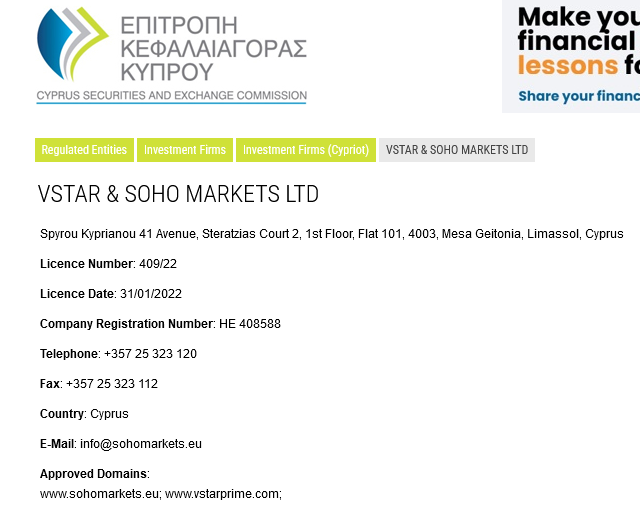
Checking the regulator’s register confirms the information on the broker’s website. No matter how legitimate a broker may seem, you should always do independent verification through the financial regulators, and Soho Markets actually gives us an example of why this is so.
Soho Markets claims that the broker’s non-EU operations are managed by two offshore companies. The first is Soho Markets Global Limited, which is alleged to be incorporated under the laws of the Republic of Mauritius and regulated by the Financial Service Commission (FSC) in Mauritius. The other one is Soho Markets LLC, incorporated in St. Vincent & the Grenadines (SVG) as an International Business Company.
The client agreement on the Soho Markets Global website is on behalf of the Mauritius-based company. However, in preparing this review we were unable to find this legal entity in the FSC Mauritius database.
The trading software used by Soho Markets is registered in the name of the other company, based in St. Vincent and the Grenadines.
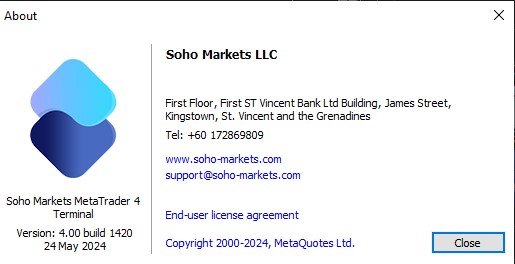
We have been able to confirm that this company exists. But while both companies are offshore, in Mauritius brokers are still subject to some regulatory oversight and requirements, which is not the case for those based in SVG. Let’s take a detailed look at what the regulations – or lack thereof – mean for this broker’s clients.
Many forex and CFD brokers operating within the EU have chosen Cyprus as their base due to the island’s well-developed financial and accounting infrastructure. This strategic choice has elevated the Cyprus Securities and Exchange Commission (CySEC) to one of the most significant and proficient financial regulators globally. A CySEC license allows companies to offer their services throughout the European Economic Area.
Forex and CFD brokers in the EU are primarily regulated under the Markets in Financial Instruments Directive (MiFID II) and the Markets in Financial Instruments Regulation (MiFIR). These regulations impose rigorous standards on forex brokers, including capital adequacy requirements and mandatory participation in investor compensation funds.
The primary objectives of these regulations are to ensure transparency and protect investors. This includes mandatory disclosures about the nature and risks associated with CFD products and the requirement for forex brokers to regularly submit reports on their financial health. These reports must include audits of their financial statements and details of their risk management procedures.
Forex brokers must maintain initial capital ranging from €50,000 to €730,000, depending on their risk exposure and the types of financial instruments they handle. This capital is crucial for managing various risks, including market, credit, and operational risks. Brokers must also maintain sufficient liquidity to meet their immediate obligations and ensure they can operate effectively under stress.
EU regulations also aim to safeguard individual retail customers. Protections include caps on the amount of leverage that retail investors can use, set at 1:30 for major currency pairs and lower for other asset classes, to reduce potential losses from volatile market movements.
Moreover, EU retail traders benefit from guaranteed negative balance protection, ensuring they cannot lose more money than they have deposited in their accounts. Licensed brokers must participate in investor compensation schemes designed to protect investors if a forex broker becomes insolvent or ceases trading. These schemes ensure that covered clients can recover a portion of their funds—up to €20,000 per investor. All retail investors and small businesses are typically eligible for compensation if they cannot recover their funds due to a broker’s failure.
For residents of countries outside strictly regulated jurisdictions, an ideal way to enter the forex trading world is often through an offshore subsidiary of an established and reputable brand. Many leading brokers have such offshore divisions, enabling them to serve clients from multiple countries with a single legal entity.
Several offshore jurisdictions have become popular choices among brokers due to their regulatory, tax, and operational advantages. These jurisdictions typically have more lenient regulatory requirements compared to stricter environments like the United States, European Union, or Japan. This flexibility allows brokers to offer products and services that may be restricted in their home countries, such as higher leverage on trades, which is attractive to many traders.
One jurisdiction commonly used by brokers is Mauritius, where the sector is overseen by the local Financial Services Commission (FSC). Forex brokers in Mauritius, categorized generally as Investment Dealers, must adhere to minimum capital requirements set by the FSC. The specific amount can vary depending on the scope of the broker’s activities. For Investment Dealers that hold or control clients’ assets (Full-Service Dealer including underwriting or Broker), the required minimum stated capital is MUR 10 million (approximately USD 250,000). For those that do not hold or control clients’ assets but execute orders on behalf of clients, the requirement is MUR 1 million (approximately USD 25,000). Apart from the minimum stated capital, brokers must also ensure they have sufficient operational capital relative to their risk exposure. This operational capital must be adequate to cover all risks associated with the brokerage operations. The FSC mandates that all financial service providers, including forex brokers, engage in fair trading practices. This includes providing transparent pricing, avoiding conflicts of interest, and ensuring that advertisements and promotions are not misleading.
In other cases, brokers or their subsidiaries are registered in offshore jurisdictions that do not even have similar minimum requirements and supervision, such as St Vincent and the Grenadines.(SVG). The local Financial Services Authority (FSA) specifically warns that it does not license forex, binary and other types of brokers. While companies offering forex and CFD services can register in SVG, they are often registered as international business companies (IBCs) without strict requirements to obtain a specific forex trading license. This means they are not subjected to the same level of scrutiny as brokers in jurisdictions with stringent financial regulations. SVG does not impose specific capital adequacy requirements or demand compliance with client protection measures such as segregated client accounts or compensation schemes that are typical in other regulatory frameworks. Forex and CFD brokers registered in SVG are not required by local law to uphold standards for product disclosure, leverage limits, or negative balance protection.
While SVG offers an easier entry point for forex and CFD brokers due to its lenient regulatory environment, it poses increased risks for traders. The absence of stringent regulatory oversight means less protection for traders, highlighting the importance of careful broker selection and the consideration of additional regulatory coverages from other jurisdictions. Traders should weigh the benefits of potentially favorable trading conditions against the risks of reduced regulatory protection.
Given the above reasons, it is a non-trivial question whether as a client of this broker you are working with a Mauritius based and regulated brokerage or one incorporated into SVG. Even assuming it is our fault that we have failed to find proof of the SVG’s licence in Mauritius, there are other worrying clues. The Client Agreement, for example, mentions nothing about negative balance protection, which is explicitly addressed in the document intended for the Cyprus company’s clients. We are also not sure whether Soho Markets provides segregated bank accounts for its offshore clients. So while clients in the EU can be sure that the broker meets regulatory requirements, traders in other jurisdictions face too many uncertainties.
Soho Markets Trading Software
One of the puzzling things about Soho Markets is that the website does not indicate what trading software is being offered to customers. On websites we see a few stock images of a web trading platform, but after signing up for an account we find that Soho Markets actually offers the MetaTrader 4 (MT4) platform. On the one hand this is one of the most familiar trading software, but on the other these inconsistencies and lack of information raise questions around the credibility of this broker.
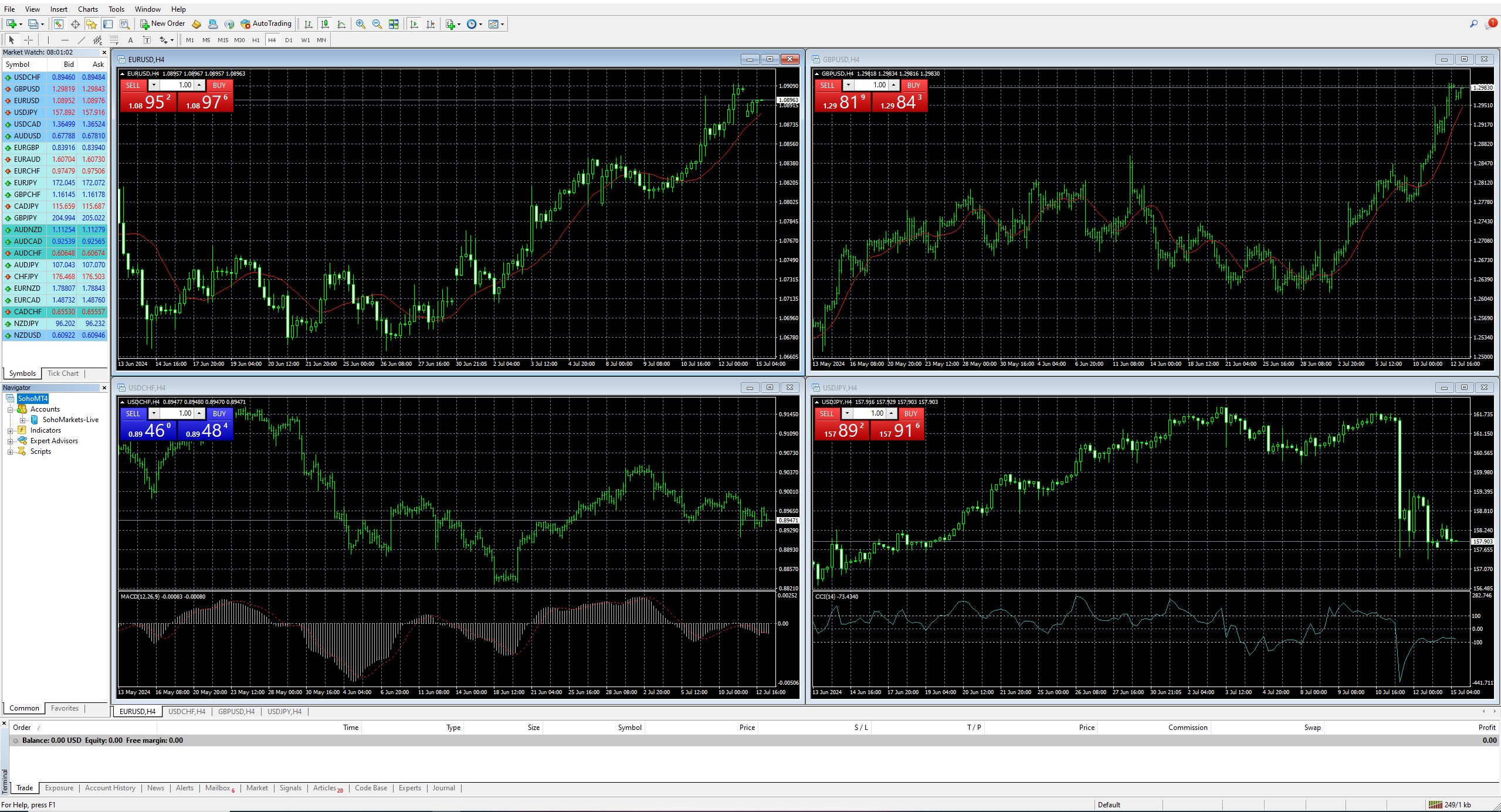
MetaTrader 4 (MT4) is a widely popular trading platform primarily used for Forex trading but also supports trading in contracts for differences (CFDs) and futures markets. Developed by MetaQuotes Software and released in 2005, MT4 has earned a reputation for its advanced trading capabilities, robust security, and user-friendly interface, making it accessible to traders of all skill levels.
MT4’s interface is intuitive and easy to navigate, catering to both beginners and experienced traders. The platform allows for easy customization, enabling traders to set up their workspaces according to their preferences. MT4 offers multiple chart setups and supports various timeframes, from one minute to monthly intervals. The platform includes over 30 built-in technical indicators and more than 2,000 free custom indicators, along with 700 additional indicators available for purchase. These tools help traders conduct detailed technical analysis and make informed trading decisions.
One of the standout features of MT4 is its support for automated trading through Expert Advisors (EAs). EAs can automate trading strategies based on predefined conditions, executing trades without manual intervention. Users can develop custom indicators and scripts using the MQL4 (MetaQuotes Language 4) programming language, specifically designed for developing trading robots and technical indicators. This has led to the formation of a large community of traders and developers who share and sell their custom tools.
MT4 supports a variety of order types, including market orders, pending orders (buy stop, sell stop, buy limit, sell limit), and trailing stops. It offers quick order execution, which is critical for taking advantage of market movements. The platform includes advanced communication tools, allowing brokers to post messages and communicate directly with traders. This feature can be particularly useful for real-time updates and support. MT4 provides access to market news and an internal mailing system to keep traders informed about the latest economic events and updates.
MT4 is generaly available as a desktop application for Windows, macOS, and Linux. It also has mobile versions for iOS and Android, enabling traders to manage their accounts from smartphones and tablets. Additionally, there is a web-based version accessible through internet browsers, providing flexibility to trade on the go. However, Soho Markets does not provide all versions of the platform. The desktop version is only available forWindows and the web version is not available at all.
Although the platform is now 20 years old, many traders continue to prefer it over the newer MT5 or other advanced platforms with comparable functionality such as cTrader. There are various reasons for this. Many traders find MT4 simpler and more straightforward compared to MT5, which offers a broader range of features that can sometimes feel overwhelming. Traders who have been using MT4 for years may prefer to stick with what they know and are comfortable with.
MT4 has been around longer than MT5, leading to wider adoption among brokers and a larger user base. As a result, many brokers continue to support MT4, and it often covers a wide range of markets that traders are interested in. The MQL4 programming language used in MT4 is considered by some traders to be easier to learn and use compared to MQL5. The extensive library of EAs, custom indicators, and scripts available for MT4 is a significant advantage for those who rely heavily on automated trading. MT4 is known to be less resource-intensive than MT5, making it more suitable for older or less powerful computers. Some trading strategies developed for MT4 are not directly compatible with MT5 due to differences in the programming languages and platform architecture. Traders who have invested time and resources in developing or acquiring MT4 strategies may prefer to continue using MT4 to avoid the hassle of converting their tools to MT5.
But when a broker only offers MT4, you need to carefully consider the drawbacks of that platform versus the alternatives available from other brokers.
MetaTrader 5 (MT5) supports trading in a wider range of asset classes, including stocks, commodities, indices, and cryptocurrencies, in addition to forex. This makes it a more versatile platform for traders looking to diversify their portfolios.
MT5 offers 21 timeframes and over 80 technical indicators, providing more granular analysis and a broader range of tools for technical analysis. MT5 Integrates an economic calendar directly into the platform, helping traders stay informed about upcoming economic events and their potential market impact. Allows opening up to 100 charts simultaneously, features more advanced charting tools, and supports more graphical objects for detailed market analysis.
MT5 Supports additional order types such as Buy Stop Limit and Sell Stop Limit, providing more flexibility in trading strategies. It also offers more execution modes, including Fill or Kill (FOK) and Immediate or Cancel (IOC). MT5 features Depth of Market functionality, showing the volume of buy and sell orders at different prices. This is particularly useful for day traders and scalpers. The newer platform also Includes a more powerful strategy tester that supports multi-threaded, multi-currency, and real tick data testing, allowing for more accurate and efficient backtesting of trading strategies.
Brokers often offer other alternatives, with one of the most established competitors to MetaTrader software being the cTrader platform. cTrader has a significantly more modern-looking and user-friendly interface than MetaTrader. This platform provides full market depth, showing the liquidity available at different price levels. This feature is particularly valuable for scalpers and day traders who require detailed information about market depth. cTrader provides extensive charting capabilities with a wide range of technical analysis tools, including more timeframes and over 70 technical indicators. It also supports detachable charts for multi-monitor setups. cTrader supports automated trading through cAlgo, which uses the C# programming language. C# is widely used and considered more versatile and powerful than MQL4, allowing for more sophisticated algorithmic trading. The platform also allows for the creation of custom indicators and automated trading robots (cBots) using the C# programming language. The platform provides an integrated development environment (IDE) for developing and backtesting cBots.
In summary, both MetaTrader 5 and cTrader offer significant advantages over MetaTrader 4, particularly in terms of multi-asset trading, advanced order types, and superior charting and technical analysis tools. While MT5 extends the capabilities of MT4, cTrader distinguishes itself with a modern interface, advanced order execution features, and a powerful programming environment. Traders should choose the platform that best fits their trading style and requirements.
Soho Markets Account types and trading conditions
Soho Markets offers an industry standard choice between STP and ECN account types. The broker also advertises a free Demo account, which is also common practice among brokers. Demo accounts are important not only for novice traders who want to gain experience and knowledge without risking real capital, but also for experienced investors who want to test trading strategies in a safe mode. But with the Demo Account we run into one of the many problems and uncertainties about Soho Markets. The Soho Markets EU website has a form to request a Demo Account, but at the time of writing this review this form was not functioning at all. The Soho Markets Global website has a functioning menu to register a Demo account directly, but we never received the required confirmation email. So in practice, Soho Markets does not offer Demo accounts.
Due to EU regulatory requirements, the registration of a live account with a Cyprus company requires the completion of a detailed questionnaire regarding personal details, legal compliance, financial standing, origin of funds, investment intentions, knowledge and experience in financial trading. The registration of a live account with Soho Markets Cyprus also requires verification of identity and residency by providing relevant documents.
At the same time, registration of a live account with the offshore division of the broker requires almost no personal details. Not even email verification is required, as is required for a Demo account. Additionally, you can start depositing funds and trading before you have verified your identity, which is not common even for most offshore brokers. However, withdrawing funds requires identity verification.
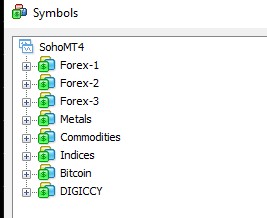
Soho Markets claims to offer trading in over 300 instruments, including major, minor and exotic currency pairs, metals, energy, commodities, stocks, indices and cryptocurrencies. The website even has detailed information on each individual instrument. But the MT4 platform lacks many of the advertised symbols. Most notably missing are CFDs on stocks. This is actually explained by the technical limitations of the MT4 software. But why instruments that are not tradable are advertised on the website is a mystery.
Soho Markets offers two types of trading accounts through both its websites – Standard Account and ECN Account. All clients of the broker have only one option for the base currency of the account, USD. It is common practice for the broker to offer multiple base currency options to include at least other major currencies such as EUR, GBP, CHF, AUD, JPY.
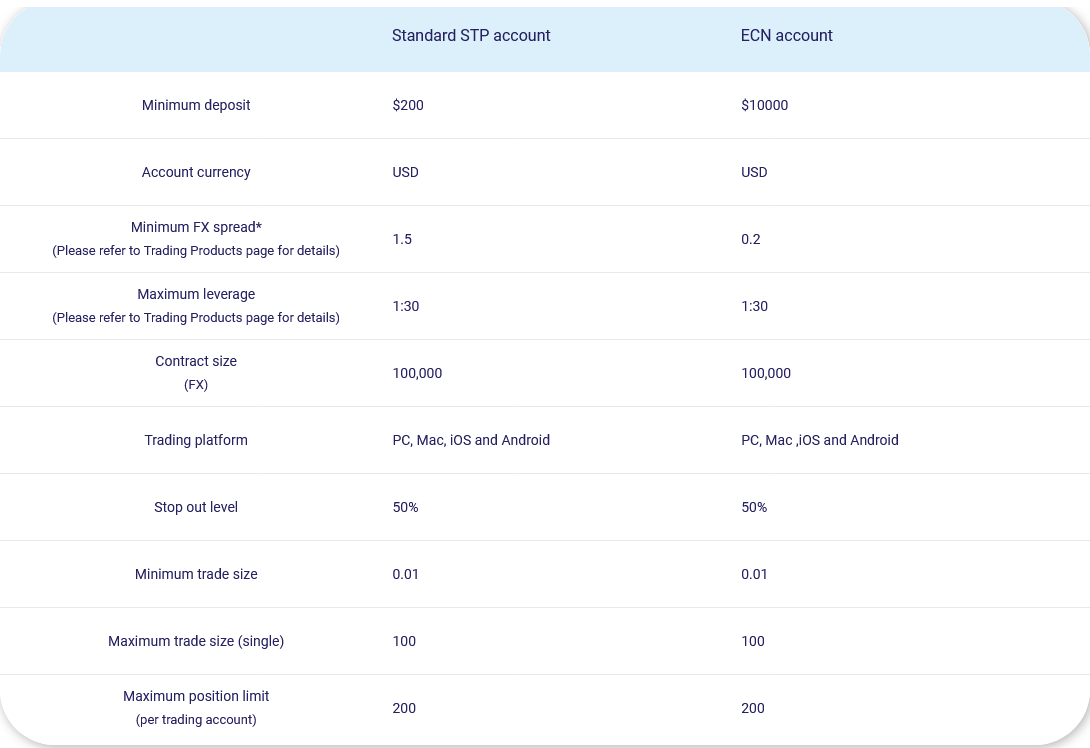
In principle, Standard STP order execution account types are accounts where the customer only pays a floating spread. Soho Markets promises a spread starting at 1.5 pips for this account type. That in itself is close to the industry’s scary level, but not particularly competitive. But in the trading plateau we actually see a much higher spread than the industry average, around 2.2-2.3 pips are benchmark currency pairs like EUR/USD. Many leading brokers offer double the spread, sometimes the price is even below 1 pip.
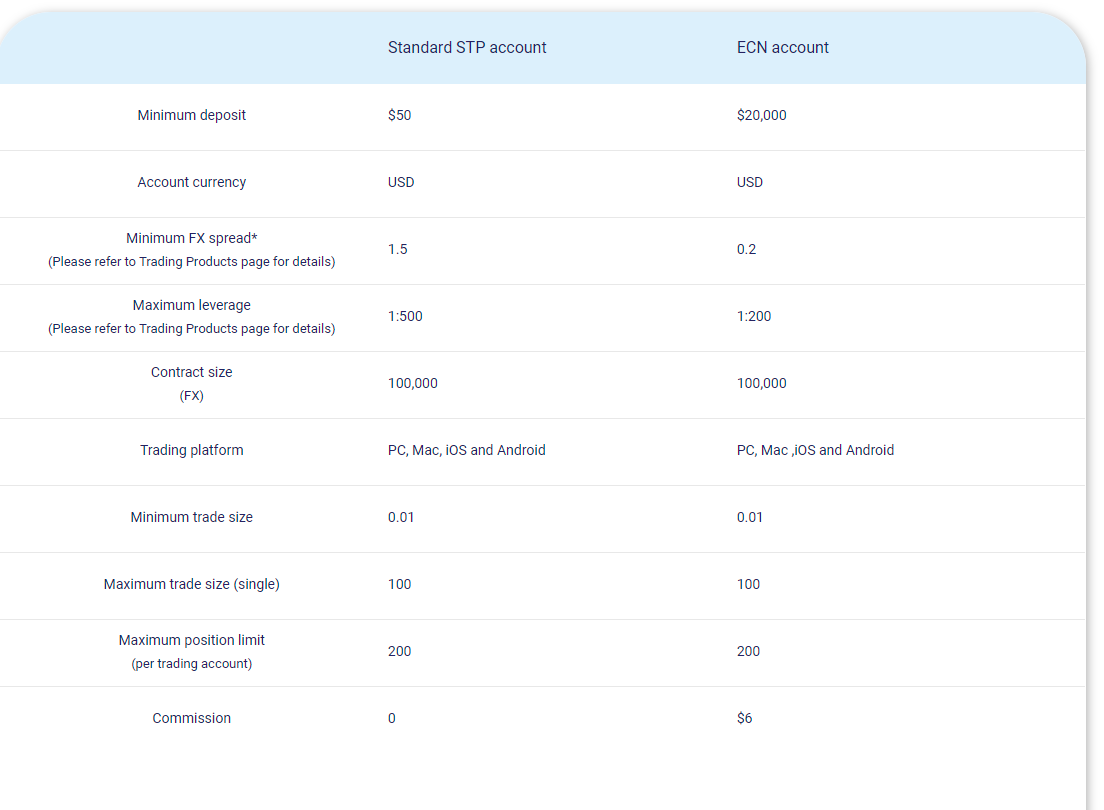
With an ECN account the spread is much lower, but usually the client pays a fixed commission per traded lot. In the description of the account types on the Soho Markets EU website no commission is mentioned for an ECN account, which is strange. On the Soho Markets Global website, this account type is associated with a commission of 6 USD. The website itself does not state whether this is a per lot or per side commission. Customer support via live chat replied to us that it is a per lot commission. This could be very advantageous depending on the spread. The homepage of the website advertises a spread starting at 0 pips, but the account descriptions state that the minimum spread for an ECN account is 0.2 pips.
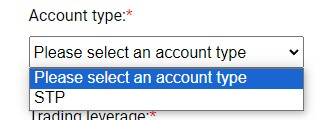
When registering a live account, you do not have the option to select an ECN account. There is also no such option in the Demo account registration menu. Therefore, we could not find out what the spreads are when using an ECN account. Given the differences between advertised and actual spreads for a Standard account, we would assume that there is a similar discrepancy for an ECN account.
Leaving the specifics of this broker aside, the two account types are suitable for different types of traders. In an STP account, traders pay a floating spread. The broker sends the trader’s orders directly to the liquidity providers, such as banks and financial institutions, without an intermediary or dealing desk. The broker adds a small markup to the spread provided by the liquidity providers. ECN accounts offer raw spreads, which are the direct spreads from the interbank market without any markup. These spreads can be very tight, often close to zero. Instead of adding a markup to the spread, ECN brokers charge a fixed commission per trade. This commission is usually based on the trade size. ECN accounts aggregate and match orders from multiple market participants, including banks, hedge funds, and other traders. This can provide better liquidity and tighter spreads.
STP Accounts are easy to understand since there is only a floating spread and no separate commission. Markup on the spread means STP accounts generally have wider spreads compared to ECN accounts. The floating spread can widen significantly during periods of low liquidity or high volatility. These types of accounts are recommended for beginner and casual traders who trade less frequently and may prefer the simplicity of floating spreads without commission costs.
ECN Accounts provides access to deeper liquidity pools from multiple market participants. The trading price is also more transparent. But during periods of low liquidity or high volatility, even raw spreads can widen, and slippage may occur. Frequent traders can benefit from the tighter spreads despite the commission. Those who rely on small price movements need the tightest spreads possible. Choosing between an STP and an ECN account depends on a trader’s experience level, trading frequency, and preference for simplicity versus tighter spreads and better liquidity. Each account type offers distinct advantages and is suited to different trading styles and objectives.
The Soho Markets EU requires a minimum deposit of 200 USD for a Standard account and 10,000 USD for an ECN account. ECN accounts are often associated with higher capital requirements because they are designed for a more professional type of trader. However, the minimum deposit required by Soho Markets for such an account is much higher than usual. The only explanation we can think of is that Soho Markets does not charge a commission for an ECN account for an EU client. But given the uncertainties surrounding this type of account, we can’t opine whether this would be worth the high investment.
Soho Markets Global requires a lower initial investment for a Standard Account, 50 USD. But the minimum deposit for an ECN is even higher, 20,000 USD. To the extent that more established brands offer this type of account with the same or often more favorable terms for a much lower minimum deposit, we can’t say that Soho Markets’s offer is attractive.
Soho Markets does not appear to offer swap-free accounts. These types of accounts, also known as Islamic accounts, are designed for customers of the Muslim faith who want to comply with the requirements of the Sharia anti-interest laws. In this type of account, open positions are held for a specified period without the application of swap payments. Sometimes brokers charge substitute administration fees for Islamic accounts.
The leverage with which retail clients can trade in the EU is set by CySEC regulations – up to 1:30 for major currency pairs, up to 1:20 for other currency pairs, gold and major indices, 1:10 for commodities and 1:2 for cryptocurrencies. The EU regulatory framework allows clients meeting high requirements for available capital and experience to request professional trader status. Brokers in turn can offer higher leverage to such clients.
A professional client must meet two of these three conditions: To have carried out transactions, in significant size, on the relevant market at an average frequency of 10 per quarter over the previous 4 quarters; To have a financial instruments portfolio, defined as including cash deposits and financial instruments, that exceeds EUR 500,000; To work or have worked in the financial sector for at least one year in a professional position, which requires knowledge of the transaction or services envisaged.
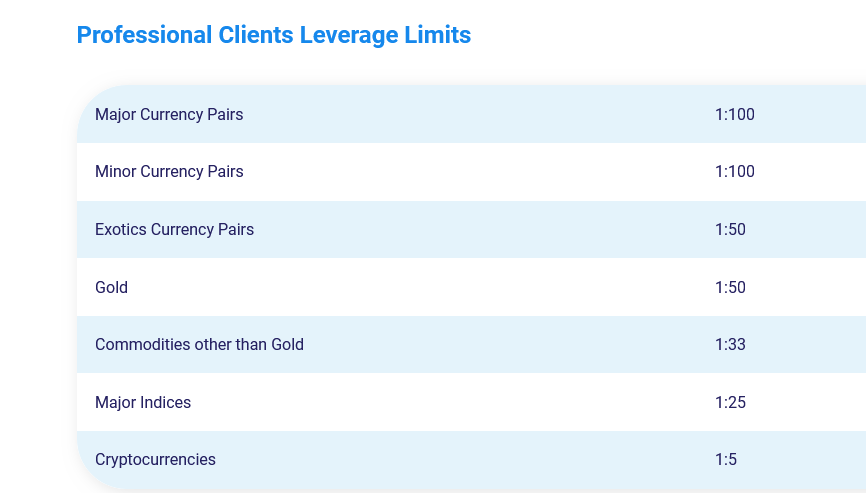
Soho Markets offers professional clients leverage of up to 1:100 for trading major and minor currency pairs, up to 1:50 for gold and exotic currency pairs, 1:30 for commodities other than gold, 1:25 for major indices and 1:5 for cryptocurrencies. But the professional client gets no negative balance protection and no guarantees from the Investor Compensation Fund.
Retail clients of the broker’s offshore division can use significantly higher leverage without professional status – 1:500 for a Standard account and 1:200 for an ECN account. Nowadays, established brokers routinely offer higher levels of leverage than this to both professional clients in regulated jurisdictions and retail clients through their offshore subsidiaries.
After registering an account with Soho Markets Global, we found that the broker offers its own copy trading platform, about which there is no information on the website itself.
Copy trading allows users to automatically copy the trades of selected experienced traders. When the trader you are copying executes a trade, the same trade is executed in your account in real-time. The process is fully automated, meaning that once you select a trader to follow and set your parameters, the platform takes care of the rest.
New traders can learn by observing and following the trades of more experienced traders. It allows beginners to participate in the forex market without needing to fully understand all the technical and fundamental aspects of trading. But keep in mind that success depends heavily on the performance of the traders being copied. Poor decisions by these traders can lead to significant losses. Forex copy/social trading democratizes access to the forex market by allowing individuals to leverage the expertise of experienced traders. While it offers numerous benefits such as accessibility, time-saving, and transparency, it also comes with its own set of risks and costs. It is crucial for traders to carefully select the traders they follow and to continuously monitor their performance to manage risks effectively.
According to the legal documentation, Soho Markets charges an inactivity fee of 5 USD per month. This fee starts to be charged if for 90 consecutive days the client has not carried out any trading activity, has not opened any positions and has not deposited any funds in his account.
Soho Markets Deposit and Withdraw Methods
The payment methods you can use to deposit and withdraw funds from your Soho Markets trading account depend on which group company you are a client of. This factor also determines whether you will have to pay transaction fees. During the preparation of this review we found a significant discrepancy between the payment methods advertised on the offshore companies’ websites and those actually available. This gives us additional reasons to find this broker suspicious.
Clients of the broker’s Cyprus branch have three options for depositing and withdrawing funds – bank transfer, credit/debit cards and PayPal. The minimum amount for a single deposit is 200 USD/GBP/EUR. There is no specified maximum deposit amount, but if the deposited amount is below 2000 USD/GBP/EUR, the broker charges a fee. In the industry, it is generally standard for brokers not to charge transaction fees, especially for deposits. The fee is between EUR 2 and EUR 20 when using a wire transfer and 2% of the deposited amount when using a card or PayPal. Soho Markets promises to process the transaction within 5 days when using bank transfer, within the same working day when using card and immediately when using PayPal.
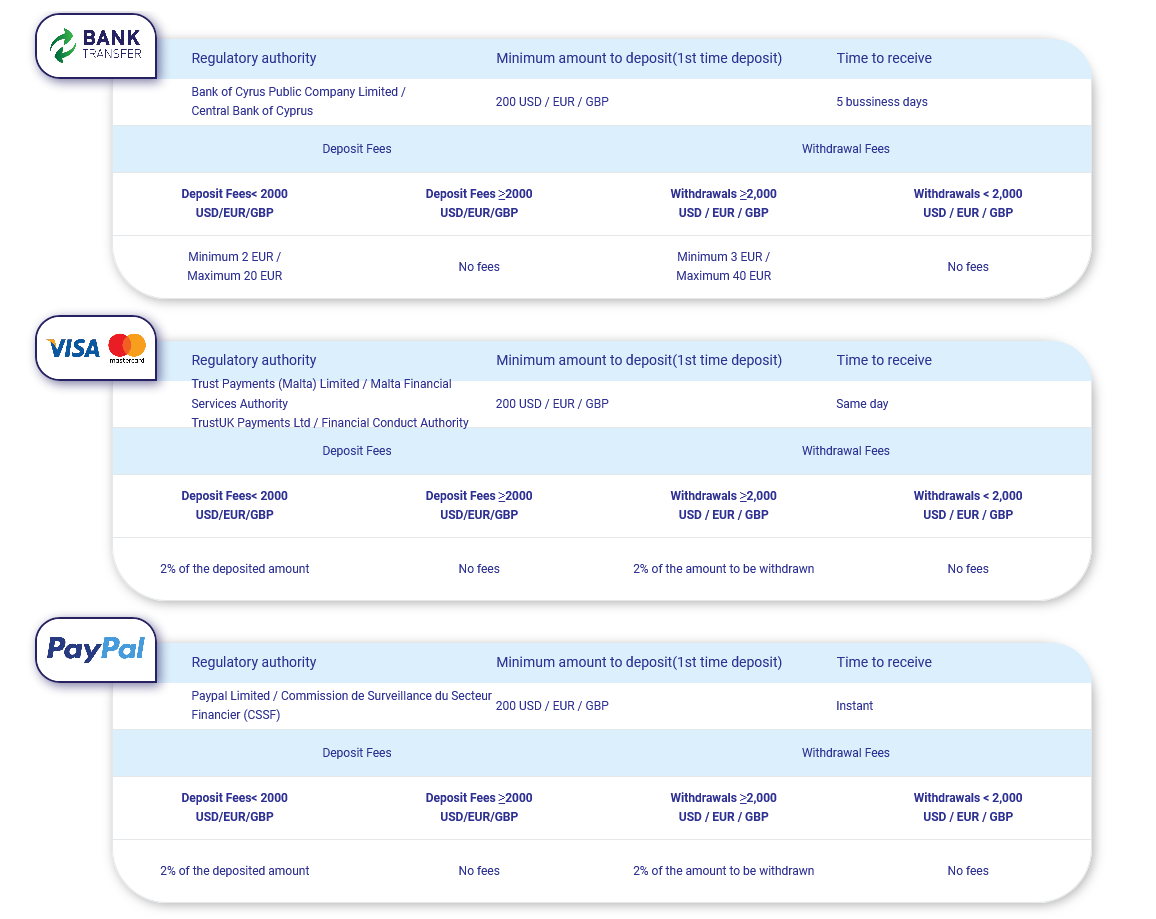
The minimum withdrawal amount is 150 USD and for other payment methods no minimum is specified. If the amount withdrawn is less than 2,000 currency units, the client pays a fee of between EUR 3 and EUR 40 when using a bank transfer and 2% of the amount withdrawn when using a card and PayPal.
Many more payment methods are listed on the Soho Markets Global website – bank transfer, credit/debit card, Safe2Pay, Unlimint, Tether trough Chipay, Stickpay, Perfect Money, AliPay, WeChat Pay, Biance, QuickPass, BFT.
Minimum initial deposit amounts are specified – 50 USD via bank, card, Unlimint, Tether, Stickpay and Perfect Money, 200 USD for Safe2Pay, 300 USD for AliPay and WeChat Pay, 100 USD for QuickPass and 500 USD for BFT.
Most payment methods do not have a specified maximum transaction amount except for credit/debit cards (10,000 USD), Safe2Pay (500,000 CNY), Tether (50,000 USDT), and QuickPass/BFT (100,000 CNY).
The website states that Soho Markets does not charge deposit and withdrawal fees for its non-EU customers.
However, after registering an account with Soho Markets Global we found a very different situation in the deposit menu. There, the available methods for depositing funds are limited to the Tether cryptocurrency, as well as bank transfers in USD and MYR via payment processors not listed on the website – BigPay and 5Pay. Minimum amounts for a single deposit of 5 USD and 40 MYR are listed in the menu.
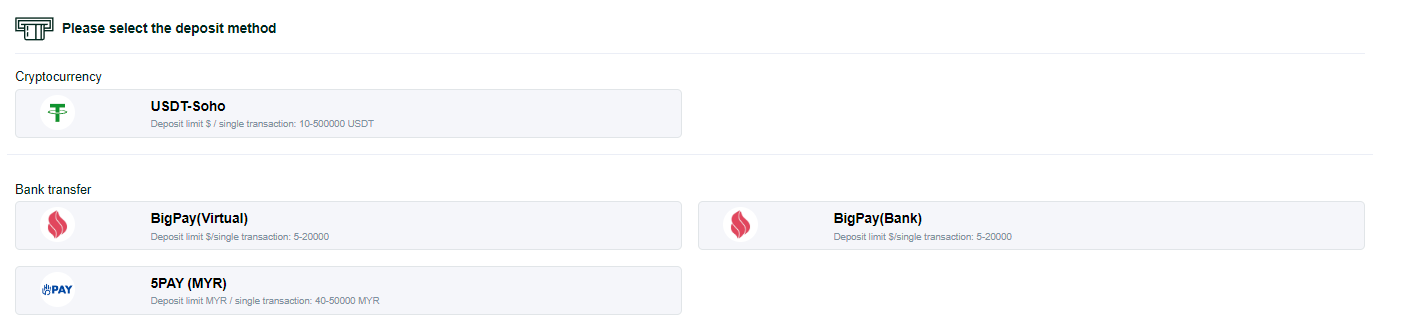
It would be expected that not all payment methods announced on the website will be available depending on the jurisdiction you are in. But in any case, options such as credit/debit cards and at least some e-wallets should be available. The details with which we registered an account cannot explain the choice of payment methods available.
In addition, the deposit menu states that when using cryptocurrency the client pays a 0.5% fee, which is not disclosed on the website.
Your withdrawal shall be processed via the same method that the deposit was made (I.E credit card, bank wire). Other deposits made by e-wallet or profits will be returned as a bank transfer or by e-wallet.
The withdrawal terms on the Soho Markets Global website mention Skrill and Neteller.
e-wallets, which are not listed among the available payment methods and are not available on the deposit menu.
| Deposit method | Minimum | Maximum | Processing time | Fee |
| Bank | $50 | Unspecified | up to 5 days | $20 |
| Credit/Debit Card | $50 | $2000 | Instant | 2% |
| PayPal | $200 | $2000 | Instant | 2% |
| Crypto | $50 | $2000 | Instant | 0.5% |
| Perfect Money | $50 | $2000 | Instant | Unspecified |
| SticPay | $50 | $2000 | Instant | Unspecified |
| Withdrawal method | Minimum | Maximum | Processing time | Fee |
| Bank | $150 | Unspecified | up to 5 days | $40 |
| Credit/Debit Card | Unspecified | Unspecified | up to 24 hours | 2% |
| PayPal | Unspecified | Unspecified | up to 24 hours | 2% |
| Crypto | Unspecified | Unspecified | up to 24 hours | Unspecified |
| Perfect Money | Unspecified | Unspecified | up to 24 hours | Unspecified |
| SticPay | Unspecified | Unspecified | up to 24 hours | Unspecified |
Soho Markets Tools and Education
Regulations prohibit brokers licensed in Cyprus and other EU member states from offering bonuses and promotions. Brokers often offer bonuses through their offshore companies, but this does not apply to Soho Markets, which has no such offerings.
Something that established brokers offer to all their clients is a range of educational materials, information resources and support tools. The Soho Markets does not in theory offer such resources, but in practice their content is quite disappointing.
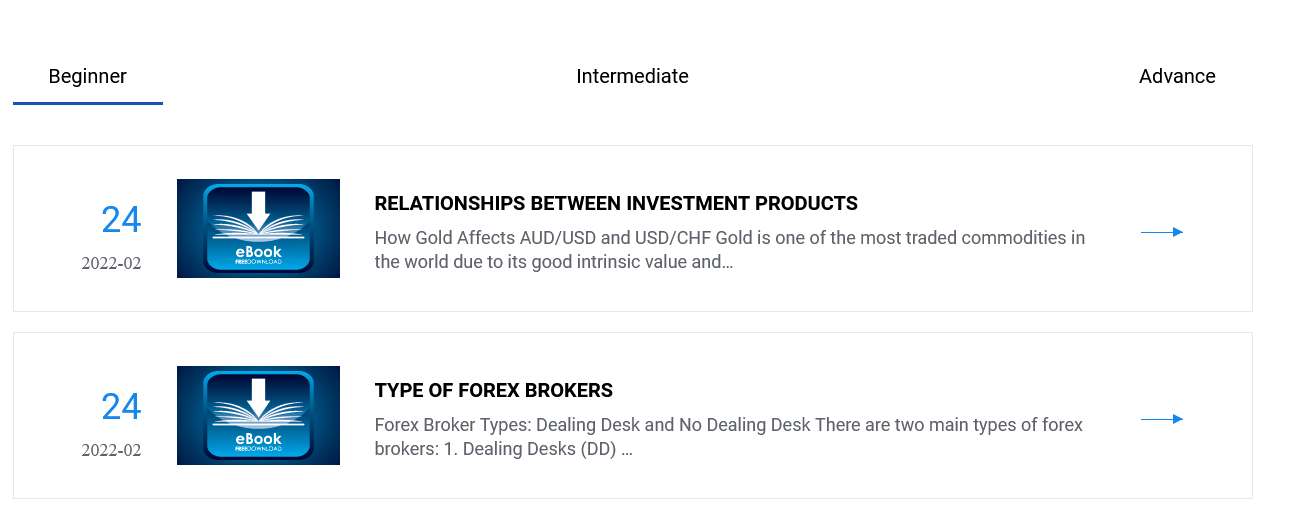
Educational materials are in a section of the website with the ambitious name “Forex Trading Academy”, but are limited to e-books. There are no video tutorials, articles or even glossaries like you will find at the leading brokers. However, Soho Markets offers free webinars, but only once a month.
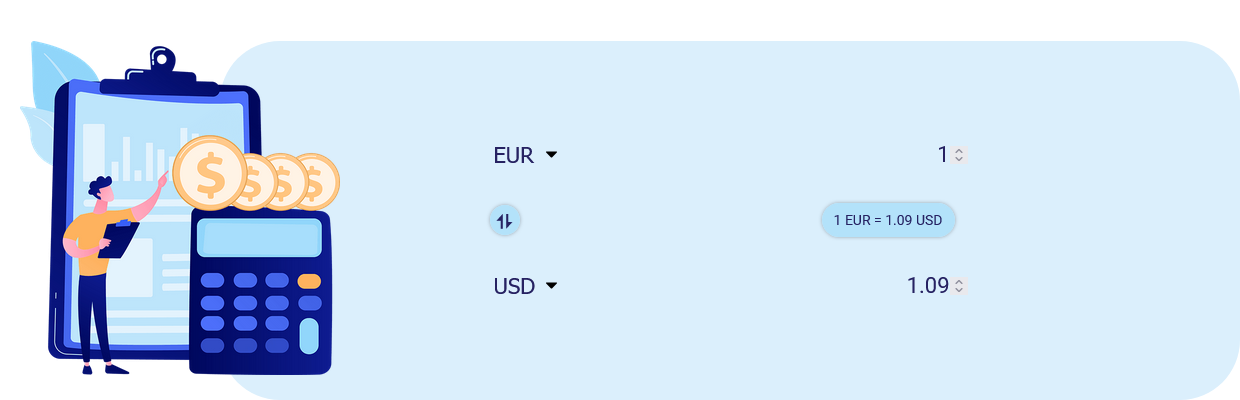
The Market Analyses section includes equally disappointing weekly outlooks that are not nearly enough to make informed investment decisions. The economic calendar is basic, and the so-called Trade Calculator seems like a joke. Such types of calculators usually allow to calculate in advance all aspects of a potential transaction, including pip and swap fees. But the “calculator” on the Soho Markets website only allows you to convert USD to EUR, which is utterly useless.
Notes from the author:
When a broker is licensed by a respected regulatory institution such as CySEC, this should ensure a level of transparency and integrity. After all, this means that the company meets quite high requirements for capital adequacy and accountability. But sometimes we come across a broker who has a first-class license, but in every other respect arouses suspicion and often puzzlement. Soho Markets is one of these cases. The irregularities surrounding this broker cannot be justified by the fact that it is a new brand that has only been operating for a few years. The first thing that baffles while browsing the Soho Markets website are the surprisingly high minimum deposits for an ECN account. Things get even stranger when you find that you cannot register an ECN account, be it Demo or Live. In fact, at the time of writing this review, it was not possible to register any Demo account.
Many brokers licensed in Cyprus and other regulated jurisdictions also maintain offshore subsidiaries. However, we were unable to confirm the existence of the offshore company with which the client allegedly contracted. Significant part of the content on the websites appears to be replacement text that has not been replaced with up-to-date information. The broker touts a solid trading platform, MetaTrader 4 (MT4), but this is not mentioned anywhere on the website. In fact, we see stock images of some other platform on the website. Soho Markets advertises stock trading, which in practice is not available. Spreads are not only much higher than advertised, but well above industry averages. The difference between the advertised payment methods and those actually available is drastic. When registering an account with the offshore division of the broker, we had the option to deposit only via cryptocurrencies and local bank transfer in Malaysia. This broker gives us no good reason to trust him with our investments.


