




TradeQuo Review
Offshore registration for forex brokers is not necessarily a bad thing. Many well-established global brands maintain offshore subsidiaries through which they serve clients outside of strictly regulated jurisdictions. The lack of strict regulatory frameworks allows brokers to offer more generous terms and higher leverage to traders willing to take on more significant risk. But when there is not a brand behind the offshore broker that also operates in regulated jurisdictions, the potential risks begin to outweigh the benefits.
TradeQuo is just such an offshore broker. But the lack of a regulatory license is just one of many reasons to be suspicious of this broker. A bare-bones website illustrated with generic stock images does not inspire a sense of professionalism and long-term vision.
The legal structure is unclear even to an offshore broker. In certain jurisdictions, TradeQuo operates under the brand name QuoMarkets. This brand will be subject to a separate review.
TradeQuo presents itself as a broker that is particularly suitable for beginner traders, but it is precisely these types of investors who should stay away from offshore brokers. The potential benefits of financial trading without regulatory oversight can only be realized by experienced traders who know what they are doing and who are prepared to accept the high risks of losing money.
Such traders could make effective use of the tools and trading conditions offered by TradeQuo, assuming that the broker would observe good business practices and treat customers fairly. But they should keep in mind that nothing guarantees such treatment from this unregulated broker.
TradeQuo only offers one trading platform, however, it is one of the most popular and well-established trading software in the industry, MetaTrader 5 (MT5). Traders have the option of four trading account types with different pricing models and very high levels of leverage. Trading instruments offered include a significant number of currency pairs and cryptocurrencies, as well as a more limited selection of commodities, indices and stocks. Trading costs are at relatively competitive levels. This potentially allows for flexible and multi-dimensional trading strategies, including automated algorithmic trading.
TradeQuo also offers a respectable wide range of payment methods and does not charge transaction fees.
But these are all things that you can also find with more established and credible brands. Many such brokers will also offer you a greater choice of trading software and additional tools to optimize and customize your trading experience, proprietary mobile applications allowing full management of trading accounts, news and analytics services, guarantees such as negative balance protection, Investor Compensation Funds and segregated bank accounts for client funds.
Overall, Tradequo seems too risky even for risk-taking traders who want to cash in on high-leverage options trading and bonuses. In this review, we’ll take a detailed look at what this broker is all about and what it offers to traders so you can decide if it’s worth taking that risk.
TradeQuo Licenses and Regulation
As pointed out, the legal status of Tradequo is somewhat unclear even for an offshore broker. The main thing to know is that this broker is not subject to any regulatory oversight.
Originally, this brand operated through the domain tradequo.com and was managed by a company named Trade Quo Global Ltd, authorized by the Financial Services Authority in Seychelles (FSA).
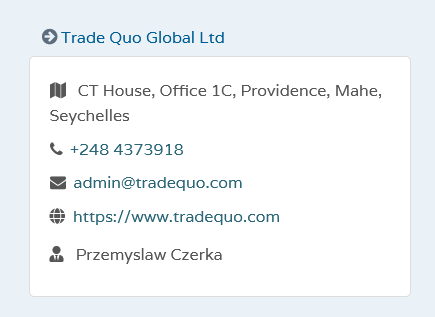
While that company’s name still appears on the TradeQuo website, the broker’s clients contract with a different offshore company.
At the time of writing this review, the tradequo.com domain transfers to tradequo.com/sv. This website is operated by Quo Markets LLC, a company based in Saint Vincent and the Grenadines (SVG).

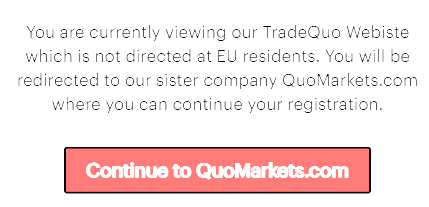
Clients from certain countries in the European Union are transferred to a different website and brand, QuoMarkets. This brand is also managed by Quo Markets LLC. The websites and trading conditions of the two brokers are almost identical with some minor differences. Both brands use the same trading platforms and trading servers.
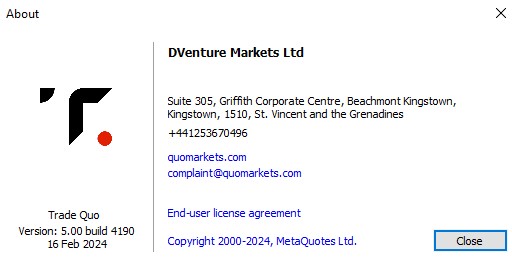
The trading software in question is still registered in the name of DVenture Markets Limited, the former name of the SVG-based Quo Markets LLC.
TradeQuo states that the company TQBG Ltd, registered in Cyprus, is acting as paying agent to Trade Quo Global Ltd. In theory, this provides no minimum guarantee of accountability of financial transactions. However, in practice it is not clear to what extent this is the case, especially given that the trader is a client of the other company, Quo Markets LLC.
One consideration you should have when deciding whether to become a client of an offshore broker is whether it is legal in the jurisdiction in which you are a resident.
TradeQuo specifies certain jurisdictions from which it does not accept clients – Ukraine, USA, Israel, Iran, Iraq, Canada, Russia, Afghanistan, Cuba, Eritrea, Liberia, Libya, Somalia, Sudan and Syria. But generally shifts the responsibility to the client through the disclaimer “or any jurisdiction where such distribution, publication, availability or use would be contrary to applicable law or regulation”.
It is common practice for established brands with ambitions to develop in international markets to operate through offshore subsidiaries. Quite a few of the leading global brokers use Seychelles companies for this purpose. Offshore subsidiaries provide brokers with access to markets and clients worldwide, facilitating expansion into regions where regulatory barriers or market conditions may be less favorable for direct operations from the parent company’s jurisdiction. One offshore company can be used to serve many international markets simultaneously.
The Financial Services Authority in Seychelles is an offshore regulator with a relatively good reputation, which nevertheless places minimal demands on brokers. Companies must maintain a minimum capital of USD 50,000, have a physical office in the country and comply with the norms of anti-money laundering and terrorism sponsorship policies.
But the same cannot be said for the Financial Service Authority (FSA) of St. Vincent & the Grenadines. This regulator does not exercise any supervision over International Business Companies engaged in forex or other brokerage activities. The institution explicitly warns that this jurisdiction does not license forex trading brokerage activities, and that potential investors must be aware that if an entity is unlicensed and unregulated, they will be using its services at their own risk. Unregulated entities may not be subject to any code of practice or other regulatory law anywhere that expressly prohibits the business from making statements that are misleading, false or deceptive.
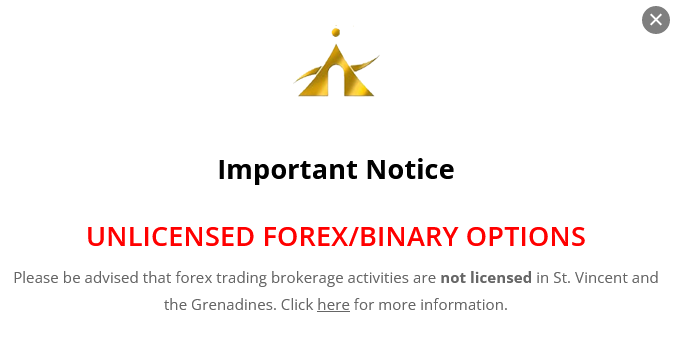
In short, an offshore broker in St. Vincent & the Grenadines is an even wilder card than an offshore broker based in Seychelles. That TradeQuo is licensed in Seychelles but prefers to serve clients through its more unsupervised company in St. Vincent & the Grenadines gives cause for suspicion.
Trading through an offshore broker is truly justified when it is a subsidiary of an established brand. These brokers have an interest in maintaining a good reputation by offering the highest quality of service in all the markets in which they operate. Such a broker can be expected to transfer to the international markets many of the good business practices and consumer safeguards that are enforced by financial authorities in highly regulated jurisdictions.
Offshore jurisdictions often offer greater flexibility in terms of the financial products and services that brokers can offer. This flexibility allows brokers to tailor their offerings to suit the preferences and needs of clients in different regions, potentially increasing their competitiveness and market reach. One of the most important aspects is the ability for brokers to offer much higher levels of leverage for their retail clients than is allowed in Europe, the US or Australia. Offshore divisions also allow brokers to offer bonuses, various promotions, prize games, loyalty programs with cash rewards and other practices that are prohibited by most financial regulators in developed markets.
But the risks should not be underestimated, especially when it comes to a broker without a license from a top-tier financial regulator. These risks are particularly high for novice traders who, moreover, cannot fully reap the potential benefits.
The lack of robust regulation can expose traders to higher levels of risk, as these brokers may not adhere to the same standards of transparency and investor protection. Traders dealing with offshore brokers may have limited legal recourse in case of disputes or malpractices. Legal processes and protections may be less robust in offshore jurisdictions, making it challenging for traders to seek redress in case of broker misconduct or fraud. Offshore brokers are subject to the same stringent financial requirements as brokers regulated in major financial centers. Consequently, there may be concerns regarding the financial stability of offshore brokers, including the adequacy of capital reserves and segregation of client funds. Traders risk losing their funds if an offshore broker faces financial difficulties or goes bankrupt.
Offshore brokers may face operational challenges such as unreliable trading platforms, poor customer support, and limited access to liquidity providers. Traders may experience disruptions in trading services, execution delays, and difficulties in withdrawing funds. Offshore brokers may have weaker cybersecurity measures and data protection protocols compared to regulated brokers. This increases the risk of unauthorized access to sensitive trader information, including personal data and trading accounts, potentially leading to identity theft or financial fraud.
On the other hand, trading through a forex broker licensed in regulated jurisdictions such as the European Union, the United Kingdom, Australia or the United States offers several benefits for traders. Regulatory authorities in these jurisdictions enforce stringent rules and regulations to safeguard the interests of investors. Brokers licensed in regulated jurisdictions are required to adhere to strict standards of conduct, transparency, and accountability, providing traders with greater confidence and peace of mind.
Forex and CFDs brokers licensed in regulated jurisdictions are subject to capital adequacy requirements, ensuring they maintain sufficient funds to cover operational expenses and client withdrawals. This enhances the financial stability of brokers and reduces the risk of insolvency or bankruptcy, thereby safeguarding traders’ funds. In the EU and the UK, brokers must maintain a minimum capital of EUR 730 000, in Australia AUD 1 million and in the US, USD 20 million.
Regulated forex brokers are mandated to segregate client funds from their own operating capital. Client funds are held in separate bank accounts, reducing the risk of misappropriation or misuse by the broker. In the event of broker insolvency, clients’ funds remain protected and accessible for withdrawal.: Regulated brokers are required to provide transparent pricing and execution practices, ensuring fair and equitable treatment for all clients. They must disclose relevant information regarding trading conditions, fees, and potential risks, enabling traders to make informed decisions. Traders dealing with regulated brokers have access to formal channels for dispute resolution and legal recourse in case of grievances or disputes. Regulated brokers are obligated to establish transparent procedures for handling client complaints and disputes, facilitating fair and impartial resolution.
Some regulated jurisdictions, such as the European Union and the United Kingdom, operate investor compensation schemes that provide additional protection to traders. These schemes compensate eligible clients in the event of broker insolvency, up to a specified limit, helping mitigate potential losses.
Negative balance protection is another crucial aspect of financial regulations aimed at mitigating the risks faced by retail investors. This provision ensures that clients cannot lose more than the funds deposited in their trading accounts, even in volatile market conditions. Some offshore brokers guarantee negative balance protection, which mitigates the risk of high-leverage trading, but TradeQuo is not one of them.
TradeQuo says it keeps clients’ money in segregated bank accounts at first-class banks, but keep in mind that there is no regulator to monitor whether this is true.
TradeQuo Trading Software
TradeQuo offers only one trading platform, MetaTrader 5. However, it could be argued that this software is quite sufficient for the needs of most traders, including those engaged in high-volume trading. Many large brokers offer MetaTrader 5 along with its notorious predecessor MetaTrader 4 because many traders prefer the older platform. Although MetaTrader 5 has more advanced functionality, it managed to overtake MetaTrader 4 in number of active users only a few years ago, a decade after its launch. More and more brokers are starting to offer full-fledged alternatives to MetaTrader software, such as the cTrader platform. Brands that have the capacity to do so also offer proprietary trading platforms.or at least trading mobile apps.
Overall, MetaTrader 5 offers a comprehensive trading experience with advanced features and capabilities suitable for both beginner and experienced traders. Its flexibility, extensive charting tools, support for multiple asset classes, and algorithmic trading capabilities make it a popular choice among traders worldwide. It was developed by MetaQuotes Software and released in 2010 as the successor to MetaTrader 4.
MetaTrader 5 offers advanced charting tools and analysis capabilities, including a wide range of timeframes, chart types such as candlestick, line, and bar charts, and technical indicators. Traders can conduct in-depth technical analysis and customize charts according to their preferences. MetaTrader 5 supports trading in a broader range of financial instruments than its predecessor, including CFDs on stocks, commodities, options, and cryptocurrencies. This diversification allows traders to access a wider array of markets and opportunities within a single platform.
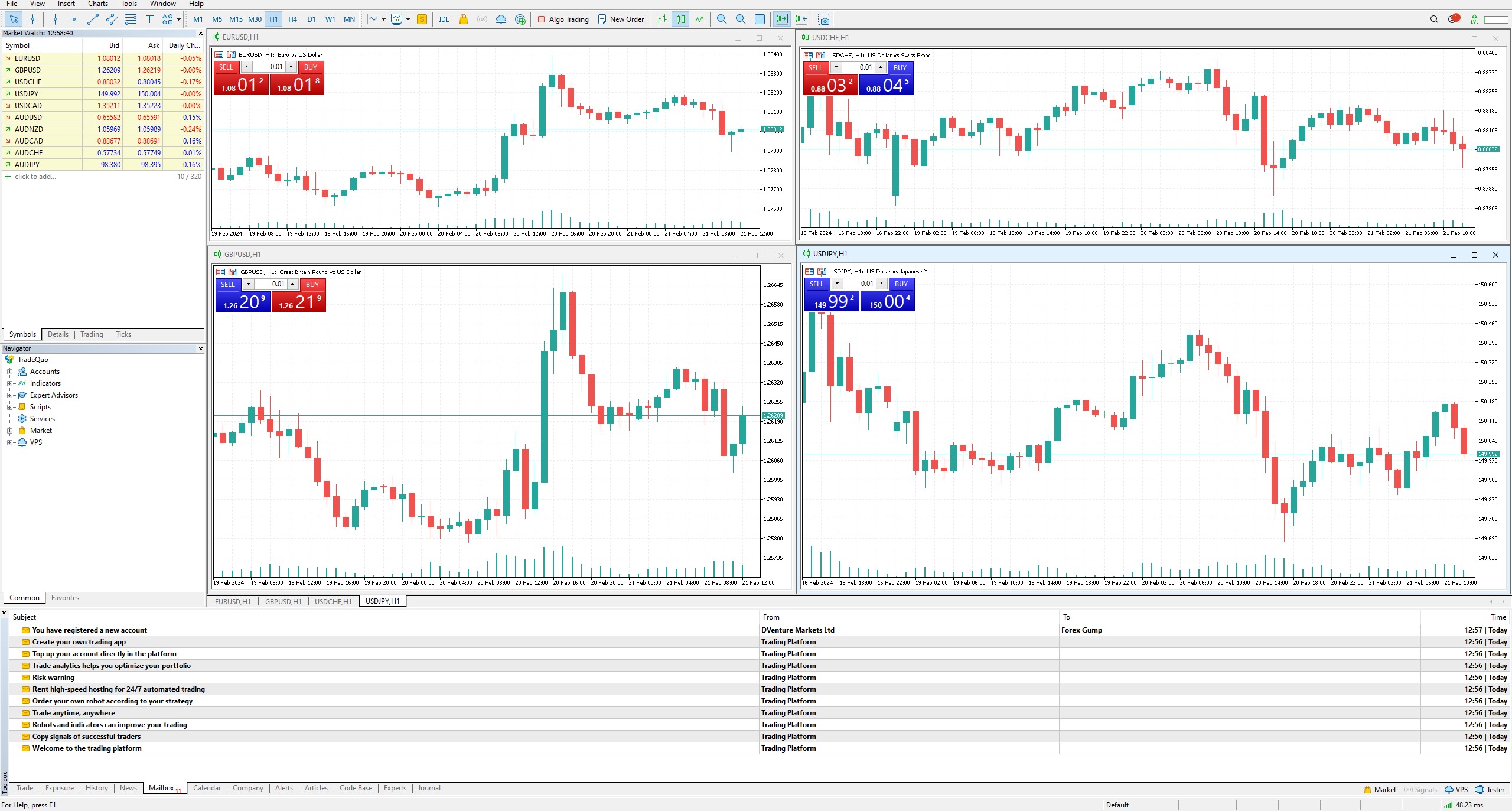
MetaTrader 5 includes a Depth of Market (DOM) feature, which provides real-time visibility into market liquidity and order book dynamics. Traders can view the volume of buy and sell orders at different price levels, helping them make more informed trading decisions. MetaTrader 5 introduces new order types beyond those available in MT4, such as stop-limit orders, buy stop limit, and sell stop limit orders. These additional order types provide traders with more flexibility in executing their trading strategies and managing risk.
MetaTrader 5 offers enhanced backtesting capabilities, allowing traders to test and optimize trading strategies using historical data. Traders can conduct multi-currency and multi-timeframe backtests to evaluate the performance of their strategies under various market conditions. The platform features an integrated economic calendar that provides real-time information on key economic events and indicators. Traders can stay informed about upcoming events that may impact financial markets and make timely trading decisions based on economic news and data releases.
Similar to MetaTrader 5, MetaTrader 5 supports algorithmic trading through Expert Advisors (EAs) written in MetaQuotes Language 5 (MQL5). Traders can develop, backtest, and deploy custom EAs to automate trading strategies and execute trades automatically based on predefined criteria. But since MetaTrader 5 and MetaTrader 5 use different programming languages, scripts for one platform cannot be used for the other without conversion.
The platform is available across multiple devices, including desktop computers (Windows and Mac), mobile devices (iOS and Android), and web browsers. This cross-device compatibility allows traders to access their accounts and trade from anywhere with an internet connection. TradeQuo offers all these versions of the platform.
But the lack of proprietary mobile app deprives the trader of the option to fully control their trading account without the need to log into the website via an internet browser. This includes the ability to deposit and withdraw funds into the account, receive trade signals and alerts, etc.
TradeQuo Account Types and Conditions
TradeQuo offers four types of trading accounts, differing mainly in the pricing model. The trading instruments offered are around 350, which includes around 150 CFDs on shares, around 100 cryptocurrencies, almost 80 currency pairs and only the most major metals, energies and indices. There are only two options for the main currency of the trading account – USD and THB.
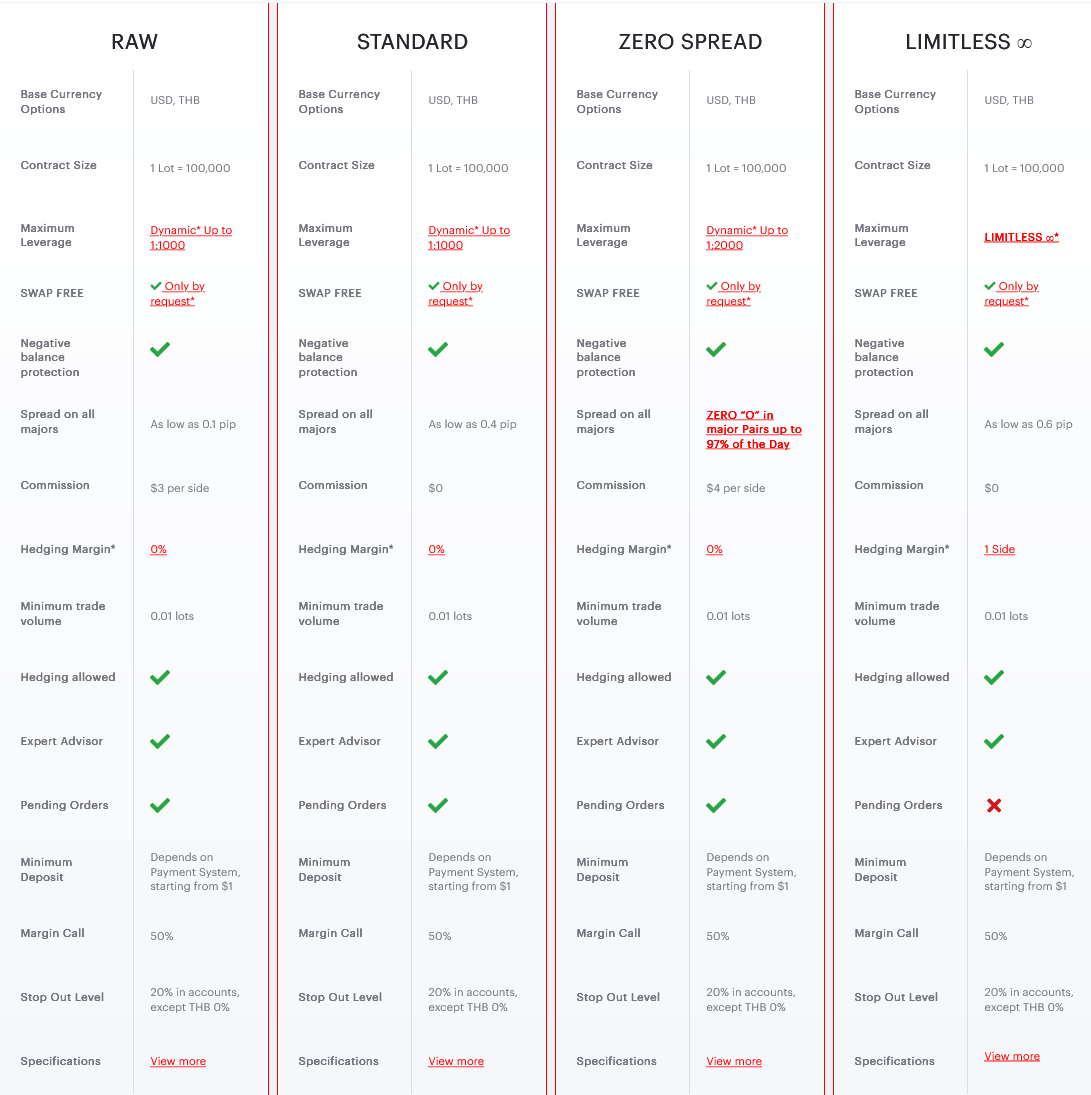
TradeQuo advertises a low minimum deposit for all account types, dependent on payment method and starting from 1 USD. However, all payment methods used by the broker have a set minimum of 10 USD. This is still a very low level. But you should note that many leading global brokers offer Micro and Cent accounts with a similarly low entry threshold.
After the initial account registration you have the option to create multiple Demo accounts. This allows you to try out all available combinations of account type, leverage and base currency.
Depositing money into the account and starting real trading requires confirmation of identity and address.
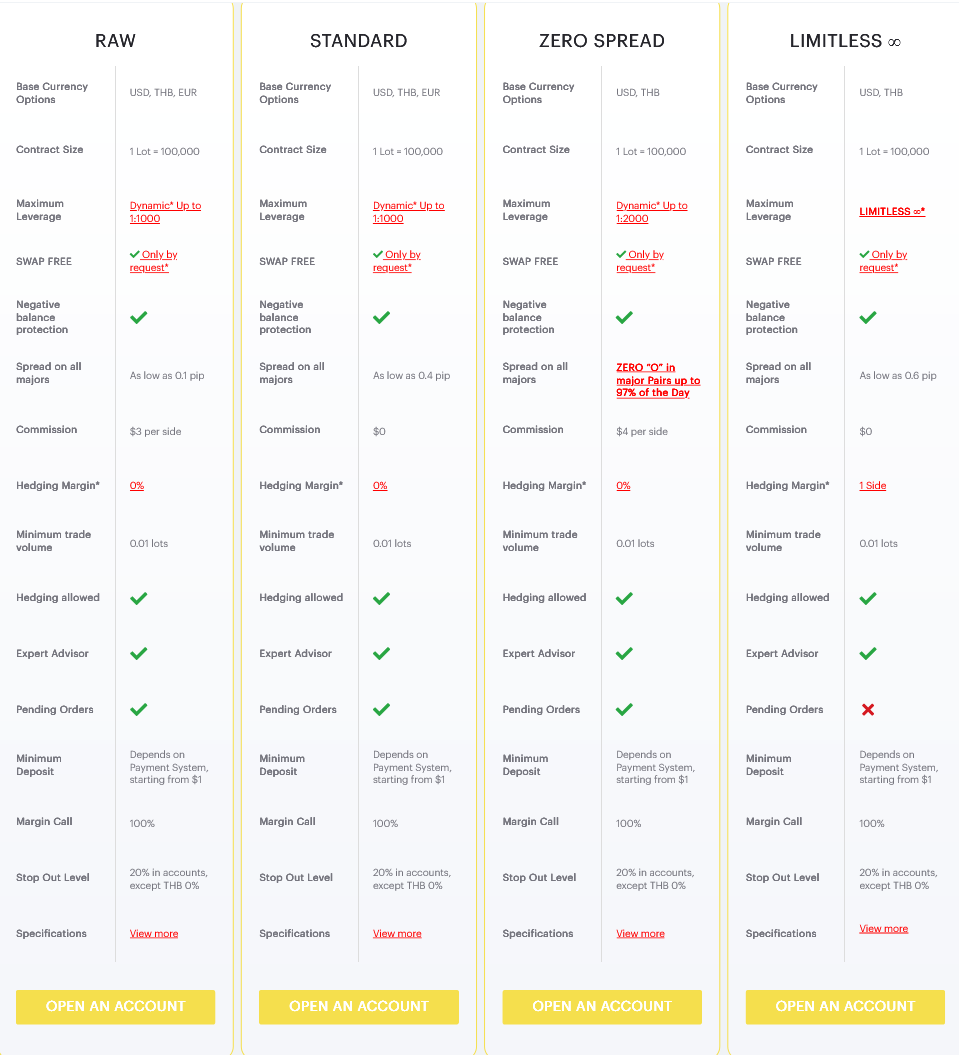
TradeQuo offers a choice between a Raw Account, a Standard Account, a Zero Spread Account and an account advertised with limitless leverage. The first two types are the usual choices provided by most brokers.
When using a Standard account type, the trader pays only a floating spread. This spread is quite low. When using a Demo account, we saw a spread of 0.6 pips for EUR/USD, 1 pip for GBP/USD and 1.2 pips for GBP/JPY. According to the information available on the website, the average spreads are 0.2 pips higher than these levels.
With a Raw account, the trader can expect a raw spread that can be as low as 0.1 pip. But in addition to this, the trader pays a fixed commission of 3 USD per side per lot. With a spread of 0.1 pip and such a commission, the client will pay 7 USD per lot traded, the same as with a spread of 0.7 pip without commission.
The decision between fixed commission and raw spread pricing models hinges on the trader’s specific investment goals, considering factors such as trading volume and instrument volatility.
For high-volume and high-frequency traders, the fixed commission and raw spread pricing model often emerges as more advantageous. This model offers a predictable cost structure for each trade, which proves particularly beneficial when trading non-volatile instruments during periods of high market liquidity. The fixed commission typically results in lower costs per trade. However, the fixed nature of the commission may limit flexibility during shifts in market dynamics. During times of low volatility or tight spreads, traders with fixed commission structures may face higher expenses compared to those utilizing variable spreads.
Raw spread accounts, while potentially more cost-effective, may present challenges for novice traders due to their reliance on a comprehensive understanding of spreads and liquidity providers. Beginners and traders with lower volumes might find the Classic account type, featuring a floating spread, more suitable.
Floating spreads offer traders adaptability, adjusting to changes in market volatility and liquidity. Traders can benefit from this flexibility, especially across diverse market conditions. Floating spreads tighten during periods of high liquidity, potentially reducing trading costs when spreads are narrow. However, it’s essential to acknowledge associated risks. During volatile market conditions, traders may encounter wider spreads, leading to increased trading expenses. Additionally, heightened volatility elevates the risk of slippage, where the execution price deviates from the expected price due to rapid market movements, potentially resulting in losses for traders.
TradeQuo offers another option – Zero Spread Account. With this type of account, the trader is guaranteed a zero spread, but pays a higher commission – 4 USD per side per lot. But the specific terms of this account type make it suitable only for traders with very specific needs. The zero spread actually applies to a limited number of instruments and is not guaranteed all the time. TradeQuo promises zero spread during “approximately 90% to 97% of trading days” and this only applies to the following instruments – AUDUSD, EURUSD, GBPUSD, NZDUSD, XAGUSD, XAUUSD, USOUSD, BRNUSD, UKOUSD, DJIUSD, SPXUSD, NDXUSD, DAXEUR. This account type may be more advantageous than Raw and Standard accounts for certain instruments depending on trading volume and market volatility.
An additional potential advantage is that the Zero account offers higher leverage than the previous two account types.
The Raw and Standard accounts offer maximum leverage up to 1:1000 and the Zero Spread account up to 1:2000.
The maximum level applies to forex and gold and decreases depending on trading volume. Between o and 5 lots the trader can use a leverage of 1:1000, between 5 and 10 lots the maximum leverage is 1:500, between 10 and 20 lots it is 1:300, and for volume above 20 lots the leverage is limited to 1:200. For the Zero spread account the levels are 1:2000, 1:000, 1:500 and 1:300 respectively.
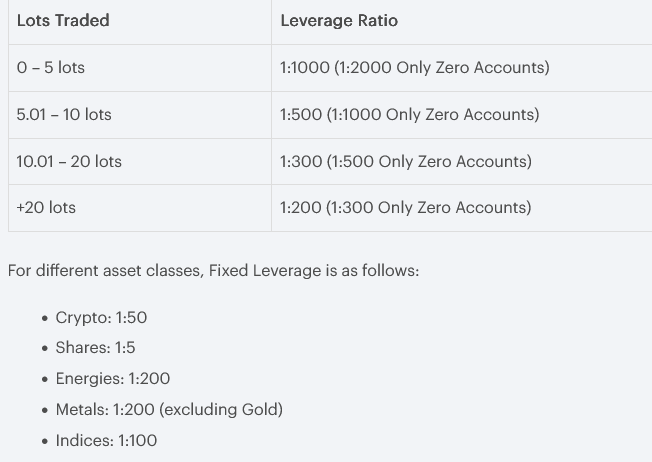
For other asset classes, there are fixed maximum leverage levels – 1:5 for shares, 1:50 for cryptocurrencies, 1:200 for energy, 1:200 for metals and 1:100 for indices.
By comparison, current regulations in the EU, the UK and Australia limit the maximum leverage for retail clients to 1:30 for major currency pairs, 1:20 for non-major pairs, gold and major indices, 1:10 for other commodities and non-major indices, 1:2 for cryptocurrencies and the same 1:5 for shares.
TradeQuo offers another type of account promising unlimited leverage under certain conditions. This Limitless Leverage account has no trading commissions, with the trader only paying a floating spread. But this spread is 0.2 pips higher than the Standard account. In addition, this type of account does not allow pending orders, unlike all other accounts.
This form of leverage applies to Forex, Gold, Silver, and selected indices and commodities, including USOUSD, BRNUSD, UKOUSD, DJIUSD (DJI30), SPXUSD (SP500), NDXUSD (NASUSD) and DAXEUR (D40EUR).
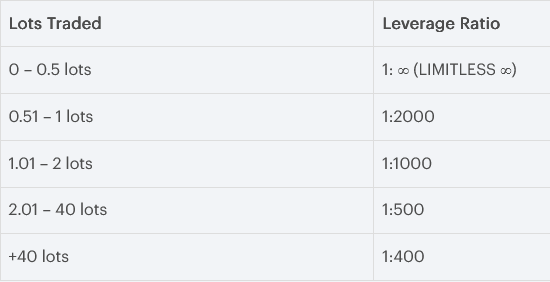
Like other accounts, the maximum leverage is dynamic and changes depending on the volume traded. The lack of a leverage limit only applies to accounts with exposures below 0.5 standard lots, or 50,000 currency units. For volume between 0.51 and 1 lot the leverage is limited to 1:200, between 1 and 2 lots the limit is 1:1000, between 2 and 40 lots the maximum leverage for this type of account is 1:500 and above 40 lots there is a limit of 1:400.
Before markets close for the weekend and during news events, new positions within the Limitless Leverage and Zero Spread account are subject to a temporary leverage change. During these times, the leverage for new positions will be set at 1:250. After these events or upon market reopening, both account times are fully restored to their regular conditions. If equity is lower than 10 USD or 350 THB the leverage for new positions will be set at 1:250.
All of the broker’s accounts feature a very low stop-out rate – 20% for USD and EUR accounts and 0% for THB accounts. While this gives the trader more time to react to unfavorable market movements, it increases the risk of trading with high leverage, especially given the lack of negative balance protection.
Broker clients from Muslim countries can request a swap-free version for all account types. In this type of account, swap payments for positions left open overnight are replaced with another type of fee. Thus the trade meets the requirements of the Islamic faith against interest. Broker clients in other countries can also request a swap-free account, but then swap-free trading only applies to a very limited number of currency pairs, cryptocurrencies, metals and indices.
TradeQuo maintains its own social trading platform called socialtrading.ai. For logging into the platform, the details of the broker’s MetaTrader accounts are used.
Copy Trading, also known as Social Trading or Mirror trading, represents a method of dealing that enables traders and investors to emulate and implement the strategies employed by their peers or more seasoned traders. In return, they pay a commission on the profits made.
The essence of social trading lies in providing swift entry points to financial markets, allowing both novice and proficient traders to exchange strategies and replicate each other’s trades. Similar to a social networking platform, a social trader has the option to ‘subscribe’ to another trader’s channel, wherein the latter’s positions are broadcasted on a live feed, granting the choice to replicate their transactions. Consequently, if trader A initiates a trade, trader B would automatically execute an identical transaction.
This is an extremely convenient and attractive option for inexperienced retail traders who lack confidence and have not yet developed their knowledge of the financial markets to devise their own trading strategies. But Social Trading is also used by more advanced investors who, however, do not have enough time to prepare their own technical analyses and make detailed order placement decisions. In addition, the Social Trading platform provides an opportunity for active and successful traders to earn additional profits by becoming Strategy Managers and earn additional income.
It should be noted that the TradeQuo/QuoMarkets’s social trading platform does not inspire confidence. The platform is on a separate website that lacks legal information about the owners. There is also no clear presentation of the specific terms of service.
TradeQuo Deposit and Withdrawal Methods
According to the information available on the website, TradeQuo offers a fairly diverse selection of payment methods for deposits with a focus on cryptocurrencies. However, the available withdrawal options are much more limited. Given the unclear legal status of the broker, it should be noted that we have not confirmed the availability of all advertised payment methods. The broker states that it does not charge fees for depositing and withdrawing funds.
Available fiat currency deposit methods include credit/debit cards, local bank transfer, popular e-wallets such as Neteller and Skrill, regional options such as Dragonpay, FasaPay, Safaricom and Tigo. Deposits can also be made with a significant number of stablecoins and cryptocurrencies.
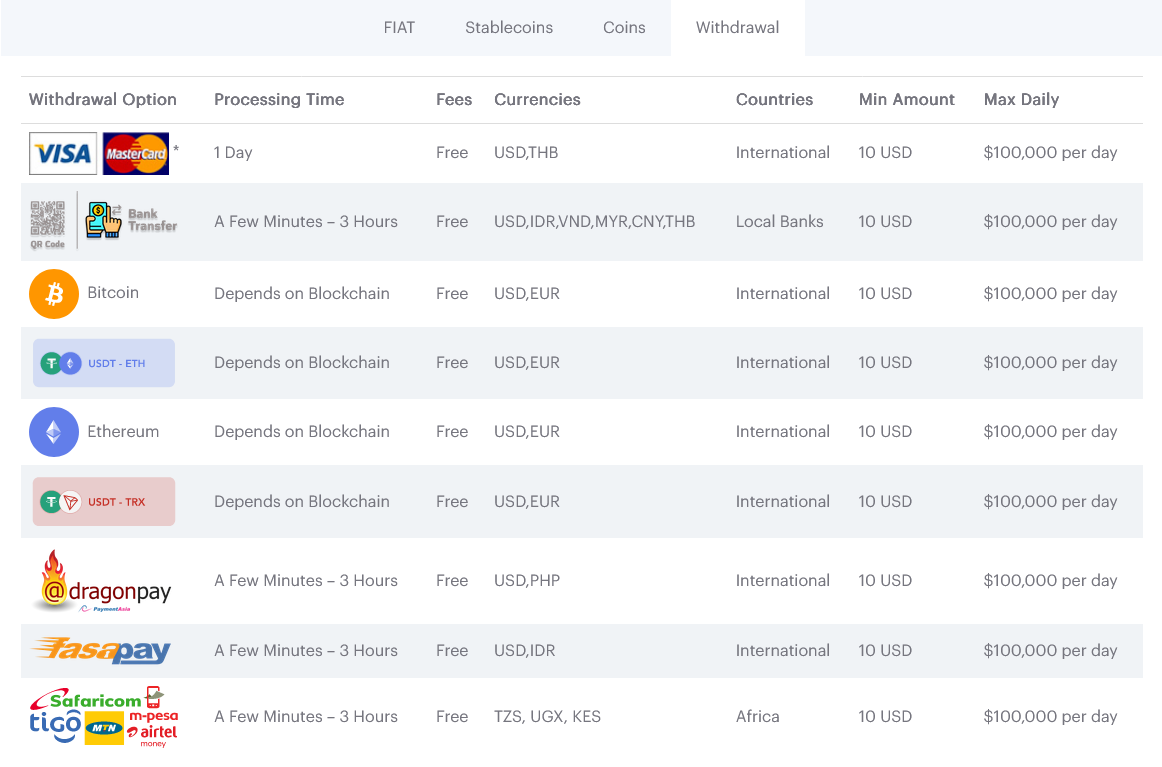
Withdrawal options include credit/debit cards, local bank transfer, Dragonpay, Fasapay, Safaricom, Tigo, Bitcoin, Tether and Ethereum.
The minimum deposit and withdrawal amount is 10 USD or equivalent. There is a maximum transaction limit of 100,000 USD per day.
| Deposit method | Minimum | Maximum | Processing time | Fee |
| Credit/Debit Card | $10 | $10000 | Instant | Free |
| Bank | $10 | $50000 | Instant | Free |
| Neteller | $10 | $10000 | Instant | Free |
| Skrill | $10 | $10000 | Instant | Free |
| FasaPay | $10 | $50000 | Instant | Free |
| DragonPay | $10 | $50000 | Instant | Free |
| Crypto | $10 | $100000 | Instant | Free |
| Withdrawal method | Minimum | Maximum | Processing time | Fee |
| Credit/Debit Card | $10 | $100000 | up to 24 hours | Free |
| Bank | $10 | $100000 | up to 24 hours | Free |
| FasaPay | $10 | $100000 | up to 24 hours | Free |
| Crypto | $10 | $100000 | up to 24 hours | Free |
TradeQuo Bonuses and Promotions
The only significant difference between TradeQuo and QuoMarkets is that the latter brand periodically offers bonuses. This is strange insofar as this brand targets customers from the European Union, where regulations prohibit such practices. This is a reason to reiterate that you should carefully check whether you are breaking local laws by becoming a client of an offshore broker. The bonuses in question are by no means attractive enough to justify taking unnecessary risks.
| Bonus | Min deposit | Max bonus | Required turnover | Cash out limit |
| Deposit bonus 50 | $50 | $50 | Unspecified | Unspecified |
| Deposit bonus 100 | $100 | $100 | Unspecified | Unspecified |
| Up to 30% Deposit Bonus | $100 | $5000 | Unspecified | Unspecified |
| 50 USD No Deposit Bonus | Unspecified | Unspecified | $200000 | $100 |
TradeQuo Tools and Education
Outside of the features built into the MetaTrader 5 platform, this broker offers virtually no additional services and tools. On the website we see an economic calendar and curated financial news, but these are free widgets from data provider TradingView. The education section is reduced to a basic glossary.
This only adds to the overall feel of the TradeQuo website, that it is something hastily put together without much effort. The broker doesn’t convey a sense of long term vision and client engagement.
Leading brokers usually try to provide traders with everything they need to make informed investment decisions and implement their trading strategies. On the websites of the more established brokers you can typically find a wide range of educational material aimed at both novice traders and more sophisticated investors looking to deepen their knowledge of financial trading. This often includes video tutorials, e-books, detailed articles, webinars, podcasts, live streams, and sometimes even their own online TV.
Many additional tools are also usually available, such as forex calculators and currency converters, as well as technical analysis and commentary from experts, personalized trading signal engines, integration with popular third-party extensions for MetaTrader platforms, among others.
Notes from the author:
In this line of work I have encountered countless shady brokers and outright scams. I must say that TradeQuo is barely distinguishable from many of them. You can't be full of confidence when you see a website of a supposedly established forex broker, using a basic template and stock gif images. This just doesn't seem like a business that has had attention, ambition and long-term vision put into it. The website gives the impression of something that has been hastily put together and could be abandoned at any moment. And when the website transfers you to an even more suspicious sister brand you are now filled with a healthy doubt that it would be wise to put your money on the line with such a broker.
The main problem with TradeQuo is its legal status. There are credible brokers that operate only through offshore companies. But a company that has the financial and expert capacity to offer sound and competitive brokerage services is seeking to obtain at least one license from a top-tier regulatory institution. An offshore brand with no licensed company behind it can literally grab the money and disappear tomorrow.
The existence of a Financial Services Authority in Seychelles license suggests that TradeQuo is subject to at least minimal oversight and is not engaged in fraudulent practices. But the transfer of clients to a company in Saint Vincent and the Grenadines (SVG) implies a desire that the broker's relationship with traders not be subject to any regulatory scrutiny. Recently, financial authorities in the SVG have made some efforts to change the country's image as a base for fake brokers. Local financial authorities now require brokers to be licensed in other states where they offer brokerage services. But in this sense, the license in Seychelles may serve as a cover. Moreover, the company behind this broker definitely does not have a broker's license in the European Union, where it is trying to attract clients through its other brand, QuoMarkets.
If a broker at all gives you the suspicion that it might be a scam, it is hardly worth considering it as an investment option. Especially with the availability of more established offshore brokers offering similar or better terms.


