




Traders Trust Review
Traders Trust is a little known forex and CFD broker, although it was founded in 2009 and already has a solid track record in the market. The broker has a first class license from Cyprus, which allows it to serve clients in the European Union. Separately, Traders Trust serves clients in other parts of the world through offshore companies in the Seychelles and Bermuda.
This is a fairly standard model for the industry. Most other aspects of Traders Trust services are also standard. The broker offers a choice of several trading account types with different pricing methods and more favorable terms for high-capital clients. Traders Trust ‘s spreads and commissions are also around the industry average. The same goes for the minimum deposit for a Standard account, but the initial investment requirements for accounts with a raw spread are much higher.
But it should be noted that although the Cyprus license is most important for the legitimacy of this broker, Traders Trust offers a much more limited range of services in the EU than to clients served by offshore companies. The website designed for the European market itself lacks multilingual support and live chat, whereas these things are available on the website designed for customers in other parts of the world. The broker’s offshore business website also has more tools and information resources.
Clients of the broker’s Cyprus office can use only one trading platform, MetaTrader 4 (MT4). Meanwhile, other Traders Trust clients have a choice between MT4 and cTrader. The broker offers a fairly limited set of tradable instruments, and yet again offshore clients have more choice, including cryptocurrencies and stocks, which are not available to EU clients. This is partly due to the limitations of the MT4 platform. Offshore clients also have passive income options such as a social/copy trading platform. There is also an option for them to get a free Virtual Private Server (VPS) if they meet certain requirements.Other differences, which are explainable now because of regulatory constraints, include the ability of the offshore clients to trade with very high leverage and benefit from bonuses and promotions. The Cyprus company of the broker also offers a very limited choice of payment methods.
Overall, Traders Trust offers a pretty basic package, but for many marketers that would probably be enough. In this review, we’ll show you in detail what Traders Trust offers to customers in different parts of the world, so you can make an informed decision on whether this is the right broker for you.
Traders Trust Licenses and Regulation
The most important information when checking a forex broker is what licenses it has. This determines whether you can become a client of the broker in question depending on the jurisdiction you are a citizen or resident of. The regulatory framework in which the broker operates determines what obligations the company has to clients and regulators, what guarantees it provides for traders’ funds, but also what restrictions it has in trading conditions for retail clients.
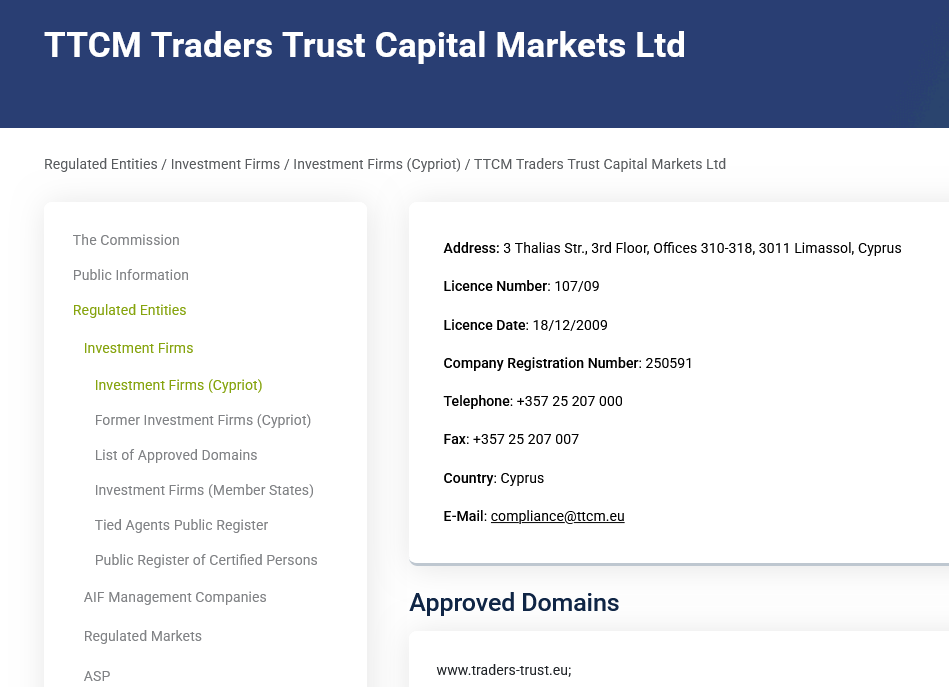
The most important license that Traders Trust holds is the one from Cyprus Securities and Exchange Commission (CySEC) . The company through which the broker operates in the EU is called TTCM Traders Trust Capital Markets Limited. This company offers its services through the traders-trust.eu domain. Regardless of how credible a broker’s website appears to be, we urge you to always independently check the legal details provided by the broker against the records of the relevant financial authorities. This includes the authorized domain names through which the broker operates in certain jurisdictions.
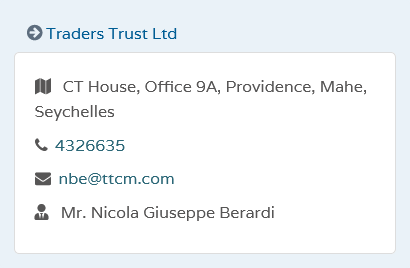
All other customers of Traders Trust contract with TTCM Traders Capital Limited, a limited liability Company, incorporated in Bermuda. But this company is not licensed as a financial services provider by the Bermuda Monetary Authority (BMA). The broker has another offshore subsidiary that holds a broker’s license, and which actually performs the financial services. This is Traders Trust Ltd authorized and regulated by the Financial Services Authority of Seychelles. The broker’s offshore business services are available through the domain traders-trust.com.
The list of countries where Traders Trust explicitly does not offer its services is relatively standard – “ including but not limited to Australia, New Zealand, Canada, Iran, Iraq, North Korea, USA, Cuba, Syria, Sudan, Afghanistan, Guyana, Lao People’s Democratic Republic, Uganda, Yemen, Venezuela, Japan and Puerto Rico”. On the website we see a separate warning that Traders Trust does not offer its services in Japan. This is due to the fact that the Japan Financial Services Agency has blacklisted the broker and issued a warning to investors in the country that Traders Trust is not allowed to offer services in that jurisdiction.
Let’s take a detailed look at what the regulatory regimes this broker must comply with mean for clients.
Many forex and CFD brokers operating within the EU have chosen Cyprus as their base due to the island’s well-developed financial and accounting infrastructure. This strategic choice has elevated the Cyprus Securities and Exchange Commission (CySEC) to one of the most significant and proficient financial regulators globally. A CySEC license permits companies to offer their services throughout the European Economic Area.
Forex and CFD brokers in the EU are predominantly regulated under the Markets in Financial Instruments Directive (MiFID II) and the Markets in Financial Instruments Regulation (MiFIR). These regulations impose rigorous standards on forex brokers, including capital adequacy requirements and mandatory participation in investor compensation funds.
The primary objectives of these regulations are to ensure transparency and protect investors. This includes mandatory disclosures about the nature and risks associated with CFD products and the requirement for forex brokers to regularly submit reports on their financial health. These reports must include audits of their financial statements and details of their risk management procedures.
Forex brokers must maintain initial capital ranging from €50,000 to €730,000, depending on their risk exposure and the types of financial instruments they handle. This capital is crucial for managing various risks, including market, credit, and operational risks. Brokers must also maintain sufficient liquidity to meet their immediate obligations and ensure they can operate effectively under stress.
EU regulations also aim to safeguard individual retail customers. Protections include caps on the amount of leverage that retail investors can use, set at 1:30 for major currency pairs and lower for other asset classes, to reduce potential losses from volatile market movements.
Moreover, EU retail traders benefit from guaranteed negative balance protection, ensuring they cannot lose more money than they have deposited in their accounts. Licensed brokers must participate in investor compensation schemes designed to protect investors if a forex broker becomes insolvent or ceases trading. These schemes ensure that covered clients can recover a portion of their funds—up to €20,000 per investor. All retail investors and small businesses are typically eligible for compensation if they cannot recover their funds due to a broker’s failure.
For residents of countries outside strictly regulated jurisdictions, an ideal way to enter the forex trading world is often through an offshore subsidiary of an established and reputable brand. Many leading brokers have such offshore divisions, enabling them to serve clients from multiple countries with a single legal entity.
Several offshore jurisdictions have become popular choices among brokers due to their regulatory, tax, and operational advantages. These jurisdictions typically have more lenient regulatory requirements compared to stricter environments like the United States, European Union, or Japan. This flexibility allows brokers to offer products and services that may be restricted in their home countries, such as higher leverage on trades, which is attractive to many traders.
One of the most established offshore hubs for forex brokers is Seychelles. The regulatory body overseeing this sector is the Seychelles Financial Services Authority (FSA). The FSA is responsible for licensing, regulating, and supervising non-bank financial services in Seychelles, including forex trading. As part of its regulatory framework, the FSA imposes specific capital adequacy requirements to ensure that brokers maintain financial stability and can withstand market volatility. The minimum capital requirement for forex brokers in Seychelles varies depending on the specific license category. Typically, a forex broker license under the FSA requires a minimum capital of around $50,000 USD. This amount serves as a base, and the requirement can increase based on the broker’s trading volume, risk exposure, and other regulatory assessments. Beyond the initial capital, brokers may also be required to maintain operational capital aligned with their liabilities to ensure they have sufficient funds to cover client trades and potential losses.
Brokers must have robust risk management systems to monitor and control the risks associated with their business activities. Seychelles-based brokers are also required to keep client funds in segregated accounts separate from their corporate funds to protect clients’ investments.
While Seychelles has been developing its financial services sector and aims to adhere to international standards, traders should be aware that regulatory standards in offshore jurisdictions like Seychelles can differ significantly from those in more established financial centers like the United States, United Kingdom, or the European Union. Therefore, while the lower capital requirements might make Seychelles an attractive location for forex brokers, traders should exercise due diligence and consider the regulatory environment and its implications for their investments.
Traders Trust Trading Software
Traders Trust offers only one trading platform to its customers in the European Union. That platform is MetaTrader 4 (MT4), which has become the industry standard over the past two decades. The platform’s successor, MT5, is more advanced than its predecessor in many respects, but only managed to overtake MT4 in terms of the number of active users a few years ago. This shows that MT4 still offers everything that many traders need. But the platform does have limitations too, which is why the lack of other options may be a dealbreaker for some potential clients of Traders Trust’s Cyprus company. Let’s take a detailed look at what MT4 is all about.
MetaTrader 4 is a widely popular trading platform primarily used for Forex trading but also supports trading in contracts for differences (CFDs) and futures markets. Developed by MetaQuotes Software and released in 2005, MT4 has earned a reputation for its advanced trading capabilities, robust security, and user-friendly interface, making it accessible to traders of all skill levels.
MT4’s interface is intuitive and easy to navigate, catering to both beginners and experienced traders. The platform allows for easy customization, enabling traders to set up their workspaces according to their preferences. MT4 offers multiple chart setups and supports various timeframes, from one minute to monthly intervals. The platform includes over 30 built-in technical indicators and more than 2,000 free custom indicators, along with 700 additional indicators available for purchase. These tools help traders conduct detailed technical analysis and make informed trading decisions.
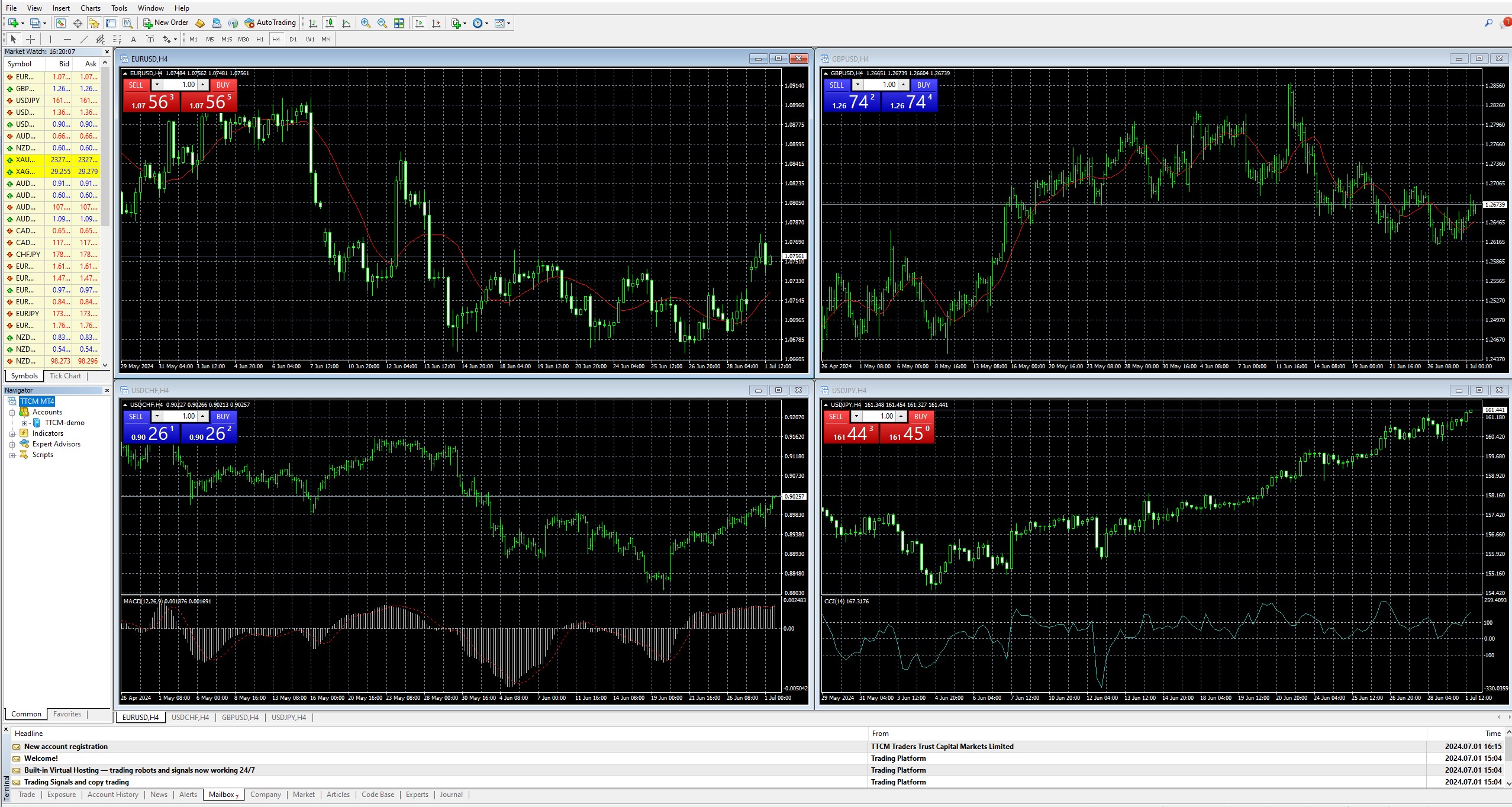
One of the standout features of MT4 is its support for automated trading through Expert Advisors (EAs). EAs can automate trading strategies based on predefined conditions, executing trades without manual intervention. Users can develop custom indicators and scripts using the MQL4 (MetaQuotes Language 4) programming language, specifically designed for developing trading robots and technical indicators. This has led to the formation of a large community of traders and developers who share and sell their custom tools.
MT4 ensures robust security by encrypting data exchanges between the client terminal and the platform servers using a 128-bit key. It also supports RSA digital signatures, providing an additional layer of security to protect traders’ accounts and personal information.
MT4 supports a variety of order types, including market orders, pending orders (buy stop, sell stop, buy limit, sell limit), and trailing stops. It offers quick order execution, which is critical for taking advantage of market movements.
The platform includes advanced communication tools, allowing brokers to post messages and communicate directly with traders. This feature can be particularly useful for real-time updates and support. MT4 is available as a desktop application for Windows, macOS, and Linux. It also has mobile versions for iOS and Android, enabling traders to manage their accounts from smartphones and tablets. Additionally, there is a web-based version accessible through internet browsers, providing flexibility to trade on the go. MT4 provides access to market news and an internal mailing system to keep traders informed about the latest economic events and updates.
Many traders find MT4 simpler and more straightforward compared to MT5, which offers a broader range of features that can sometimes feel overwhelming. Traders who have been using MT4 for years may prefer to stick with what they know and are comfortable with. MT4 has been around longer than MT5, leading to wider adoption among brokers and a larger user base. As a result, many brokers continue to support MT4, and it often covers a wide range of markets that traders are interested in.
The MQL4 programming language used in MT4 is considered by some traders to be easier to learn and use compared to MQL5. The extensive library of EAs, custom indicators, and scripts available for MT4 is a significant advantage for those who rely heavily on automated trading. Some trading strategies developed for MT4 are not directly compatible with MT5 due to differences in the programming languages and platform architecture. Traders who have invested time and resources in developing or acquiring MT4 strategies may prefer to continue using MT4 to avoid the hassle of converting their tools to MT5.
MT4 is known to be less resource-intensive than MT5, making it more suitable for older or less powerful computers. Traders with less advanced hardware may prefer MT4 for its lower system requirements. MetaTrader 4 remains a preferred choice for many traders due to its comprehensive features, user-friendly interface, and robust community support. While MT5 offers more advanced features and capabilities, the simplicity, familiarity, and extensive ecosystem of MT4 continue to make it a favored platform among both novice and experienced traders.
Many of the features of MT5 that are missing in MT4 can be found in Metatrader’s most established competitor, cTrader. Traders Trust offers this platform alongside MT4 to clients served by the broker’s offshore companies.
cTrader is a sophisticated trading platform developed by Spotware Systems, designed to offer advanced trading capabilities, a user-friendly interface, and a range of features tailored for both new and professional traders. Since its launch in 2010, cTrader has gained a significant following due to its focus on transparency, direct market access (DMA), and advanced trading tools. cTrader is renowned for its sleek, modern, and intuitive interface that is highly customizable. The platform is designed to be visually appealing and easy to navigate, catering to both novice and experienced traders.
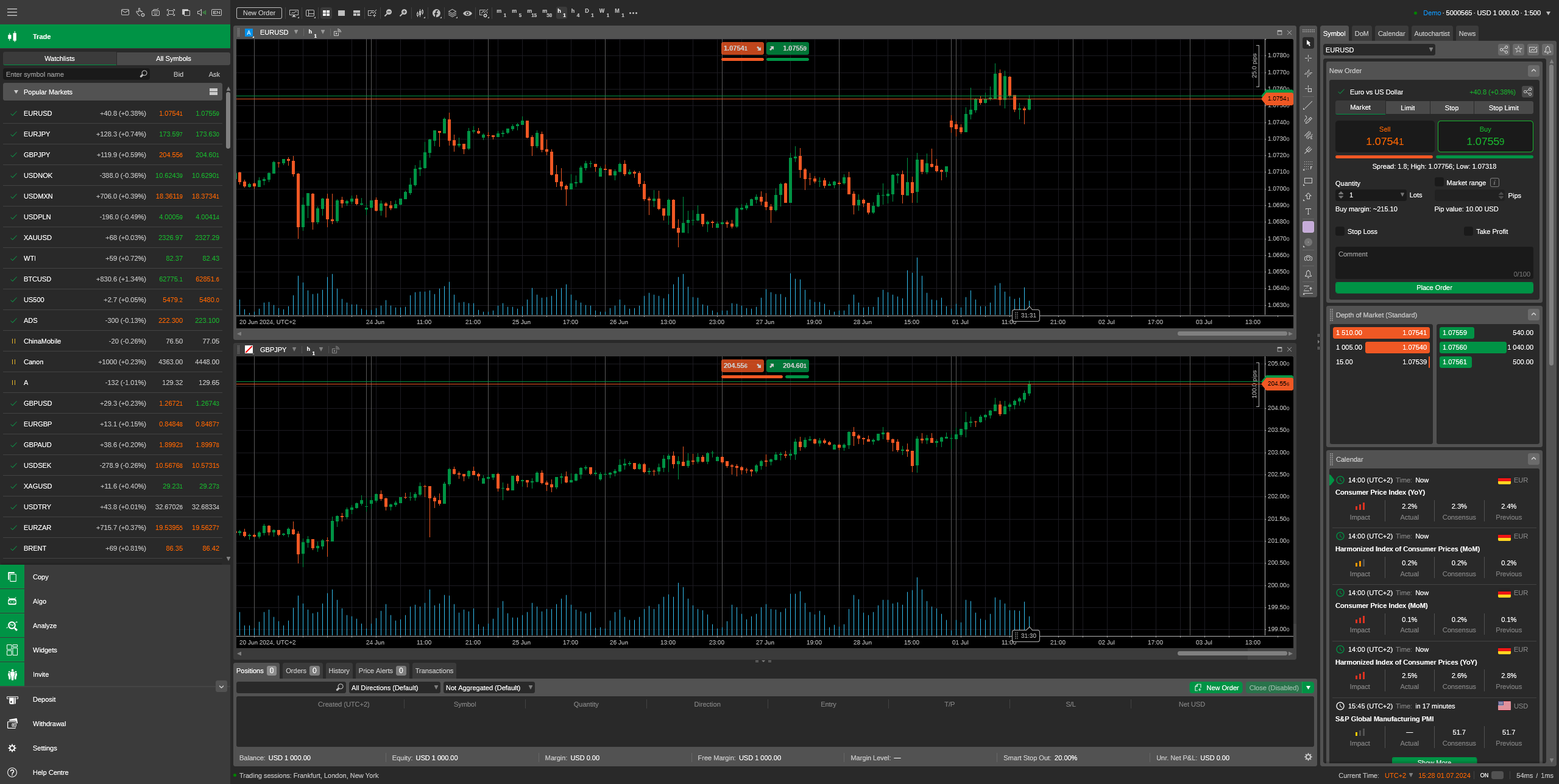
cTrader offers extensive charting capabilities with over 70 built-in technical indicators and multiple chart types (candlestick, bar, line, dot chart, and more). It supports up to 28 different timeframes and allows traders to detach charts to multiple monitors, enhancing the trading experience. Advanced drawing tools and customizable templates provide comprehensive tools for technical analysis. One of cTrader’s standout features is its Market Depth functionality, which provides full market depth information and Level II pricing. This feature shows the available liquidity at different price levels, which is particularly valuable for scalpers and day traders who need detailed information on price depth. cTrader supports a wide variety of order types, including Market, Limit, Stop, Stop-Limit, and Trailing Stop orders. The platform offers fast execution speeds with no dealing desk intervention, ensuring that orders are processed swiftly and transparently.
cTrader includes cAlgo (now part of cTrader Automate), which allows for the development and deployment of automated trading strategies using the C# programming language. This feature supports the creation of custom indicators and robots, providing a powerful tool for algorithmic traders. The platform also offers backtesting and optimization capabilities for automated strategies. cTrader integrates with cTrader Copy, a social trading feature that allows traders to copy the strategies of more experienced traders. This feature is similar to other social trading platforms and enhances the trading experience for both new and experienced traders.
cTrader is available as a desktop application, web-based platform (cTrader Web), and mobile application for iOS and Android devices. The web version provides nearly the same functionality as the desktop version, offering flexibility for traders who prefer to trade on the go. cTrader employs advanced security measures, including SSL encryption and secure data storage, to protect user data and transactions. The platform is known for its reliability and robust security protocols. cTrader emphasizes transparency and fairness in trading, with features such as order book access, trade receipts, and detailed trading reports. The platform supports direct market access (DMA), which means trades are executed directly in the market without dealing desk intervention.
Although simplicity and familiarity are considered some of the advantages of MT4, the older platform’s interface is more dated compared to cTrader. MT4 is also customizable but lacks the sleek design of cTrader.
cTrader also provides more advanced charting capabilities with over 70 built-in indicators, multiple chart types, and 28 timeframes. It also supports detachable charts. cTrader features full market depth and Level II pricing, providing detailed liquidity information. MT4 lacks comprehensive market depth and Level II pricing, making cTrader more suitable for scalpers and high-frequency traders. cTrader supports a wider variety of order types and ensures fast execution with no dealing desk intervention. The web version of cTrader is full-featured, unlike MT4 which has more limited functionality than the desktop application.
cTrader is a highly advanced trading platform with a modern interface, extensive charting and technical analysis tools, and robust automated trading capabilities. It is particularly well-suited for professional traders and those who require detailed market depth information. MetaTrader 4, on the other hand, is favored for its simplicity, extensive community support, and wide availability. It remains a preferred choice for many traders due to its familiarity and proven reliability. The choice between cTrader and MT4 ultimately depends on individual trading needs and preferences.
Taking full advantage of MT4 and cTrader’s automated trading capabilities requires scripts to function reliably 24/7. The most secure way to achieve this is through a Virtual Private Server (VPS), which allows automated processes to be independent of the trader’s personal hardware and internet connection. Traders Trust has partnered with one of the leading providers of VPS services, Beeks. All clients of the broker can subscribe to VPS, with a choice of three packages – Bronze, Silver and Gold. Monthly subscriptions for the three packages are £30, £83 and £94 respectively.
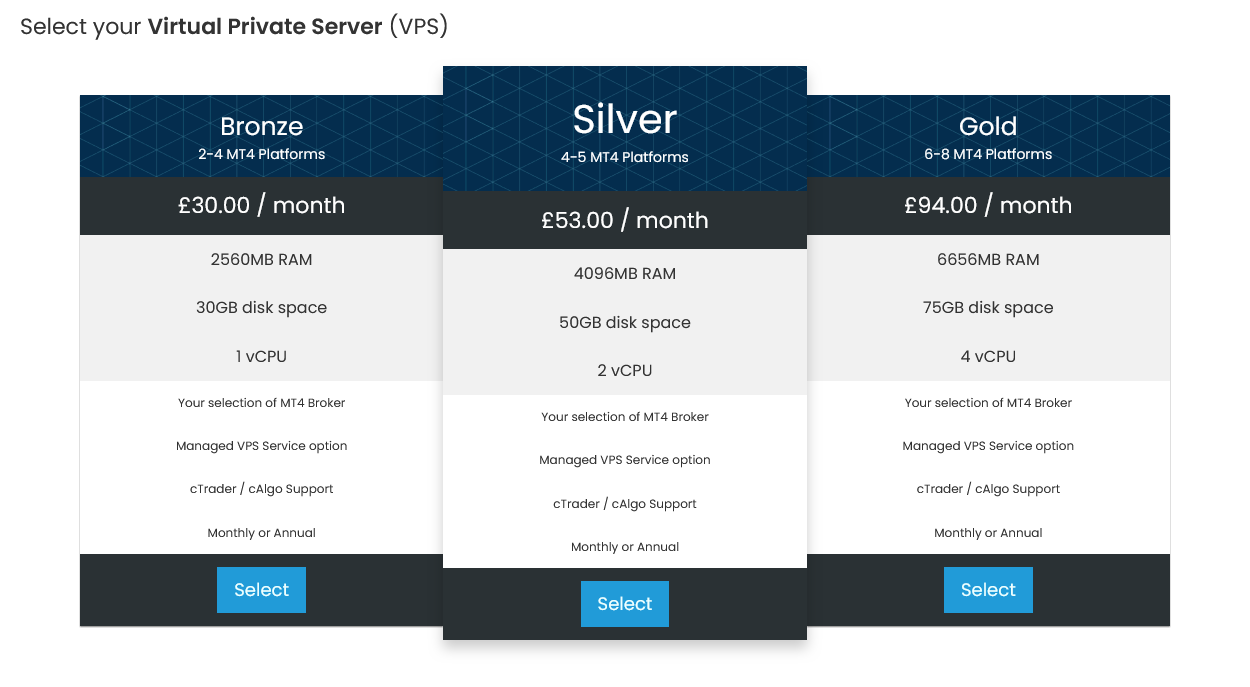
But offshore company clients again have an option not available to those in the EU. Traders Trust offers free VPS to active clients meeting certain capital and volume traded criteria. In order to receive a no-fee Bronze VPS package you must have a balance of at least $2,000 and trade at least 5 lots per month. The Silver Package requires a starting balance of $3,000 and 7 lots traded per month, and the Gold Package requires a starting balance of $5,000 and 10 lots traded per month.
Traders Trust Account types and trading conditions
Traders Trust offers all its customers a choice of three types of trading accounts. The broker also allows the registration of full-fledged Demo accounts, which allows clients to slave different combinations between pricing models, base currency and maximum leverage. Clients of the broker’s offshore company can try out both trading platforms in Demo mode.
Initial account registration only requires email address verification. In order to deposit funds and start real trading you must have verified your identity and residency. Cypriot company clients have to complete a more detailed questionnaire on personal details, financial situation and trading experience than other broker clients.
The broker’s clients have a choice of Classic Account, Pro Account and VIP Account. Base currencies are quite limited – only USD, EUR, GBP and JPY. On the website designed for EU customers, it is stated that the minimum deposit is 50 EUR for Classic Account, 500 EUR for Pro Account and 5000 EUR for VIP Account. The website of the broker’s offshore company states the same minimum deposits, but in USD or equivalent.
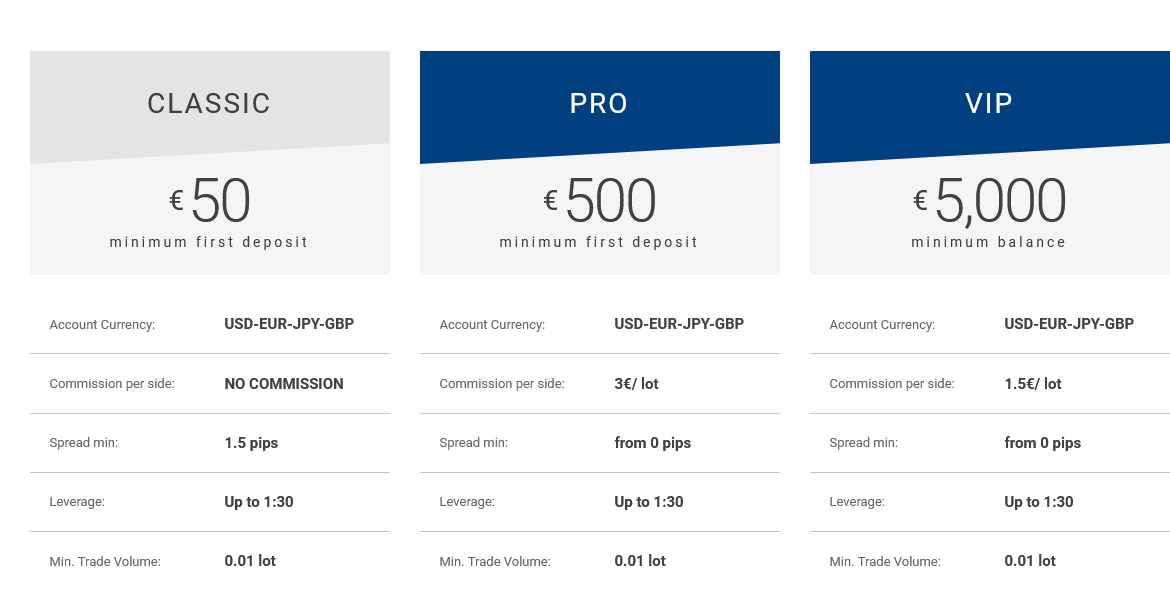
It should be noted that in the sub-section “trading accounts” on the Cypriot company’s website, minimum deposits for Pro and VIP accounts are listed, which differ from those listed on the homepage – EUR 2,000 and EUR 20,000 respectively. We suspect that this is old information that has not been updated. This is another thing that suggests that the broker’s European website is not as actively maintained as the one designed for global business.
The Classic Account, as its name suggests, offers a classic pricing scheme where the trader pays only a floating spread. The broker has declared a minimum spread of 1.5 pips, which while within the industry standard, is not the most competitive level you can find. When using the Demo Classic account, we saw a spread of 1.8 pips for the benchmark currency pair EUR/USD, which is an even less attractive cost per trade. Traders Trust’s boast that it offers the lowest spreads on the market simply does not hold true.
The Pro Account offers a much lower spread of about 0.2 pips, but the trader pays a fixed commission of 3 USD/EUR per side per lot. This commission is also not the lowest you can find on the market, but overall the cost of trading with a Pro account is much more competitive than that of a Classics account. At the spreads we saw during the preparation of this review, a trader will pay around 18 USD per lot with a Classic Account and 8 USD with a Pro Account. VIP Account uses the same pricing model as the Pro Account, but the fixed commission is twice as low – 1.5 USD or EUR per side per lot. These are now terms that are among the most competitive in the industry.
The minimum deposit of 50 USD/EUR for a Classic Account is within the industry standard. While the Pro account is designed for more active traders, other brokers offer similar terms with a lower minimum deposit. The terms of the VIP account are indeed very competitive, which is why it can be said that asking for a minimum deposit of 5000 USD/EUR is justified.
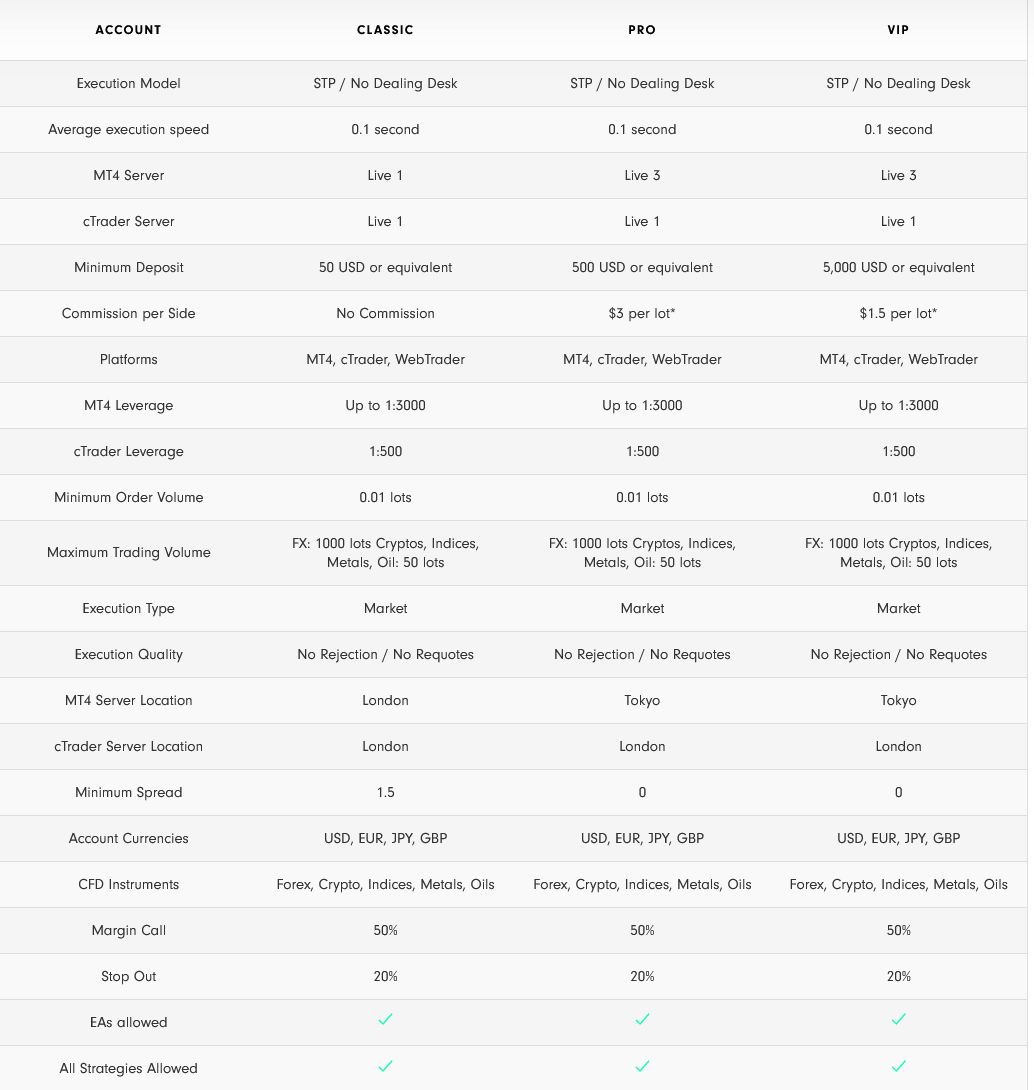
Brokers often offer different types of accounts with varying fee structures to cater to the needs of different traders. Understanding the difference between accounts where clients only pay a spread and those that feature raw or zero spread plus a fixed commission is crucial for choosing the right account type for your trading style and goals.
With the accounts where traders pay only the spread, those spreads are usually higher than those in raw spread accounts, because this is the primary way the broker earns revenue on these accounts. Traders don’t have to calculate additional commission costs, because the cost of the trade is clear from the spread alone. These accounts are generally more suitable for beginner traders, less frequent traders, or those who prefer simplicity in cost calculations.
Raw or Zero spread accounts with fixed commission offer spreads that are very close to the interbank spread (which can be zero or near zero) and charge a fixed commission on each trade. A fixed commission is charged per lot traded, which is separate from the spread. This fee is explicitly stated and is generally based on the transaction size. These accounts provide more transparency in pricing and can be more cost-effective for frequent traders or those trading large volumes.
For high-volume traders, raw or zero spread accounts can be more cost-effective despite the commission. The narrower spread means that the cost to enter and exit trades is lower, which can significantly impact profitability in strategies that involve frequent trading (like scalping). Raw or zero spread accounts offer more transparency. Traders can see the actual market spread and are only charged a clearly defined commission, making it easier to analyze and forecast trading costs.
The choice might depend on your trading strategy. If your strategy involves opening many trades quickly (scalping or high-frequency trading), a raw spread plus commission account might be more suitable because the transaction costs could be lower per trade. For less frequent trades or longer-term positions, the simplicity of a spread-only account might be preferable if the slightly higher spread isn’t a significant factor in the strategy’s performance.
Traders Trust clients in the EU can trade a very limited number of financial instruments – 39 currency pairs, 9 indices, 2 metals and 2 oils.
The broker’s clients serviced by the offshore company can trade over 50 currency pairs, the same 9 indices and 2 oils, but also 9 spot metals, 8 cryptocurrencies and a large number of corporate stocks.
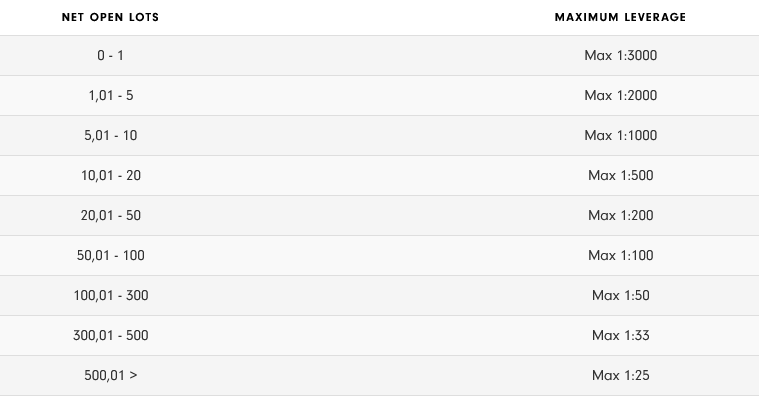
For EU traders, the maximum leverage is limited to 1:30 of the regulatory frameworks in force in the region. The maximum leverage available to other clients of the broker depends on the trading platform they use. If they trade through a cTrader, the maximum leverage is 1:500, which is a common level for offshore brokers. But if they use the MT4 platform, they can go up to 1:3000 leverage when trading certain forex instruments. In this model, the maximum leverage is based on the net open lots. The maximum level of 1:3000 is only available if the current account exposures are below one lot. Dynamic leverage can only be used when trading currency pairs including the following currencies – AUD, CAD, CHF, EUR, GBP, NZD, SGD and USD.
Traders Trust Global offers an Islamic Account option, which is not available to the broker’s EU clients. The Islamic Account allows traders of the Muslim faith to comply with religious requirements and against interest by not charging swap fees. With such an account, open positions for forex, indices, metals and oil remain swap-free for 7 days, while for stocks and cryptocurrencies the period is one day.
The Cypriot company’s customers also do not have access to Traders Trust’s social trading platform available to traders from other supported jurisdictions.
Social trading is a form of dealing that enables traders or investors to copy and execute the strategies of their peers or more experienced traders. Social trading works by creating quick access to financial markets, enabling beginner and experienced traders alike to share strategies and copy each other’s trades. In fact, new technology and advanced platforms have made it easier than ever to become a social trader. You can either use a comprehensive social trading platform, or adopt individual elements of the practice. Some traders might want to use a fully integrated social trading platform, which facilitates the complete sharing of trading strategies using a ‘copy trading’ or ‘mirror trading’ feature. As with a social networking platform, a social trader could choose to ‘subscribe’ to another trader’s channel, whose positions would be broadcast on a live feed, with the option to copy their deals. So, if trader A executes a trade, trader B would automatically execute the same trade.
Traders Trust Deposit and Withdraw Methods
Another aspect where Traders Trus’s services are much more limited for EU customers are the payment methods you can use to deposit or withdraw funds from your trading accounts. There are only two options for Cypriot customers – Bank Transfer and Credit/Debit Cards.

With both payment methods the minimum deposit amount and the minimum withdrawal amount is 50 USD/EUR/GBP or equivalent. There are no maximum deposit and withdrawal amounts.
The broker does not charge fees for depositing by bank transfer, but charges a 3.35% fee when using a credit/debit card. When withdrawing with the same method the fee is 2.5% and when using a bank transfer – 25USD/18EUR/15GBP. Nowadays most established brokers do not charge transaction fees.
Traders Trust promises immediate processing of deposits via credit/debit cards and processing within 3 days when using bank transfer. For withdrawals, the stated processing time is one business day for both methods.
Clients of the broker’s offshore companies have a wider choice. In addition to bank transfers and credit/debit cards, they can deposit and withdraw funds via the popular Skrill and Neteller e-wallets, as well as two cryptocurrencies – bitcoin and tether.
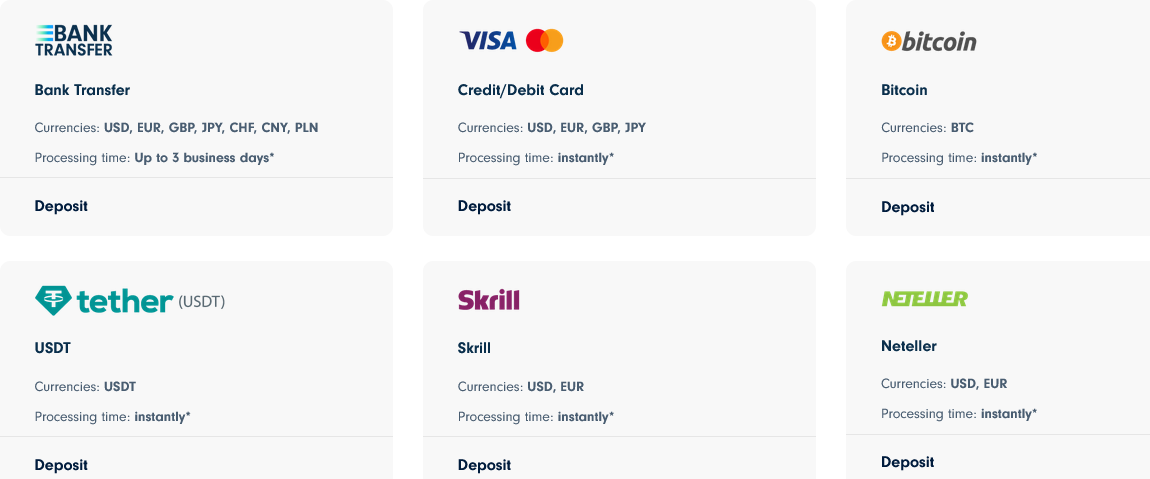
In addition to this, the broker’s non-EU clients pay no fees for depositing and withdrawing funds. The only exception is in cases where the withdrawal request is made from an account with very low trading activity – less than 1% of the deposited amount traded in lots. In such a case the broker reserves the right to restrict or charge you the equivalent amount of any banking/payment provider fees incurred and 5% of the total deposit and or withdrawal amount.
| Deposit method | Minimum | Maximum | Processing time | Fee |
| Bank | $50 | Unspecified | up to 3 days | Free |
| Credit/Debit Card | $50 | Unspecified | Instant | 3,35% |
| Neteller | $50 | Unspecified | Instant | Free |
| Skrill | $50 | Unspecified | Instant | Free |
| Crypto | $50 | Unspecified | Instant | Free |
| Withdrawal method | Minimum | Maximum | Processing time | Fee |
| Bank | $50 | Unspecified | up to 24 hours | $25 |
| Credit/Debit Card | $50 | Unspecified | up to 24 hours | 2,5% |
| Neteller | $50 | Unspecified | up to 24 hours | Free |
| Skrill | $50 | Unspecified | up to 24 hours | Free |
| Crypto | $50 | Unspecified | up to 24 hours | Free |
Traders Trust Bonuses and Promotions
The regulatory framework in the European Union does not allow brokers to offer bonuses, promotions and prize games. Traders Trust companies in Bermuda and the Seychelles are not restricted by such regulatory requirements and offer their clients some very attractive promotions.
The “50K USD Convertible Bonus” should be mentioned first. This bonus is available for both new and existing customers, but only those using the MT4 platform with a Classic or Pro account.
In order to participate in the promotion, you must have your account verified and make a minimum deposit of 300 USD or equivalent. The bonus is 100% of the deposit up to a maximum of 50,000 USD. The bonus validity period is 90 days, after which the bonus funds will be removed from your account.
One of the big advantages of this promotion is that the bonus can be converted into withdrawable balances. To convert the Bonus to balance, participants must meet a conversion ratio of 1 closed lot round turn for every $5 of credit value. For example, if the Bonus is $300, a minimum of 60 closed lots must be achieved within a 90 days period. For every 0.2 lots traded, you can convert 1$ credit to 1$ cash. Once the required volume has been traded, participants should send an email from their registered email address to [email protected], providing the trading account number and requesting the conversion or credit to balance.
High volume traders have the opportunity to take advantage of the promotion “Up to $2,000 daily Cashback Rebate”. This promotion is available for traders with Classic and Pro accounts who trade more than 10 round turn lots per day. The rebate ranges from 5 USD for a volume between 10 and 19 lots to 2,000 USD for a volume over 1,000 lots. When using a Pro account, the maximum is 1000 USD.
The Broker also maintains a loyalty program, but this is only for partners in the Introducing Broker program. This promotion does not apply to retail customers.
| Bonus | Min deposit | Max bonus | Required turnover | Cash out limit |
| 50K USD Convertible Bonus | $300 | $50000 | Unspecified | $50000 |
| Cashback Rebat | Unspecified | Unspecified | Unspecified | $2000 |
Traders Trust Tools and Education
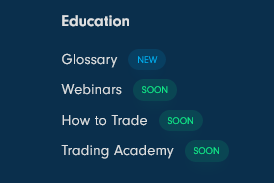
Traders Trust is not one of the brokers that seek to provide a single information hub for traders. The broker’s EU website has no educational metrics at all to help new traders get into financial trading and more advanced traders deepen their knowledge. The offshore website only has a glossary of basic financial terms. The broker promises to start offering webinars and a Trading Academy soon, but at the time of writing this review this was not yet a fact.
The website for non-EU clients also has a news section with Market Insights, but this is not regularly maintained and is not detailed enough to serve for day-to-day investment decisions. The broker does not offer analytical and research resources such as technical analysis, trading signals, etc.
The ancillary tools offered by Traders Trust are also unimpressive in number and quality. In fact, the available tools are limited to the Economic Calendar, which you will also find in the MT4 platform, as well as an undoubtedly convenient set of calculators – All-in-one Calculator, Margin Calculator, Swap Calculator, Profit/Loss Calculator, Pip Calculator and Currency Converter. Traders Trust does not offer third-party software extensions for the MT4 and cTrader platforms as you will find with some other brokers.
Notes from the author:
It is somewhat strange for a broker to have a Cyprus Securities and Exchange Commission (CySEC) license, but obviously to pay more serious attention to its offshore business. Traders Trust 's EU business is designed for high-volume traders who only want to trade the most fundamental forex pairs via the familiar old MetaTrader 4 (MT4) platform. There is nothing wrong with that, because there are undoubtedly enough such traders.
But this does not justify that the "European" Traders Trust website lacks multilingual support and even live chat, and that it contains outdated information. The broker's EU customers also have a very limited choice of payment methods, in addition to having to pay fees for deposits and withdrawals. The starter 'Classic' account does not offer particularly competitive terms. The Pro account is more enticing, but hardly justifies the high minimum deposit. The VIP account, however, lives up to its name and really offers a great price on the trade.
In other jurisdictions, Traders Trust offers fairly standard terms for an offshore broker, including high leverage and quite attractive deposit bonuses. Additionally, outside the EU, the broker offers another trading platform, cTrader. But in order to take advantage of the high dynamic leverage of up to 1:3000, as well as to get a deposit bonus, you need to use an MT4 trading account. The cash rebates offered by Traders Trust sound good, but require extremely high trade volume. The broker's offshore offerings also include trading in cryptocurrencies and equities, although the total number of tradable instruments remains disappointingly limited.
Overall, this broker may be suitable for traders with very particular preferences, especially high-volume traders with a traditional taste in software. But for beginners and casual investors, Traders Trust offers nothing impressive.


