





WeTrade Review
WeTrade may not yet ring bells in every trading circle, but it’s quickly gaining ground—thanks in part to its recent regulatory upgrade. Originally operating under a light-touch offshore license in Saint Vincent and the Grenadines, WeTrade has now secured full authorization from CySEC (Cyprus Securities and Exchange Commission), one of the EU’s most trusted financial regulators. This marks a major credibility shift, allowing the broker to serve clients across all EU member states while offering stronger client protections, compliance standards, and operational transparency.
The broker supports both the MetaTrader platform (MT4/MT5)—a favorite among forex veterans—and a proprietary mobile app designed for on-the-go trading. Platform availability depends on your region, but the dual-offering approach makes WeTrade accessible to a broad range of traders.
In terms of instruments, the broker offers a fairly diversified catalog: Forex, Metals, Commodities, Indices, Stocks, and Cryptocurrencies. Whether you’re looking to day trade the majors, hedge with gold, or speculate on crypto, WeTrade gives you room to explore.
That said, offshore roots don’t vanish overnight. In this in-depth review, we’ll unpack WeTrade’s regulatory profile, platform experience, spreads, leverage, payment methods, and account options—so you can decide whether this EU-regulated broker is the right fit for your trading strategy, or just another flashy newcomer with limited depth.
WeTrade Regulation and Licenses
When it comes to choosing a forex and CFD broker, regulation is non-negotiable. It’s the single most important factor that determines whether your money is protected, your trades are executed fairly, and your broker is operating under real financial scrutiny. WeTrade’s regulatory evolution tells a story of a broker working to shed its offshore past and build trust—particularly in Europe.
Offshore Beginnings: Saint Vincent and the Grenadines (SVG)
WeTrade first launched under the registration of Saint Vincent and the Grenadines (SVG)—a go-to jurisdiction for many low-cost brokers. While this allowed for global reach and lower barriers to entry, it’s crucial to understand that SVG’s FSA does not regulate forex trading activity. There are no investor safeguards, no mandatory audits, no fund protection rules, and no oversight of how client capital is handled.
For many traders, this raises immediate red flags. An SVG license is essentially a certificate of incorporation—not a license to trade under financial regulation. It’s common for beginners to assume a registered broker is a regulated broker, but in SVG, that’s simply not the case.
Regional Expansion: Malaysia Footprint (With Caveats)
WeTrade has also signaled operations in Malaysia, a region where online trading is booming. In theory, any broker offering derivatives or forex in Malaysia should be licensed by the Securities Commission Malaysia (SCM). SCM is a serious regulator that enforces compliance, disclosure, and client protections. However, at the time of review, WeTrade’s regulatory status in Malaysia remains unverified, and no official SCM license details have been made public.
Until confirmed through the SCM registry, traders are advised to treat this claim with caution and seek verification from official Malaysian regulatory records.
The Game-Changer: CySEC License in the European Union
The most promising development in WeTrade’s journey is its regulatory approval by the Cyprus Securities and Exchange Commission (CySEC). This license, governed under the EU’s MiFID II framework, grants WeTrade the legal ability to operate across all European Economic Area (EEA) countries—including Germany, France, Italy, the Netherlands, and more.
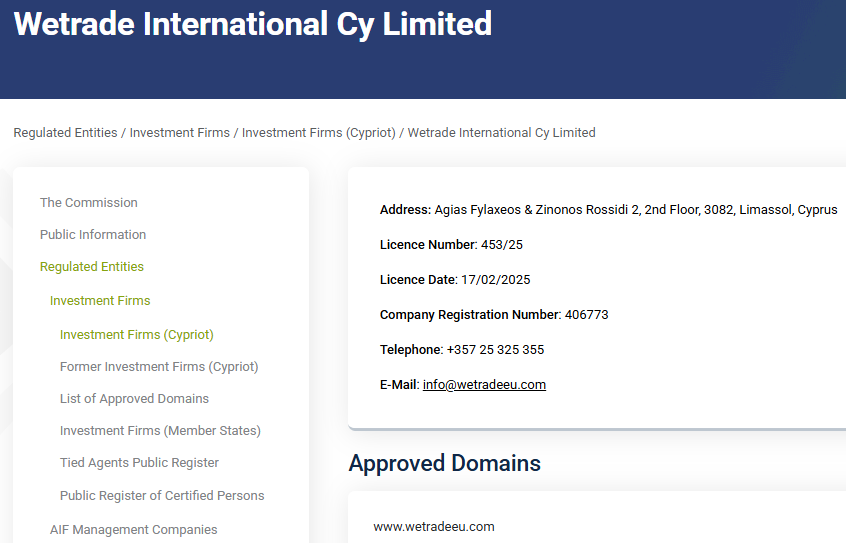
For retail traders, CySEC regulation brings a real upgrade in safety and standards. Here’s what that means in practice:
- Investor Compensation Fund (ICF): Eligible traders are covered up to €20,000 if the broker fails financially.
- Segregated Client Accounts: Funds are kept in separate bank accounts at reputable financial institutions.
- Negative Balance Protection: Clients cannot lose more than their deposited funds.
- Ongoing Supervision: WeTrade must meet capital adequacy thresholds, file audit reports, and comply with operational transparency.
- MiFID II Compliance: Ensures fair treatment, best execution, and conflict-of-interest protocols across EU services.
WeTrade’s CySEC licensing is a major step forward, especially for traders in Europe seeking legally regulated brokers with financial safeguards. This move elevates WeTrade above many offshore-only competitors, positioning it as a mid-tier broker with improving credentials.
Newest Update: ASIC Authorization in Australia
Most recently, WeTrade has secured a license from the Australian Securities and Investments Commission (ASIC)—one of the world’s most respected financial regulators. ASIC imposes rigorous standards for risk disclosures, financial reporting, client protection, and operational transparency.
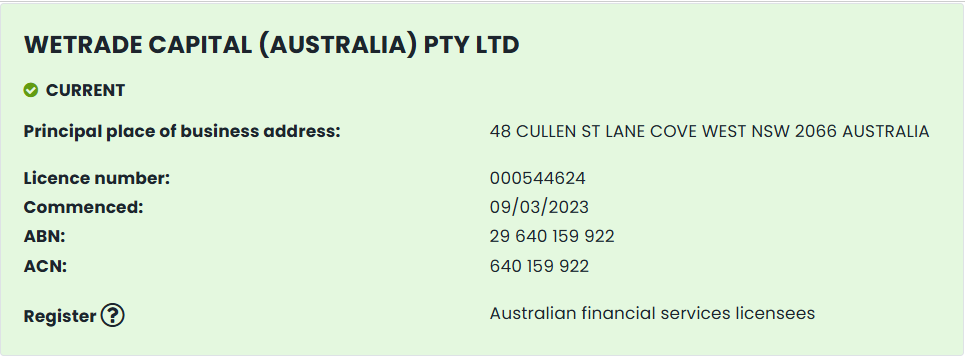
Key advantages of ASIC regulation include:
- Strict capital adequacy and solvency rules
- Mandatory client fund segregation
- Compulsory dispute resolution through AFCA
- Robust enforcement of broker conduct and advertising
With both CySEC and ASIC licenses now in place, WeTrade has significantly upgraded its legal standing, making it more trustworthy than many offshore-only competitors.
WeTrade’s regulatory profile has evolved meaningfully—from a high-risk offshore entity to a dual-regulated broker with EU and Australian licenses. This marks clear progress and positions the broker among mid-tier providers striving for greater legitimacy.
That said, WeTrade is still not on the same level as industry leaders like IG, Pepperstone, or Interactive Brokers, which boast deeper histories, larger balance sheets, and tighter compliance records across multiple top-tier jurisdictions.
For traders in Europe and Australia, WeTrade’s regulated entities now offer a safer, more transparent alternative to the broker’s earlier offshore model. But cautious due diligence is still advised—especially for those trading large sums or seeking institutional-grade oversight.
WeTrade Trading Platform
Choosing the right trading platform is more than just a technical detail—it’s the foundation of your entire trading experience. From fast execution to technical analysis and algorithmic automation, the platform you use directly impacts how effectively you can trade. At WeTrade, traders are offered a mix of industry-standard and proprietary platforms, but availability depends on your location.
For EU Clients: MetaTrader 5 (MT5) Only
If you’re trading from the European Union under WeTrade’s CySEC-regulated entity, your platform access is limited to MetaTrader 5 (MT5). This restriction is common among EU brokers and stems from compliance with MiFID II standards.
What MT5 Brings to the Table:
- Advanced Charting: Analyze the markets with 21 timeframes and support for up to 100 charts simultaneously.
- 80+ Built-In Indicators: Includes oscillators, trend tools, and custom indicators for in-depth market views.
- Depth of Market (DOM): See the order book to better time your entries and exits—especially useful for scalpers.
- Built-In Economic Calendar: Stay on top of high-impact news without switching platforms.
- Automated Trading (Expert Advisors): Program or download trading bots to execute your strategy automatically.
EU Device Support:
- MT5 for Windows/Desktop: Full suite of tools and customization options.
- MT5 Mobile (iOS & Android): Trade on the go with a mobile-optimized version—ideal for monitoring and placing trades, though with limited charting features.
Important Note: EU-based traders cannot access MetaTrader 4 (MT4), the proprietary WeTrade App, or the MultiTerminal platform.
For International Clients: MT4, MT5, and Proprietary App Access
Traders outside the EU enjoy significantly more flexibility. In addition to MT5, they also gain access to MetaTrader 4 (MT4)—the world’s most popular retail trading platform—and WeTrade’s own mobile app, as well as the MetaTrader MultiTerminal for account management.
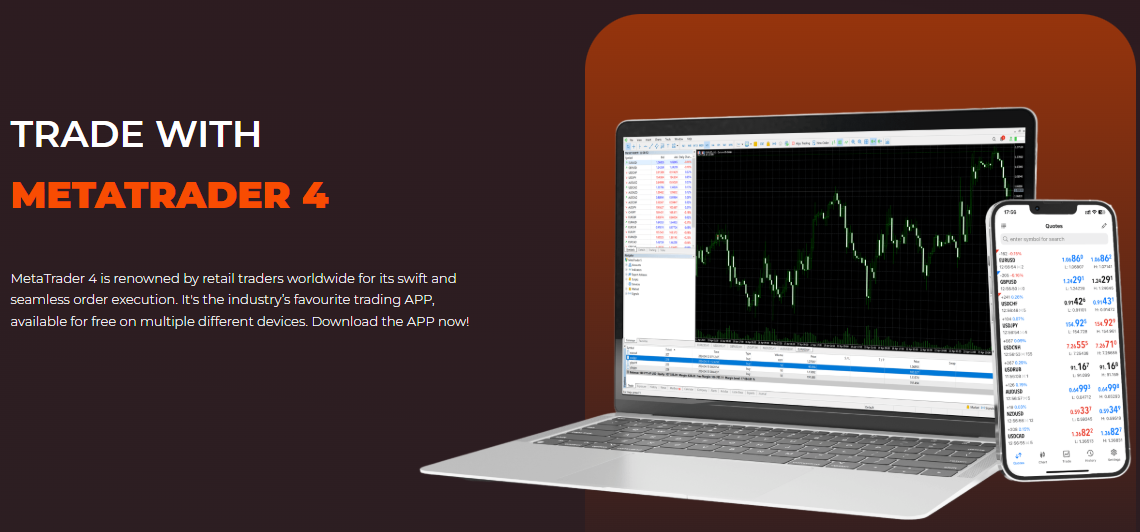
MetaTrader 4 (MT4) Highlights:
- Beginner-Friendly: Easier learning curve compared to MT5.
- Custom Indicators & Scripts: Thousands of tools available for free or purchase.
- Expert Advisors (EAs): Automate your strategies using the MQL4 programming language.
- Low System Requirements: Runs smoothly even on older devices.
- One-Click Trading: Designed for rapid execution—ideal for scalpers.

WeTrade Mobile App (Proprietary):
- All-in-One Trading Dashboard: View markets, place orders, manage your account, and chat with support—all in one place.
- Streamlined Interface: Built for usability, but limited in analysis tools.
- Real-Time Notifications: Stay alert on key movements and account updates.
MetaTrader MultiTerminal:
- Multi-Account Management: Trade across several accounts simultaneously.
- Centralized Execution: Execute bulk trades with ease—perfect for account managers.
- Custom Allocation Settings: Control risk and trade volume across accounts.
Device Support for International Traders:
- MT4 for Windows
- MT4/MT5 Mobile for iOS & Android
- WeTrade App (iOS & Android)
- MultiTerminal (Windows only)
WeTrade offers a decent but region-dependent platform selection. If you’re trading from the EU, you’re limited to MT5—an excellent platform, but with no access to MT4 or mobile alternatives. For traders in other regions, the full range of options gives more flexibility, especially for those managing multiple accounts or trading primarily from mobile.
While WeTrade’s in-house app provides useful on-the-go functionality, it can’t match the depth or customizability of MetaTrader. So, if you value feature-rich environments and automation, MT4 or MT5 remains your best bet.
WeTrade Trading Accounts
WeTrade offers a tiered account structure tailored to different trader profiles and geographic regions. Its account options are split between clients under its EU-regulated entity and those under its offshore entity. While the structure itself is clearly defined and covers a range of experience levels, the broker’s transparency about specific trading conditions—such as spreads, commissions, and leverage—is a positive differentiator and will be explored in more detail throughout the next sections.
For EU Clients: Silver, Gold, and ECN Accounts
Traders based in the European Union are onboarded under WeTrade’s CySEC license and can choose between three main account types: Silver, Gold, and ECN.
- The Silver Account has a minimum deposit of €250 and is best suited for beginners or casual traders. It provides access to the MetaTrader 5 platform and standard trading conditions, likely without any commission fees. While it serves as an easy entry point, it offers basic features and limited perks.
- The Gold Account, requiring a €5,000 deposit, targets intermediate traders with higher capital. It likely offers tighter spreads than the Silver Account, along with improved support, enhanced tools, and possibly faster withdrawal processing. It’s positioned as a mid-tier solution with a more competitive edge.
- The ECN Account is geared toward professional traders and comes with a €20,000 deposit requirement. This account is designed for those seeking raw spreads, lower latency, and potentially dedicated support or a personal account manager. Commissions are likely charged per trade, aligning with industry ECN standards.
For International Clients: STP, Standard, and ECN Accounts
Outside the EU, WeTrade operates under its offshore license and provides more flexible account options with significantly lower entry barriers. These include STP, Standard, and ECN accounts.
- The STP Account starts at just $10 and is intended for beginner or budget-conscious traders. It features straight-through processing with no dealing desk intervention and likely does not charge commissions. This account type offers accessible entry and moderate spreads.
- The Standard Account also requires a $10 deposit and provides a simplified trading setup, potentially using a hybrid model (STP/Market Maker). It’s similar to the STP account but may differ slightly in margin or execution policy.
- The ECN Account is available with a $1,000 minimum deposit and offers raw spreads, faster execution, and commission-based pricing. It’s ideal for experienced or algorithmic traders who prioritize direct market access and cost efficiency.
WeTrade’s account structure is thoughtfully organized to meet the needs of both novice and experienced traders across jurisdictions. The broker also stands out by providing specific details on trading conditions—which we’ll break down in the next sections. This level of transparency allows users to make informed decisions based on their strategy, budget, and regulatory preferences.
WeTrade Trading Instruments
If you’re looking for a broker that covers the most important markets without overwhelming you with complexity, WeTrade might strike the right balance. While it doesn’t dive into ultra-niche assets like bonds, ETFs, or options, it offers a focused and practical lineup that supports most retail trading strategies.
From forex majors to cryptos, stock CFDs, commodities, and indices, the range here is more than enough to build a diversified portfolio and explore different market conditions—all from a single account.
Forex: The Core of WeTrade’s Offering
WeTrade delivers a healthy mix of major, minor, and exotic currency pairs. Whether you’re trading the stability of EUR/USD or chasing volatility with emerging market pairs, you’ll find solid liquidity and 24/5 access. For many traders—especially beginners—forex is where the learning curve starts, and WeTrade provides the essential tools to get going.
Metals & Energies: For Macro and Momentum Traders
Precious metals like gold and silver are available for those who want to hedge against inflation or market turmoil. On the other side of the spectrum, energy assets like Brent, WTI, and natural gas offer fast-paced opportunities for those who thrive in high-volatility environments.
Indices: Ride the Market’s Big Moves
For traders who prefer broad market exposure without diving into individual stocks, WeTrade’s index CFD lineup includes big names like the S&P 500, NASDAQ, FTSE 100, and DAX. Index trading is especially popular among those who follow macroeconomic news and want access to diversified, momentum-driven setups.
Stock CFDs: Global Equities at Your Fingertips
Want to trade Tesla, Apple, Amazon, or JPMorgan without buying the actual shares? WeTrade lets you do exactly that via CFDs on global equities, mostly from the U.S. and European markets. Leverage and short-selling are enabled, so traders can speculate in both directions. Just keep in mind that exact availability may vary by region.
Cryptocurrencies: Trade the Digital Frontier
WeTrade’s crypto CFD offering includes favorites like Bitcoin, Ethereum, and Ripple, allowing leveraged trading on price movements without the need for a digital wallet. Perfect for traders who want access to crypto volatility—but in a regulated trading environment.
Final Thoughts: Enough for Most, But Not for Everyone
WeTrade keeps it clean and simple when it comes to tradable assets. If you’re a forex-first trader who likes to occasionally explore metals, stocks, or crypto, this broker delivers the essentials. However, if you’re hunting for hundreds of equities, niche instruments, or ETF diversification, a more specialized broker might be a better fit.
For most retail traders—especially those starting out or refining their multi-asset strategy—WeTrade checks the right boxes without unnecessary noise.
WeTrade Trading Conditions
Understanding a broker’s trading conditions can make or break your bottom line. At WeTrade, spreads and leverage vary significantly depending on your account type and region, so it’s important to know what you’re getting before placing a trade. While the broker doesn’t compete with the absolute lowest-cost providers in the industry, its pricing model is transparent, tiered, and relatively beginner-friendly.
Spreads: Clear, Tiered, and Region-Dependent
WeTrade structures its spreads based on your account type—offering a straightforward experience for newcomers and more competitive pricing for advanced traders.
- STP Account: Ideal for beginners, the STP account comes with spreads starting from 1.8 pips and no commissions. While easy to understand, the slightly wider spreads may eat into profits for scalpers or high-frequency traders.
- Standard Account: This account lowers the starting spread to around 1.0 pip, still commission-free. It’s a solid middle ground for traders who want better pricing without dealing with per-trade commissions.
- ECN Account: Targeted at more serious traders, this account features raw spreads from 0.0 pips and a $7 round-turn commission per lot. This setup suits scalpers, algo traders, and news traders who rely on tight execution and minimized cost per trade.
WeTrade’s pricing is decent, though not the sharpest in the market. The spread structure makes sense for most use cases, but cost-sensitive traders may find tighter spreads and lower commissions at FCA-, ASIC-, or BaFin-regulated brokers.
Leverage: Flexible for Some, Conservative for Others
WeTrade’s leverage offering depends on where you’re located—offering compliance with EU rules for CySEC clients and higher flexibility for offshore traders.
Leverage for EU Clients (CySEC Regulation)
If you’re trading under the EU umbrella, your leverage is capped to meet MiFID II and ESMA guidelines, designed to reduce risk for retail traders.
- Major Forex Pairs: Up to 1:30
- Minors & Gold: Up to 1:20
- Indices & Commodities: Up to 1:10
- Cryptocurrencies: Typically capped at 1:2
This approach is risk-averse but ensures capital protection for less experienced traders.
Leverage for Offshore Clients (International Entity)
Outside the EU, WeTrade opens the throttle—with leverage up to 1:2000. This high-leverage model is attractive for small-cap traders aiming for high returns with limited deposits.
However, this much power comes with significant risk. One wrong move with 1:2000 leverage, and your account can disappear in minutes—especially in fast-moving markets like crypto or exotic forex pairs.
Negative Balance Protection: One Risk Guard That Matters
Regardless of where you’re trading from, WeTrade offers negative balance protection—a crucial safety net. This ensures you’ll never owe more than what you deposit, even if a flash crash or overnight gap wipes your position.
WeTrade’s trading conditions are solid for most beginner and mid-level traders. The broker delivers a mix of clarity, platform flexibility, and reasonable pricing. While it doesn’t match the razor-thin spreads or deep liquidity of top-tier institutions, it also doesn’t overpromise or confuse. If you’re looking for a transparent broker that keeps trading accessible without hidden traps, WeTrade holds its ground. For ultra-low-cost, high-frequency trading? You might want to keep shopping.
WeTrade Payment Methods
Whether you’re funding your account or cashing out profits, fast, reliable, and flexible payment methods are crucial. WeTrade covers the basics, offering a mix of traditional and digital funding options—but the availability depends largely on whether you’re trading under their EU-licensed or offshore entity.
For EU-Based Traders (CySEC Regulation)
If you’re registered under WeTrade’s CySEC-regulated branch in Europe, your payment choices are limited to mainstream financial channels, as required by EU compliance standards.
Accepted Methods:
- Credit & Debit Cards (Visa, Mastercard)
- Bank Wire Transfers
These options are secure and widely used, but the absence of modern e-wallets (like PayPal, Skrill, or Revolut) might disappoint traders looking for quicker or more convenient alternatives.
Estimated Processing Times:
- Card Deposits: Instantly or within 1 business day
- Bank Wires: 1–3 business days
- Withdrawals: Usually take 2–5 business days
For International Clients (Offshore Entity)
Traders outside the EU benefit from broader funding options, including crypto—a convenient solution in countries with currency restrictions or limited banking infrastructure.
Accepted Methods:
- International Bank Wire
- Local Bank Transfers (where available)
- Cryptocurrency: Tether (USDT)
Crypto funding via USDT offers a fast, borderless solution, often settling within hours. However, digital wallets like Neteller and Skrill are not supported, and crypto withdrawals may involve extra verification.
Estimated Processing Times:
- Bank Transfers: 1–3 business days
- Local Transfers: Same day to 1 business day
- Crypto (USDT): Typically completed within a few hours
Deposit & Withdrawal Fees
WeTrade does not charge deposit fees—whether you’re in the EU or trading offshore. That said, the situation with withdrawals is less straightforward.
Offshore Clients:
- No listed withdrawal fees for UnionPay or bank wire transfers.
- Withdrawals are often processed the same day.
- However, third-party banking fees may still apply, depending on your country or bank.
EU Clients: Here, costs are higher—especially for card withdrawals.
Card Withdrawals (Visa & Mastercard):
- Fee: 3.25% + €2.50 per transaction
- Currencies: EUR or USD
- Time: Usually 1 business day
Bank Wire Transfers (via Alpha Bank):
- Currency: EUR only
- Time: 3–5 business days
- Fees: “Commissions apply” (exact amounts not disclosed)
This fee structure makes WeTrade less competitive than many other EU-regulated brokers that offer free or low-cost withdrawals.
WeTrade’s payment system gets the job done, especially for international users who benefit from faster processing and crypto support. However, EU traders may find the withdrawal fees and limited funding options restrictive. Clearer disclosures around wire fees and the addition of modern e-wallets would bring the broker more in line with industry standards.
WeTrade Education & Trading Tools
Solid basics for beginners, but lacks depth for advanced traders
WeTrade offers a beginner-friendly educational hub aimed at helping new traders understand the markets, but the depth and structure of its content fall short of more robust industry standards. Still, the inclusion of several analytical tools adds practical value to the trading experience.
Education: Good Start, Needs More Depth
WeTrade’s educational offering includes:
- Video Tutorials: Covering basic trading concepts, platform walkthroughs, and market fundamentals.
- Glossary of Trading Terms: A helpful guide for decoding forex jargon, ideal for newcomers.
- Introductory Guides: Covering how to place orders, use leverage, and understand risk.
While these resources provide a decent starting point, they’re relatively basic. There’s a noticeable lack of structured learning paths, strategy-focused modules, or advanced content for traders looking to level up beyond the basics.
Trading Tools: More Impressive Than the Education
Where WeTrade’s educational content may be lacking in depth, its trading tools help make up for it—particularly for those who rely on market analysis and insights.
Included Tools:
- Trading Central: A leading third-party tool that provides technical analysis, trade setups, and market sentiment—great for both beginners and pros.
- Economic Calendar: Tracks key economic events and data releases that can move the markets, with filters by impact and country.
- Analyst Views: Daily market outlooks and opinions to help guide decision-making, backed by Trading Central data.
- MT4 Indicator Suite: A custom set of indicators for enhanced technical analysis, designed to integrate seamlessly with MetaTrader 4.
- Web TV: Streaming financial news and expert commentary directly within the platform—useful for staying on top of market trends.
- Weekly Market Insights: Recaps and forecasts that highlight upcoming opportunities or risks in major asset classes.
WeTrade des a good job of equipping new traders with foundational knowledge and a solid set of analytical tools. However, traders looking for in-depth strategy education, webinars, or mentoring may find the educational resources too light. That said, the integration of Trading Central and platform-based tools adds real-time utility to the trading environment.
WeTrade Bonuses and Promotions
WeTrade provides a selection of bonuses and promotions—but only through its offshore entity, not its CySEC-regulated EU arm. These offers are generally designed to attract new traders and reward trading activity through cashback and reduced costs. Below, we break down the currently active campaigns and their terms.
1. Starter Cashback Bonus
Eligibility: First-time depositors with offshore accounts
Promo Period: June 1 – June 30, 2025
Reward: $2 cashback per standard lot traded
Details: Traders making their first deposit during the promotional period will receive $2 back for every standard lot they trade. There is no upper limit listed on the total cashback amount, and the minimum deposit to participate is only $10.
This bonus is ideal for beginner traders seeking to reduce their trading costs early on. Cashback is typically credited automatically, though the broker may require verification or account activity review before processing.
2. Swap-Free Trading Campaign
Eligibility: Offshore account holders only
Applies to: Forex and Metals instruments
Duration: 14-day structured benefit
This campaign temporarily eliminates or reduces swap charges (overnight fees), allowing traders to hold positions longer without incurring standard rollover costs.
Swap-Free Terms:
- Days 1–7: 100% swap-free trading on forex and metals
- Days 8–14: 50% discount on standard swap rates (as shown in the MT4 platform)
- Applies to all major and minor forex pairs as well as gold and silver
This benefit is particularly attractive for swing traders or those executing multi-day positions who would otherwise face higher costs in volatile or trending markets.
Key Limitations and Considerations
- Regulatory Restriction: None of these bonuses are available to EU clients due to MiFID II restrictions under CySEC regulation.
- Transparency: While the promotional offers are appealing, full terms and conditions (e.g., withdrawal restrictions, volume requirements, etc.) are not clearly published on the public website and must be requested from support.
- Risk Disclosure: As with any trading bonus, offers like cashback and swap-free trading should not be viewed as a substitute for strategy. They are cost-saving tools—not risk mitigators.
WeTrade’s bonus structure adds moderate value for offshore traders, especially beginners. The Starter Cashback and Swap-Free Campaign are well-suited for low-budget traders looking to build experience with minimal upfront cost. However, the absence of promotions for EU clients and the lack of detailed conditions make it less competitive compared to brokers with fully transparent, global reward systems.
Final Thoughts
WeTrade is a broker in transition—moving from its offshore beginnings toward a more credible, regulated presence in the European market. Its recent CySEC license is a meaningful step forward, giving EU traders access to stronger legal protections, transparent practices, and MiFID II compliance. While that doesn’t automatically place it among the industry’s elite, it does raise the bar compared to brokers that continue to operate solely under light-touch jurisdictions.
In terms of trading experience, WeTrade delivers a decent platform lineup, reasonable spreads, and a solid range of instruments that cover all major asset classes, including forex, indices, commodities, stocks, metals, and crypto. The platform you’ll have access to—and the conditions you’ll trade under—will largely depend on your region. EU clients face more restrictions but benefit from higher regulatory standards, while international clients enjoy more flexibility, lower entry barriers, and access to promotional bonuses.
There are trade-offs. Withdrawal fees for EU clients are higher than average, the education section lacks depth for advanced traders, and the broker isn’t yet positioned to compete with top-tier names like IG, Pepperstone, or Saxo Bank when it comes to pricing or product breadth. Still, WeTrade stands out for its clear account structure, negative balance protection, and integration of reputable tools like Trading Central.
Ultimately, WeTrade is not a perfect broker—but it is a transparent and improving one. For beginners or intermediate traders—especially those in the EU looking for a regulated entry point into the markets—it presents a viable, trustworthy option. Just be aware of the regional differences in features and fees, and you’ll know exactly what you’re getting.
Notes from the author:
On the surface, it’s a broker in transition: originally offshore, now CySEC-regulated, and clearly working to improve its credibility and offerings. That alone earns it some points. Gaining a CySEC license is no small feat and signals that the company is willing to play by stricter rules, particularly in areas like fund protection, operational transparency, and client support within the EU.
From a trading perspective, WeTrade ticks many of the basic boxes. It offers both MT4 and MT5 (though only MT5 for EU clients), covers the essential asset classes, and maintains decent account variety. Spreads are not industry-leading, but they’re within a fair range for most retail strategies, and the broker is reasonably transparent about what to expect depending on your account type.
That said, it’s not yet a top-tier broker. The lack of digital wallets for payments, high card withdrawal fees in Europe, and a fairly shallow educational section make it less appealing for serious long-term traders. Its offshore entity still exists and caters to high-leverage, bonus-seeking traders, which may be a red flag for some. I also find the bonus structure a bit opaque—terms aren't clearly listed, and you need to contact support for details.
In short, WeTrade is evolving in the right direction, but it’s not a standout. It could be a solid option for beginners or mid-level traders who want multi-asset access and basic platform functionality under EU regulation. However, advanced traders—or those seeking tighter spreads, stronger platform variety, or a deeper education experience—may still be better off with a more established name regulated by the FCA or ASIC.


