





Wisuno Review
Wisuno is an up and coming broker that shows serious ambition, but has yet to prove it has a place in the market. The group of companies behind this broker includes one holding a first class regulatory license from Cyprus. But the broker’s European business uses a different brand, WSN, which will be the subject of a separate review. This review focuses on the offerings of the Wisuno brand, which operates through offshore companies and appears to be primarily aimed at Asian markets.
According to the information available on the website, Wisuno aims to offer a fairly comprehensive package of services. This includes a choice between account types with rationed pricing models as well as a Cent account. Wisuno also offers a combination of the two most widely used trading platforms in the industry, MetaTrader 4 and MetaTrader 5. This allows for the implementation of any type of trading strategy. The broker offers a significant variety of traded instruments, and the trading price is favorable, though not the lowest you can find. Like most offshore brokers, Wisuno provides a very high leverage trading option. The broker also offers a Welcome Bonus, but the terms associated with this promotion are quite restrictive.
But it should be noted that at the time of writing this review Wisuno was still a work in progress. While the website does call for registration, the feature to create Demo accounts is not functional. Also, it is only possible to create MT4 accounts, although a licensed MT4 platform is available. Wisuno has also not yet provided clear and detailed information on some important parameters of its services, such as deposit and withdrawal conditions.
Generally Wisuno seems like a broker worth paying attention to, but it has not yet proven itself in practice.
Wisuno Licenses and Regulation
The company that you become a customer of when you register for a Wisuno account is Wisuno Limited, regulated by the Financial Services Authority of Seychelles.
The group of companies behind this broker also include Wisuno Capital Limitedр licensed and regulated by the Financial Services Commission of Mauritius, as well as WSN Capital Ltd, licensed and regulated by the Cyprus Securities and Exchange Commission.

Whilst having a company with a premium EU licence inspires confidence about the standard of the whole group, you should bear in mind that you will be a client of a much loosely regulated company. Wisuno, for example, does not provide negative balance protection, which is an important safety measure for high-leverage trading.
Seychelles is nonetheless one of the offshore jurisdictions with a better reputation. Many of the global subdivisions of the industry’s leading brands are based there. The institution responsible for this sector there is the Seychelles Financial Services Authority (FSA). The FSA is responsible for the licensing, regulation, and supervision of non-bank financial services in Seychelles, including forex trading. As part of its regulatory framework, the FSA imposes specific capital adequacy requirements to ensure that brokers maintain financial stability and are able to withstand market volatility. The minimum capital requirement for forex brokers in Seychelles can vary depending on the specific license category. For a typical forex broker license under the FSA, the required minimum capital is often around $50,000 USD. This amount serves as a base, and the requirement can increase based on the broker’s trading volume, risk exposure, and other regulatory assessments. Beyond the initial capital, brokers may also be required to maintain operational capital that aligns with their liabilities. This ensures that they have sufficient funds to cover client trades and potential losses.
Brokers must have adequate risk management systems in place to monitor and control the risks associated with their business activities. Seychelles-based brokers are required to keep client funds in segregated accounts separate from their corporate funds to protect clients’ investments.
While Seychelles has been developing its financial services sector and aims to adhere to international standards, traders should be aware that regulatory standards in offshore jurisdictions like Seychelles can differ significantly from those in more established financial centers like the United States, United Kingdom, or the European Union. Therefore, while the lower capital requirements might make Seychelles an attractive location for forex brokers, traders should exercise due diligence and consider the regulatory environment and its implications on their investments.
When considering whether to become a client of an emerging offshore forex broker based in the Seychelles, a trader should carefully evaluate the balance between regulatory protection, trading conditions, and the broker’s group structure. The Seychelles, regulated by the Financial Services Authority (FSA), offers a relatively light-touch regulatory environment compared to stricter jurisdictions like the European Union or Australia. This means that while the broker may be legally registered and licensed to operate, the regulatory oversight is limited in terms of investor protection, capital adequacy enforcement, dispute resolution mechanisms, and regular compliance audits.
However, the situation becomes more nuanced when the Seychelles-based broker is part of a larger group that includes an entity regulated by the Cyprus Securities and Exchange Commission (CySEC). A CySEC license brings credibility to the group, as it indicates that at least one part of the business complies with EU regulatory standards under MiFID II. These standards include stringent requirements for capital reserves, transparency, risk management, and client protection, such as negative balance protection and participation in investor compensation schemes. The presence of a CySEC-regulated sister company can suggest a higher level of operational quality and financial accountability, particularly if the group maintains shared infrastructure, client support, and trading platforms across its global entities.
Nonetheless, it is important to recognize that the broker operating under the Seychelles license is not bound by the same strict rules that apply to its CySEC-regulated counterpart. Traders opening an account with the Seychelles entity are not entitled to EU-level protections such as leverage limits, guaranteed fund security, or compensation in case of broker insolvency. The offshore entity may offer more attractive trading conditions—such as higher leverage, bonus promotions, or fewer restrictions on trading strategies—but these come with higher counterparty risk and fewer legal safeguards.
A trader should assess whether the broker voluntarily upholds key best practices, such as segregating client funds, offering negative balance protection, and maintaining transparent withdrawal policies. It is also wise to investigate whether the group allows for seamless internal transfers between the offshore and EU-regulated branches, which might offer flexibility for traders who wish to manage risk exposure across regulatory environments.
Ultimately, choosing to trade with the Seychelles-based arm of a group that includes a CySEC-licensed company involves a trade-off between flexibility and regulatory protection. Traders must be comfortable accepting a higher level of personal risk in exchange for potentially better trading conditions. The decision should be based on careful due diligence, a thorough understanding of the broker’s structure, and a clear assessment of the trader’s own experience level, risk tolerance, and reliance on institutional protections.
Wisuno Trading Software
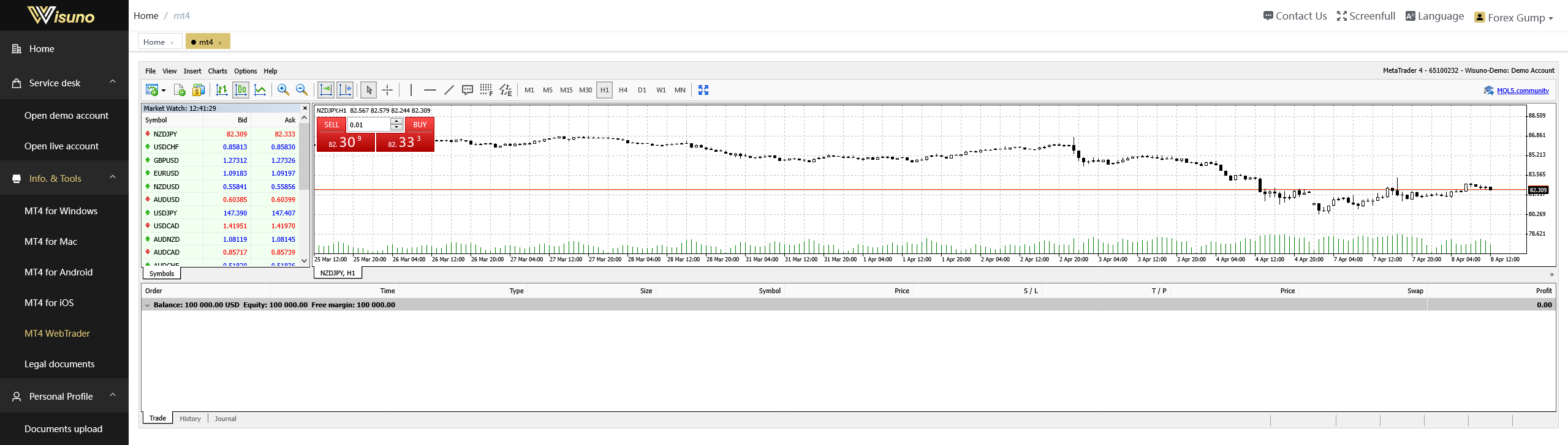
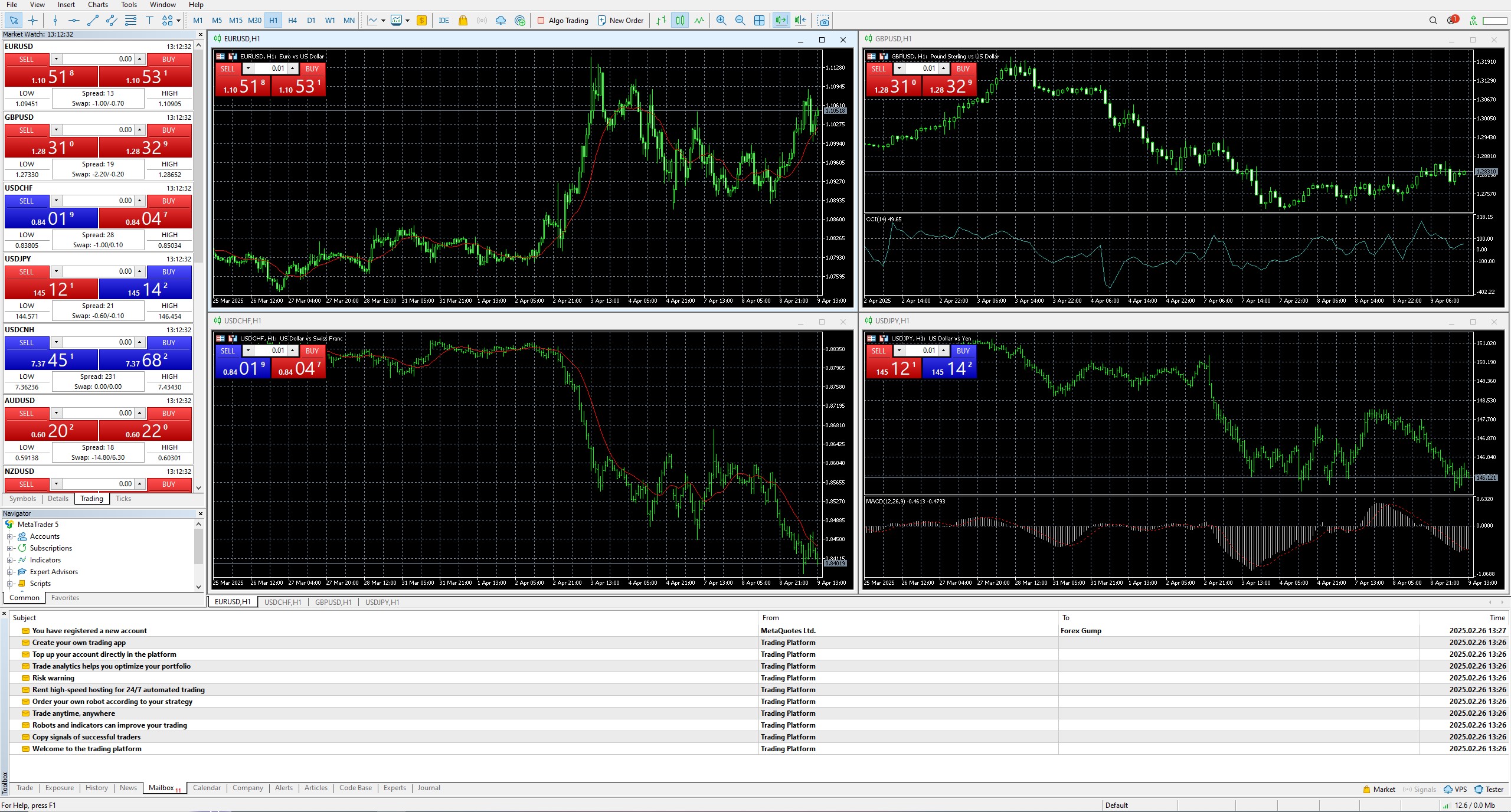
Wisuno, at least in theory, offers a choice between two advanced trading platforms that have become the industry standard – MetaTrader 4 (MT4) and MetaTrader 5 (MT5). Installation files for a branded, licensed version of both platforms are available on the website. But when registering an account, it is possible to select only MT4 as the trading platform option. The client area of the website has links to the desktop and web versions of MT4 only. It is possible that at the time of writing this review Wisuno does not yet have an MT5 trading server. As mentioned, when we prepared this review the Demo account creation feature was not functional, so the attached screenshots of the platforms are examples.
Wisuno does not offer its own mobile app and there is no information on the website if there are plans to develop one.
MetaTrader 4 (MT4) and MetaTrader 5 (MT5) are two of the most widely used trading platforms in the forex and CFD industry, developed by MetaQuotes Software. These platforms have become the industry standard due to their robust technical capabilities, user-friendly interface, advanced charting tools, and extensive support for automated trading strategies. MT4, launched in 2005, quickly became the preferred choice for forex traders due to its stability, efficiency, and vast customization options. Although MT5 was introduced in 2010 with additional features and expanded asset support, many traders continue to favor MT4 due to its simplicity, extensive broker adoption, and compatibility with a well-established ecosystem of third-party tools, including custom indicators and Expert Advisors (EAs).
Technical Features of MT4 and MT5
One of the key strengths of MT4 and MT5 is their adaptability to different trading styles. Both platforms provide advanced charting tools, multiple order types, and algorithmic trading capabilities, making them suitable for manual traders, scalpers, swing traders, and those using automated strategies. Their widespread adoption by brokers ensures that traders have access to a broad range of liquidity providers, reducing the risk of slippage and execution delays.
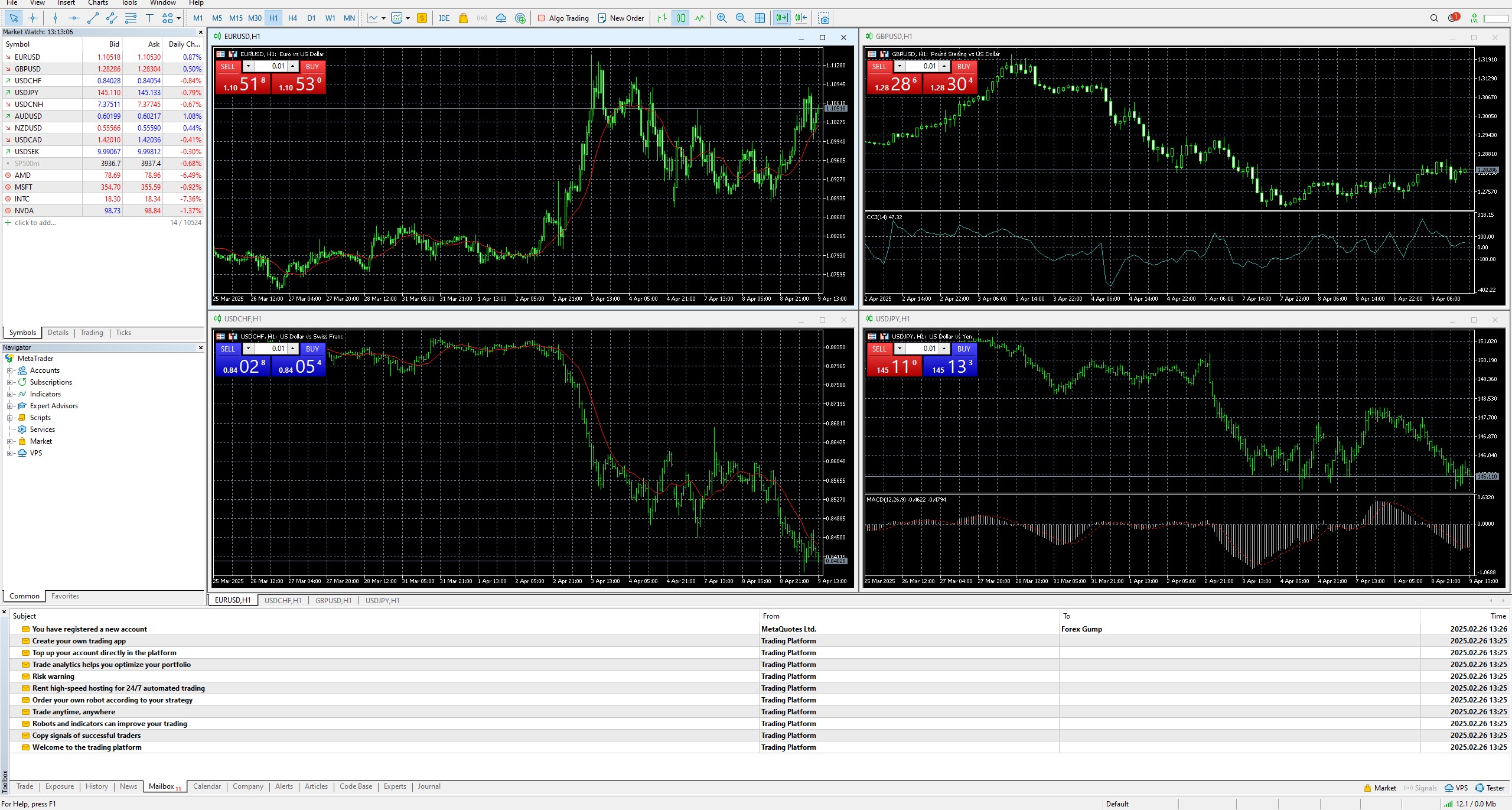
While MT5 was designed as an advanced multi-asset platform, supporting forex, CFDs, stocks, commodities, and futures, its adoption among forex traders has been relatively slow. The key technical differences between the two platforms include faster order execution speeds, additional order types, expanded timeframes, an integrated economic calendar, and market depth (DOM) functionality in MT5. Unlike MT4, which was originally built only for hedging, MT5 supports both hedging and netting, making it more compliant with certain regulatory requirements, particularly in stock and futures trading.
Programming and Automation
A critical distinction between the two platforms is the programming language used for developing custom indicators and automated trading strategies. MT4 operates on MQL4, a simpler, procedural programming language, while MT5 runs on MQL5, which is object-oriented and allows for more complex and faster executions of scripts and Expert Advisors. Despite MQL5’s technical superiority, many traders still prefer MT4 because MQL4 and MQL5 are not backward compatible, meaning that EAs and custom indicators built for MT4 cannot be used on MT5 without significant modifications. This has made many traders reluctant to switch platforms, as they would have to rebuild or repurchase their trading tools.
Order Execution and Market Depth
MT5 provides more advanced order execution capabilities compared to MT4. It supports six types of pending orders instead of four, allowing traders to execute Buy Stop Limit and Sell Stop Limit orders in addition to the traditional Buy/Sell Limit and Buy/Sell Stop orders available in MT4. The Market Depth (DOM) feature in MT5 also gives traders access to real-time bid/ask price levels, making it a more suitable choice for institutional and high-volume traders.
Charting and Timeframes
MT5 offers more extensive charting options compared to MT4. While MT4 supports nine timeframes, MT5 expands this to 21 different timeframes, providing traders with more granular control over market analysis. Additionally, MT5 features more built-in indicators and graphical objects, making it a superior platform for traders who rely heavily on technical analysis.
Desktop, Web, and Mobile Versions
Both MT4 and MT5 are available on desktop, web, and mobile, but the features vary across versions. The desktop version of each platform provides the full trading experience, including custom indicators, automated trading (EAs), and advanced charting tools. The web-based versions allow traders to execute trades and analyze basic market movements without requiring software installation, but they lack full support for EAs and custom scripts. The mobile versions of MT4 and MT5, available for iOS and Android, offer basic trading functionalities such as market execution, pending orders, and limited charting tools. However, mobile trading does not support automated trading (EAs), making it more useful for trade monitoring rather than developing or testing strategies.
Why Many Traders Still Prefer MT4
Despite the technical advancements of MT5, many forex traders continue to favor MT4 due to its familiarity, stability, and massive ecosystem of third-party tools. Since many brokers still support MT4 and offer optimized trading conditions, traders often see little incentive to switch. Additionally, MT4’s lower system requirements make it an attractive choice for traders with older hardware or unstable internet connections, as it consumes fewer system resources compared to MT5.
Ultimately, MT5 is a more advanced platform, offering better execution speeds, enhanced order types, and expanded asset support, making it ideal for multi-asset traders and those who require deep market analysis tools. However, MT4 remains the preferred choice for many retail forex traders due to its simplicity, stability, and established ecosystem of trading tools and strategies. The decision between the two platforms depends on a trader’s specific needs, programming preferences, and the availability of compatible trading tools.
Full use of the automated trading capabilities of the MetaTrader 4 and 5 platforms require the use of a Virtual Private Server (VPS). This allows EA scripts to function 24/7 without being dependent on the trader’s hardware and internet connection. Some brokers offer their own VPS services or assume the subscription fees of clients who meet certain deposit capital and/or trading volume requirements. But Wisuno is not one of them. In addition, the terms of the bonuses offered by the broker prohibit the use of VPS, which is strange.
Wisuno Account types and trading conditions
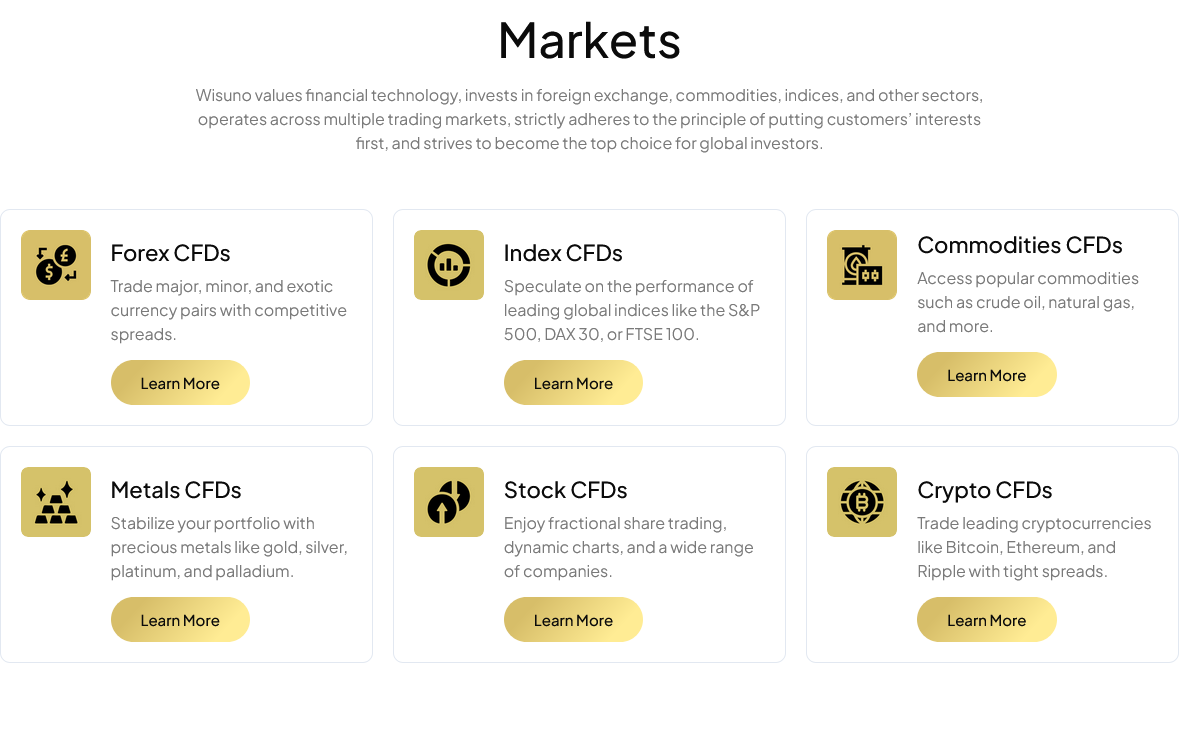
Wisuno has the ambition to offer a fairly wide range of tradable CFD instruments – currency pairs, indices, commodities, metals, equities and cryptocurrencies. At the time of writing this review, there is uncertainty around the total number of tradable instruments. The website does not have detailed information on the specifications of all tradable instruments. There is only one main currency option for trading accounts – USD.
The range of trading accounts offered by this broker is standard, but allows for the implementation of any investment strategy. Clients have a choice between a Standard account where they pay a floating spread, an ECN account with a raw spread and fixed commission, and a Cent account which is ideal for gaining experience without significant financial risk.
The minimum deposit required by Wisuno is quite low and makes the services of this broker accessible even to low-capital traders. The Cent account requires only a 10 USD minimum deposit. The standard account requires an initial investment of 100 USD, and the ECN account – of 100 USD. That’s pretty low for an ECN account. Since these types of accounts are aimed at a more professional type of trader, many brokers set higher barriers to entry.
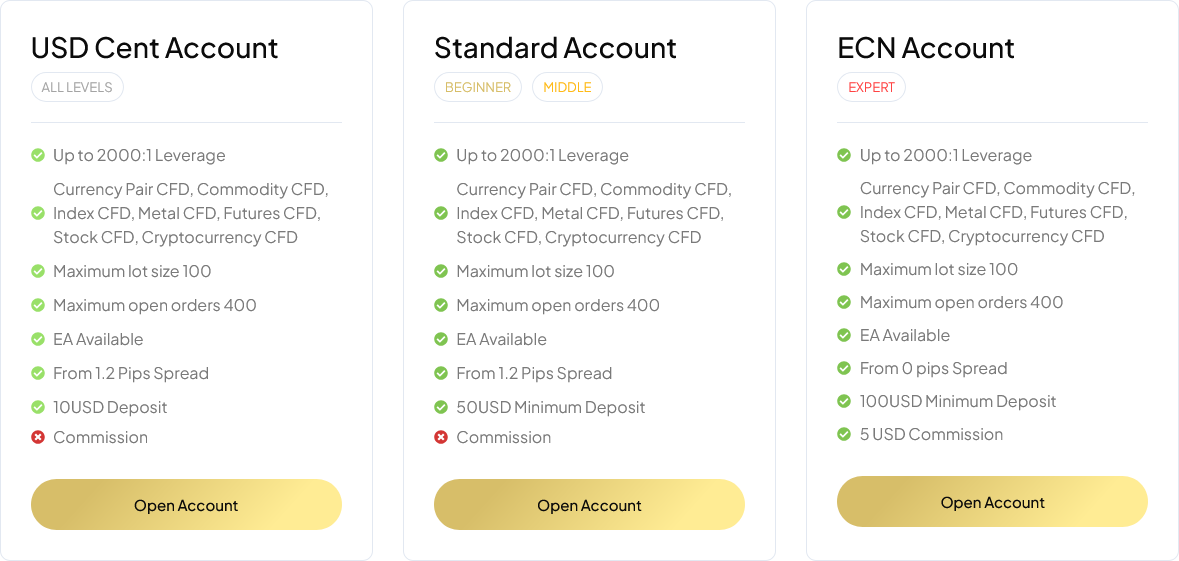
The advertised cost of trade is comparable to the industry average. The Standard Account promises spreads starting at 1.2 pips for the benchmark currency pair. EUR/USD. The Cent account promises a similar cost per trade. The raw spread of ECN accounts may even be zero. When using this type of account the client pays a fixed commission of 5 USD per side per lot, or 10 USD per round turn lot.
When choosing between a floating spread account and an ECN account with a fixed commission, a forex trader must consider their trading strategy, cost structure, market conditions, and execution requirements. Both pricing models have advantages and drawbacks, making them suitable for different types of traders.
A floating spread account operates with spreads that fluctuate based on market conditions. During periods of high liquidity, such as during major trading sessions, spreads tend to be lower and more competitive, while during volatile periods or major news events, spreads can widen significantly. This type of pricing model is often used by market maker or STP (Straight Through Processing) brokers, where the broker may act as a counterparty or route orders through liquidity providers. Floating spread accounts are generally commission-free, as all trading costs are built into the spread, making them simpler and more predictable for traders who do not want to calculate additional commission costs.
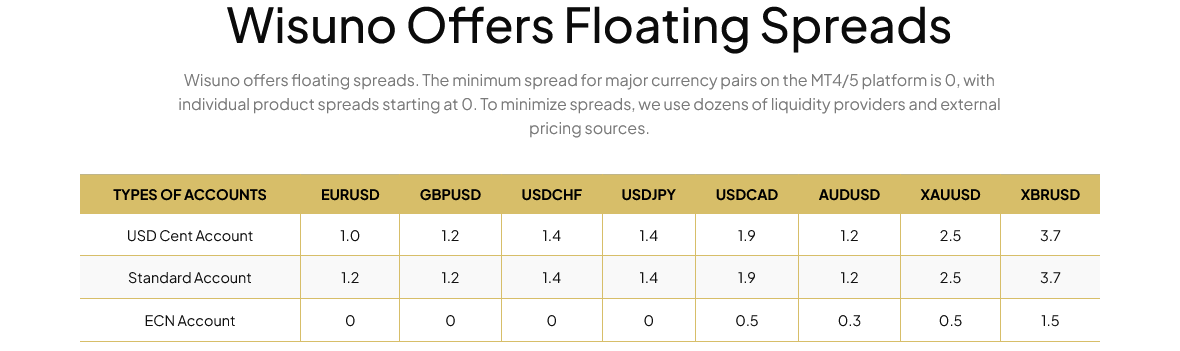
Floating spread accounts are well-suited for casual traders, beginners, and swing traders who hold positions for longer periods and are not as sensitive to minor variations in spreads. They are also ideal for traders who do not execute a high volume of trades daily and those who prefer a straightforward fee structure. However, one of the risks of floating spreads is that during times of market volatility, spreads can widen sharply, which can increase the effective trading cost. For short-term traders, such as scalpers or high-frequency traders, sudden spread widening can significantly impact profitability.
An ECN (Electronic Communication Network) account operates on a raw spread + commission model, where traders pay a fixed commission per lot traded in exchange for tighter spreads, often as low as 0.0 pips on major currency pairs. ECN brokers connect traders directly to the interbank liquidity pool, ensuring better market transparency, deeper liquidity, and faster execution. Since spreads are raw, they do not fluctuate as much due to broker markup, making trading costs more predictable, especially for high-frequency traders.
ECN accounts are particularly suitable for scalpers, day traders, and algorithmic traders who rely on high-speed execution and precise trade entries. Since these traders open and close multiple positions within a short period, having consistently tight spreads and fixed commission costs helps maintain more predictable expenses. Additionally, ECN trading often features better trade execution with lower slippage, making it ideal for strategies that require fast order processing and access to real market liquidity.
However, ECN accounts may not be ideal for traders who trade infrequently or hold long-term positions, as the commission fees can add up over time. Additionally, some ECN brokers have higher minimum deposit requirements, making them less accessible to beginners or small-cap traders.
Ultimately, the decision between a floating spread account and an ECN account depends on trading style and strategy. Traders who prioritize simplicity and low trading frequency may find a floating spread account more convenient, while those who require tight spreads, direct market access, and consistent execution will benefit from an ECN account despite the added commission costs. Evaluating trading costs under different market conditions and analyzing trade frequency will help determine the most cost-effective and suitable pricing model for an individual trader’s needs.
A Cent account is a type of forex trading account designed primarily for beginners and traders with smaller capital, where balances and trade sizes are denominated in cents rather than standard currency units. This means that if a trader deposits 10 USD into a Cent account, it will be displayed as 1,000 cents, allowing them to trade with smaller position sizes compared to standard trading accounts.
Cent accounts are particularly useful for new traders who want to gain real-market experience without exposing themselves to significant financial risk. Unlike demo accounts, which simulate market conditions but do not involve real money, Cent accounts allow traders to experience real spreads, slippage, execution speeds, and market dynamics, helping them develop emotional discipline and confidence in a live trading environment. Additionally, traders who want to test new trading strategies, Expert Advisors (EAs), or automated systems often use Cent accounts as a low-risk way to evaluate performance under real market conditions before scaling up to larger accounts.
Another key advantage of Cent accounts is that they allow traders to trade micro-lots with minimal capital. Many brokers set the minimum trade size at 0.01 lots (1,000 units) in a standard account, but in a Cent account, this becomes 0.01 of a cent lot, equivalent to just 10 currency units. This makes it ideal for those who want to practice risk management and trade sizing without needing a large deposit.
However, Cent accounts also come with limitations. Many brokers restrict the maximum deposit amount, making them unsuitable for professional traders or those looking to trade with significant capital. Additionally, while Cent accounts typically offer floating spreads, the trading conditions may not always match those of standard accounts, particularly in terms of execution speed and liquidity, since brokers often route Cent account trades through internal dealing desks rather than through real market liquidity providers.
Overall, Cent accounts serve as a valuable bridge between demo trading and full-scale live trading, providing traders with a safe and affordable way to experience real trading conditions. They are best suited for beginners, strategy testers, and those who want to trade with minimal financial exposure, but they may not be ideal for those looking to trade high volumes or access deep market liquidity.
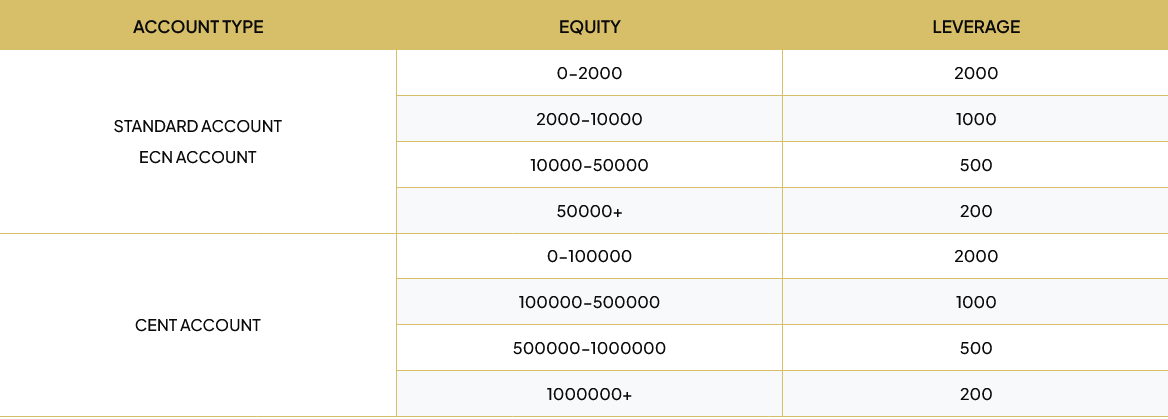
All accounts offered by this broker are leveraged up to 1:2000. In comparison, retail clients of brokers licensed in the EU or Australia can trade with leverage up to 1:30. Like most brokers that offer such high leverage, Wisuno applies a dynamic leverage formula. The maximum level of 1:2,000 is available for accounts whose capital does not exceed 2,000 USD. For accounts with a capital between 2,000 and 10,000 USD, the maximum leverage is limited to 1:1,000. The next limit is for accounts with a capital between 10,000 and 50,000 RSD – 1:500. For accounts with higher capital the limit is 1:200.
Wisuno also imposes temporary leverage limits on all accounts in specific situations. During major economic data releases, specifically within 2 minutes before and after the release time, the leverage for forex and gold will be adjusted to 1:500. Any new positions opened during this window will be subject to the 1:500 leverage and will require higher margin accordingly. One hour before the weekly Friday market close, starting from 23:00 platform time until the market closes, the leverage will be adjusted to 1:500 for Forex and precious metals, and 1:100 for Silver and energy products.
It is understood from the website that the broker intends to offer a passive income option – Copy Trading. This is an investment approach that allows traders to follow and replicate the strategies of more experienced traders, enabling participation in financial markets without the need for deep market knowledge or active trade management. Copy Trading is a fully automated system where a trader, known as a follower, links their trading account to that of an experienced trader or strategy provider. Once connected, every trade executed by the strategy provider is automatically replicated in the follower’s account, proportionally based on the amount of capital allocated. The follower does not need to make individual trading decisions, as the system ensures that trades, including entry, exit, and risk management parameters, are mirrored in real-time. This makes Copy Trading particularly appealing to beginners, passive investors, and those who lack the time to analyze markets and execute trades manually. Many brokers and platforms offer customization options, allowing followers to adjust trade sizes, set stop-loss limits, or even close trades manually. However, the primary risk is that if the selected trader incurs losses, the follower’s account will suffer similar losses, making the choice of whom to copy crucial.
According to information in Wisuno’s legal documentation, the broker does not charge inactivity fees, but reserves the right to archive or disable accounts that have been inactive for 90 calendar days and have a balance below 10 currency units.
Wisuno Deposit and Withdraw Methods
The terms and conditions for depositing and withdrawing funds from trading accounts is one area where the Wisuno website and documentation provide almost no information. The broker states that it will allow funding of accounts via credit/debit cards, bank transfer, and the Skrill and Vpay e-wallets. But there is no information anywhere about deposit and withdrawal fees, minimum and maximum transaction amounts and other details.

This is a standard set of payment methods, but as far as an offshore broker focused on specific regional markets is concerned, one would expect it to offer more choice – including locally specific payment methods and unconventional options such as cryptocurrencies.
| Deposit method | Minimum | Maximum | Processing time | Fee |
| Credit/Debit Card | $10 | Unspecified | Unspecified | Unspecified |
| Bank | $10 | Unspecified | Unspecified | Unspecified |
| Skrill | $10 | Unspecified | Unspecified | Unspecified |
| Withdrawal method | Minimum | Maximum | Processing time | Fee |
| Credit/Debit Card | Unspecified | Unspecified | Unspecified | Unspecified |
| Bank | Unspecified | Unspecified | Unspecified | Unspecified |
| Skrill | Unspecified | Unspecified | Unspecified | Unspecified |
Wisuno Bonuses and Promotions
One of the advantages of offshore brokers over strictly regulated companies is that they can offer various bonuses and promotions. Often this includes no deposit bonuses, deposit and welcome bonuses, cashback, loyalty programs, prize games, trading tournaments.
The Wisuno website only has information on one promotion – the Welcome Bonus. This bonus is equal to 50% of the first deposit, with a maximum bonus amount of 500 USD.
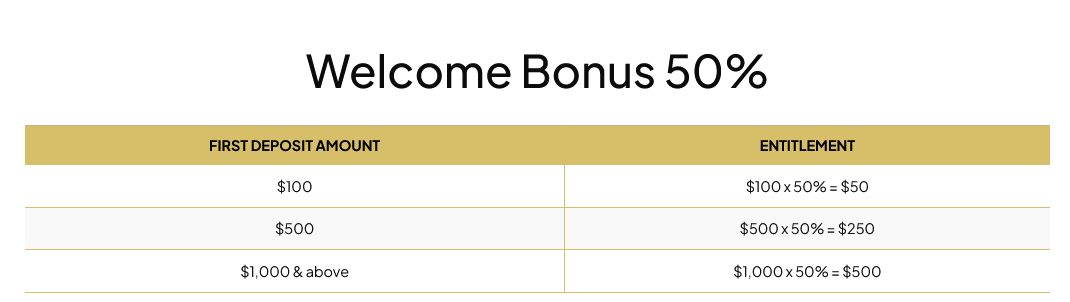
The bonus is available for customers with an active Standard or ECN account, but not for Cent accounts. There is a minimum deposit requirement of 100 USD to be eligible for the bonus. More significant is the geographical limitation – only residents of the following countries can benefit from this Welcome Bonus – China, Malaysia, Thailand and Vietnam.
The bonus is not withdrawable. When the client withdraws any part of the balance from their trading account during the promotion period, the full bonus amount will be removed from the account. Withdrawals include internal transfers to other accounts or transfers from the trading account to a wallet.
The bonus conditions include a rather unusual requirement – if the client executes his/her trades through a Virtual Private Servers (VPS), Wisuno reserves the right to disqualify those trades and remove any Deposit Bonus that has been paid to the client.
| Bonus | Min deposit | Max bonus | Required turnover | Cash out limit |
| Welcome Bonus | $100 | $500 | Unspecified | Unspecified |
Wisuno Tools and Education
At the time of writing this review, the Wisuno website offers absolutely no educational or research resources or support tools. If this remains the case, this would be a significant disadvantage of this broker.
A forex broker that does not offer educational, analytical, or research resources can present several disadvantages for traders, particularly for beginners or those looking to enhance their trading strategies. Beginners rely heavily on educational resources such as tutorials, webinars, courses, and articles to learn about forex trading. A broker that does not offer these materials forces new traders to seek external resources, which can make learning more fragmented and confusing. Without educational support, beginner traders are more likely to make costly mistakes due to a lack of knowledge about risk management, trading strategies, or market behavior. This can lead to frustration and potential financial losses early on in their trading journey.
Analytical resources such as daily market analysis, economic calendars, or technical analysis reports provide valuable information for traders to make informed decisions. Without these tools, traders may struggle to stay updated on important market movements and economic events, leading to missed opportunities or poor trade execution. Traders will need to rely on third-party websites or tools for market analysis, which can be time-consuming and inconvenient. The lack of integrated resources on the broker’s platform may cause delays in accessing crucial market data. Research materials such as trading signals, technical indicators, and expert insights help traders refine and develop their strategies. A broker without these resources leaves traders without guidance on how to improve their approach, limiting their ability to adjust or optimize strategies based on market conditions. Brokers that provide research tools often include backtesting capabilities and performance analysis features. Without access to such resources, traders may find it difficult to evaluate the success of their strategies over historical data. Advanced traders often look for in-depth analytics, market sentiment indicators, and expert commentary to fine-tune their trades. A broker lacking these resources may not be appealing to experienced traders who rely on detailed research and analysis to gain an edge in the markets. The forex market is highly competitive, and advanced traders need every advantage they can get. Without analytical tools and research support, a broker’s platform may be perceived as less competitive, driving serious traders to other brokers that offer more comprehensive resources. Traders may have to invest in paid educational courses, market analysis tools, or research platforms, adding to their overall trading costs. This is especially disadvantageous for beginner traders who are already dealing with the financial burden of learning and trading at the same time.
Notes from the author:
In principle, it is risky to give an assessment to a broker who is just starting out and does not yet provide a full range of services. You can describe what that broker advertises and promises, but there is no way to guarantee that those promises will be fulfilled or that the services will be of a good standard. On the other hand, shortcomings and imperfections cannot justify a low score because they may be corrected in the future. The owners of Wisuno show ambition, which is why it is worth noting the existence of this broker, although it is not yet fully operational. The existence of a sister brand with a license from Cyprus is a good indicator that behind the broker there are companies with long-term ambitions and sufficient financial resources. But still, Wisuno brand is run by an offshore company, which should not be forgotten. Wisuno promises a pretty good mix between trading account types and trading software. Customers have a choice between Standard, ECN and Cent accounts. The broker also has licenses for the MT4 and MT5 platforms, but at least at the time of writing this review there is no MT5 server yet. The relatively low minimum deposit, the variety of tradable instruments and the fairly high leverage are undoubted advantages of this broker, but none of these things are unique to offshore brokers. The cost per trade is well within industry norms, but it also doesn't stand out as particularly competitive. The broker is apparently targeting Southeast Asian markets, but so far does not offer local base currencies and local payment methods. However, if you are from this region and are looking for a new broker to invest through, it is worth keeping an eye on Wisuno to see if it develops into a worthwhile broker.


