




XS.com Minimum Deposit
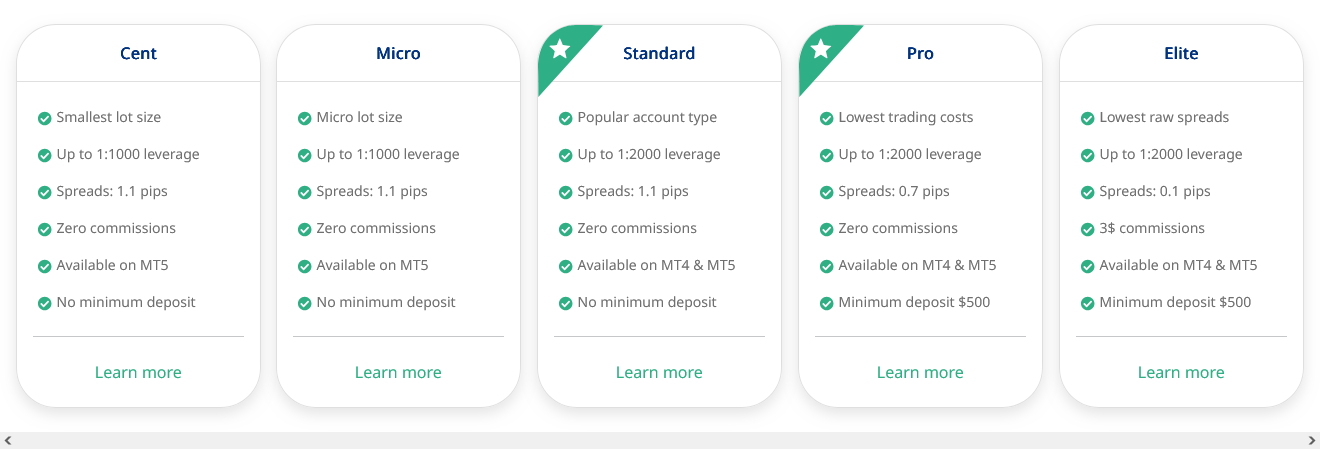
XS.com offers a total of nine account types, divided into three categories – Preferred, Professional and Partners. The account types in the Preferred category are Standard, Cent and Micro. These account types are designed for beginners and casual traders. The broker does not require a specific minimum deposit for these accounts, making them very accessible in theory. But it should be noted that in practice there are minimums between 15 and 300 USD depending on the payment method used. The Professional account category also includes three separate types – Pro, Elite and VIP. Pro and Elite accounts require a minimum deposit of 500 USD. This minimum deposit is somewhat justified by the trading price offered by XS.com, but not by the tradable instruments available. The VIP account is an offer for traders who have deposited over 100,000 USD.
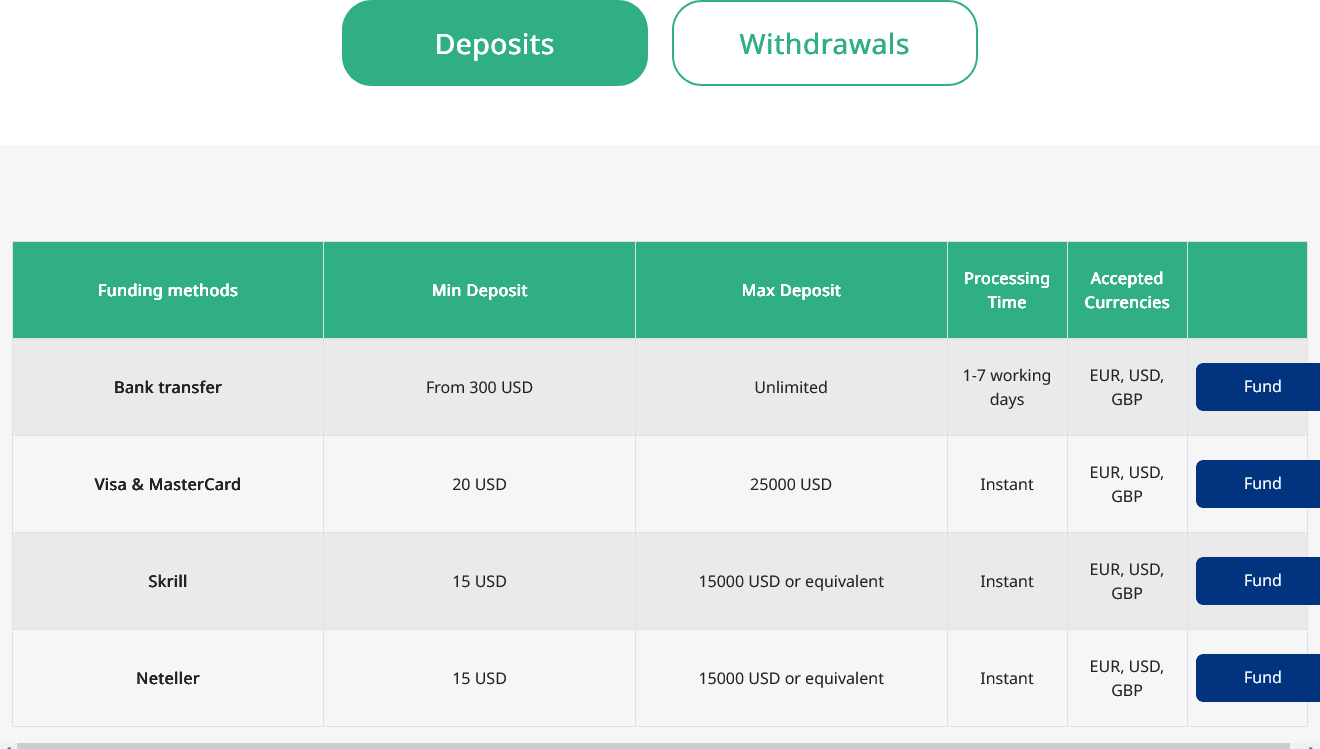
Payment methods are one area where XS.com does not compare well with most of its competitors. This broker only allows deposits and withdrawals via the most basic methods – bank transfer, credit/debit cards and the Skrill and Neteller e-wallets. Especially for brokers with global operations, it is common to offer a much wider choice, including regionally and locally specific payment processors and unconventional methods such as cryptocurrencies.
Forex trading involves significant risk, especially given the use of leverage, which can amplify both gains and losses. Starting with a smaller initial investment helps manage risk by limiting potential losses. New traders can experiment and learn the mechanics of trading without the stress of risking a large sum of money. This is crucial in forex markets, where volatility can lead to rapid changes in value. For beginners, the learning curve in forex trading can be steep. Starting with smaller amounts allows traders to gain practical experience without facing devastating losses. Mistakes are part of the learning process, and it’s financially safer to make them with smaller amounts.
Low minimum deposits also enable traders to test different forex brokers’ platforms, services, and customer support without committing a significant amount of money. This can be essential for traders deciding which broker best fits their trading style and needs. Traders with limited funds can choose to diversify their investment across different financial instruments rather than putting all their capital into one. This spreads the risk and can potentially reduce the volatility of their investment portfolio. Trading with amounts that are within one’s comfort zone reduces the psychological stress associated with the potential loss. This can lead to better decision-making and improved trading discipline.
When choosing a payment method to deposit funds into a forex trading account, several key considerations come into play. These factors help ensure that the selected payment method aligns with the trader’s convenience, cost-effectiveness, security, and speed of transactions.
The chosen payment method should have strong security measures in place to protect funds and personal information. Some methods allow instant deposits, which is crucial for taking advantage of trading opportunities that may arise suddenly. It’s important to consider both the fees charged by the payment provider and any potential fees that the broker might add for using a specific payment method. Traders need to consider if their chosen payment method supports transactions in the desired currency without requiring costly conversions. Some methods may be great for deposits but might be complicated or slow when it comes to withdrawals. The method should be easily accessible and convenient for the trader, without requiring extensive steps to process each transaction. The payment method also should comply with local and international financial regulations.
Depositing funds into a forex trading account via bank transfer is a traditional and widely used method. It has a mix of advantages and disadvantages that are important to consider, especially when comparing it to more modern or alternate deposit methods such as credit/debit cards or cryptocurrencies.
Bank transfers are generally secure and backed by the robust security measures of established financial institutions, reducing the risk of fraud. Compared to other methods like credit cards, bank transfers typically allow for larger amounts to be transferred, which is beneficial for traders looking to move significant sums of money into their trading accounts. Funds are transferred directly from the trader’s bank account, which can help in managing finances more effectively by avoiding potential debt accumulation associated with credit card use. Due to the higher security and higher limits, bank transfers are often preferred for larger, institutional deposits or by serious traders planning to use significant capital.
But keep in mind that bank transfers can be slow, sometimes taking several days to process, which may result in missed trading opportunities in a fast-moving market. Both sending and receiving banks may charge fees for wire transfers. International transfers often incur additional costs, which can be significant depending on the amount and the banks involved. Setting up a bank transfer can be more cumbersome than other methods. It often requires more detailed information and sometimes extensive paperwork, especially for international transactions. In some countries, there may be restrictions or regulations on sending money abroad, including caps on the amount that can be transferred or the need for additional approvals. For small-scale traders, the fees associated with bank transfers can make this method less economical compared to alternatives like e-wallets or even credit cards. Errors in entering account details can lead to funds being sent to the wrong account, which can be difficult and time-consuming to rectify.
Funding forex trading accounts with credit or debit cards offers a range of advantages, making it a favored method among traders. The quick processing of transactions, often in real-time, allows traders to capitalize on market opportunities without the wait associated with bank transfers, which can take several days.
The common use and availability of credit and debit cards, combined with their ease of use for online transactions, make them an effortless option for depositing funds into trading accounts. This convenience eliminates the need for setting up new accounts or dealing with additional services. Recognized globally by forex brokers, these payment methods ensure traders can fund their accounts from anywhere, overcoming any potential banking system compatibility issues.
Credit and debit card payments typically come with low minimum deposit requirements, making them ideal for novices or those looking to trade with smaller sums. Additionally, these methods offer streamlined financial oversight, as transactions are clearly listed on card statements, facilitating the management of personal finances and trading budgets. Security measures such as fraud protection are inherent benefits of using credit and debit cards, providing a safeguard against unauthorized transactions and enhancing the security of traders’ funds.
However, the potential downsides of funding forex accounts with credit or debit cards warrant careful consideration. These methods can lead to unintentional overspending or accumulating debt if not managed wisely. Moreover, some brokers and card issuers might impose transaction fees. Being aware and strategically planning are crucial steps to mitigate these risks and costs, ensuring a well-balanced approach to utilizing credit or debit cards for forex account funding.
Employing e-wallets including Skrill and Neteller to finance forex trading accounts offers significant advantages, making these options popular among traders. One of the most notable benefits is their quick processing times, with services like Skrill and Neteller often completing deposits almost instantly or within a few hours, preventing traders from missing crucial market opportunities.
Accessibility is greatly enhanced through both web and mobile platforms, with Skrill and Neteller featuring user-friendly interfaces that make transferring funds straightforward. The global acceptance of these e-wallets by forex brokers ensures that traders worldwide have a dependable method to fund their accounts, free from geographical restrictions.
E-wallet transactions generally come with lower fees than those associated with bank wire transfers or credit card deposits, providing a more cost-effective solution for traders looking to frequently manage their account funds. Advanced security features, such as encryption and two-factor authentication, offer robust protection for users’ finances and personal information, minimizing the risk of unauthorized access.
Moreover, e-wallets present an additional layer of financial privacy, as they eliminate the need for direct use of personal bank accounts or credit card information in transactions, preserving traders’ financial confidentiality.
The flexibility offered by Skrill and Neteller, supporting a range of funding sources from bank transfers to credit/debit cards and local payment methods, enables traders to choose the most convenient and cost-saving funding route. They also support multiple currencies, facilitating the storage and transfer of funds in various currencies without the need for conversion, avoiding conversion fees and simplifying transactions involving multiple currencies.
In addition to funding, e-wallets streamline the withdrawal process, ensuring fast processing of transactions and swift access to funds. They also contribute to better management of trading budgets, as traders can earmark specific sums for trading, enhancing financial discipline.
While the benefits are substantial, traders should remain mindful of possible downsides, such as restrictions on withdrawal amounts and potential fees for currency conversion or transfers to banks. Despite these considerations, the comprehensive advantages offered by e-wallets like PayPal, Skrill, and Neteller often outweigh the limitations, affirming their position as preferred funding methods for forex trading accounts.
XS.com does not state its own transaction fees, but you should be aware of bank and other third-party charges. The minimum amount to deposit by bank transfer is quite high – 300 USD or equivalent. The minimum is 20 USD when using a card and 15 USD when depositing via e-wallet. There is no maximum deposit amount when using a bank transfer, but there is a maximum of 25,000 USD when using a card. The maximum for depositing with Skrill and Neteller is 15,000 USD.
The banking transaction can take between 1 and 7 working days. Depositing with other payment methods is instant, but withdrawing with an e-wallet can take 1 business day.
Cent and Micro accounts offered by this broker allow you to open positions with symbolic amounts, literally cents. Due to the high leverage, this largely applies to the remaining account types as well. Standard and other account types designed for full-scale trading use a standard lot. The minimum order size is 0.01 lots, or 100 currency units. At a leverage of 1:2000, placing such a minimum order requires about 50 cents.
Trading forex in smaller lot sizes helps to minimize financial risk per trade, making losses on individual trades more manageable and less impactful on the overall account balance. This approach is especially valuable for beginners who are still navigating market fluctuations and developing their risk management skills. With smaller trades, traders can refine their risk strategies by adjusting trade sizes based on the volatility of specific currency pairs or upcoming economic events, allowing for greater control over each trade’s exposure.
Using smaller lot sizes also provides new traders with real-market experience without the pressure or potential large losses associated with bigger trades. This hands-on experience is essential for understanding market dynamics, testing strategies, and building confidence while risking only modest amounts of capital. Additionally, traders with mini or micro lots have the flexibility to diversify their strategies by trading across multiple markets and positions. This enables them to execute several trades at once, distributing risk across different instruments and avoiding over-concentration in any single position.
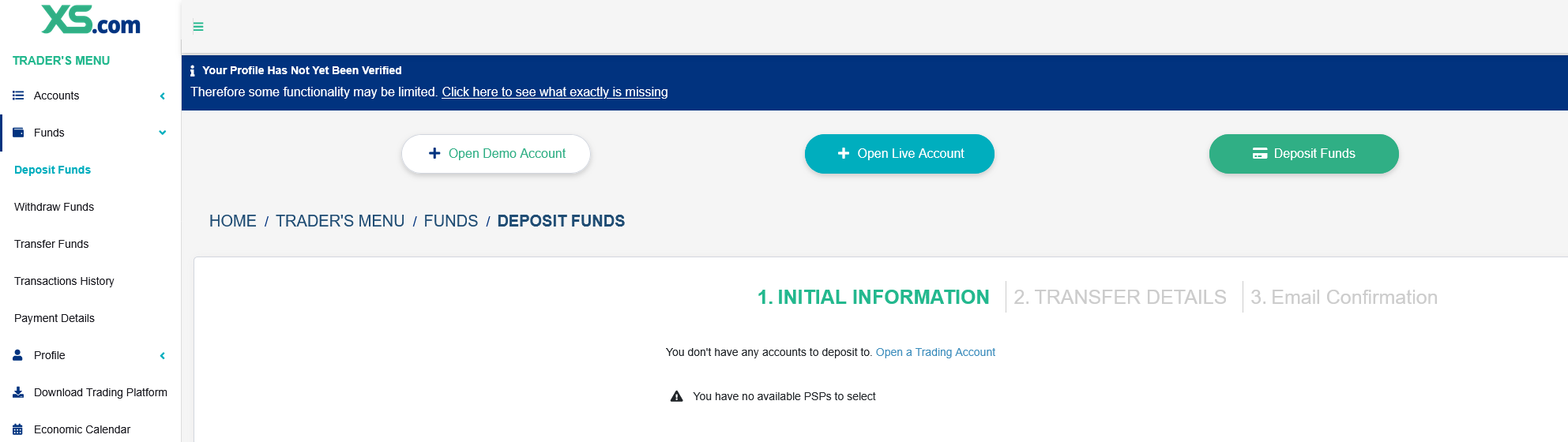
XS.com offers a branded MasterCard mobile app that is tied to your trading wallet. But if you don’t use this broker service, the only way to deposit and withdraw funds is through the Client Area of the website. In order to be able to make deposits and withdrawals you must have verified your identity and residency. After logging in, you must open the Funds tab in the main menu located on the left side of the interface. Then select Deposit Funds. The menu requires you to select a live account to fund, after which options appear to select a payment method and enter a transaction amount. The next step requires you to enter the credentials associated with the payment method used and confirm the transaction. Once the funds appear in your account, you can begin actual trading.


