




XS.com Withdrawal – Any Problems?
Payment methods are one area where XS.com does not compare well with most of its competitors. This broker only allows deposits and withdrawals via the most basic methods – bank transfer, credit/debit cards and the Skrill and Neteller e-wallets. Especially for brokers with global operations, it is common to offer a much wider choice, including regionally and locally specific payment processors and unconventional methods such as cryptocurrencies.
If you have decided to use the services of this broker you should consider carefully which payment method is most suitable for you. Each of the available options has certain advantages and disadvantages that you need to take into consideration.
Withdrawing funds from your forex trading account via bank transfer is another popular option that traders use for its reliability and security. However, like any method, it comes with its own set of advantages and disadvantages.Bank transfers typically allow for higher withdrawal limits compared to other methods like credit/debit cards, making them ideal for withdrawing larger amounts of money.: Bank transfers are accepted worldwide and can be used by traders in almost every country, making it a universal method for fund withdrawal.: Funds are transferred directly into your bank account, which can be more convenient for managing large sums of money and facilitates easier access to funds once they arrive. Unlike e-wallets or other payment systems, you don’t need to have an account with a third-party provider. The money goes straight into your existing bank account.
But on the other hand bank transfers can be slower than other withdrawal methods. It can take anywhere from a few business days to over a week for the funds to appear in your account, depending on the banks and countries involved. Both the brokerage and the bank might charge higher fees for bank transfers compared to other methods. These fees can vary greatly between banks and might be higher for international transfers.: The process for setting up a bank transfer can be more complex and time-consuming, requiring more detailed information than other methods. The necessity for accurate bank details is critical. Mistakes in providing account numbers, SWIFT codes, or other identifying information can lead to delays or the funds being sent to the wrong account.
Withdrawing funds from your forex trading account using credit or debit cards combines ease and efficiency with certain potential drawbacks. The procedure is straightforward, avoiding the need to set up additional accounts or use external payment services, making it a convenient choice for most traders. Typically, withdrawals via credit or debit cards are processed quickly, often within 1-3 business days, which is faster than options like bank wire transfers. The strong security protocols and fraud protection measures associated with these cards also add a significant layer of safety to each transaction. Since most traders already possess credit or debit cards, this method eliminates the need to navigate third-party services, and the direct deposit of funds into a linked bank account ensures quick access to your money.
However, it’s crucial to consider some limitations of using credit or debit cards for withdrawals. Anti-money laundering regulations often limit withdrawals to the amount originally deposited via the card, necessitating alternative methods for withdrawing any profits beyond this amount. Although typically quick, processing times can vary based on the broker’s policies and the card issuer’s specific procedures, which may sometimes lead to delays. Furthermore, some banks or card issuers might place restrictions on receiving funds from forex trading accounts, potentially complicating transactions. If your trading account and card are in different currencies, you might also incur currency conversion fees, adding to the overall cost of withdrawal. Moreover, the viability of using a credit or debit card for withdrawals depends on the card being valid and not expired; an expired or canceled card would require choosing an alternative withdrawal method.
Withdrawing funds from your forex trading account via e-wallets like Neteller and Skrill offers a modern, flexible alternative to more traditional methods such as bank transfers and credit/debit card withdrawals. Each of these e-wallets comes with its unique set of features, but they generally share some common advantages and disadvantages in the context of forex trading withdrawals.
E-wallet withdrawals are often processed much faster than traditional bank transfers or credit/debit card withdrawals. In many cases, funds can be available in your e-wallet account within 24 hours.E-wallets are designed for easy online transactions. Withdrawing funds to an e-wallet is usually straightforward, and once the money is in your e-wallet, it can be easily used for other online transactions or transferred to your bank account. E-wallets can offer lower withdrawal fees compared to traditional bank transfers, especially for international transactions. This makes them a cost-effective option for traders.E-wallets employ strong encryption and security measures to protect user accounts and transactions, offering a high level of safety for your funds. Using an e-wallet can provide an additional layer of privacy, as you do not have to share your bank account or card details with the forex broker.
But keep in mind that some e-wallets may impose limits on the amount you can withdraw at once or within a certain timeframe, which might be inconvenient for traders looking to withdraw larger amounts. E-wallets require account verification, which can be a time-consuming process. You’ll need to provide personal information and possibly documentation to verify your identity. Access to your funds is dependent on having access to the internet and potentially a smartphone, which might not be convenient for everyone. While e-wallets are secure, they are not immune to hacking or phishing attempts. Users must be cautious and protect their account details to avoid unauthorized access.
XS.com does not state its own transaction fees, but you should be aware of bank and other third-party charges.
The minimum amount to deposit by bank transfer is quite high – 300 USD or equivalent. The minimum is 20 USD when using a card and 15 USD when depositing via e-wallet. There is no maximum deposit amount when using a bank transfer, but there is a maximum of 25,000 USD when using a card. The maximum for depositing with Skrill and Neteller is 15,000 USD.
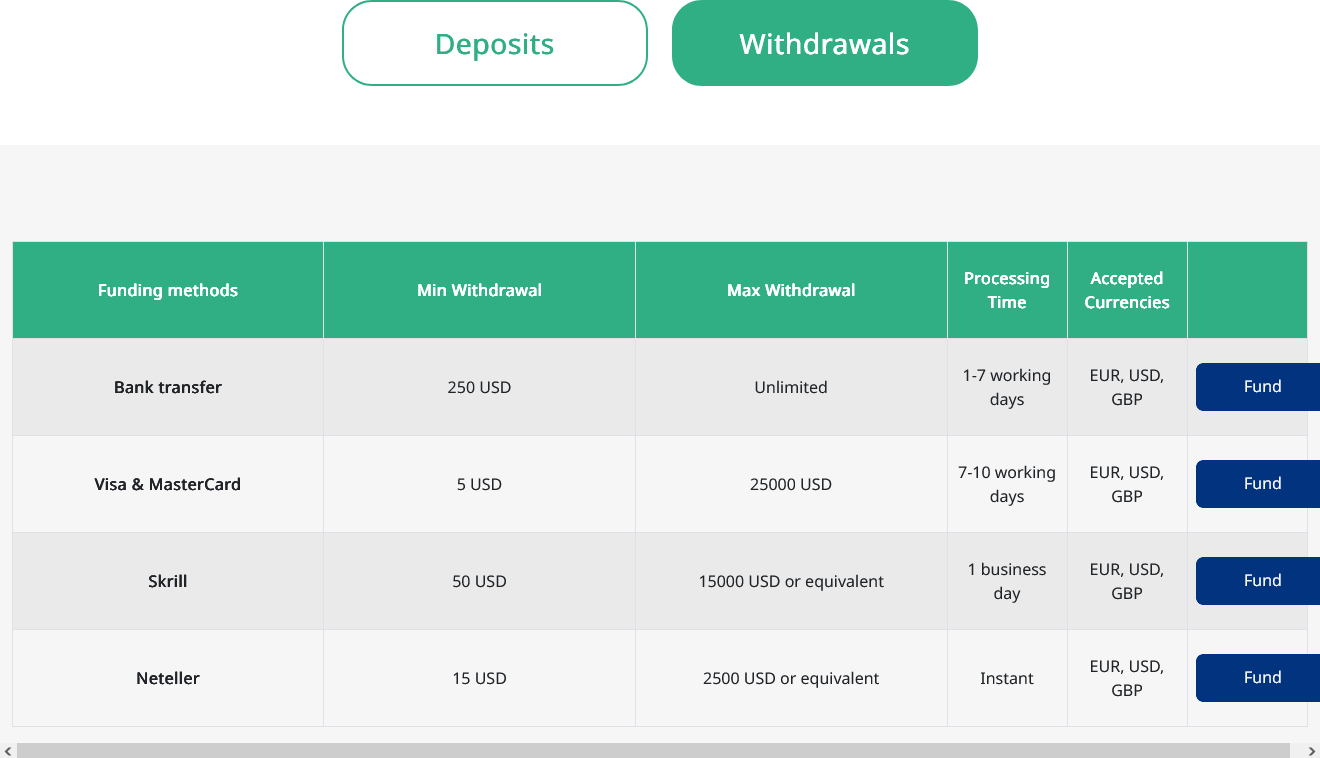
The minimum withdrawal amounts are 250 USD by bank transfer, 5 USD by card, 50 USD by Skrill and 15 USD by Neteller. Withdrawal maximums are the same as for depositing, except for Neteller, where there is a maximum withdrawal amount of 2500 USD.
Client’s withdrawals should be made using the same method used by the Client to fund his Client Account and to the same remitter. The Company reserves the right to decline a withdrawal with a specific payment method and will suggest another payment method where the Client needs to proceed with a new withdrawal request, or request further documentation while processing the withdrawal request. Where applicable, the Company reserves the right to send Client’s funds only in the currency as these funds were deposited.
The banking transaction can take between 1 and 7 working days. Depositing with other payment methods is instant, but withdrawing with an e-wallet can take 1 business day. Withdrawals by credit/debit card may have a greater delay of 10 days.
In order to deposit and withdraw money from a forex trading account, you must have verified your account in accordance with the Know Your Customer (KYC) policy. This requires you to provide proof of identity and proof of address.
Standard anti-money laundering and anti-terrorist sponsorship measures (AML) also require the same payment method to be used to withdraw funds as was used to make the deposits. If your account and withdrawal request meets these conditions, the withdrawal should be a straightforward and simple process. But before you proceed with this operation, there are a few more important things to keep in mind.
Firstly, for traders engaged in margin trading, it’s vital to assess the impact of a withdrawal on your open positions. Withdrawing a significant amount from your account could lower your margin level below the broker’s required threshold, potentially triggering a margin call or even leading to the forced liquidation of your positions. To avoid such scenarios, always calculate the effect of your withdrawal on your margin cushion and ensure you maintain the necessary equity in your account to support your open trades.
Another consideration is currency conversion. Withdrawals made in a currency different from your account’s base currency entail conversion, which comes with associated rates and fees. The exchange rate provided by your broker or financial institution might not align with the current market rate, potentially affecting the amount you receive. It’s advisable to familiarize yourself with your broker’s currency conversion policies and seek the most favorable rates to minimize losses due to conversion discrepancies.
Tax implications form another crucial aspect of withdrawals from forex trading accounts. Depending on your jurisdiction, profits earned from forex trading may be subject to taxes, and you bear the responsibility for declaring these earnings to your local tax authorities. Accurate and detailed record-keeping of all your trading transactions becomes indispensable in this context, enabling you to comply with tax regulations and facilitate any necessary reporting or audits.
Post-withdrawal, it is a good practice to regularly scrutinize your withdrawal history and check your bank statements. This vigilance helps in the early detection and rectification of any discrepancies that might arise, ensuring the integrity of your financial transactions.
For traders who have received bonuses from their brokers, it’s imperative to understand the terms attached to these bonuses before attempting to withdraw them or the profits accrued from using them. Many brokers enforce specific conditions, such as achieving a minimum trading volume, before these funds can be withdrawn. Understanding these conditions in advance can prevent any surprises and ensure you meet all necessary criteria for accessing your funds
In conclusion, while the act of withdrawing funds from your forex trading account might seem straightforward, a host of considerations—ranging from maintaining adequate margin levels and understanding currency conversion rates to complying with tax obligations and meeting bonus withdrawal conditions—play a pivotal role in ensuring the process is efficient and aligned with your trading and financial goals.
XS.com offers a branded MasterCard mobile app that is tied to your trading wallet. But if you don’t use this broker service, the only way to deposit and withdraw funds is through the Client Area of the website. In order to be able to make deposits and withdrawals you must have verified your identity and residency. After logging in, you must open the Funds tab in the main menu located on the left side of the interface. Then select withdraw Funds. The menu requires you to select a live account from which to withdraw, after which options appear to select a payment method and enter a transaction amount.


